Boxes for Wine and Cheese Packs: Gourmet Packaging
Sincla
Excellence in presentation: boxes for wine and cheese packs In the competitive delicatessen sector, the first impression is just as crucial as the quality of the product itself. Using the right boxes for wine and cheese packs not only guarantees protect
Excellence in Presentation: Boxes for Wine and Cheese Gift Sets
In the competitive delicatessen sector, first impressions are just as crucial as product quality itself. Using suitable boxes for wine and cheese gift sets not only guarantees physical protection for fragile glass bottles and cured dairy products during logistics transit, but also exponentially elevates the overall perceived value for the end consumer. At the intersection of discerning palates and industrial design, packaging takes center stage in defining the purchasing experience.
Key Takeaways
Compartmentalized boxes prevent damaging collisions between heavy glass and other gourmet products.
FSC-certified wood plywood establishes itself in 2026 as the leading material thanks to its balance between lightness and mechanical strength.
Customization via laser engraving or screen printing transforms packaging into a keepsake item that reinforces brand recall.
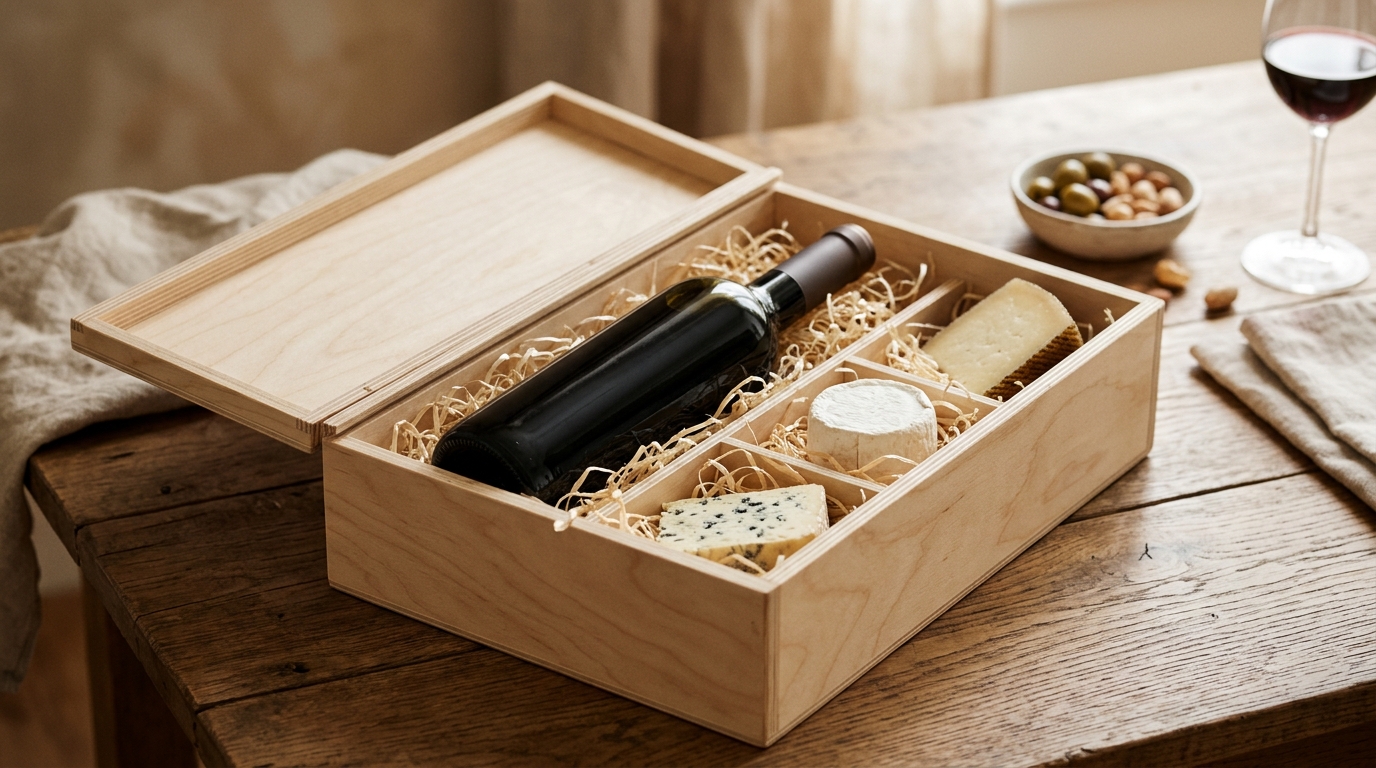
This classic European gastronomic pairing demands special care in bundled marketing. Unlike other items that can travel in simple corrugated cardboard boxes, a wine bottle introduces asymmetrical weight and a breakage risk that can completely ruin the entire set. At the same time, cheese—whether in vacuum-sealed wedges or whole wheels—requires its own dedicated space to avoid being crushed. This is precisely where packaging engineering comes into play.
Why Is Compartmentalized Wood the Gourmet Standard?
When buyers purchase or receive a premium gourmet set, expectations run high. Specific weight, natural texture, and structural solidity make wood the quintessential container. There are clear advantages of wood over cardboard in packaging, especially when dealing with loads exceeding two or three kilograms of net weight. Cardboard, no matter how reinforced, tends to give way under moisture or targeted impacts at its corners, whereas a rigid box preserves its geometry intact, keeping its contents fully protected.
Furthermore, wood allows for the integration of internal dividers and sliding inserts in a far more robust manner. These compartments are vital for isolating the bottle, preventing its momentum during transit from bumping into or crushing the cheese wedge. This physical isolation is not merely functional; it creates an orderly, symmetrical, and visually appealing presentation the moment the box is opened.
Key Materials in Premium Packaging Manufacturing
Material selection dictates the durability, cost, and ecological footprint of the set. Today's market offers diverse alternatives tailored to the budgets and operational requirements of wineries and specialty food retailers.
FSCCertified wood
100%Biodegradable
3 - 5 kgLoad capacity
Plywood is the undisputed king of boxes for wine and cheese sets. Manufactured from thin wood veneers glued with alternating grain directions, it delivers exceptional mechanical strength with minimal thickness (typically between 3 and 5 millimeters). This keeps volumetric weight low for courier shipping without compromising glass protection.
On the other hand, there is MDF (Medium-Density Fiberboard). While it lacks the natural grain that imparts a rustic, authentic look, its perfectly smooth surface makes it ideal for highly detailed, full-color printing. Finally, solid pine is reserved for top-tier luxury boxes, offering greater thickness (often 9 to 12 millimeters) and an unmistakable natural pine scent, although it significantly increases shipping weight.
Food Contact Regulations
European regulations are strict regarding direct food contact with packaging materials. Cheeses must always be vacuum-packed, waxed, or wrapped in food-grade paper (virgin or waxed kraft) before being placed into any industrial wood or cardboard box to prevent substance migration.
Interior Design: The Engineering Behind the Packaging
The interior of the box is genuinely responsible for ensuring the product reaches the end customer intact. An open, unpartitioned box where items rattle around freely is a major design flaw. Dividers serve a dual purpose: they absorb kinetic energy from impacts and structure the spatial layout of the set.
When designing boxes for wine and cheese sets, a rectangular format featuring a longitudinal or transverse partition is standard. The wine compartment typically requires a cradle along the bottle neck to immobilize it. In the remaining space, the cheese rests on a base frequently cushioned with void-fill materials such as wood shavings, crinkle paper, or tissue paper.
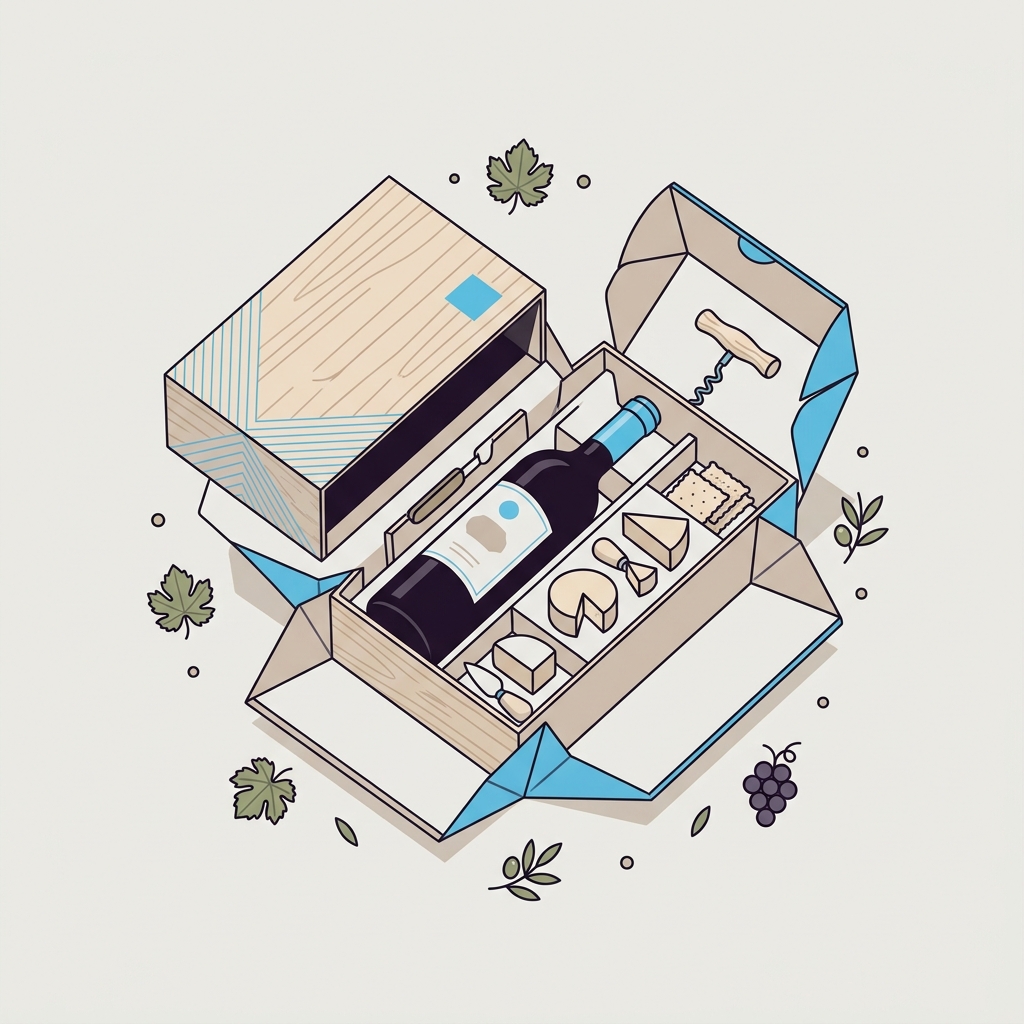
Preparing the base. Add a layer of wood shavings or crinkled kraft paper at the bottom of the box to create an initial cushioning bed.
Inserting the dividers. Slide in the die-cut wooden pieces that will section off the compartments, ensuring they seat firmly into the side grooves.
Securing the bottle. Place the wine bottle into the longest compartment, making sure the neck is locked in place to prevent horizontal shifting.
Arranging the cheese and accompaniments. Settle the dairy items, breadsticks, or accessories (such as a corkscrew or cheese knife) into the remaining compartment, filling empty voids to eliminate any slack.
Closing and sealing. Slide the lid shut or close the hinges, finishing with a cardboard sleeve or a tamper-evident security seal.
Custom wooden boxes
Discover our wooden boxes for packaging, hospitality, events and more. In-house manufacturing and full customisation.
A premium package is not complete without the graphic identity of the brand, winery, or gourmet shop marketing it. Customization techniques not only communicate product provenance, but also turn the container into an enduring marketing asset. Many boxes are eventually repurposed in homes to store tools, keepsakes, or small items, extending the lifespan of your printed logo.
Excellent for corporate logos and large production runs
Low (in volume)
Pad Printing
Crisp printing on compact areas
Enables marking on curved surfaces or fine details
Low
Hot Stamping
Debossing with metallic foil (gold/silver)
Provides unrivaled luxury and a premium tactile feel
High
Laser engraving remains the favored choice for its natural aesthetic harmony with wood, burning the logo into the grain through focused heat. However, for modern brands seeking a bolder look, screen printing in one or two vibrant colors delivers striking contrast.
Criteria for Selecting the Right Packaging
When ordering boxes for wine and cheese gift sets, it is essential not to be guided by aesthetics alone. The logistical viability of your campaign hinges on well-informed decisions. While standardized wine bottle sizes make planning easier, cheese dimensions and shapes vary substantially depending on their origin and aging profile.
Usable Interior Dimensions Check that Burgundy-style bottles (which are wider) fit comfortably if you are not using standard Bordeaux bottles.
Base Strength The bottom of the box must be securely glued or pinned to safely support weights over 2 kg.
Lid Type Sliding lids are more cost-effective and easier to stack; hinged lids provide a classic chest-like feel.
Flat-Pack vs. Pre-Assembled Storage Evaluate whether boxes arrive pre-assembled (requiring more warehouse footprint) or flat-packed for self-assembly.
Seasonal Campaigns
For seasonal peak periods such as Christmas, it is best to order your packaging several months in advance. Early planning guarantees access to better options for original Christmas gifts for clients and packaging without incurring rush production fees.
Outstanding packaging cannot improve a mediocre product, but poor packaging can easily ruin an extraordinary one.
Common Logistics Pitfalls to Avoid
Even with the best materials, poor planning can lead to costly breakage returns. One of the most prevalent errors is overlooking condensation and temperature shifts. When developing boxes for wine and cheese sets, creators often forget that cured cheeses can release moisture if exposed to sudden thermal fluctuations during transit. Without basic breathability, trapped moisture can compromise the wood's structural integrity or cause wine labels to peel away.
The Risk of Excessive Clearance
Never leave more than a centimeter of empty space between products and compartment walls without void fill. The constant jostling of express parcel sorting networks subjects items to continuous vibration and shock.
Another frequent mistake is using outer shipping cartons that do not fit snugly around the wooden box. Wooden presentation boxes always require secondary protective packaging (typically double-wall corrugated cardboard) for shipping. If the wooden box shifts inside the outer carton, it loses its structural reinforcement, and its corners can suffer severe aesthetic damage before ever reaching the recipient's hands.
Frequently Asked Questions
Are compartmentalized boxes mandatory if I use void-fill material?
While void-fill materials (such as wood wool or crinkle paper) provide cushioning, they do not offer structural rigidity. For shipments combining glass bottles weighing over a kilogram with other items, rigid physical dividers made from wood or solid board are strongly recommended to guarantee the bottle does not crush adjoining products during lateral impacts.
How much weight does a standard plywood box support?
Depending on its joinery and material thickness, a 3 to 5 mm plywood box with a securely fastened base can comfortably hold between 3 and 5 kilograms—more than enough to house a couple of wine bottles alongside one or two generous cheese wedges.
Which lid style is best for parcel courier shipping?
Sliding lids are generally the most reliable choice for courier transport, as they lack protruding metal hinges that might snag or break along automated conveyor belts. Additionally, they can be easily secured with a small tamper-evident adhesive label across the seam.
Can I laser engrave my logo onto any type of wood?
Yes, laser technology is highly versatile, although the visual result varies. On pale woods like pine or poplar plywood, the dark burn provides maximum contrast and legibility. On darker woods or certain finished MDF boards, the contrast is subtler, yielding an understated, tactile watermark effect.
Are these wooden boxes sustainable over the long term?
Absolutely. In 2026, the vast majority of wood used for commercial packaging originates from responsibly managed, certified forests (FSC or PEFC). Unlike complex plastics, wood acts as a natural carbon sink, is 100% biodegradable, and is frequently repurposed by consumers for years to come.