Original Christmas Gift Hampers for Employees: Design and Presentation in Reusable Containers
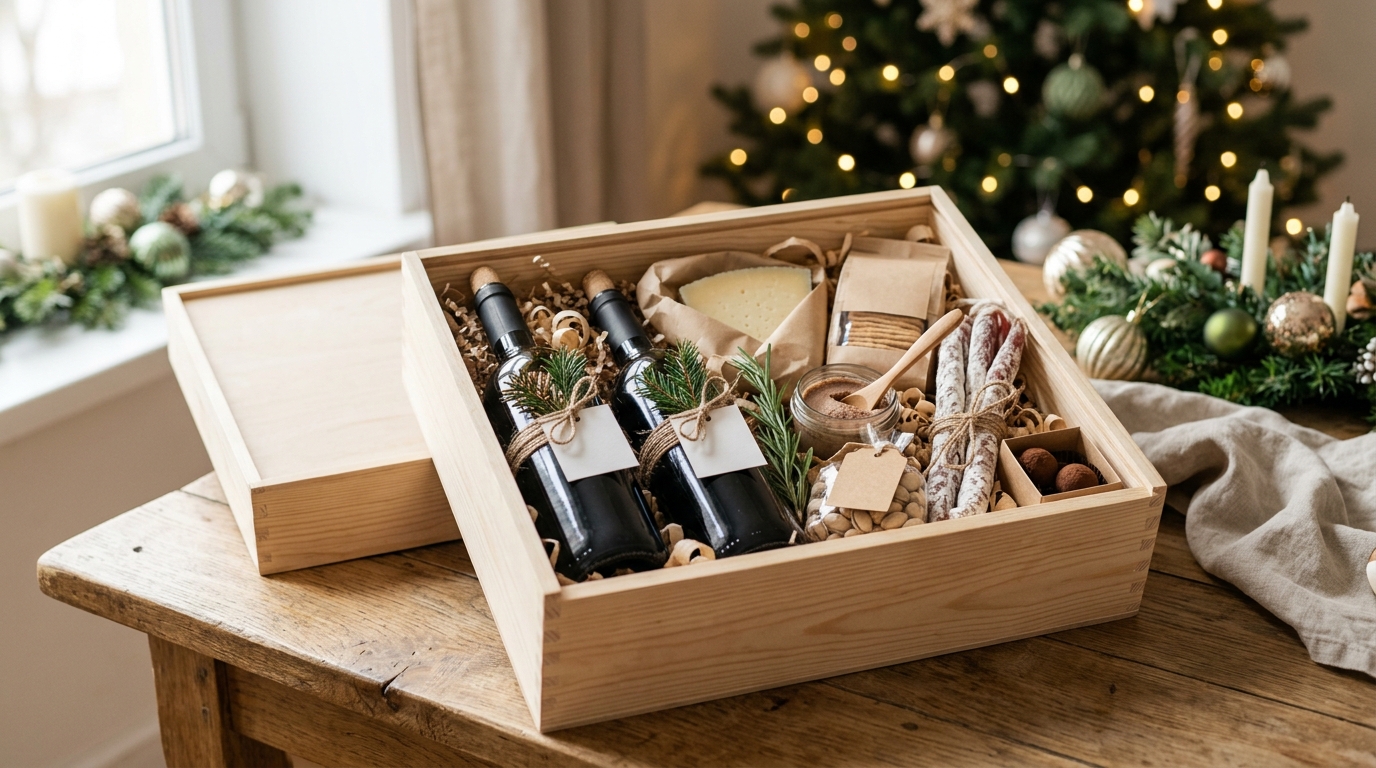
Corporate Christmas hamper gifting has evolved in recent years, leaving behind traditional cellophane-wrapped baskets to make way for presentations that reflect company values, environmental commitment, and attention to detail. Choosing original Christmas gift hampers for employees involves not only selecting gourmet or innovative products, but also paying close attention to the outer container. The packaging acts as the first impression and, when strategically designed, can endure well beyond the holiday season, serving as a lasting reminder of the bond between the company and its team.
Key takeaways
- Wooden packaging adds significantly higher perceived value to Christmas hampers, enhancing the recipient's unboxing experience.
- Reusing the container turns a year-end expense into a durable item that prolongs the visibility of the employer brand.
- Choosing FSC-certified materials communicates a genuine commitment to corporate sustainability.
In the 2026 business landscape, sustainability and the post-holiday utility of packaging are decisive factors when assembling a corporate gift. Using wooden containers to present these hampers brings a premium character and invites reuse in the home or office, giving the packaging a second life that single-use cardboard or plastic simply cannot offer.
Why wooden packaging makes all the difference
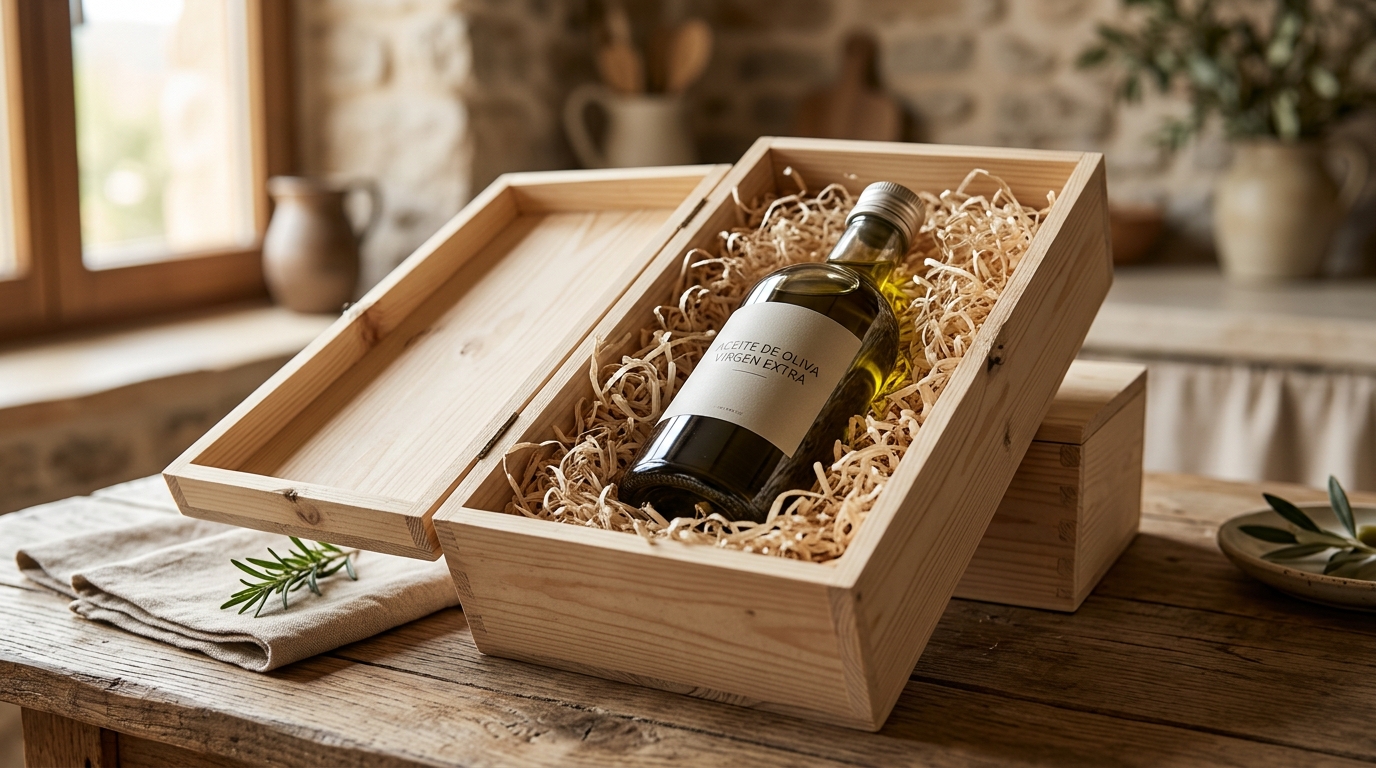
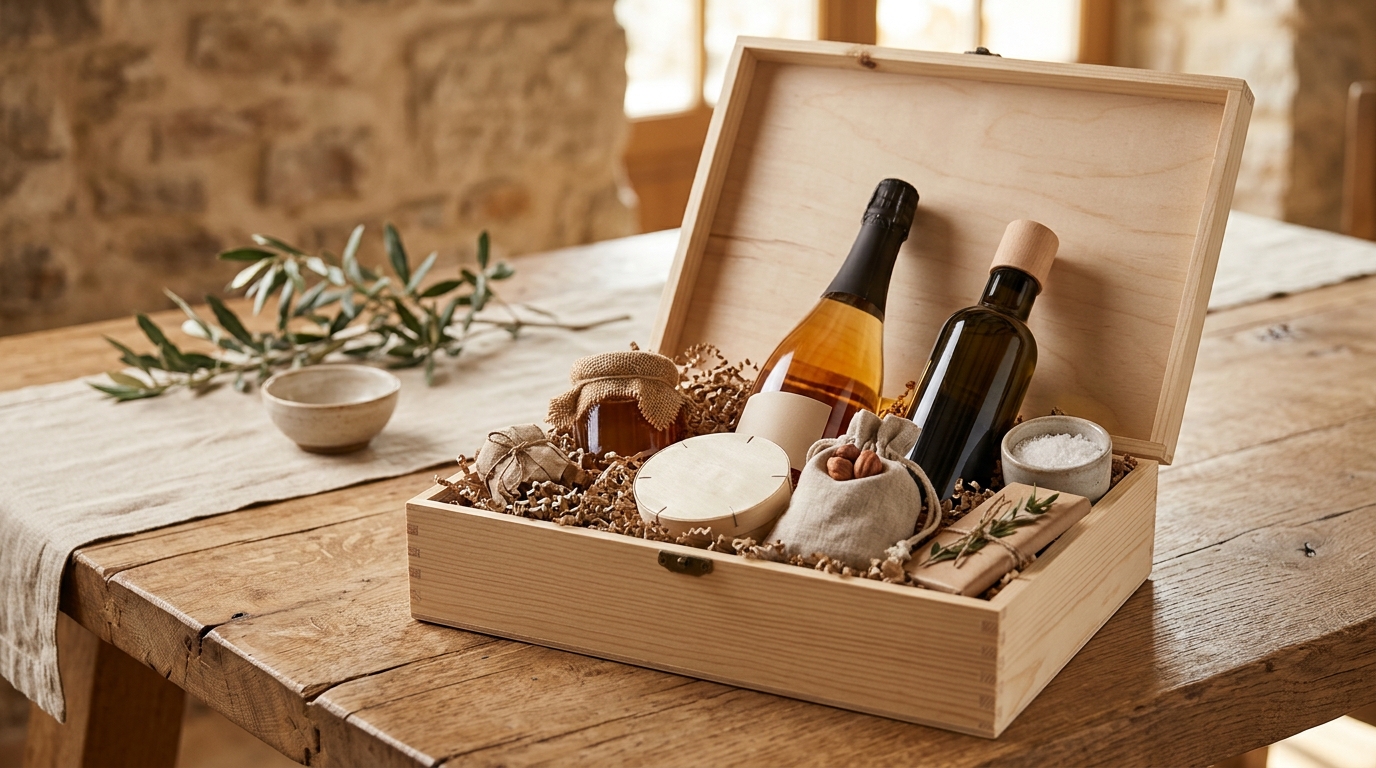
When the goal is to design original Christmas hampers, the material chosen for the container sets the overall tone of the gift. Wood conveys solidity, tradition, and warmth—qualities that align perfectly with the spirit of year-end celebrations. Furthermore, its structural rigidity is essential when shipping wine bottles, glass jars, or delicate items, ensuring that the gift arrives in pristine condition in the employee's hands.
Key fact
Consumer perception studies indicate that gifts presented in wood are perceived to have significantly higher economic value, even when the contents are identical to those of a hamper presented in standard cardboard.
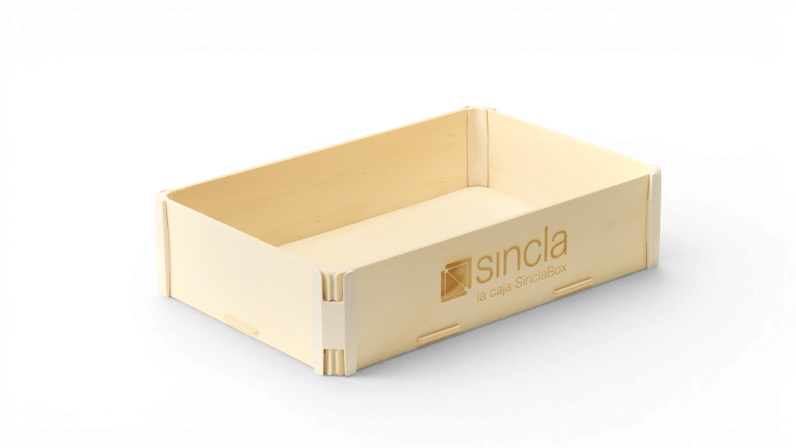
Beyond mechanical protection, wood offers an ideal surface for applying various finishing techniques that reinforce corporate identity. From a rustic, natural style to more polished and contemporary finishes, this material adapts to the aesthetic of any brand. In this context, opting for boxes engraved with the company logo is a common strategy to transform the container into a decorative or storage piece where the brand remains visible over time.
Criteria for designing an original corporate gift hamper
Creating original Christmas hampers for employees requires careful planning. It is not enough simply to select interesting products; the way they are arranged inside the container is crucial. Below are key elements to consider during the hamper design process:
-
Brand consistencyThe style of the container should reflect corporate values (minimalist, classic, eco-friendly).
-
Dimensions and proportionsTailoring the box size to the volume of the products prevents using excessive void fill and improves presentation.
-
Filling materialReplacing polystyrene with natural wood excelsior or shredded kraft paper elevates aesthetics and respects the environment.
-
Surprise factorIncorporating internal dividers or tiered levels upon opening the box enriches the recipient's unboxing experience.
A common mistake is calculating the box dimensions solely based on the total volume of items, without accounting for the space needed to keep them from colliding, especially when bottles are included. For this reason, planning the internal layout is a critical step in packaging design.
Materials and wood types for corporate boxes
The term "wooden box" encompasses various materials, each with unique characteristics regarding strength, weight, and appearance. Understanding the general options available on the market makes it easier to select the right fit for your budget and the hamper's weight.
| Material | Main characteristics | Ideal use in gift hampers |
|---|---|---|
| Solid wood (pine/poplar) | High strength, visible natural grain, rustic and premium appearance. | Heavy hampers, premium wine selections, or gourmet charcuterie. |
| Plywood | Excellent dimensional stability, lightweight, warp-resistant, striped layered edges. | Medium-sized hampers, modern and clean aesthetics, varied tech or gourmet gifts. |
| MDF (Medium-density fibreboard) | Very smooth surface, no knots, medium weight, more cost-effective. | Surfaces that require sharp full-colour printing or complete lacquered finishes. |
Regardless of the material selected, it is advisable to ensure that it comes from sustainably managed forests, verified by international certifications. This not only complies with growing European regulations regarding packaging, but also conveys a clear message of environmental responsibility to employees.
Customisation techniques to reinforce brand image
Customisation is what transforms a standard wooden box into an effective employer branding tool. To achieve truly original employee Christmas hampers, it is worth going beyond a simple logo sticker. Marking techniques on wood deliver durable, refined results.
- Laser engraving: The most popular technique for wood. It lightly burns the surface to create a dark relief that will not fade over time. Ideal for logos, short messages, or dates, offering an understated, natural appearance.
- Screen printing: Allows flat colour inks to be applied directly onto the wood. Useful if the corporate logo strictly relies on specific Pantone shades for brand recognition. Works best on smooth surfaces like plywood.
- Pad printing: Suitable for printing on irregular surfaces or fine details, though less common on large wooden surfaces.
- Hot stamping or heat branding: Uses a heated die, sometimes with metallic foil (gold, silver, copper), to indent the design into the wood. Delivers a high-end luxury feel, perfect for premium cases or corporate anniversaries.
For companies seeking a temporary or versatile solution, an alternative is to customise wooden boxes with labels or cardboard belly bands (sleeves) that wrap around the package to add a holiday and corporate touch, leaving the wooden box clean once removed for future use in the home.
Timeless messaging
If you want the box to be reused in the employee's home (for instance, as a sewing kit, toolbox, or magazine holder), avoid engraving overly corporate or dated messages ("Merry Christmas 2026"). A subtle, elegant logo in a corner encourages long-term reuse much more effectively.
The packaging life cycle: beyond 25 December
The primary advantage of investing in a rigid, well-crafted container is its extended lifespan. Packaging designed from the outset as a practical object aligns naturally with circular economy principles. This approach dramatically cuts down the volume of waste generated during the Christmas season.
The best packaging design is one that is simply too useful and beautiful to throw into the recycling bin.
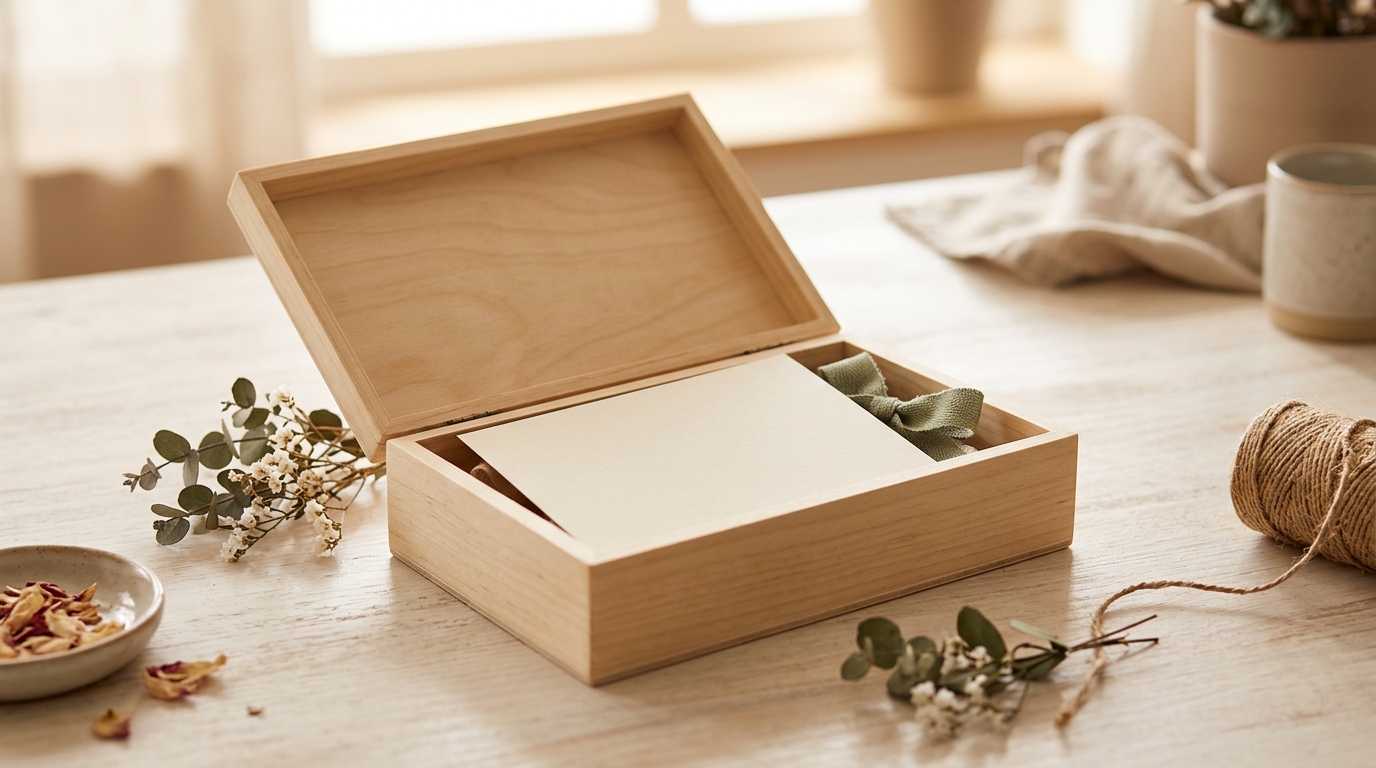
Many organisations take advantage of redesigning their year-end gifts to standardise their packaging criteria. By establishing a standard based on sustainable materials, the same supplier and style can be used year-round for other corporate purposes. For instance, by adjusting dimensions and internal layout, the same box style can serve as a welcome pack for new hires or to present gifts at special events. It also serves as inspiration when designing boxes to present gift cards and experiences, giving an intangible gift a tangible physical presence.
Mistakes to avoid when assembling a corporate hamper
When putting together original Christmas hampers for your team, it is easy to overlook details that can compromise the final result. One of the most common issues is inadequate internal protection. A wooden box is rigid and, unlike corrugated cardboard, does not absorb shock. As a result, placing glass bottles inside without dividers (wooden or cardboard inserts) or sufficient protective cushioning (wood excelsior) creates a significant risk of breakage during transit.
Watch out for shipping and weight
The combined weight of the products and the wooden box can drive up shipping costs if the hampers need to be dispatched directly to remote employees' homes. Calculating the final volumetric weight before finalising the project budget is critical.
Another frequent misstep is excessive branding. Covering every surface of the box with company logos, slogans, and corporate colours can backfire. Employees may feel hesitant to keep and display an item in their home that feels like overt promotional merchandise. Subtlety is the key to ensuring the packaging finds a lasting place in a domestic setting.
Conclusion
Designing original Christmas gift hampers for employees is an excellent opportunity to show appreciation for your team while reinforcing core corporate values like quality and sustainability. Choosing reusable containers made from certified wood and tastefully customised transforms a seasonal gesture into a lasting gift. Attention to detail—from dialling in the right dimensions to selecting the proper branding technique—ensures a memorable unboxing experience that strengthens company connection long after the holidays are over.