Bubble Wrap: Essential Protection in the World of Packaging Bubble wrap, or bubble plastic, is an omnipresent packaging material known for its ability to protect fragile objects during transport and storage. From its curious invention in the mid-
Bubble Wrap: Essential Protection in the World of Packaging
Bubble wrap, or bubble plastic, is an ubiquitous packaging material known for its ability to protect fragile items during shipping and storage. From its curious invention in the mid-20th century to its evolution into various variants and applications, it has proven to be a versatile and effective solution for a wide range of industries and domestic users. This material, composed of a plastic sheet with encapsulated air bubbles, acts as a cushion that absorbs impacts, vibrations, and external pressures, thus safeguarding the integrity of products.
The essential
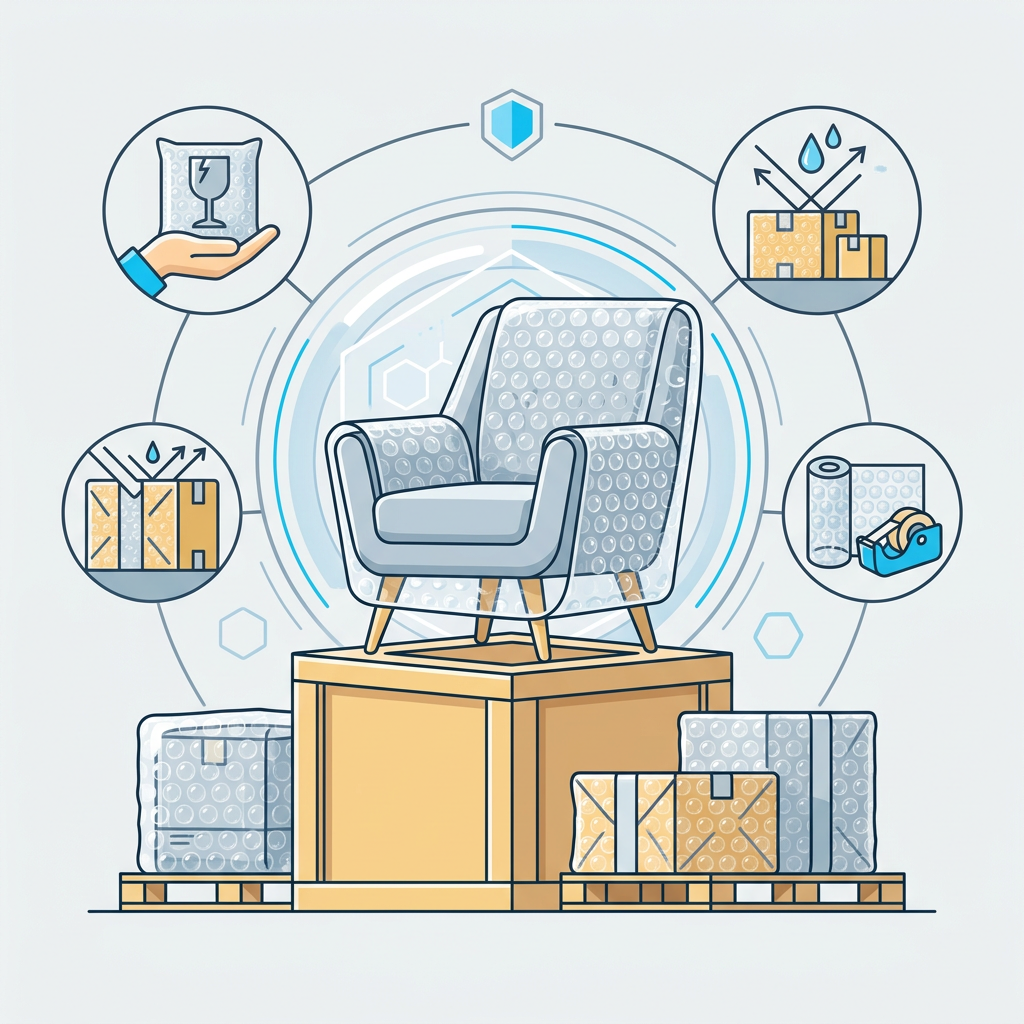
Bubble wrap protects fragile items through air chambers that cushion impacts.
There are various types depending on bubble size, material (polyethylene, recycled), and properties (anti-static, barrier).
Proper use involves wrapping, filling, and securing, maximizing protection and efficiency.
Alternatives include more sustainable options like kraft paper or biodegradable fillers.
History and Evolution: From Curtain to Protection
The invention of bubble wrap is a fascinating case of serendipity in innovation. In 1957, engineers Alfred Fielding and Marc Chavannes were attempting to create a three-dimensional textured wallpaper by sealing two shower curtains to form air bubbles. Although the wallpaper was unsuccessful, they realized that their creation had enormous potential as a packaging material. In 1960, they founded Sealed Air Corporation and registered the trademark Bubble Wrap. What began as an interior design attempt quickly transformed into an indispensable solution for shipping sensitive products.
Since then, the basic design has remained, but manufacturing materials and techniques have evolved to offer greater strength, flexibility, and sustainability. Variants with different bubble sizes, special treatments, and plastic compositions have been developed, adapting to the growing demands of the global market and environmental concerns.
Types and Characteristics of Bubble Wrap
Choosing the right type of bubble wrap is crucial for optimal protection. Not all products require the same level of cushioning, nor the same additional properties. The main types and their characteristics are detailed below:
By Bubble Size
The size of the bubbles is a determining factor in the cushioning capacity and the volume of protection offered by the material. Generally, two main categories are distinguished:
Small bubble (approx. 10 mm diameter). Ideal for small, light, and low-volume items. Provides uniform cushioning and adapts well to irregular shapes.
Large bubble (approx. 20-30 mm diameter). Offers greater cushioning and resistance for large, heavy, or very fragile items. It is more effective for filling empty spaces in larger boxes.
Medium bubble (intermediate sizes). A compromise between the previous two, suitable for a wide variety of products.
By Material and Additional Properties
Beyond bubble size, bubble wrap can incorporate special features that make it ideal for specific applications:
Standard (Polyethylene): The most common variant, manufactured from low-density polyethylene (LDPE). It is transparent, flexible, and offers good general protection.
Anti-static: Designed to protect sensitive electronic components. Contains additives that dissipate static electricity, preventing damage to integrated circuits and other devices. It is recognized by its characteristic pink or blue color.
With nylon barrier: Incorporates a co-extruded nylon layer that improves air retention, making the bubbles more durable and resistant to deflation. This extends the life of the cushioning, ideal for prolonged storage or long-distance shipping.
Kraft laminated: A layer of kraft paper is adhered to the air bubble to provide additional protection against abrasions and punctures. It provides greater rigidity and a more "natural" or premium aesthetic.
With adhesive surface: Some variants have a self-adhesive side that allows the packaging to be fixed directly to the product, ideal for small or irregular parts.
Recycled or Biodegradable: More sustainable options manufactured with post-consumer recycled plastics or biodegradable materials. Although their performance may vary slightly, they represent a significant advance in reducing the environmental impact of packaging.
Practical tip
For very fragile items like glass or ceramics, consider combining bubble wrap with other filling materials or double or triple-wall corrugated cardboard boxes for multi-layer protection.
Available Formats
Bubble wrap is sold in various presentations to adapt to different packaging needs:
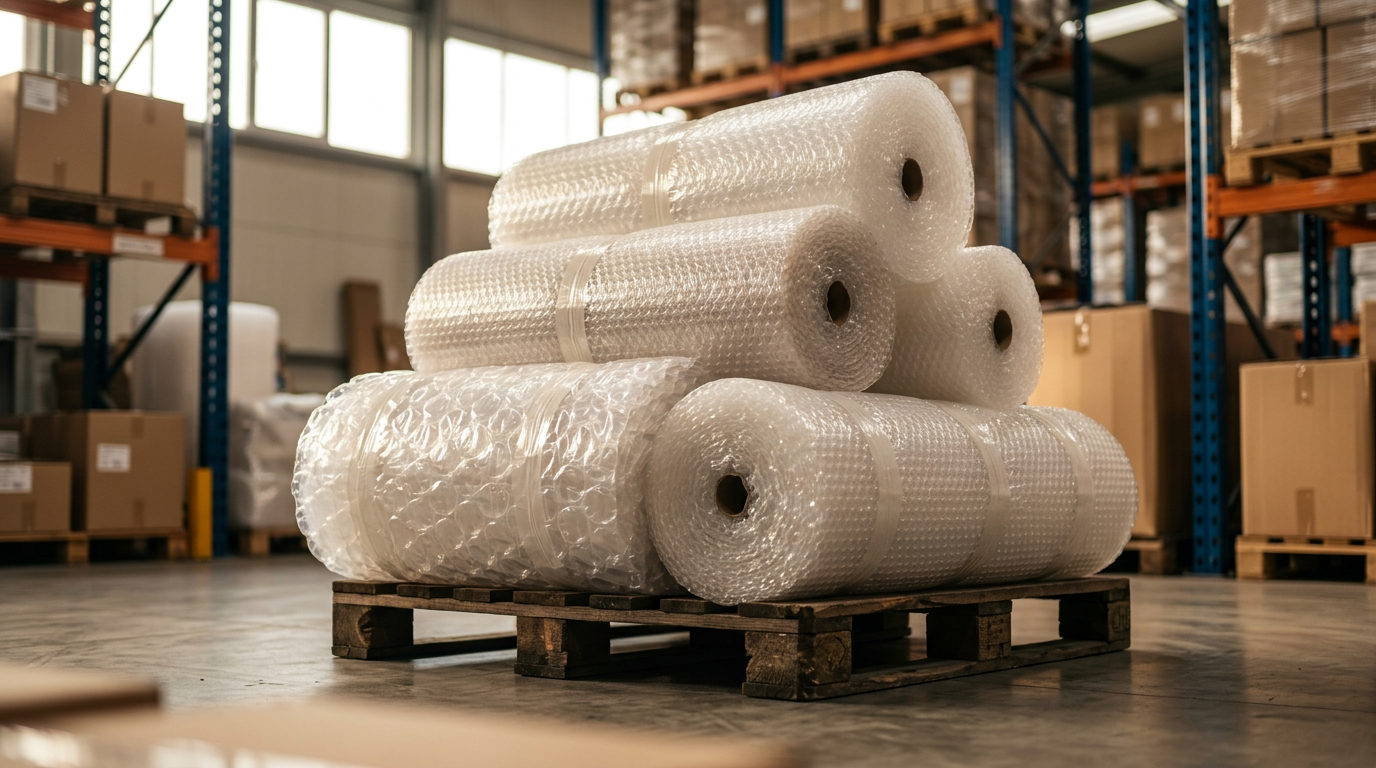
Rolls: The most common format, available in various widths and lengths. Ideal for wrapping objects of various sizes.
Bags: Pre-made bubble wrap bags, with or without adhesive closure, perfect for packaging small items quickly and efficiently.
Sheets: Pre-cut sheets of different sizes, useful for protecting flat objects or as dividers.
Dispensers and air machines: For large volumes of packaging, there are machines that inflate bubble wrap on demand, optimizing storage space and reducing shipping costs.
Common Applications of Bubble Wrap
The versatility of bubble wrap makes it an indispensable tool in a multitude of scenarios, both commercial and domestic:
E-commerce and shipping: Protects products such as electronics, cosmetics, books, clothing, and decorative items during shipping, ensuring they arrive intact at their destination.
Moving: It is essential for packing glassware, crockery, artwork, mirrors, and any object susceptible to breakage.
Storage: Protects delicate objects from bumps, dust, and moisture in warehouses or storage rooms.
Electronics industry: Anti-static bubble wrap is vital for protecting sensitive electronic components and devices.
Crafts and hobbies: Ideal for protecting delicate creations, models, or instruments during handling or transport.
Interesting fact
The texture of bubble wrap can vary depending on the manufacturer and use, from a smooth surface to a slightly rough one to improve friction and prevent slipping.
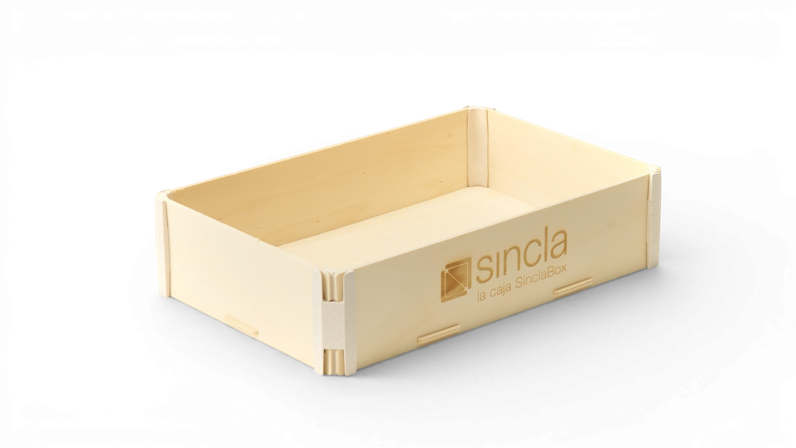
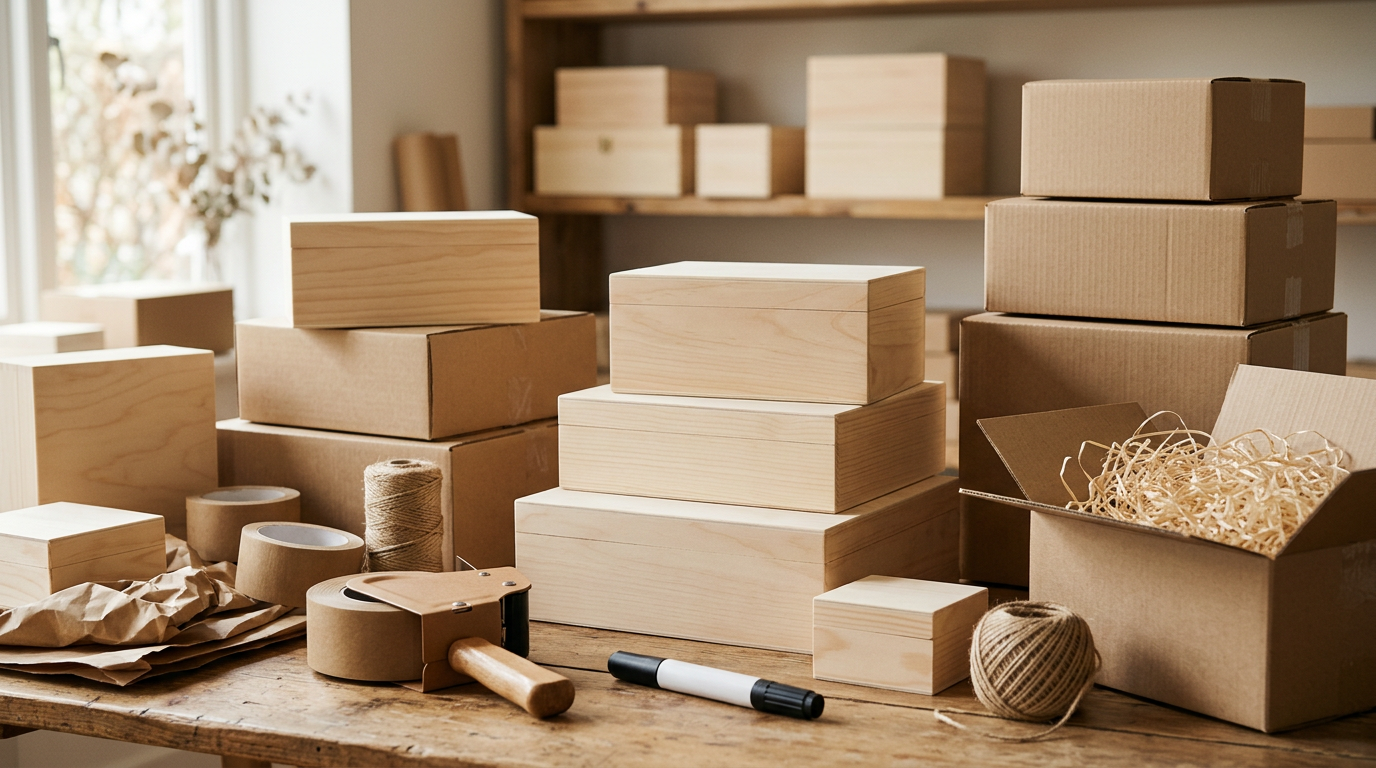
Custom wooden boxes
Discover our wooden boxes for packaging, hospitality, events and more. Own manufacturing and full customization.
Improper use of bubble wrap can significantly reduce its effectiveness. Follow these steps to ensure maximum protection:
Choose the right bubble size. Small bubble for small and light objects, large bubble for bulky and heavy items.
Bubble orientation. The bubbles should face the object. This allows the encapsulated air to better absorb impacts and prevents the object's surface from being scratched by the flat side of the plastic.
Wrap the object completely. Use enough layers to cover all surfaces. For very fragile objects, two or three layers are recommended.
Secure the wrapping. Use adhesive tape to secure the bubble wrap around the object, preventing it from unraveling or shifting during transport.
Fill empty spaces. Once the object is in the box, use more bubble wrap (or any other filling material such as packing peanuts, crumpled kraft paper, etc.) to fill any empty spaces. This prevents the object from moving inside the box, which is a common cause of damage.
Consider double boxing. For extremely fragile or valuable objects, the "double box" method provides an additional layer of protection. Wrap the object in bubble wrap, place it in a small box, and then place that small box inside a larger box, filling the space between them with more bubble wrap.
Common mistakes
Don't overuse bubble wrap thinking "more is better." Excess can unnecessarily increase the package's volume and weight. The key is strategic application and void filling.
Sustainability and Alternatives
Despite its effectiveness, traditional bubble wrap, being plastic, has raised environmental concerns. This has driven the development of more sustainable options and the search for alternatives:
Sustainable Bubble Wrap Options
Made with recycled material: More and more manufacturers offer bubble wrap produced with a percentage of post-consumer or post-industrial recycled plastic. This reduces reliance on virgin raw materials.
Biodegradable/Compostable: Although less common and often more expensive, variants exist that decompose in the environment or in industrial composting facilities. It is crucial to verify certifications to ensure their authenticity.
Reusable: Bubble wrap can be reused multiple times if handled carefully. Storing it correctly, without crushing it, will prolong its useful life.
Alternatives to Bubble Wrap
For those looking to reduce plastic use entirely, there are several alternatives:
Alternative Material
Advantages
Disadvantages
Recommended Uses
Crumpled Kraft Paper
Recyclable, biodegradable, economical, versatile.
Less cushioning for direct impacts, generates dust.
Requires specific cutting and folding for wrapping.
Dividers, corner protection, as a second box.
Innovation in packaging seeks to balance product protection with environmental responsibility, exploring new frontiers in materials and design.
Considerations When Choosing an Alternative
When opting for an alternative, it is important to evaluate:
Product fragility level: How susceptible is it to breakage or damage?
Shipping distance and conditions: Will the package experience many bumps or vibrations?
Budget: Some alternatives may be more expensive.
Brand image: Does the alternative align with the company's sustainability values?
Recycling availability: Ensuring that the material can be recycled at the destination.
In summary, bubble wrap remains a highly effective packaging solution valued for its protective capabilities. With growing environmental awareness, the industry is moving towards more sustainable versions and exploring innovative alternatives. The key for users is to understand the characteristics of each type and apply them intelligently to ensure product safety and minimize ecological impact.
Frequently Asked Questions
Is bubble wrap recyclable?
Yes, bubble wrap made from low-density polyethylene (LDPE) is generally recyclable. It is identified by plastic resin code number 4. However, not all recycling plants accept it due to its volume and processing difficulty. It is advisable to consult with local recycling services for specific community guidelines.
What is the difference between standard and anti-static bubble wrap?
Standard bubble wrap protects against physical impacts, while anti-static, typically pink or blue, incorporates additives that prevent the accumulation of static electricity. The latter is crucial for protecting sensitive electronic components that could be damaged by an electrostatic discharge. For common items, standard bubble wrap is sufficient.
Should I use the bubbles facing inwards or outwards?
It is always recommended that the bubbles face the item being wrapped. This orientation allows the air chambers to better absorb impacts directly on the product's surface, acting as the desired protective cushion.
How much bubble wrap should I use?
The amount of bubble wrap depends on the fragility and size of the item. For small and moderately fragile items, 1 or 2 layers are sufficient. For large, heavy, or very fragile items, 2 to 3 layers of large bubble wrap are recommended, in addition to using it to fill voids within the box. The goal is for the item not to move inside the outer packaging.
Are there eco-friendly alternatives to bubble wrap?
Yes, there are several eco-friendly alternatives, such as crumpled kraft paper, biodegradable packing peanuts (made from starch), paper air pillows, or corrugated cardboard-based void fill solutions. These options aim to reduce environmental impact without compromising protection, although it's important to evaluate their suitability for each product type.