Custom E-commerce Boxes: A Complete Guide to Choosing the Perfect Packaging
The first physical contact a customer has with an online store happens when they receive their order. Custom e-commerce boxes have become an essential tool for standing out, conveying brand values, and ensuring products arrive in perfect condition, creating a memorable unboxing experience that drives customer loyalty.
Key Takeaways
- Custom packaging significantly enhances the product's perceived value.
- The choice of material (cardboard, wood, combinations) must align with the nature of the item and brand identity.
- Printing techniques and finishes determine the durability and visual impact of the design.
- Sustainability is a factor increasingly demanded by consumers in their online purchases.
The evolution of e-commerce has transformed packaging from a simple protective container into a direct communication channel. Understanding how to select the right features for custom e-commerce boxes is key to optimizing logistics costs and maximizing impact on the end customer.
Why Invest in Custom Packaging for E-commerce?
In a saturated digital market, differentiation is a constant challenge. Generic packaging fulfills its protective role, but it wastes a unique branding opportunity. A thoughtful design, tailored to the product's dimensions and featuring distinctive visual elements, elevates the shopping experience and reduces return rates by minimizing damage during transit.
The Power of Unboxing
The unboxing experience not only influences the customer's initial perception, but it also drives organic content creation on social media. If the packaging impresses, consumers are more likely to share photos of the product they received.
Key Factors When Choosing E-commerce Boxes
Selecting the right packaging requires analyzing multiple variables. There is no one-size-fits-all solution; every business must evaluate its specific needs based on product type, shipping volume, and customer profile.
-
Protection and Dimensions
The size must fit the product closely to prevent movement inside, reducing the need for void fill materials. -
Materials and Durability
Depending on the weight and fragility of the item, a specific thickness and material type will be required to withstand logistical transit. -
Customization Options
From exterior and interior printing to special finishes that reinforce corporate identity. -
Logistics Optimization
Self-assembling boxes or designs that streamline the pick and pack process, saving time in the warehouse.
Common Materials in Custom Packaging
The choice of material impacts both product protection and final aesthetics. The most common materials offer distinct advantages depending on the item's weight, fragility, and market positioning.
Corrugated Cardboard and Kraft
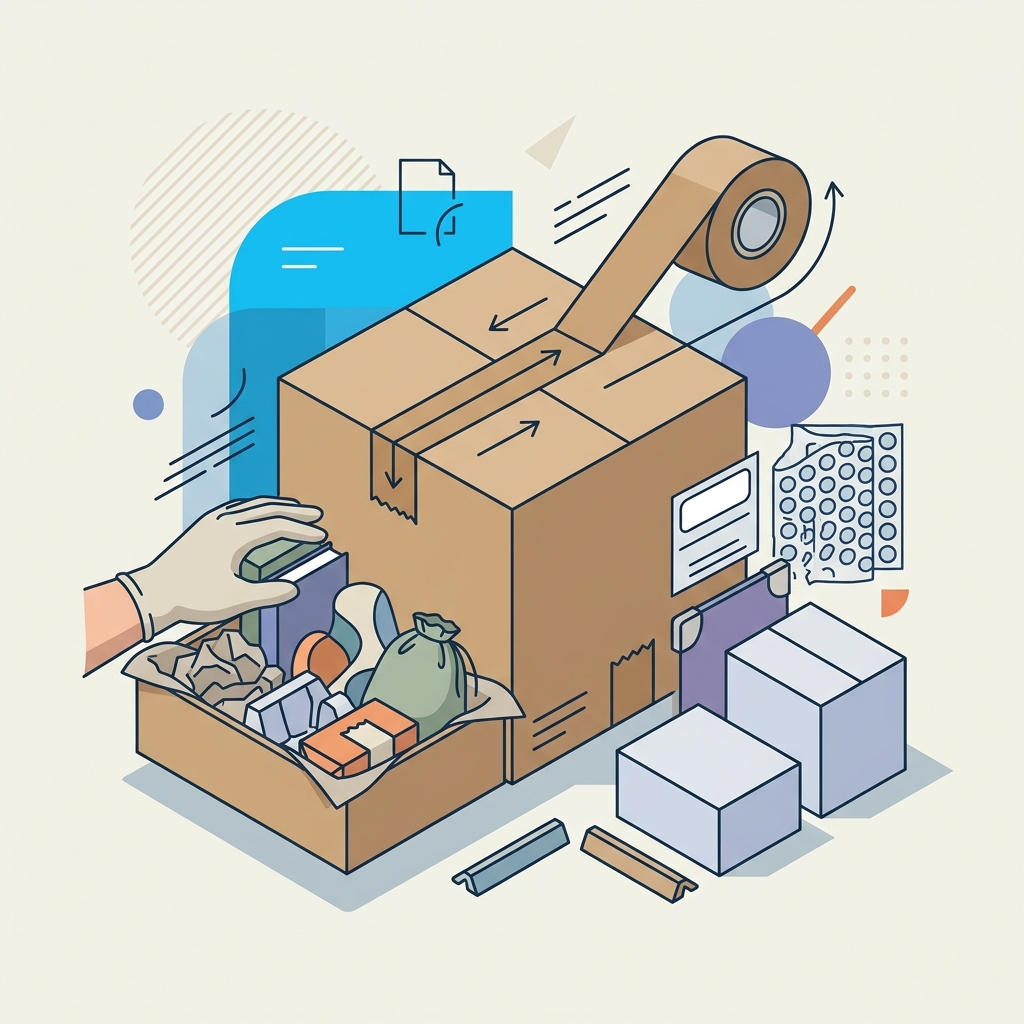
This is the go-to material for e-commerce. Its fluted layer structure provides high resistance to impact and compression, making it ideal for most shipments. The Kraft finish, with its natural brown tone, conveys an eco-friendly and minimalist look that is highly valued today.
MDF and Lightweight Plywood
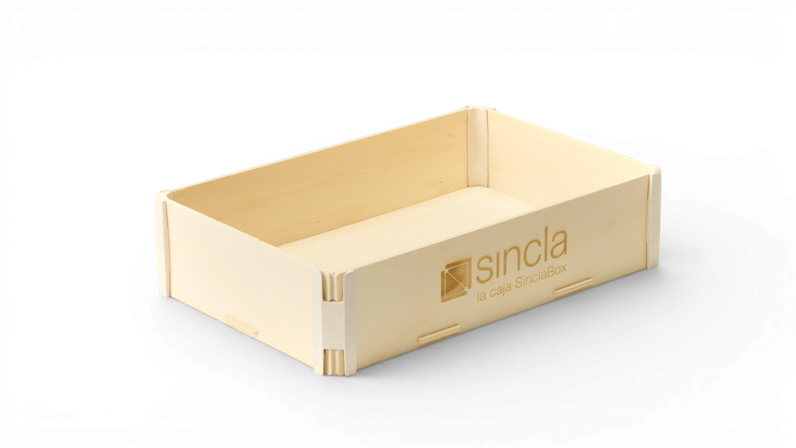
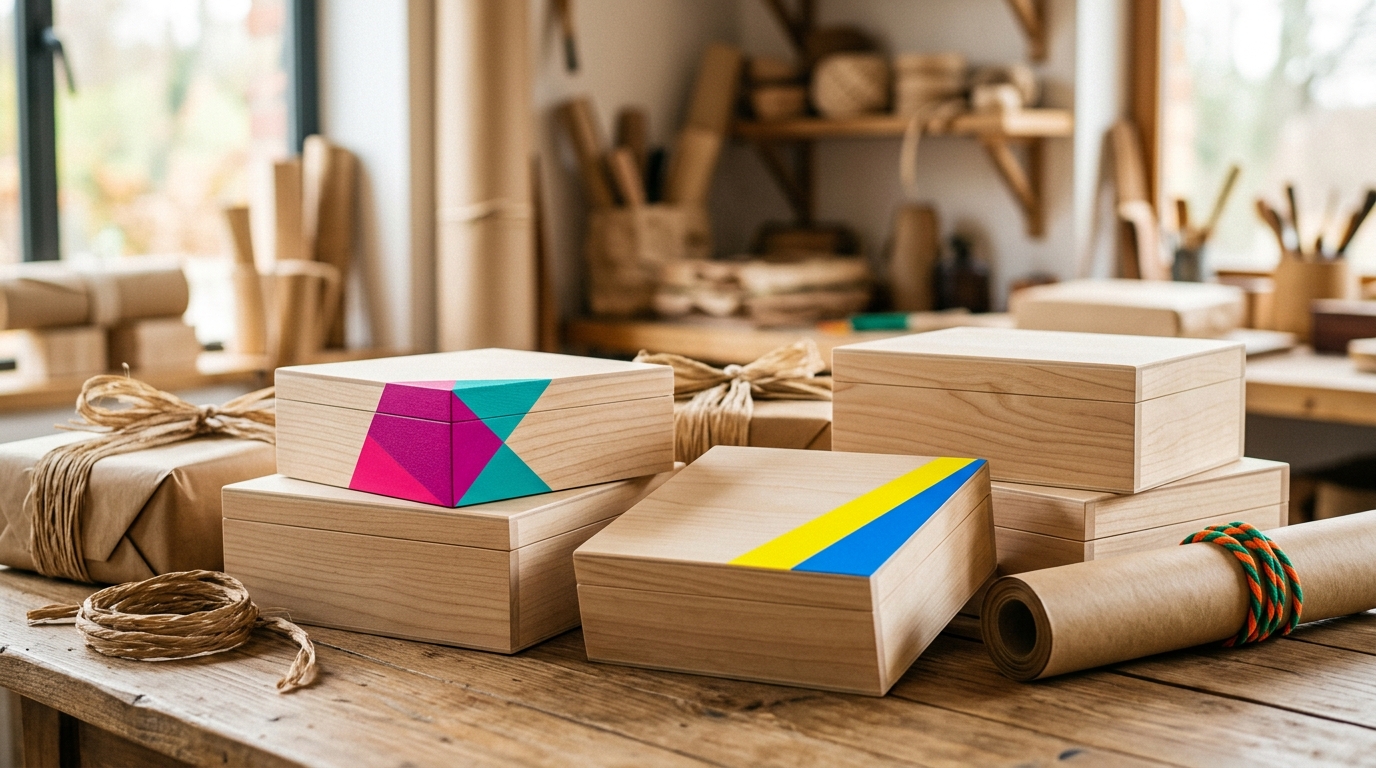
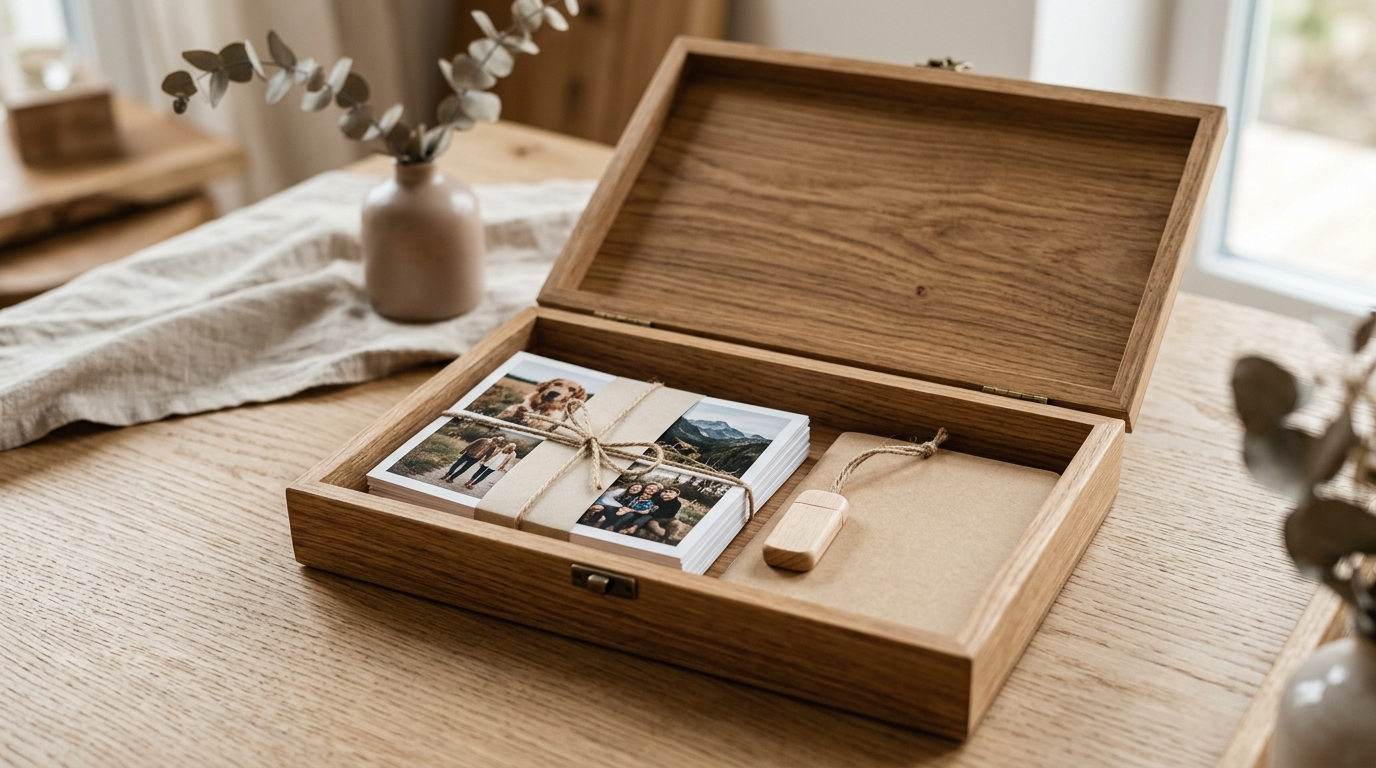
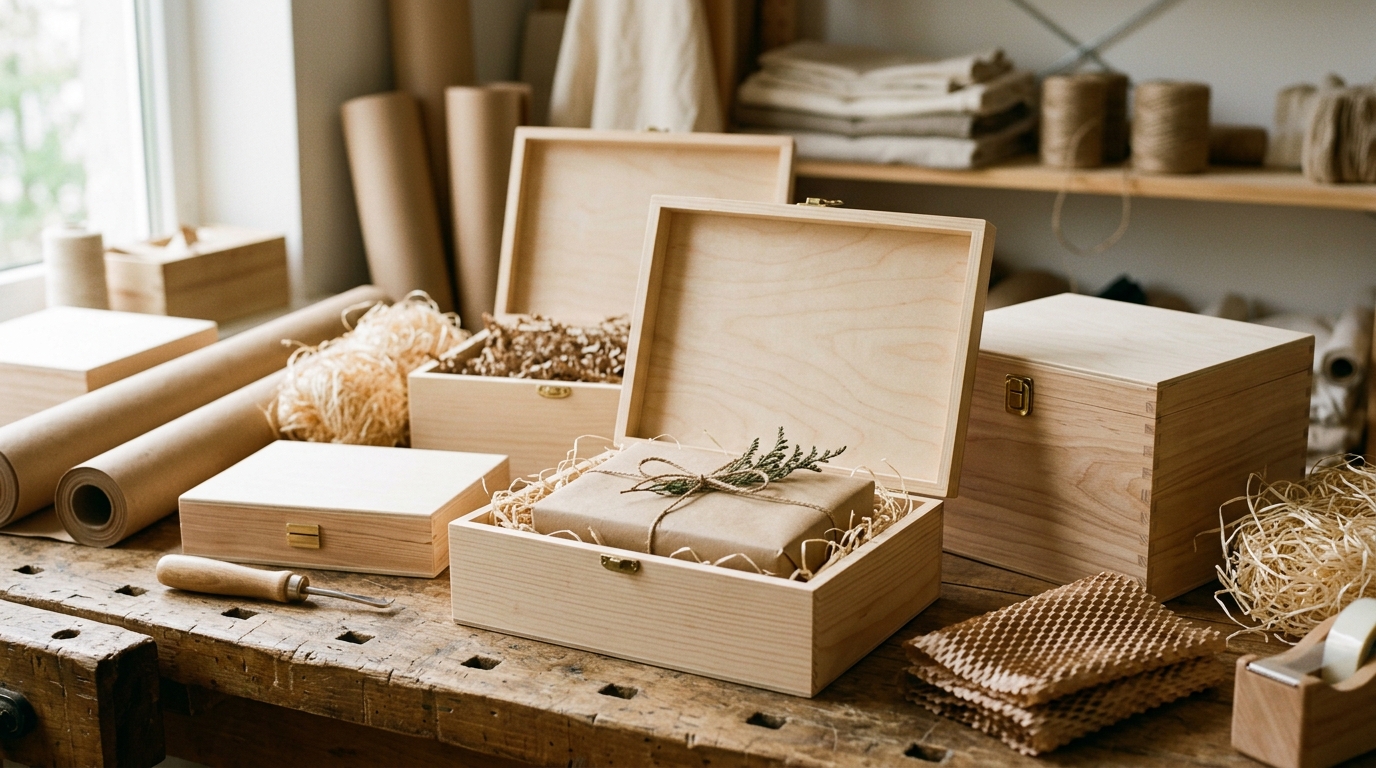
For premium products or items requiring more rigid, reusable packaging, engineered wood options are excellent choices. They are often used in custom wooden boxes for delicate items, exclusive beverages, or gourmet goods. These materials deliver superior strength and a presentation with high perceived value.
Certified Natural Wood (FSC)
Using wood sourced from sustainably managed forests combines luxury with environmental responsibility. Solid or slatted wood is common in high-end packaging, where the box itself becomes part of the product or a keepsake for the customer.
Customization Techniques and Finishes
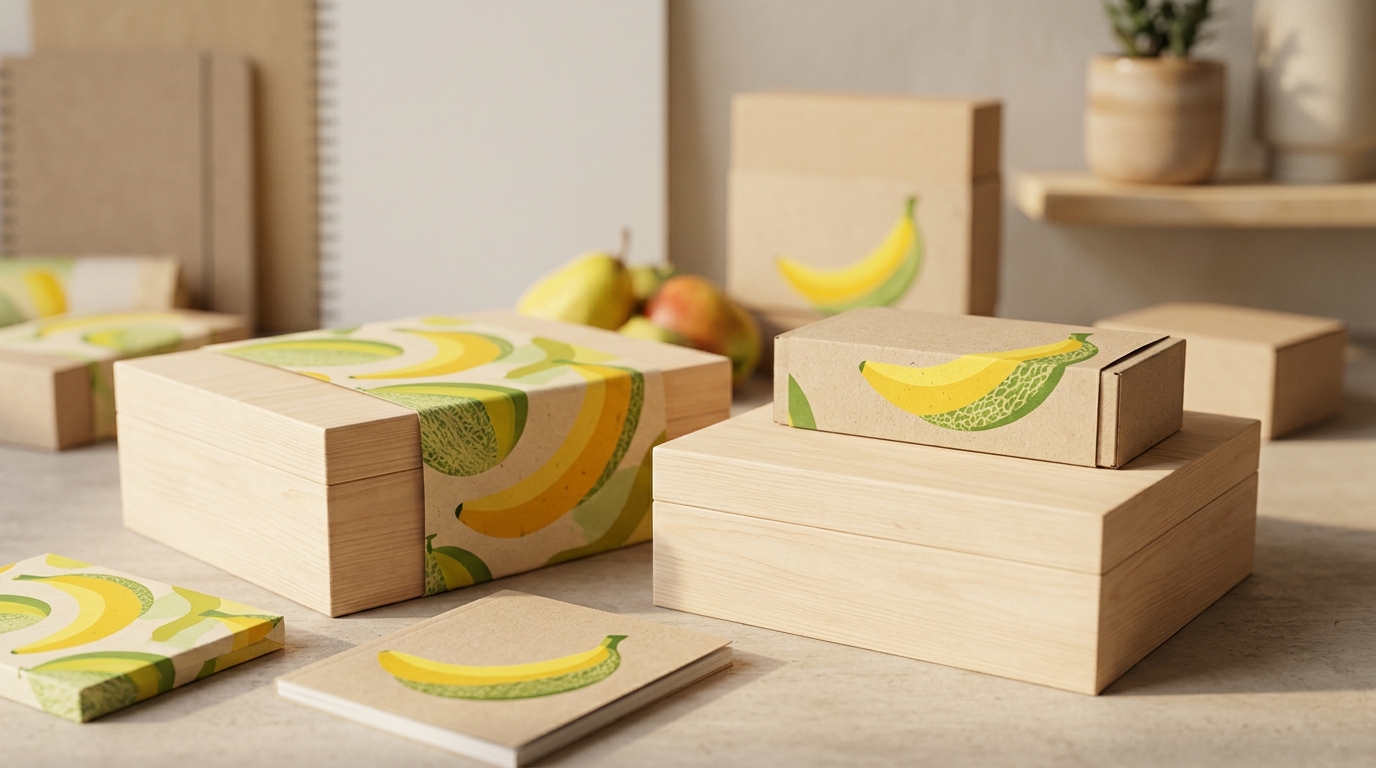
Customizing e-commerce boxes goes beyond simply adding a logo. Printing techniques and finishes define the visual and tactile quality of the packaging.
| Technique | Main Characteristics | Recommended Materials |
|---|---|---|
| Flexography | Cost-effective for large volumes, standard quality, water-based inks. | Corrugated cardboard, Kraft. |
| Digital Printing | Ideal for short runs, high photographic quality, no plate costs. | Smooth cardboard, coated MDF. |
| Screen Printing | Solid, vibrant colors, excellent opacity, requires screens per color. | Wood, cardboard, plywood. |
| Laser Engraving | Premium finish, permanent, tactile relief, natural burned contrast. | Natural wood, plywood, MDF. |
| Hot Stamping / Foil Stamping | Application of metallic foils (gold, silver) using heat and pressure. | Premium cardboard, smooth surfaces. |
Interior Printing
Printing the inside of the box is a growing trend that surprises customers when opening the package, while keeping a discreet exterior to prevent theft during transit, especially for high-value items.
Sustainability: An Essential Requirement
In 2026, sustainability is no longer optional—it is a requirement of both the market and European regulations. Brands must prioritize packaging that minimizes environmental impact by choosing recycled, recyclable, or compostable materials.
Reducing excess packaging (the "air" shipped in oversized boxes) not only lowers carbon footprints, but it also optimizes dimensional weight shipping costs. Furthermore, using eco-friendly inks (water- or soy-based) and eliminating single-use plastics in void fill are essential practices.
Sustainable packaging communicates a brand's environmental commitment and connects emotionally with consumers who are increasingly conscious of their ecological footprint.
Structural Design: Formats and Closures
The structure of the box impacts product safety as well as warehouse efficiency. Self-assembling boxes, which do not require additional adhesive tape to build, significantly speed up the order fulfillment process. For gift item shipments, such as those analyzed in premium design and packaging, magnetic closures or reinforced tab closures are often used to enhance presentation.
There are specific formats tailored to different industries. For example, boxes with interior locking tabs are perfect for cosmetics or jewelry, while boxes with modular dividers are ideal for product sets or gourmet tastings.
The Importance of Proper Fit
An oversized box not only increases shipping costs, but it also drastically raises the risk of product breakage if proper protective void fill is not used.
Steps to Designing and Ordering Custom E-commerce Boxes
The process of creating the ideal packaging requires planning and collaboration with specialized manufacturers.
- Product Audit. Accurately measure the items, assess their fragility, and determine whether they will ship individually or bundled together.
- Material Selection. Choose between cardboard, wood, or hybrid options based on required durability, product value, and budget.
- Format Definition. Decide if you need a mailer box, a self-assembling box, a separate lid box, or custom structural designs.
- Graphic Design. Prepare the final artwork taking into account printable areas, bleeds, and the limitations of the chosen printing method (flexography, digital, etc.).
- Prototyping. Request physical samples to test assembly, product fit, and print quality before mass production.
For businesses looking to explore physical options before placing large orders, many manufacturers offer the option to request a free sample, which is highly recommended for validating dimensions and finishes.