Boxes for Christmas? Order as early as you can: the factory gets overloaded and lead times get longer.Last day to order up to 1,000 boxes: 25 October 2026.See all deadlines
The pink pig in packaging: innovation and package design
Sincla
The universe of unique packaging: understanding the concept of the pink pig In the competitive world of package design and product presentation, the ability to surprise the recipient has become the main driver of innovation. Among the multiple aesthetic currents
The universe of unique packaging: understanding the pink pig concept
In the competitive world of packaging design and item presentation, the ability to surprise the recipient has become the main driver of innovation. Among the multiple aesthetic currents, visual metaphors, and differentiation strategies adopted by unboxing experience creators, a concept as striking as it is specific emerges: the approach popularly known in certain creative circles as the pink pig. This name does not refer literally to the meat industry, but rather to a disruptive design philosophy that seeks to break away from industrial monotony through unexpected visual elements, bold chromatics, or presentations that defy convention.
The Essentials
The pink pig concept in packaging represents a total break from sober and boring corporate aesthetics.
It combines striking visual elements with noble materials like wood, generating a memorable contrast.
Its main application is found in sectors where the unboxing experience and exclusivity are decisive.
When a buyer receives a package, the first visual and tactile contact completely conditions their perception of the contents. If the wrapping is predictable, the emotion fades even before accessing the product. On the contrary, the incorporation of a disruptive element —a vibrant chromatic tone, an unexpected texture, or an unconventional box format— transforms a simple shipment into a memorable event. Exploring this trend implies understanding how traditional materials, such as wooden boxes, can merge with bold aesthetic proposals to captivate today's consumer.
Origins and philosophy of the surprise factor in design
The visual theory behind this type of proposal stems directly from the need to stand out in environments saturated with stimuli. In the fields of e-commerce and corporate gifts, the standardization of brown cardboard has caused widespread visual fatigue. To counteract this, designers resort to stroke-of-genius effects that act as authentic attention magnets.
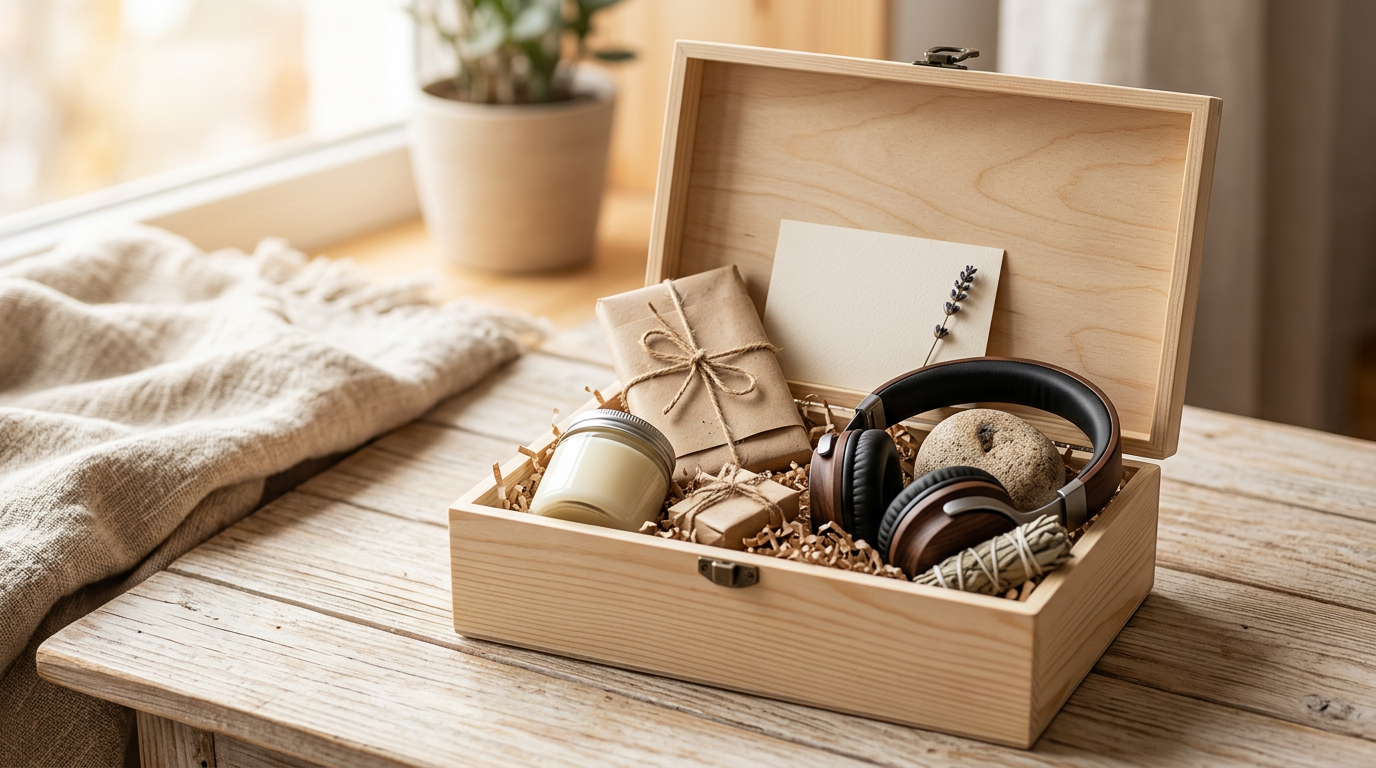
This approach argues that any product, no matter how sober, can benefit from intelligent contrast. For example, a wooden box with minimalist lines and a natural finish acquires a completely new dimension when its interior houses a lining, a printed detail, or an accessory in a vibrant, saturated tone. This duality between the organic rusticity of the material and the modernity of the visual accent generates an aesthetic tension highly valued in contemporary design.
Chromatic contrast
Highly saturated tones work best when applied to small interior details while maintaining a sober and elegant exterior base.
Materials and supports for a memorable presentation
The choice of physical support is essential for any packaging strategy to work on a technical and emotional level. It is not enough to bet on a striking design; the structure must protect the contents and convey solidity. Below, the most common materials in the creation of high-end wrappings that seek this balance are analyzed:
Material
Main advantages
Ideal application
Plywood / natural wood
Maximum durability, premium touch, sustainability, and reusability.
Corporate gifts, select beverages, and collector's editions.
Lined rigid cardboard
Geometric versatility, excellent printing surface, and lightness.
Luxury cosmetics, technology, and eCommerce packaging.
MDF (Fibreboard)
Perfectly smooth finishes, ideal for lacquering and opaque paints.
Presentation cases and display stands.
Wood, in particular, provides a series of irreplaceable tactile advantages. When working with it, it is possible to integrate customization techniques that enhance its natural beauty without masking it. Many people interested in this type of solution often consult a wooden box catalog to evaluate the different formats, hinges, and closures available in the current market.
Custom wooden boxes
Discover our wooden boxes for packaging, hospitality, events and more. In-house manufacturing and full customisation.
To ensure that packaging conveys its own identity or surprises the recipient, various branding and surface treatment techniques are employed. The choice of method depends on both the budget and the base material being worked with.
Laser engraving: Allows burning the wood surface with high precision, achieving a subtle relief and a highly valued artisanal look.
Screen printing: Ideal for applying flat inks or highly saturated corporate colors onto flat wood or cardboard surfaces.
Hot stamping: Uses a metallic foil through pressure and heat to provide intense gold, silver, or metallic color shines.
Use of wood wool and fillers: Employing filler materials in contrasting tones completes the visual experience when opening the lid for the first time.
Design tip
Before commissioning large-scale production, it is very practical to request a free sample or a physical prototype to check how inks react on the chosen wood or cardboard.
Steps to plan packaging with visual impact
Designing packaging that breaks the mold requires a clear methodology. Following a series of structured phases avoids common mistakes in proportion, costs, or logistical functionality.
Define the target audience and occasion. Analyze who will receive the package and what level of surprise is sought based on the event.
Select the main material. Opt for certified wood with responsible forest management seals to guarantee durability and environmental respect.
Establish the contrast palette. Decide which element will act as the design's "pink pig": an interior lining, a printed paper belly band, or a special closure.
Test resistance and transport. Ensure that the outer packaging adequately protects the inner structure during standard logistical processes.
FSCCertified wood
100%Recyclable
3 kgTypical load
Common mistakes when seeking packaging differentiation
In the eagerness to stand out, it is easy to fall into excesses that harm both the product image and the user experience. One of the most common mistakes is saturating the design with too many striking elements at the same time. If the exterior of the box is strident, the interior lacks mystery and the surprise effect disappears completely.
Another common flaw consists of prioritizing aesthetics over functionality. Packaging must be easy to open, store, and transport. If a closure system is excessively complex or fragile, the consumer will experience frustration instead of delight. Likewise, it is important to verify that the applied finishes comply with European regulations regarding inks and materials suitable for contact with different types of merchandise.
Watch out for decorative excess
Less is more. The rule of effective contrast requires the breakthrough element to stand out precisely because the rest of the ensemble maintains an elegant sobriety.
The best packaging is not the one that shouts the loudest, but the one that ensures the recipient remembers the experience long after opening the box.
Ultimately, integrating bold creative concepts into packaging design —whether through unexpected color combinations or the intelligent use of personalized wooden boxes— completely transforms the relationship between the object and the person receiving it. The key lies in maintaining the balance between the elegance of noble materials and the freshness of details that defy convention.
Frequently Asked Questions
What does the pink pig concept applied to packaging actually mean?
It is used as a metaphor to describe that unexpected, disruptive, and striking element within a packaging design that breaks visual monotony and immediately captures the consumer's attention.
Is a modern and striking design compatible with eco-friendly materials?
Totally. In fact, current trends combine sustainably certified wood and recycled papers with cutting-edge printing techniques and environmentally friendly inks.
What types of projects benefit most from this type of presentation?
Limited edition packaging, high-end corporate gifts, premium cosmetics products, and items intended for the hospitality and select food sectors make the best use of visual impact.
How can you check the quality of a wooden case before placing a large order?
The most recommended practice in the sector is to request prototypes or prior samples to evaluate wall thickness, sanding smoothness, engraving precision, and closure system resistance on-site.
We use our own and third-party cookies to improve your experience, analyze traffic and show relevant advertising. You can accept, reject or customize your preferences.