Boxes for Christmas? Order as early as you can: the factory gets overloaded and lead times get longer.Last day to order up to 1,000 boxes: 25 October 2026.See all deadlines
Gamification in ecommerce: How to overcome challenges and increase the profitability of your online store
Jon Marco Esteban
Gamification is the use of game elements in non-game contexts to improve motivation, participation, and information retention, while ecommerce refers to the online sale of products and services.
Gamification and e-commerce are two terms that have come together in recent years to create a more exciting and engaging online shopping experience for customers. Gamification is the use of game elements in non-game contexts to improve motivation, participation, and information retention, while e-commerce refers to the online sale of products and services.
The essentials
Gamification uses game elements in e-commerce to boost customer engagement and sales.
It can take forms like rewards, loyalty programs, games, contests, and improved user experience.
Gamification can help reduce cart abandonment, convert one-time customers, and amplify advertising.
Challenges include avoiding distractions and ensuring fairness for all customers.
Currently, online shoppers are looking for more than a simple transaction. They want a shopping experience that makes them feel like they have achieved something. Gamification offers a way to create this experience by incorporating game elements into the purchasing process. By doing so, customer motivation can be increased, which translates into higher conversion rates and, ultimately, higher sales.
Forms of gamification
There are several ways in which gamification can be applied to e-commerce. One of the most common forms is through rewards and loyalty programmes. Customers can earn points, badges, or other rewards for performing certain actions, such as making a purchase, leaving a review, or referring a friend. These rewards can be redeemed for discounts on future purchases or other benefits.
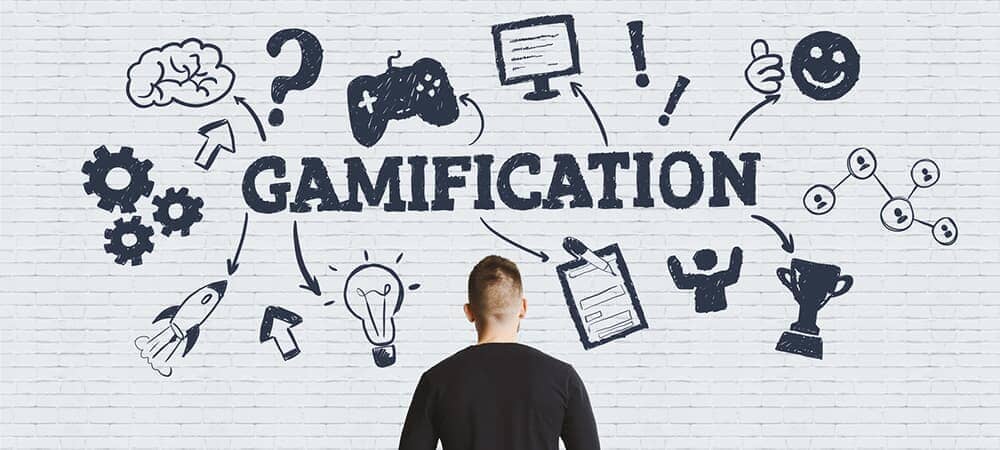
What is Gamification?
Gamification integrates game design elements and game principles into non-game contexts to make processes more engaging and enjoyable, driving user participation and motivation.
Another form of gamification in e-commerce is through games and contests. Retailers can create online games or contests in which customers can participate to win prizes. These games and contests can be an excellent way to generate excitement and encourage customer participation. Retailers can also use games to teach customers about their products or services in a fun and educational way.
Gamification can also be used to improve the user experience in an online store. For example, a retailer could create a game or a quiz to help customers find the right product for them. This not only makes the shopping experience more exciting, but also helps customers make an informed purchasing decision.
Additionally, gamification can be an effective way to improve customer retention. By offering long-term rewards and benefits, retailers can foster customer loyalty and encourage them to return for future purchases. For example, a retailer could offer a discount on a future purchase if the customer makes a certain number of purchases within a given period.
Custom wooden boxes
Discover our wooden boxes for packaging, hospitality, events and more. In-house manufacturing and full customisation.
Reduce Cart Abandonment Offer discounts and reminders to complete purchases.
Convert One-Time into Recurring Customers Offer exclusive discounts for special occasions or repeat purchases.
Increase Advertising Impact Use games or contests within campaigns.
Encourage Sharing Incentivize sharing campaigns on social media.
Personalize Experiences Collect data to tailor gamified interactions to user preferences.
Reduce shopping cart abandonment
One of the most common problems in e-commerce is shopping cart abandonment. Users may add products to their cart, but for various reasons, do not complete the purchase. For example, offering discounts and rewards to users who complete a purchase can increase user motivation to complete the transaction.
Furthermore, gamification can also help reduce shopping cart abandonment by implementing purchase reminders or special promotions for products that have been left in the cart. For example, offering exclusive discounts to users who return and complete a purchase after abandoning a cart.
Convert one-time customers into recurring customers
Another challenge that gamification in e-commerce can overcome is converting one-time customers into recurring customers. Gamification can help maintain user interest and motivation in the long term, which can encourage repeat purchases and convert one-time customers into recurring customers. For example, offering exclusive discounts to users who make purchases on special dates, such as birthdays or anniversaries of previous purchases.
Additionally, gamification can also be used to encourage the exploration and discovery of new products. For example, creating reward systems that incentivise users to explore new product categories or try new brands. In this way, the variety of products the user buys can be increased and, therefore, the probability of becoming a recurring customer.
Use gamified challenges or leaderboards within your loyalty program to keep customers actively involved and coming back for more, fostering a sense of community around your brand.
Increase the impact of advertising campaigns
Gamification can also be an effective tool to increase the impact of advertising campaigns. Many e-commerce businesses use gamification to attract users and increase their participation in marketing campaigns. For example, by using games or contests in their advertising campaigns.
Gamification can also be used to encourage users to share the advertising campaign with their friends and followers on social media, which can increase its reach and dissemination.
Finally, gamification can also be used to improve the effectiveness of advertising campaigns by personalising the user experience. By collecting data on user preferences and behaviour, a more personalised gamification experience can be created that adapts to the user's specific needs and desires. This can increase the relevance of the advertising campaign for the user and, therefore, increase its effectiveness.
One example of a company that has used gamification in e-commerce effectively is Amazon. Amazon has used gamification in several of its initiatives, such as its Prime programme, which offers special benefits to members, such as free shipping and access to exclusive content. By making membership exclusive and offering rewards for loyalty, Amazon has created an exciting and engaging experience for its customers.
Another example is the sportswear brand Nike, which has used gamification to encourage customer participation in its online community. Nike offers a series of online challenges and training programmes that customers can participate in to win prizes and connect with other fitness enthusiasts. By making training an exciting and social experience, Nike has created a vibrant and active online community that in turn fosters customer loyalty.
Amazon's Prime program uses exclusive benefits and rewards to create loyalty, while Nike fosters community and engagement through gamified fitness challenges and programs.
Challenges of gamification in e-commerce
Although gamification has many benefits for online retailers, there are also some challenges that need to be addressed. One of the biggest challenges is ensuring that gamification does not distract the customer from the main task of making a purchase. If the game or contest is too complicated or takes too much time, customers may become discouraged and abandon the online store.
Avoid Distraction
Ensure gamified elements do not become overly complicated or time-consuming, as this can distract customers from their primary goal of making a purchase and lead to abandonment.
Another challenge is to ensure that gamification is fair and equitable for all customers. If a customer feels that the game or contest is manipulated or that they do not have the same opportunity to win as other customers, they are likely to feel frustrated and disillusioned.
Gamification is a powerful tool to enhance the customer experience and boost sales, but it must be implemented carefully to avoid distractions and maintain fairness.
Despite these challenges, gamification is a growing trend in e-commerce and is expected to continue to be a popular tool for online retailers in the future.
In summary, gamification is a powerful tool that online retailers can use to improve the customer’s shopping experience and increase sales. By incorporating game elements into the purchasing process, retailers can increase customer motivation and encourage participation and information retention. However, it is important to ensure that gamification does not distract the customer from the main task of making a purchase and that it is fair and equitable for all customers.
Ultimately, gamification is just one of many tools that online retailers can use to improve the customer’s shopping experience. By understanding customer needs and preferences and customising their offering accordingly, retailers can provide an exciting, engaging, and satisfactory online shopping experience that fosters customer loyalty and increases sales.