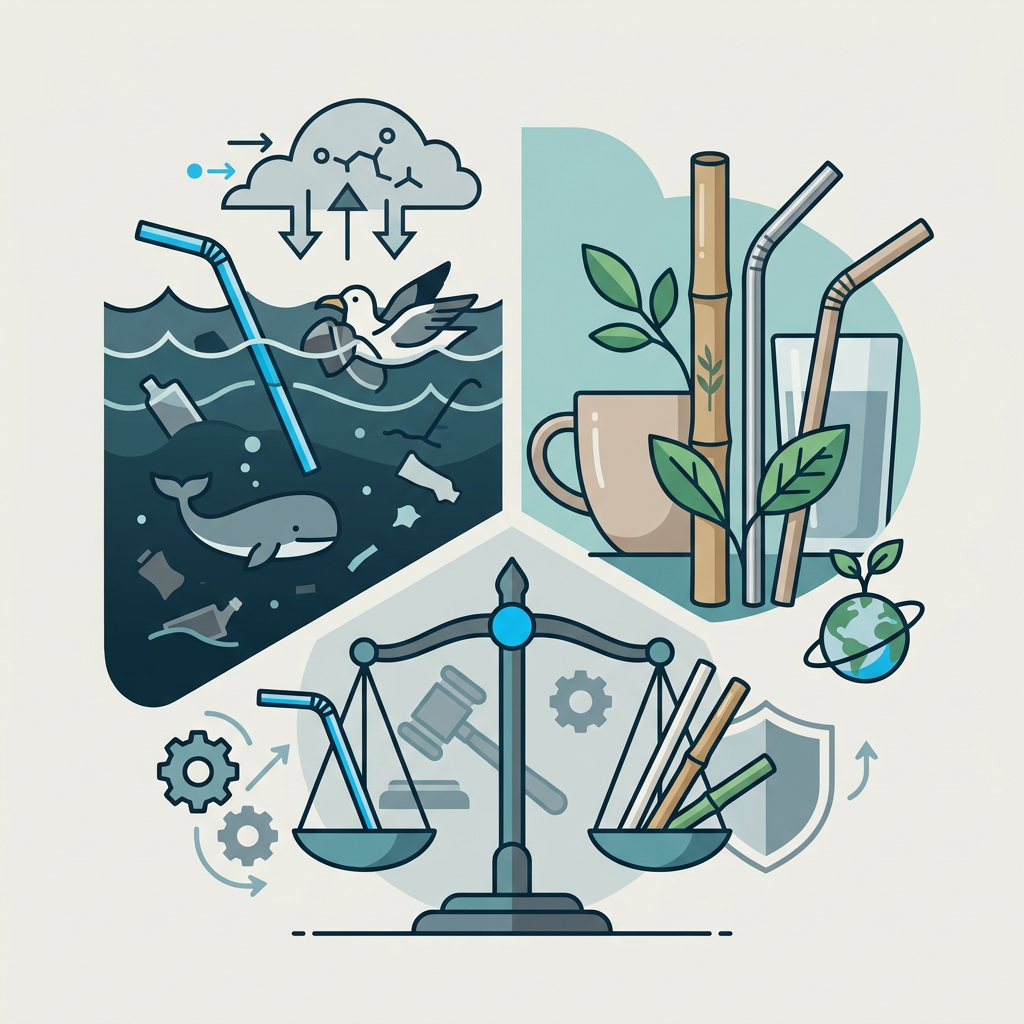
Plastic Straws: Impact, Alternatives, and Regulation
Sincla
Plastic Straws: A Comprehensive Analysis of Their Impact, Alternatives, and Regulation. Plastic straws, ubiquitous for decades in bars, restaurants, and homes, have become a symbol of the global problem of plastic pollution. Their widespread use
Plastic Straws: An Exhaustive Analysis of Their Impact, Alternatives, and Regulation
The Essential
Plastic straws represent a small but significant fraction of ocean plastic pollution.
Their design makes them difficult to recycle and prone to becoming microplastics.
Numerous sustainable alternatives exist, such as paper, bamboo, metal, glass, and compostable straws.
Global regulation is moving towards banning or restricting single-use plastic straws.
Origins and Popularization: The History Behind an Everyday Object
The Environmental Impact of Plastic Straws
Ocean Pollution and Marine Fauna
Danger to Marine Life
Plastic straws are a real threat to marine life, capable of causing suffocation, digestive tract obstruction, and serious physical injuries.
Difficulty in Recycling
Impact on Soil and Freshwater
Sustainable Alternatives to Plastic Straws
ReusableDurable options like metal, bamboo, or glass, ideal for personal and continuous use.
CompostableMaterials that degrade under specific conditions, such as PLA or bagasse.
BiodegradableOptions that decompose naturally, such as paper, with varying performance.
EdibleInnovative straws made from pasta, seaweed, or sugar, which can be consumed after use.
Paper Straws:Compostable Material Straws (PLA, Bagasse, Corn Starch):PLA (Polylactic Acid):Bagasse:Corn Starch:Pasta/Rice Straws:Seaweed Straws:
Buying Tip
When choosing single-use alternatives, look for compostability certifications (e.g., EN 13432 for Europe) or sustainable origin certifications (e.g., FSC for paper) to ensure their actual lower environmental impact.
Regulation and Global Prohibition Movements
European Legislation
Measures in Other Countries and Cities
Exceptions and Considerations for People with Disabilities
The transition from plastic straws is not only a material change but an opportunity to rethink our relationship with single-use products and adopt more conscious and environmentally friendly consumption habits.
The Role of Consumers and Industry
The Conscious Consumer
Proactive Refusal:Adoption of Reusables:Informed Choice:Awareness of Biodegradability:
Industry Responsibility
Innovation and Development:Responsible Sourcing:custom wooden boxesClear Communication:Design with Lifecycle in Mind:packaging
100%Plastic-Free (Alternatives)
FSCPaper Material (Sustainable)
400+Years to Degrade (Plastic)
Challenges and Future
Conclusion
Custom wooden boxes
Discover our wooden boxes for packaging, hospitality, events and more. In-house manufacturing and full customisation.
Why are plastic straws so harmful to the environment if they are so small?
Although small, their accumulated volume is enormous due to their massive and disposable use. They are lightweight and buoyant, making it easy for them to end up in oceans and waterways. Their size and shape make them particularly dangerous for marine fauna, and they are difficult to recycle with current technologies, condemning them to hundreds of years of persistence in the environment, slowly degrading into microplastics.
Are paper straws really sustainable?
Paper straws are a biodegradable and compostable alternative, making them more sustainable than plastic ones. However, their sustainability depends on several factors: the origin of the paper (ideally FSC certified), the additives used for strength, and whether they are managed correctly at the end of their life. Some can soften quickly, affecting the experience and potentially leading to increased consumption.
What are PLA straws and where can they be composted?
PLA (polylactic acid) straws are made from plant materials like corn starch and are an alternative to plastic. They are biodegradable and compostable, but crucially, they require industrial composting facilities to break down effectively. They do not degrade well in home compost or the natural environment, so it's important to ensure that adequate composting infrastructures are available for their proper disposal.
What straw options are best for people with special needs?
For individuals with disabilities or medical needs who require straws for safe drinking, the most suitable options are typically silicone (flexible and reusable) or sturdy paper straws (for single-use). Metal or glass straws may be less safe due to their rigidity, although reinforced glass straws or those with rounded edges can be an option for some. It is vital that these individuals have access to safe and functional options.
Are there straws that can be eaten after use?
Yes, there are edible straws made from materials such as pasta, rice, seaweed, or sugar. These straws are an innovative and fun solution, as they can be consumed after finishing the drink, completely eliminating waste. Their durability in liquids may vary depending on the material and brand, but they are an excellent option for events and quick consumption.