Papel Kraft: Versatilidad y Sostenibilidad en Embalaje
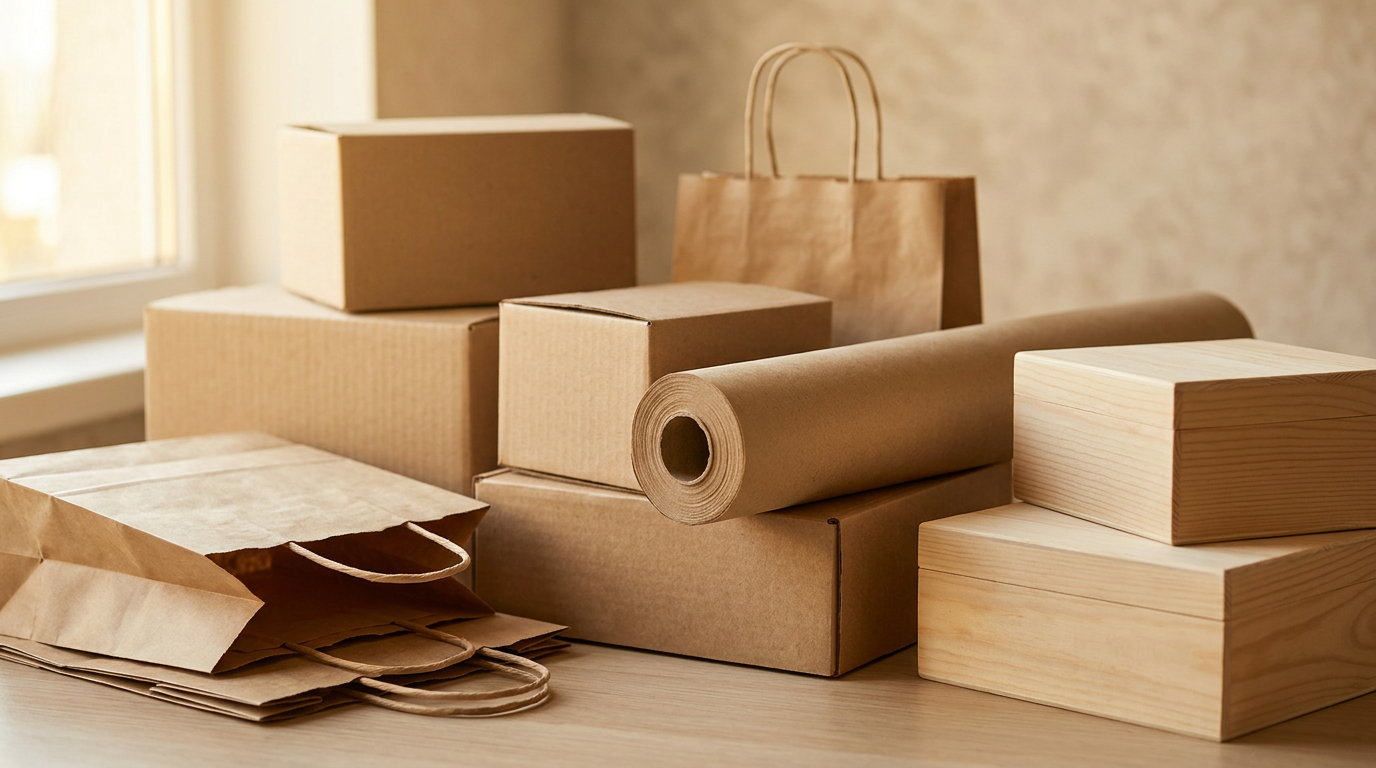
Kraft Paper: Versatility and Sustainability in Packaging
Kraft paper is a widely used material in various industries, recognized for its strength, versatility, and sustainable credentials. Since its invention in the 19th century, this type of paper has evolved to become a fundamental pillar in the packaging, parcel, and countless creative applications sectors. Its name, derived from the German word "kraft" meaning "strength" or "resistance," already anticipates one of its most outstanding characteristics. In a context where environmental awareness is gaining increasing importance, understanding the properties and applications of kraft paper is essential for any company or consumer seeking efficient and environmentally friendly packaging solutions.
The Essential
- Kraft paper is made from virgin or recycled wood pulp through a chemical process that preserves cellulose.
- It stands out for its high tensile and tear strength, making it ideal for packaging and protection.
- It is a sustainable material: recyclable, biodegradable, and often sourced from certified origins like FSC.
- It offers great versatility and customization options to adapt to diverse brand and product needs.
Origins and History of Kraft Paper
The invention of the kraft process is attributed to chemist Carl F. Dahl in 1884. Dahl discovered that by treating wood chips with a solution of sodium hydroxide and sodium sulfide, lignin could be separated from cellulose more efficiently than with previous papermaking processes. This method produced longer, stronger cellulose fibers, resulting in paper with superior durability. The first kraft paper mill opened in Sweden in 1890, marking the beginning of an era that would revolutionize the packaging industry.
Difference from other papers
Unlike other papers that use intensive bleaching processes that weaken fibers, the kraft process minimizes lignin removal to preserve the structural integrity of cellulose, contributing to its characteristic brownish color and inherent strength.
Manufacturing Process and Types of Kraft Paper
The kraft process is a chemical method for converting wood into cellulose pulp, which is then used to manufacture paper. Wood, generally from conifers due to their higher content of long fibers, is broken down into chips and cooked in a chemical solution. The result is a strong, dark pulp that can be used unbleached (natural kraft paper) or bleached to obtain color variations and a surface more suitable for certain prints.
- Natural KraftIt is the most common, with its characteristic brown color and high strength. Ideal for packaging that requires durability.
- Bleached KraftSubjected to a bleaching process to obtain a lighter or white color. It loses some strength but improves print quality.
- Recycled KraftMade from recovered fibers. It is a very sustainable option, although it may be slightly less resistant than virgin kraft.
- Kraft LinerboardUsed as the outer layer (liner) in corrugated cardboard. Provides robustness and a printable surface.
- Kraft SacksWith a higher grammage, specifically designed for sacks that transport bulk materials such as cement or fertilizers.
Key Advantages and Properties of Kraft Paper
The popularity of kraft paper is no accident; it is based on a series of intrinsic properties that make it ideal for a multitude of uses. Its strength, sustainability, and versatility position it as a preferred option in the world of packaging and beyond.
Mechanical Strength
The main characteristic of kraft paper is its exceptional strength. The long cellulose fibers interlace robustly, giving it high resistance to tension, tearing, breakage, and puncture. This property is crucial in applications where packaging must withstand rough handling, significant weight, or stresses during transport. It is, in fact, the reason why it is used in the manufacturing of cardboard boxes and other protective materials.
Sustainability and Environmental Friendliness
In today's era, sustainability is a decisive factor in material selection. Kraft paper stands out for:
- Recyclability: It is 100% recyclable, and its fibers can be reused in the manufacture of new paper.
- Biodegradability: Being an organic material, it decomposes naturally in the environment without leaving harmful residues.
- Renewable: It comes from trees specifically grown for use in the paper industry, often sustainably managed with certifications such as FSC (Forest Stewardship Council) or PEFC (Programme for the Endorsement of Forest Certification).
- Lower carbon footprint: Compared to plastics, its production process has a significantly lower environmental impact, especially if renewable energy sources are used.
*Approximate comparative data with conventional plastics, variable by process.
Versatility and Customization Capabilities
Although its natural color is brown, kraft paper can be bleached or dyed. Its rough but consistent surface is suitable for various printing techniques and finishes, allowing for customized wooden boxes with a distinctive touch if combined with other materials, or simply a kraft cardboard packaging with a unique aesthetic. Techniques such as screen printing, digital printing, or even hot stamping can be applied to enhance brand image.
Applications of Kraft Paper in the Packaging Sector
Kraft paper is omnipresent in the world of packaging. Its robustness and natural aesthetic make it ideal for a wide variety of products and sectors.
- Boxes and Containers: It is the base material for many cardboard boxes, from those intended for e-commerce to those used for food or manufactured products. Its robustness ensures product protection during shipping and storage.
- Paper Bags: Widely used in shopping and gift bags, thanks to its strength and the perception of quality and sustainability it conveys.
- Wrapping and Void Fill Paper: To protect fragile items or fill empty spaces within packages, it is an ecological alternative to bubble wrap or other non-biodegradable materials.
- Envelopes and Mailers: Its tear resistance makes it a secure option for mailing documents and small items.
- Paper Adhesive Tape: Adhesive tapes with kraft paper backing are an ecological alternative to plastic ones, ideal for sealing boxes and packages. More information in Adhesive Tape: Types, Uses, and the Key to Optimal Packaging.
- Industrial and Agricultural Packaging: From sacks for cement and fertilizers to wrappers for agricultural products, kraft paper withstands demanding conditions.
- Cardboard Tubes and Cores: Forms the structure of tubes used for winding fabrics, films, or paper, ensuring their stability.
Branding Tip
The natural color of kraft paper evokes authenticity and sustainability. Brands can use it to reinforce an ecological or artisanal message, even in custom boxes, using single-color inks or simple engravings that contrast with its tone. Minimalism often works best.
Considerations When Choosing Kraft Paper for Packaging
Selecting the appropriate type of kraft paper involves considering several factors to ensure that the packaging fulfills its function and consumer expectations.
Grammage
Grammage, or weight per square meter (g/m²), determines the thickness and rigidity of the paper. Higher grammage implies greater strength. For wrapping light objects, a low grammage (40-60 g/m²) may be sufficient, while for industrial sacks or layers of corrugated cardboard, much higher grammages (120-200 g/m² or more) are required.
Finishes and Treatments
Although natural kraft is the most versatile, there are specific finishes:
- Plastic Coatings or LAMINATES: Improve resistance to water, grease, or moisture, ideal for food or products requiring a barrier.
- Bleaching: Allows for brighter colors in printing but may slightly reduce strength.
- Calendering: Improves surface smoothness and gloss, optimizing print quality.
Certifications
It is important to verify that the kraft paper comes from responsible sources. Certifications such as FSC (Forest Stewardship Council) or PEFC (Programme for the Endorsement of Forest Certification) ensure that the wood used comes from sustainably managed forests.
Impact on Customer Experience
A well-packaged item with kraft paper can leave a positive impression. Its natural appearance and feel convey a message of authenticity and environmental responsibility. This material integrates perfectly into the packaging design of brands with sustainable values or that seek a rustic and elegant aesthetic, even in the manufacture of wooden boxes with lids that incorporate kraft paper elements in their interior or wrapping. For customization ideas, you can consult Custom Wooden Boxes for Corporate Gifts.
Kraft paper is not just a packaging material; it is a canvas for the brand and a statement of values in an increasingly environmentally conscious world.
Common Mistakes When Using Kraft Paper
Despite its advantages, improper use of kraft paper can lead to problems. Knowing these errors helps optimize its application.
- Underestimating Grammage: Using a grammage too low for the product's weight or fragility, which can lead to breakages or damage during transport.
- Ignoring Moisture: Natural kraft paper is not waterproof. For moisture-sensitive products, it is crucial to use versions with specific treatments or combine them with protective barriers.
- Inadequate Print Design: The natural brown color has its own particularities. Not all ink colors look the same as on white paper. The design and colors should be adapted to contrast well and ensure legibility on the kraft background.
- Overdoing Customization: Although versatile, an excess of inks or engravings can overshadow the natural elegance of kraft. Often, "less is more" to highlight its organic aesthetic.
- Not Verifying Certifications: Assuming all kraft paper is sustainable without verifying certifications like FSC or PEFC. It is fundamental to meet the brand's sustainability standards.
Attention to Storage
Kraft paper is susceptible to environmental humidity. Storing it in dry places at a constant temperature is crucial to maintain its mechanical properties and prevent deformation or mold before use.
The Future of Kraft Paper in Sustainable Packaging
With increasing pressure on companies to adopt more sustainable practices, kraft paper is poised to play an even more important role in the future of packaging. Innovations in the sector focus on improving its barrier properties without compromising recyclability, exploring new fiber sources, and optimizing the production process to further reduce environmental impact.
The combination of strength, aesthetic versatility, and a solid ecological profile ensures that kraft paper will continue to be a preferred choice for companies seeking functional, attractive packaging aligned with the values of the circular economy. Whether in a container for an artisanal product or as a structural component of complex transport packaging, its relevance will only increase.
Frequently Asked Questions
Is kraft paper always brown?
No, although its natural color is a characteristic brown tone because the wood fibers are not completely bleached, there is also bleached kraft paper, which is white or lighter in color. The bleaching process is carried out to meet specific aesthetic or printing needs, although it may slightly reduce the material's original strength.
Is kraft paper 100% eco-friendly?
Kraft paper is highly sustainable. It is 100% recyclable, biodegradable, and often comes from sustainably managed wood sources (certifications like FSC or PEFC). However, like any industrial process, its manufacturing consumes resources (water, energy). The key lies in responsible management and choosing options with certifications that guarantee minimal environmental impact.
Can I print any design on kraft paper?
Yes, kraft paper is suitable for various printing techniques (flexography, screen printing, offset, digital). However, due to its brown background color and slightly rough surface, it is important to adapt the design. Light, opaque colors, or simple, high-contrast motifs usually look and read best on natural kraft. It is advisable to perform print tests if the design is complex or includes specific colors.
Does kraft paper protect against moisture?
Natural kraft paper is not inherently resistant to water or prolonged moisture. For applications that require protection against moisture, there are versions of kraft paper treated with coatings (e.g., polyethylene laminates) that act as a barrier. These versions are useful, for example, for food packaging, but may affect their recyclability or biodegradability.
What is the difference between kraft paper and kraft cardboard?
The main distinction lies in grammage and structure. "Kraft paper" refers to single-thickness sheets, generally of lower grammage, used for wrapping, making bags, or as an outer layer. "Kraft cardboard" usually implies a much higher grammage or a multi-layer structure (such as corrugated cardboard, where kraft paper is used as "liner" or outer and inner layers) that provides greater rigidity and strength for manufacturing boxes and packaging for greater protection.