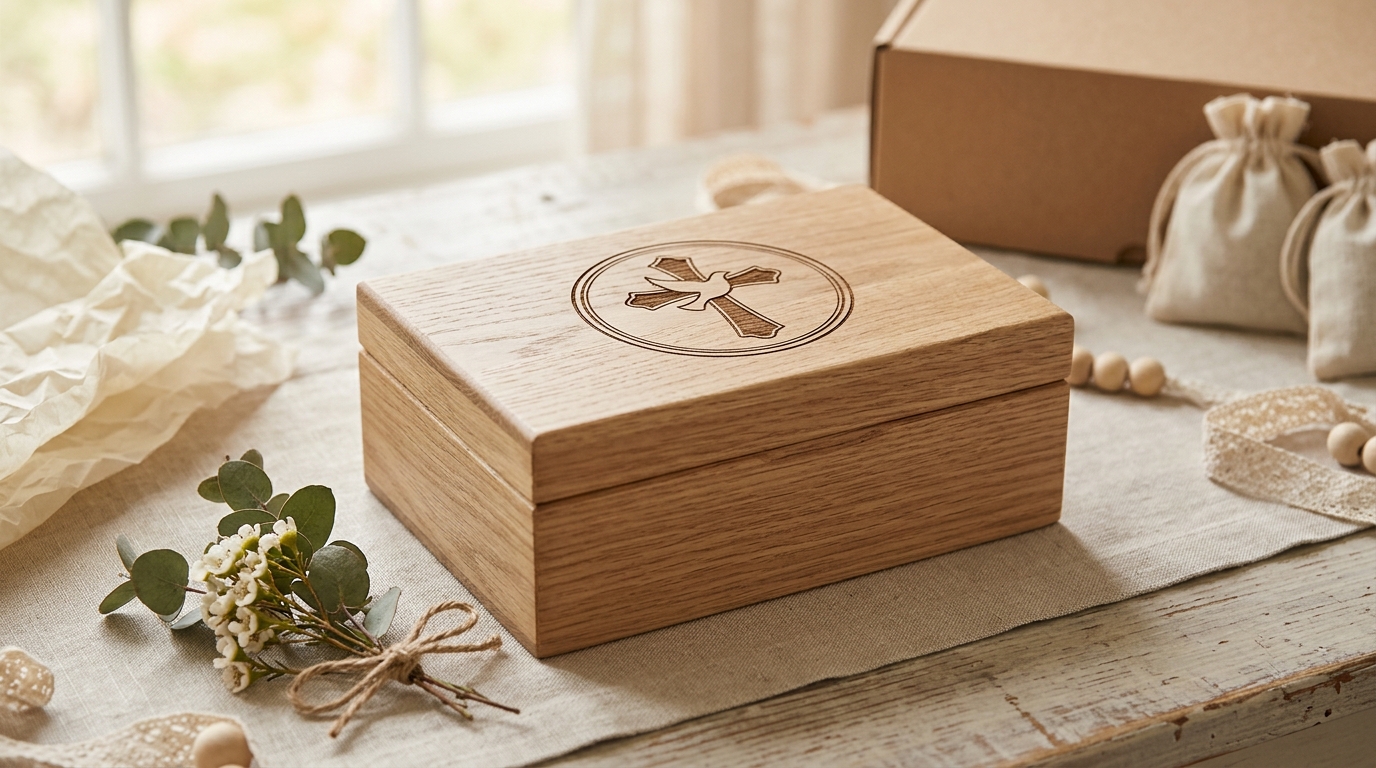
How Much It Costs to Make Custom Christmas Hampers and Prices
Sincla
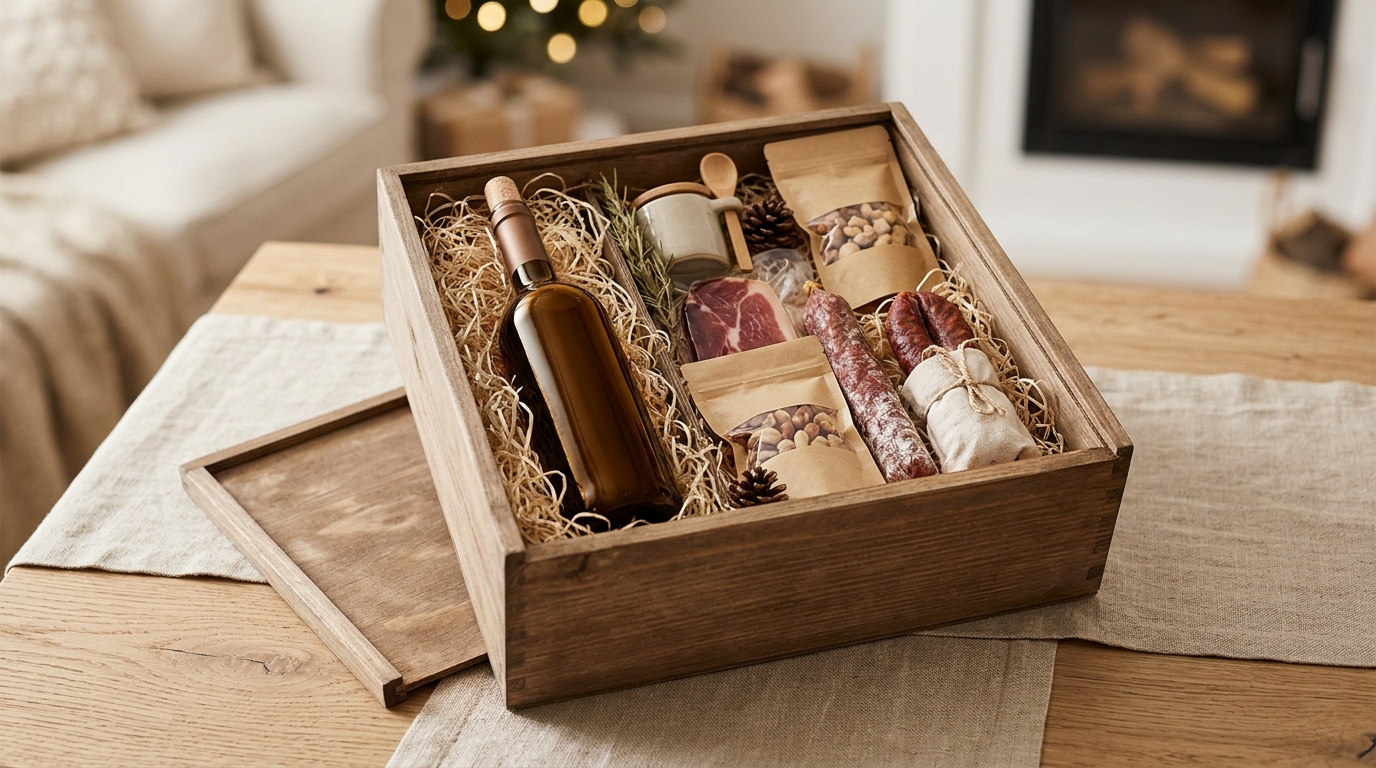
How much it costs to make custom Christmas hampers: key factors for your budget. Knowing exactly how much it costs to make custom Christmas hampers is one of the biggest challenges for procurement departments, marketing agencies, and food companies as the year-end approaches.
How Much Does It Cost to Make Custom Christmas Hampers: Key Budget Factors
Knowing exactly how much it costs to make custom Christmas hampers is one of the greatest challenges for procurement departments, marketing agencies, and food companies as the final quarter of the year approaches. The presentation of a holiday hamper communicates the values of the sender's brand, and in an increasingly demanding market, generic packaging has given way to customized solutions. However, calculating the final budget requires analyzing multiple variables that go far beyond the simple price of materials: from exact dimensions and the chosen branding technique to the assembly format and the logistics costs associated with volumetric weight.
Key Takeaways
The final cost depends on the material, dimensions, customization method, and interior accessories.
Choosing flat-pack boxes drastically reduces shipping and storage expenses compared to pre-assembled options.
Laser engraving customization is ideal for short runs, while screen printing becomes cost-effective for large volumes.
Volumetric weight is the logistics factor that drives up the budget the most if the packaging design is not optimized.
To accurately determine how much it costs to make custom Christmas hampers in 2026, it is essential to dissect every element of the packaging. A very common mistake in corporate campaign planning is allocating 90% of the budget to the contents (wines, charcuterie, sweets) and leaving the packaging for the end. This lack of foresight usually leads to extra costs from rush shipments, forced adjustments, or the choice of flimsy materials that damage products during transit. In an efficient budget design, the packaging must be conceived in parallel with the selection of the products it will hold.
The Impact of Dimensions and Volume
The indisputable starting point for budgeting any packaging project is size. Every extra centimeter of material adds cents to the unit cost of the box, but its true impact is reflected in logistics. Freight and courier companies do not bill solely on the actual weight of the goods, but on the space they occupy in the truck—known as volumetric weight. Therefore, a design tailored to the millimeter for the bottles or jars inside the hamper not only saves wood or cardboard, but can also reduce shipping costs exponentially.
Safety Clearance
Although tight sizing is vital, you should always leave a margin of 5 to 10 millimeters on each side to include void fill (wood wool, tissue paper) that protects fragile items against lateral impacts.
Packaging Materials and Their Influence on Price
The chosen material is the most visible component of the cost structure. The perceived value conveyed by a plywood box is not the same as that of a corrugated cardboard box, and this is naturally reflected in its base price. Below is a detailed breakdown of the materials most commonly used in the industry for premium and corporate hampers, analyzing their economic feasibility.
Material
Relative Cost
Key Features
Recommended Use
Plywood
Medium - High
Sturdy, premium aesthetic, natural grain. Supports heavy loads without warping.
Gourmet sets, high-end wine bottles, VIP gifts.
MDF Wood
Medium
Smooth, highly uniform surface. Easy to cut and engrave. No natural grain.
Elegant corporate hampers, painted or lined finishes.
Kraft Corrugated Cardboard
Low - Medium
Lightweight, recyclable, low unit cost on large runs.
Budget hampers, bulk shipments of light items.
Solid Pine Wood
Very High
Maximum robustness, traditional and rustic look. Heavy.
Very limited editions, traditional luxury cases.
In the premium packaging sector, the shift toward sustainability has standardized certain requirements that are no longer an "extra," but a market standard. Companies prefer to invest in materials that ensure a circular economy.
FSCCertified wood
100%Recyclable and biodegradable
5 - 10 kgTypical load capacity
Customization Techniques: How to Brand Without Multiplying Costs
Once the structure is defined, the next step in calculating how much it costs to make custom Christmas hampers is customization. Packaging without the sender's brand identity loses much of its communicative value. However, not all branding techniques carry the same cost, nor are they feasible for every order volume. Choosing the wrong method can derail the budget, especially when initial setup costs—such as screens or plates—are involved.
These are the most common options in the industry to give hampers and boxes a professional finish:
Laser Engraving Lightly burns the surface of the wood or cardboard. Ideal for short runs because it does not require physical plates or setup costs.
Screen Printing Applies ink through a mesh stencil. Requires creating a screen for each color, making it highly cost-effective for orders of several hundred units, but prohibitive for small quantities.
Pad Printing Allows stamping logos onto curved or uneven surfaces with sharp definition. Requires a physical cliché plate (initial fixed cost).
Hot Stamping (Foil Stamping) Applies metallic film (gold, silver) using pressure and heat. Delivers an ultra-luxurious finish, but carries the highest unit cost.
If the campaign involves multiple departments or brands and you want a unified presentation, it is recommended to review this comprehensive guide on Boxes engraved with company logos: a guide to understand what file formats and resolutions each graphic technique requires, avoiding last-minute redesign fees at the factory.
Design Size Matters
With laser engraving, cost is typically determined by machine run time. A small, subtle logo in one corner will be significantly cheaper than engraving an intricate pattern that covers the entire box lid.
Custom wooden boxes
Discover our wooden boxes for packaging, hospitality, events and more. In-house manufacturing and full customisation.
Step-by-Step Guide to Calculating the Cost of Custom Christmas Hampers
To leave no loose ends and obtain vendor quotes that can truly be compared side by side, you need to follow a calculation methodology. Simply asking for "pricing on 100 boxes" without specific details will only result in inaccurate estimates that will later face unexpected increases.
Define the weight and volume of the contents. Gather all products physically (bottles, tins, charcuterie) and arrange them on a table as compactly as possible. Measure the total width, height, and depth, and calculate the overall weight. This determines the material thickness the box will require.
Select the material and lid style. Decide whether wood is required for strength or heavy-duty cardboard suffices. Choose the lid style: sliding, hinged, or lift-off. Hinges and metal clasps increase the cost and complicate recycling compared to simple sliding lids.
Determine interior accessories. Do you need wood wool for padding? Cardboard or plywood dividers to keep bottles from clinking? Every custom divider is an additional piece that must be cut and priced.
Specify the customization. Decide on the technique, logo size, and whether branding will be placed only on the front lid or also on the sides.
Calculate logistics. Decide if you want boxes delivered assembled (ready to fill, but with higher shipping costs) or flat-packed (lower transport costs, but requiring assembly time in your warehouse).
When designing Original and sustainable Christmas hampers for employees, following this process ensures that your allocated budget is spent wisely, avoiding wasted funds on shipping "empty air" instead of investing in better gourmet products.
Common Mistakes That Drive Up the Budget
Certain design or planning decisions may seem harmless at first glance, but they have the potential to multiply the cost of a custom packaging project. A lack of standardization is the main culprit.
The most serious mistake is requesting non-standard structural shapes. Rectangular or square boxes optimize sheet layout across wood boards or cardboard blanks, maximizing material yield and minimizing waste. Designing hexagonal, triangular, or asymmetrical boxes creates substantial raw material waste that the packaging manufacturer will inevitably pass on to the unit price.
Rush Lead Times
The holiday packaging industry experiences a massive bottleneck between October and December. Ordering custom production in November means paying rush fees and accepting pricier freight transit options. Planning during the summer is the best cost-saving strategy.
Another frequent oversight is ignoring the fulfillment process. Traditional wicker hampers, for instance, require labor-intensive packing: placing cellophane wrap, balancing products carefully, tying a bow, and heat-shrinking. In terms of labor hours (which also represent money), rigid boxes are much faster to pack. An operator simply adds the protective fill, places the products lying flat, and slides the lid shut.
Format Optimization: Self-Assembling Boxes
When considering how much it costs to make custom Christmas hampers, the storage space they require while empty is rarely factored in. Ordering 500 fully assembled solid wood boxes requires multiple bulky pallets. This creates hefty freight charges from the factory to the packing facility and a major warehouse storage challenge.
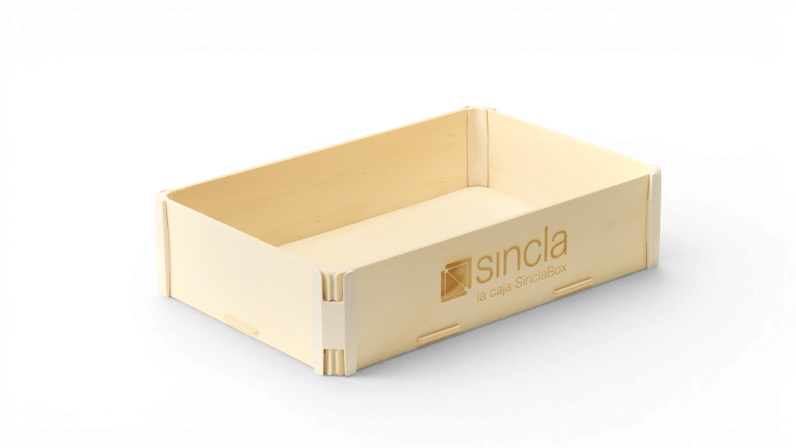
Flat-pack packaging is the ultimate logistics breakthrough: it reduces storage space and shipping costs by up to 80% compared to pre-assembled boxes.
Self-assembling systems—where box components are shipped flat and assembled without tools, glue, or nails using interlocking joints—are the smartest solution for controlling budgets. This feature is especially beneficial for small businesses or facilities with limited floor space, a concept explored in depth in the guide on Custom wooden boxes for small orders: key factors.
Moreover, a quality self-assembling wooden box comes with a guaranteed second life. The gift recipient can easily repurpose the box for home storage, multiplying brand impressions over time and boosting the return on investment for the corporate campaign.
Frequently Asked Questions
Is there a minimum order quantity (MOQ) for custom Christmas boxes?
Generally, the industry requires an MOQ that varies depending on the supplier and material. For cardboard boxes with offset or screen printing, it is usually 300 to 500 units. For plywood with laser engraving and digital cutting technology, many manufacturers accommodate runs starting from 50 units, as there are no costly physical cutting dies to amortize.
How much weight can 3 mm thick wooden boxes support?
Plywood or MDF with a 3 mm thickness, when properly engineered with finger joints (strong interlocking seams), can easily support loads between 6 and 9 kilograms. This is more than enough for a standard holiday hamper containing 2 or 3 wine bottles alongside assorted gourmet food items.
Is wood wool filler cheaper than tissue paper?
Natural wood wool is generally more economical on a volume basis and provides significantly more structural cushioning for heavy, fragile items like glass bottles. Tissue paper looks elegant and works well for cosmetics or apparel, but lacks the rigidity needed to protect wine bottles from impacts during courier shipping.
Can food be placed in direct contact with the wooden box?
European regulations require food-grade certifications for any packaging material that comes into direct contact with food (such as unwrapped nougats or fresh fruit). However, in 99% of Christmas hampers, items are already packaged in their own primary jars, tins, or cartons. The outer box functions as secondary packaging and therefore does not require direct food contact certification.
We use our own and third-party cookies to improve your experience, analyze traffic and show relevant advertising. You can accept, reject or customize your preferences.