The Ice Cream Tub: A World of Options for Preservation and Presentation
The essentials
- Ice cream tubs are key for product preservation and presentation.
- There are various materials such as cardboard, plastic, and compostable options, each with its advantages.
- Customization is fundamental for brand identity and connection with the consumer.
- Sustainability and functionality (hermeticity, resistance) are important selection criteria.
Common Materials in Ice Cream Tub Manufacturing
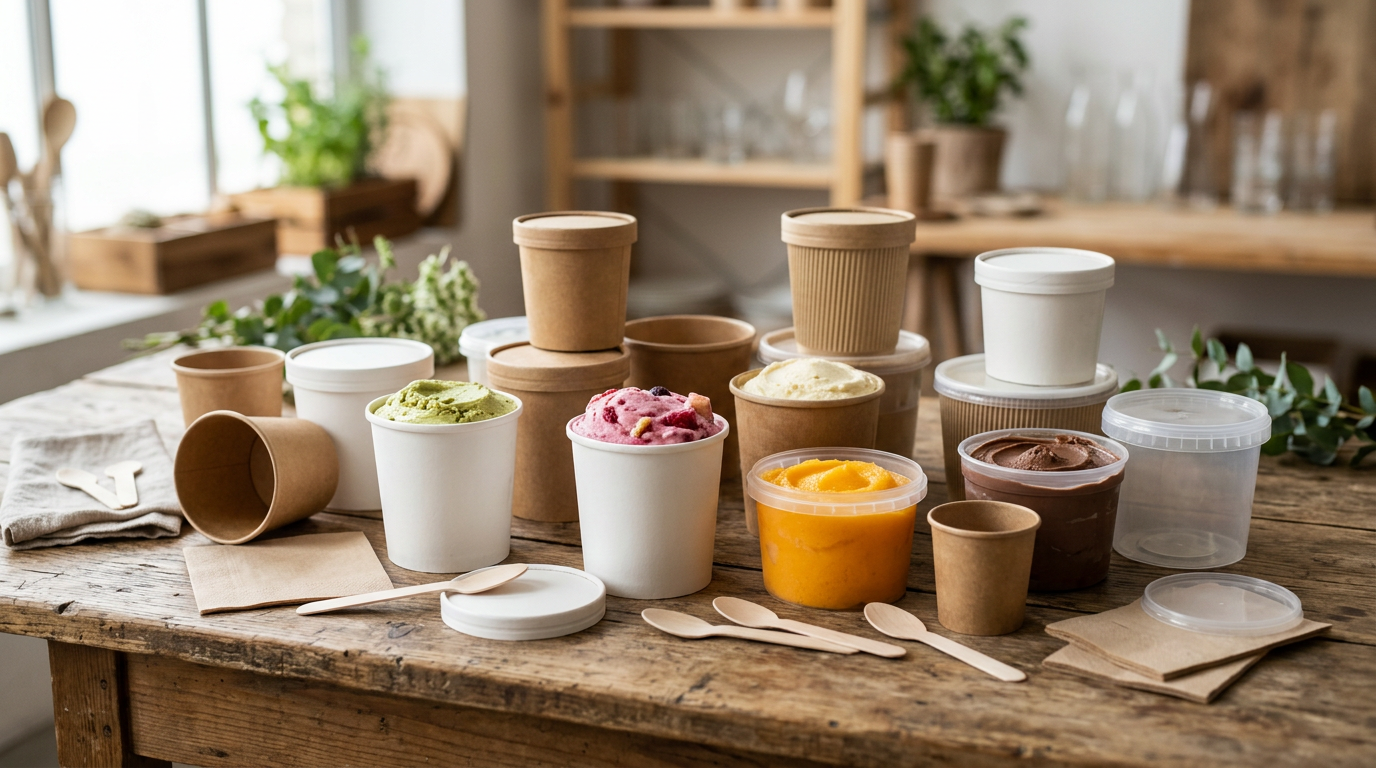
Cardboard and Paperboard
- Cardboard with PE/PLA coating: To ensure impermeability and resistance to moisture and fat from the ice cream, cardboard tubs usually have an internal coating. Traditionally, polyethylene (PE) has been used, a plastic that, although effective, makes recycling difficult. Recently, polylactic acid (PLA), a bioplastic derived from renewable resources like corn starch, has gained ground as a more sustainable alternative, being compostable under industrial conditions.
- Kraft Cardboard: Valued for its natural and rustic aesthetic, kraft cardboard, often unbleached, conveys an image of sustainability and authenticity. Like other cardboards, it requires an inner lining to be suitable for ice cream.
- Bleached Paperboard: Offers a smooth, bright surface ideal for high-quality designs and vibrant colors, allowing for sophisticated branding.
Sustainable coatings
When choosing cardboard tubs, research the types of coatings. PLA-based options or plastic-free biodegradable coatings are preferable for brands with an environmental commitment.
Plastic
- Polypropylene (PP): It is one of the most common plastics for ice cream tubs, especially larger ones. It is lightweight, resistant to low temperatures, has good rigidity, and is suitable for food contact. Furthermore, it is recyclable in many places. For a deeper dive into this material, you can consult the article "What is Polypropylene? Uses, Properties and Types of PP".
- PET (Polyethylene Terephthalate): Less common for the body of the tub, but used in transparent lids. It is lightweight, impact-resistant, and offers excellent product visibility. It is highly recyclable.
- Recycled plastics (rPET, rPP): The incorporation of post-consumer recycled (PCR) plastic in tub manufacturing is a growing trend to reduce reliance on virgin plastics and improve circularity.
Compostable and Biodegradable Materials
- Sugarcane Bagasse: A byproduct of the sugar industry, bagasse is a fibrous material that can be molded to create resistant, compostable, and biodegradable tubs.
- Corn Starch (PLA): As mentioned, PLA is not only used as a coating but can also be used to manufacture entire tubs, offering a compostable alternative to traditional plastics.
Design and Functionality: Beyond the Material
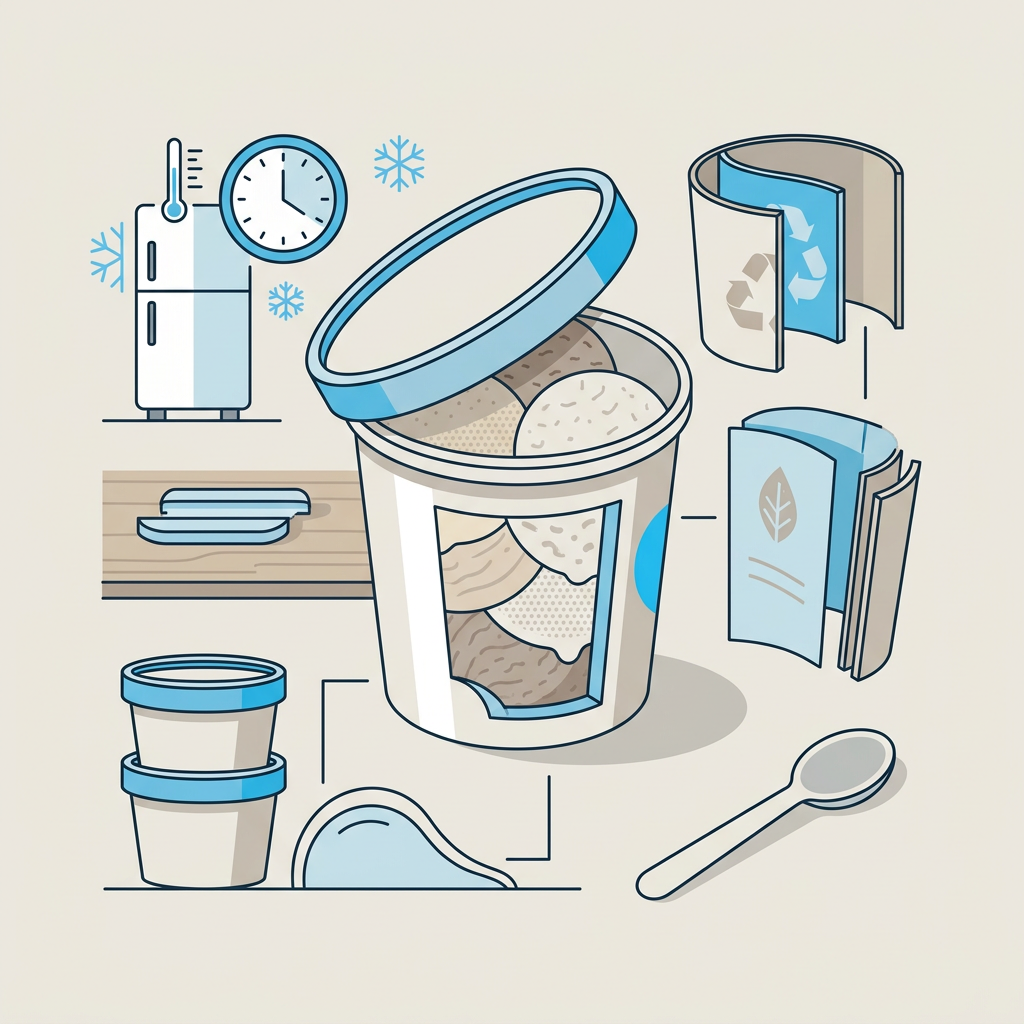
- HermeticityPrevents ice crystal formation and odor absorption.
- Thermal InsulationMaintains ice cream temperature and texture longer.
- Structural StrengthWithstands stacking and transport without deformation.
- Ease of OpeningA well-designed lid that is easy to open and close.
Shapes and Sizes
Lids and Closures
- Press-fit lids: Common on cardboard and plastic tubs, they offer a good seal and are reusable.
- Heat-sealed lids: Used in some formats for a tamper-evident and maximum freshness seal, often with an additional press-fit plastic lid for subsequent use.
- Dome lids: Ideal for ice cream with toppings or decorations, as they allow extra space without crushing the contents.
Importance of vacuum
Good tub design helps minimize trapped air, which is one of the main causes of ice crystal formation and loss of creamy ice cream texture.
Customization and Branding on the Ice Cream Tub
Printing and Finishes
- Offset printing: Ideal for large volumes and high-quality designs, with vibrant colors and fine details.
- Digital printing: Suitable for shorter runs, prototypes, or designs requiring variable personalization. Offers flexibility and speed.
- Labeling: Allows pre-printed labels to be applied to standard tubs, a flexible option for small batches or market tests.
- Special finishes: Matte, glossy, metallic, or textured can add a premium touch and differentiate the product.
Key Design Elements
- Logo and brand: Clear and prominently visible, reinforcing brand identity.
- Product information: Flavor, ingredients, allergens, expiration date, and nutritional facts.
- Graphic elements: Illustrations, photographs of the ice cream or ingredients, evoking flavor and quality.
- Brand message: Slogans, brand history, or key values, conveying an emotional connection.
Clarity and legibility
Ensure all mandatory information is clearly legible, even in low light conditions in freezers or supermarkets. An attractive design should not compromise clarity.
Sustainability and the Environment
Ecological Options
| Sustainable Option | Description | Advantages | Considerations |
|---|---|---|---|
| Recyclable | Materials that can be processed and converted into new products. | Reduces landfill waste, conserves resources. | Requires adequate recycling infrastructure and consumer separation. |
| Compostable | Materials that biodegrade under specific conditions (industrial or home). | Returns to earth as compost, reduces plastic pollution. | Requires specific composting facilities; does not degrade in normal landfills. |
| Biodegradable | Breaks down by microorganism action, but not always within a useful timeframe or conditions for the environment. | May decompose faster than conventional plastics. | The term "biodegradable" can be ambiguous; understanding degradation conditions and time is crucial. |
| Renewable materials | Made from plant-based resources that replenish naturally (e.g., sugarcane, starch). | Reduces reliance on fossil fuels. | The impact of raw material cultivation (water, pesticides) must be considered. |
Certifications and Regulations
Common Mistakes When Choosing or Designing Ice Cream Tubs
- Underestimating the importance of insulation: A poorly insulated tub can lead to ice crystal formation and loss of the ice cream's original texture.
- Ignoring the lid's airtightness: A deficient seal allows air and odors to enter, affecting the product's flavor and shelf life.
- Prioritizing low cost over quality: Choosing the cheapest material can result in fragile, leaky tubs that do not adequately protect the product.
- Poorly legible or saturated design: Overloaded packaging with information or an unclear design can confuse the consumer and dilute the brand message.
- Not considering logistics: The shape and size of the tub should optimize freezer space, transport, and storage.
- Neglecting sustainability: In today's market, the lack of sustainable options can be a decisive factor for many consumers.
The Future of Ice Cream Tubs
- More advanced materials: Development of second-generation bioplastics and compostable materials with better performance and lower impact.
- Smart designs: Tubs with temperature indicators, compartments for toppings, or integrated spoons.
- Reuse and refill: Business models based on returnable tubs or ice cream refill stations.
- Minimalism and transparency: Designs that prioritize ice cream quality with clean, simple packaging that sometimes allows the product to be seen.