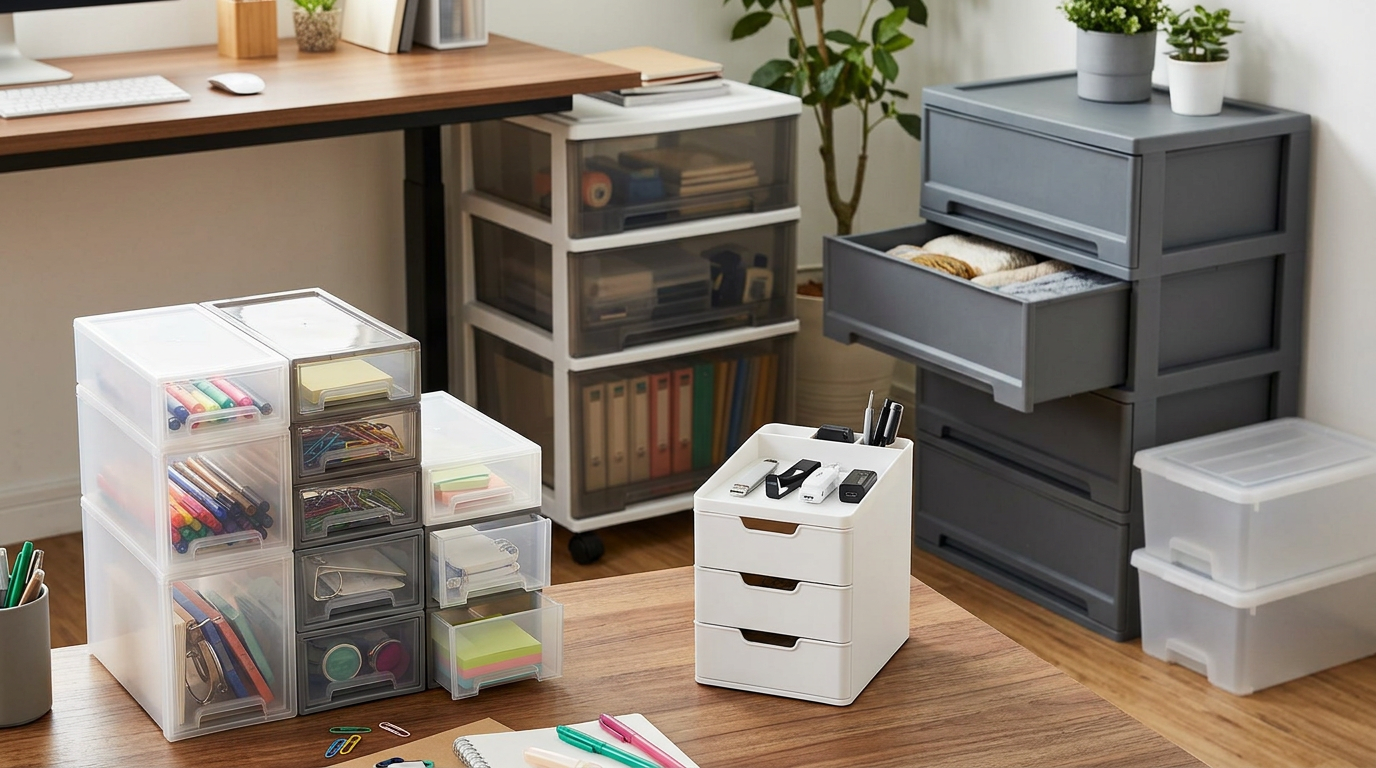
The Plastic Drawer Unit: Versatility and Organization in the Home and Office
The gist
- Plastic drawer units offer lightweight and durable organizing solutions.
- Various types exist: desktop, with wheels, modular, and large capacity.
- Plastic quality (PP or PET) affects durability and resistance.
- They are ideal for homes, offices, and educational or industrial environments.
- Sustainability is key: opt for recycled or easily recyclable options.
Types of Plastic Drawer Units and Their Applications
Desktop Drawer Units
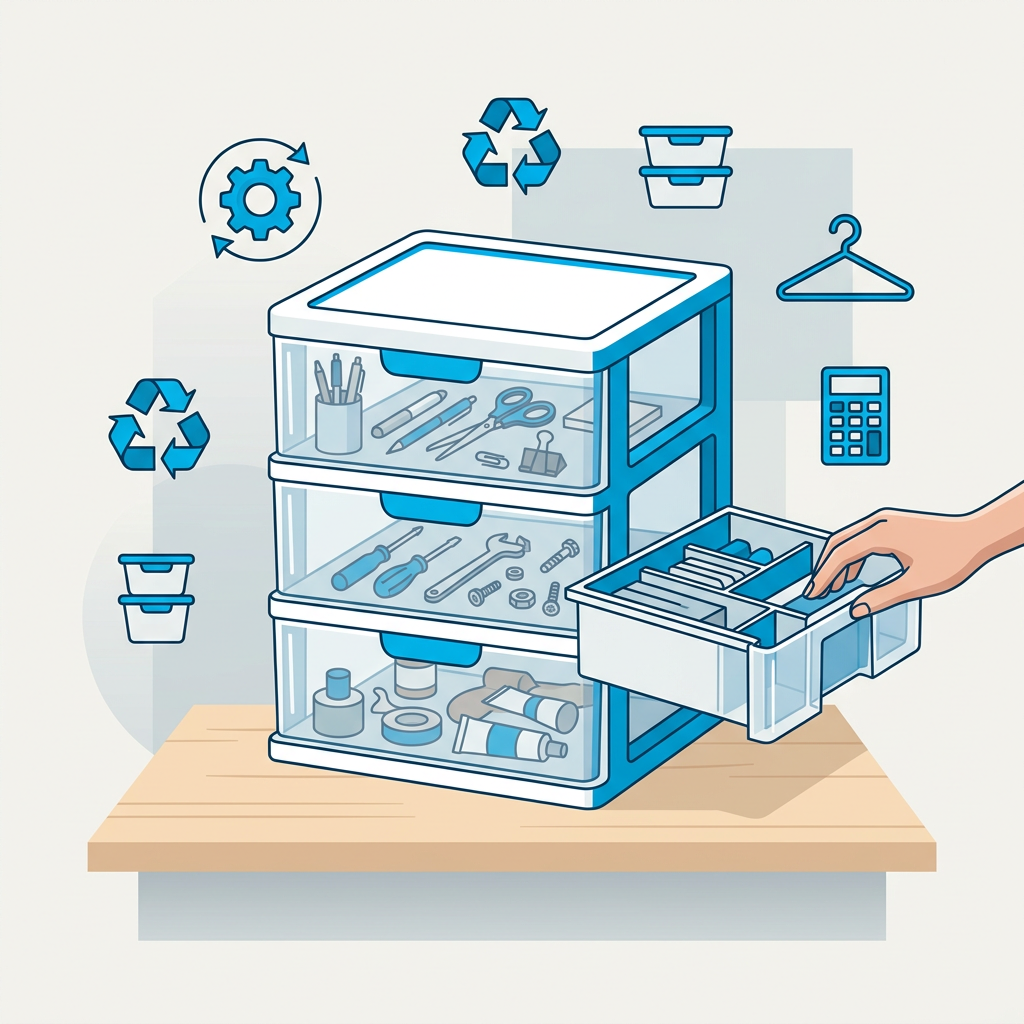
- Office suppliesPerfect for pens, clips, sticky notes, and small USB devices.
- CraftsStore beads, threads, needles, and other small tools for hobbies.
- Cosmetics and jewelryOrganize makeup, hairpins, clips, and small pieces of costume jewelry.
Drawer Units with Wheels
Versatile use
Drawer units with wheels are excellent complements under desks or in workshops where tools are used at different points.
Modular Drawer Units
Large Capacity or Filing Drawer Units
storage boxesPlastic Materials and Quality
Polypropylene (PP)
High-Density Polyethylene (HDPE) or Low-Density Polyethylene (LDPE)
Polystyrene (PS)
Avoid low-quality plastics
Plastic that is too thin can deform with weight or crack with use, considerably reducing the lifespan of the drawer unit.
Recycled Plastic
Criteria for Choosing a Plastic Drawer Unit
Size and Capacity
Number and Size of Drawers
Resistance and Durability
Stability
Design and Aesthetics
Ease of Cleaning and Maintenance
Sustainability
PPCommon material
EasyCleaning
3-5Typical drawers
Advantages and Disadvantages Compared to Other Materials
Advantages of Plastic
- Lightweight: They are easy to move and transport, especially models with wheels.
- Moisture resistance: Ideal for bathrooms, kitchens, laundry rooms, or covered outdoor areas where wood might swell or metal rust.
- Easy to clean: They can be cleaned with a damp cloth, making them hygienic and suitable for environments requiring frequent cleaning.
- Variety of colors and designs: Plastic allows for a wide range of aesthetics, from transparent to opaque and vibrant colors.
- Cost: Generally more economical than wood or metal options of similar quality.
- Durability (depending on quality): Good polypropylene can withstand impacts and years of use without significant deterioration.
Disadvantages of Plastic
- Aesthetics: For some environments, the appearance of plastic may be perceived as less "premium" or formal than wood or metal.
- Heat resistance: Sensitive to extreme heat, they can deform or weaken.
- Environmental impact: If not recyclable or not made from recycled material, they can contribute to the plastic waste problem.
- Load capacity: Low-quality plastic drawer units may not support much weight without deforming or breaking.
Plastic sustainability
Polypropylene, being a thermoplastic, is recyclable. Choosing drawer units made from recycled plastic demonstrates a commitment to environmental sustainability.
Maintenance and Organization Tips
- Regular cleaning. Clean surfaces and the inside of drawers with a damp cloth and mild detergent to remove dust and dirt. Avoid abrasive products that can scratch the plastic.
- Do not overload the drawers. Respect the manufacturer's recommended load capacity to prevent deformation or breakage. Distribute weight evenly.
- Avoid direct exposure to sun and heat sources. UV radiation and heat can degrade plastic, causing it to lose its color and become more brittle over time.
- Use internal organizers. To keep drawers tidy, use dividers, baskets, or small trays. This is especially useful for small items such as pencils, cosmetics, or beads.
- Labeling. If the drawer unit has opaque drawers, consider labeling them to quickly identify contents without having to open them all.