The Essentials
- The strapping tool is a fundamental tool for securing loads, protecting products, and optimizing packaging processes.
- There are various types (manual, semi-automatic, automatic) adapted to different volume needs and load types.
- The right choice depends on packaging volume, product type, strap material, and budget.
- Correct use and preventive maintenance are crucial for safety and operational efficiency.
In the vast universe of packaging and logistics, where merchandise safety and process efficiency are paramount, few tools are as crucial as the strapping tool. This device, in its multiple variants, plays an indispensable role in securing, grouping, and protecting products, from small packages to large pallets. Its main function is to apply and tension a strap around one or more items, creating a compact and secure unit that facilitates their transport and storage, preventing damage and optimizing space.
The importance of the strapping tool transcends the mere act of holding. It is an investment in product integrity, in reducing losses, and in optimizing supply chains. Understanding its operation, the available types, and the key considerations for its selection and use is fundamental for any entity that handles or ships products, whether in a warehouse, a production line, or a point of sale. This article will delve into the world of strapping tools, exploring their characteristics, applications, and how to select the most suitable one for each need, always from an informative and neutral perspective.
What is a Strapping Tool and Why is it Essential in Packaging?
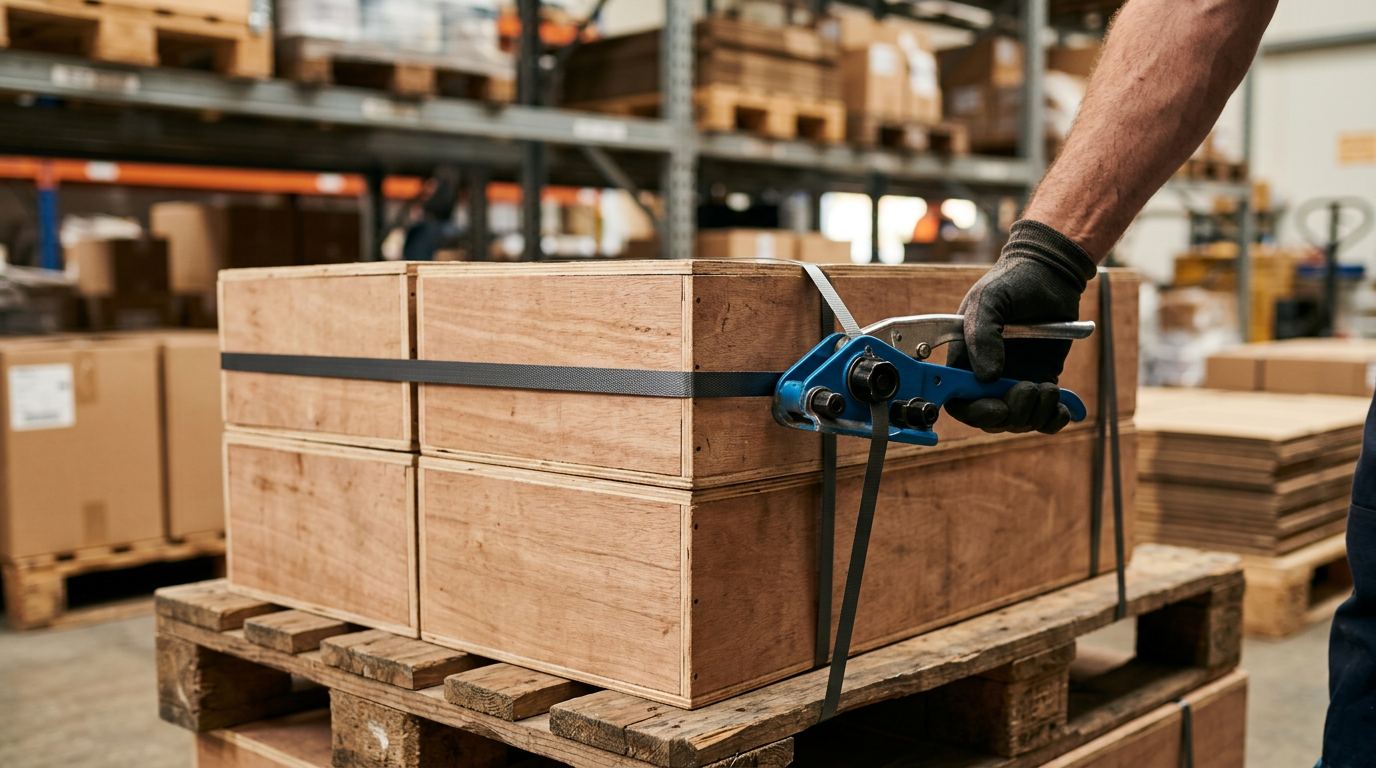
A strapping tool is a machine or tool used to apply a strap, which is a resistant plastic or metal band, around a package, bundle, or pallet. The objective is to compress and secure items, creating a stable and easy-to-handle unit. This process, known as strapping, is vital for:
- Product safety: Protects goods from movement, impacts, and falls during transport and storage.
- Load stability: Groups multiple items, such as wooden boxes or loose products, into a single cohesive unit, preventing them from dispersing.
- Logistical optimization: Facilitates the loading, unloading, and handling of goods, speeding up processes in warehouses and distribution centers.
- Theft prevention: A well-tensioned strap can deter unauthorized openings, although it is not a definitive anti-theft measure.
- Cost reduction: By preventing damage, returns and claims are minimized, and storage space is optimized.
The relevance of this tool extends to a multitude of sectors, from the food and pharmaceutical industry to construction, printing, or the distribution of consumer goods. Its versatility makes it a pillar of modern packaging.
The Origin of Strapping
Strapping has its roots in the use of iron bands to secure barrels and wooden crates in the 19th century. Over time, technology and materials have evolved, giving rise to modern straps and current strapping tools.
Types of Strapping Tools: A Complete Overview
The diversity of strapping tools on the market allows for covering a wide spectrum of needs, from low-volume operations to high-speed production lines. They can be classified mainly by their level of automation and by the type of strap they use.
Manual Strapping Tools
These are the most basic and economical, ideal for low-volume operations or for strapping packages in various locations where portability is key. They require the operator to manually insert the strap, tension it, and then seal it. Within manual tools, we distinguish:
- Buckle/clip strapping tools: They use a metal clip or buckle to join the ends of the strap once tensioned. They are simple to use and require little investment.
- Friction/weld strapping tools: More advanced, they use a mechanism to generate heat by friction between the ends of the plastic strap, welding them together. This eliminates the need for clips and offers a cleaner and more secure seal. They are usually portable and battery-powered.
Advantages: Low initial cost, portability, flexibility. Disadvantages: Slow speed, dependence on operator strength, higher risk of tensioning errors. Ideal for: Small businesses, sporadic packaging tasks, strapping irregular or bulky products at different points.
Semi-automatic Strapping Tools
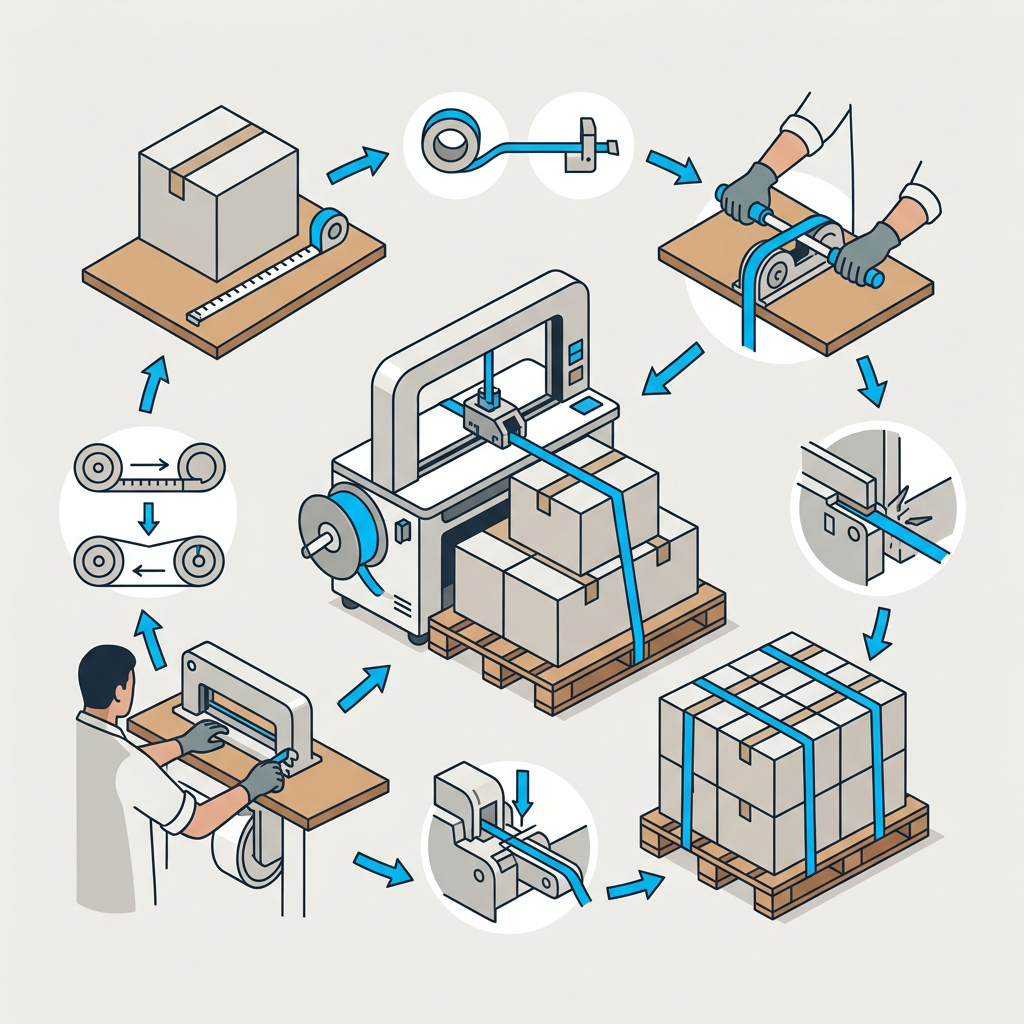
They represent an intermediate step in automation. The operator places the package on the machine, inserts the strap, and the machine automatically tensions and seals it. This speeds up the process and ensures more consistent tension. They are very popular in environments where packaging volume is moderate but does not justify an investment in fully automatic equipment.
Advantages: Faster than manual, uniform tension, reduced operator fatigue, moderate cost. Disadvantages: Require operator intervention in each cycle, limited by arch size (in some models). Ideal for: Stores, warehouses with medium shipping volumes, distribution centers.
Automatic Strapping Tools
Designed for high-production environments, these machines integrate the strapping process into automated packaging lines. They detect the presence of the package, strap it, tension it, and seal it without human intervention. Some can strap a large number of packages per minute and automatically adapt to different sizes. They can be arch-type (for packages passing through the center of the arch) or table-type (for pallets, with a mobile strapping head).
Advantages: High speed, maximum efficiency, minimal human intervention, perfect tension and sealing, integration into production lines. Disadvantages: High initial cost, require specialized maintenance, less flexible for frequent product changes without reconfiguration. Ideal for: Large industries, high-volume logistics centers, production lines with constant merchandise flow.
Consider the Strap
The choice of strapping tool goes hand in hand with the type of strap. Polypropylene (PP) straps are common for light and medium loads, while polyester (PET) offers greater resistance. Metal straps are for extremely heavy and high-risk loads.
Automatic Pallet Strapping Tools (Horizontal and Vertical)
These machines are specifically designed to secure pallets, which often contain plastic boxes, or stacks of wooden boxes or other containers. They can apply straps vertically (across the pallet from top to bottom) or horizontally (around the pallet). They are robust and capable of handling large volumes and considerable weights. Some incorporate edge protector dispensers to protect the edges of the load.
- VerticalSecures the load to the pallet and prevents vertical shifting.
- HorizontalOffers lateral stability and compresses the load.
- CombinedSome systems can perform both types of strapping.
Key Factors When Choosing a Strapping Tool
Selecting the ideal strapping tool is not a trivial decision. It involves considering multiple variables to ensure that the investment is efficient and meets operational and economic expectations. Below are the most relevant aspects:
1. Packaging Volume
- Low (few packages per day): Manual with clip or battery-powered friction.
- Medium (tens to a few hundred per day): Semi-automatic table-top.
- High (hundreds to thousands per day): Automatic, integrated into a line.
2. Product Type and Weight
- Light and fragile: Polypropylene (PP) straps with controlled tension. Gentle manual or semi-automatic strapping tools.
- Heavy and bulky: Polyester (PET) or metallic straps. Robust semi-automatic or automatic pallet strapping tools.
- Irregular products: Manual strapping tools or some semi-automatic ones with adaptable heads may be more suitable.
3. Strap Material
Each material has specific properties that make it more suitable for certain applications:
| Material | Characteristics | Typical Uses | Compatible Strapping Tools |
|---|---|---|---|
| Polypropylene (PP) | Flexible, economical, light, moisture-resistant. Medium tension. | Cardboard boxes, light packages, magazines, gift wrapping paper. | Manual (clip/friction), Semi-automatic, Automatic. |
| Polyester (PET) | High tensile strength and impact resistance, tension stability, UV resistance. | Pallets, construction materials, heavy products, wood, appliances. | Manual (battery friction), Semi-automatic, Automatic, Pallet Strapping. |
| Textile (Fiber) | Very resistant, flexible, does not damage the product, can be re-tensioned. | Irregular loads, delicate products, machine parts. | Manual with metal buckle. |
| Steel | Maximum tensile strength, high rigidity, high temperature resistance. | Very heavy loads, steel, bricks, cut wood, containers. | Manual and pneumatic steel, Specific automatic. |
4. Budget and Operating Cost
Initial investment varies significantly. Manual strapping tools can cost from a few tens of euros, while high-end automatic ones can amount to tens of thousands. In addition to the purchase price, maintenance costs, strap consumption, energy, and spare parts must be considered.
5. Portability and Ergonomics
If strapping is done at different points or on large products that cannot be easily moved, a battery-powered manual or pneumatic strapping tool will be the most practical option. For fixed production lines, portability is less relevant.
6. Additional Features
- Tension adjustment: Essential for adapting to different products.
- Programmable strapping cycles: In automatic machines, to optimize the process.
- Automatic fault detection: To minimize interruptions.
- Strap dispensing systems: To prevent tangles and facilitate loading.
Use and Maintenance of a Strapping Tool
The durability and efficiency of a strapping tool largely depend on its correct use and proper maintenance. Ignoring these practices can lead to premature failures, inefficiencies, and safety risks.
Basic Steps for Correct Strapping (Example with a Battery-Powered Manual Strapping Tool)
- Strap preparation. Ensure that the strap roll is correctly installed in the dispenser (if applicable) and that the end is ready to be inserted.
- Strap placement. Wrap the strap around the package or pallet, ensuring it is well-centered and has no creases.
- Insertion into the strapping tool. Insert both ends of the strap into the strapping tool's slot, following the manufacturer's instructions (usually one fixed end and one mobile end).
- Tensioning. Activate the tensioning mechanism (button on electric, lever on manual) until the desired or programmed tension is reached. It is crucial to avoid overtension, which could damage the product, or undertension, which would compromise safety.
- Sealing/Welding. Once tensioned, the machine proceeds to seal the ends. In manual friction/battery tools, this process starts automatically after tensioning. In clip tools, the clip is placed and closed with the tool.
- Strap cutting. The strapping tool usually cuts the excess strap automatically.
Preventive Maintenance Tips
Maintenance Guide
Regular maintenance extends the life of the strapping tool and ensures optimal performance. It is an investment that prevents costly breakdowns and downtime.
- Regular cleaning: Remove strap residue, dust, and dirt from moving parts, especially tensioning and sealing mechanisms.
- Wear inspection: Regularly check cutting blades, tensioning wheels, motors, and batteries. Replace worn components before they fail.
- Lubrication: Apply appropriate lubricants at the points indicated by the manufacturer, especially on mechanical parts that generate friction.
- Adjustment and calibration: Periodically check tension and sealing. Automatic machines may require calibration by specialized technicians.
- Storage: Store the strapping tool in a clean, dry environment when not in use.
Common Errors When Using a Strapping Tool and How to Avoid Them
Even with the right strapping tool, problems can arise if it is not used correctly. Knowing the most common errors helps prevent them:
- Incorrect strap tension:
- Undertension: The load is not sufficiently secured, with a risk of movement and damage.
- Overtension: Can damage the product (especially fragile boxes like decorative boxes or gift boxes), the strap may break, or the machine may suffer excessive wear.
- Incorrectly placed strap: If the strap is not centered or has creases, tension will not be uniform and it could break. Solution: Ensure the strap is smooth and well-positioned before tensioning.
- Poor maintenance: A dirty or unlubricated machine can experience tensioning, sealing, or cutting failures. Solution: Follow the manufacturer's preventive maintenance schedule.
- Using the wrong strap: Using a strap that is not compatible with the machine or that cannot support the weight and characteristics of the load. Solution: Consult the strapping tool and strap specifications for each application.
- Lack of equipment knowledge: Operating the strapping tool without adequate training can lead to inefficiencies, errors, and even accidents. Solution: Train all personnel who will use the strapping tool, ensuring they understand its operation and safety measures.
Safety First
Always use personal protective equipment (gloves, goggles) when handling straps and strapping tools, especially with metal straps or automatic machines. Disconnect the machine before any maintenance or cleaning operation.
The Future of Strapping: Innovation and Sustainability
The strapping sector, like much of the packaging industry, is moving towards efficiency, automation, and sustainability. Innovations include smarter strapping tools with IoT connectivity for remote monitoring and predictive maintenance, as well as more energy-efficient equipment.
Regarding materials, the search for more ecological straps is constant. This includes straps made from recycled or biodegradable material, thus reducing the environmental impact of packaging. The goal is to offer strapping solutions that not only secure the load but also minimize the carbon footprint.
The customization in packaging, the demand for tailored solutions, and integration with warehouse management systems (industrial shelving) and logistics (basis weight) also drive the evolution of these tools, making them more versatile and adaptable to changing market needs.
In summary, the strapping tool is much more than a simple tool; it is a critical component in the value chain of countless companies. Choosing the right type, understanding its operation, and ensuring diligent maintenance are essential steps to guarantee product safety, operational efficiency, and, ultimately, success in the dynamic world of logistics and packaging.
Frequently Asked Questions
What type of strap is most suitable for heavy pallets?
For heavy pallets, polyester (PET) strap is a common choice due to its high tensile strength and ability to maintain tension over time. For extremely heavy loads or those with sharp edges, steel strap may be the best option, although it requires specific strapping tools and equipment.
Is it mandatory to strap all shipments?
There is no universal obligation to strap all shipments. However, strapping is a highly recommended practice for most packages and pallets, as it improves load stability, protects products from damage during transit, and may be a requirement of some shipping companies or for certain types of merchandise (e.g., hazardous goods).
How long does the battery of a battery-powered manual strapping tool last?
The battery life of a battery-powered manual strapping tool varies significantly depending on the model, battery capacity, frequency of use, and applied tension. Generally, a fully charged battery can allow between 100 and 400 strapping cycles, and many machines include a spare battery for continuous operations.
Can I use a different strap width in my strapping tool?
Not always. Each strapping tool is designed to operate with a specific range of strap widths and thicknesses. Using a strap outside these specifications can cause tensioning, sealing, or cutting failures, or even damage the machine. Always consult the manufacturer's manual for compatible strap types.
What is "bridging" in strapping and how is it avoided?
"Bridging" occurs when the strap is not in full contact with the surface of the package or pallet, forming an air "bridge." This results in ineffective tension and a less secure load. It is avoided by ensuring the strap is tightly fitted to the shape of the load before tensioning, using edge protectors if necessary to protect the edges, and choosing a strap with the appropriate stiffness for the application.