Sustainable Packaging for Eco-Friendly Brands: A Guide
Sincla
Choosing the best sustainable packaging for eco-friendly brands. The transition toward more environmentally friendly business models requires every element of a product to maintain complete consistency. Implementing sustainable packaging for eco-friendly brands is not simply
Choosing the Best Sustainable Packaging for Eco-Friendly Brands
The transition toward more environmentally responsible business models requires every element of a product to maintain complete consistency. Implementing sustainable packaging for eco-friendly brands is not merely an aesthetic trend or a visual add-on; it is a structural necessity to connect honestly with a consumer who, well into 2026, scrutinizes every detail before making a purchase. When the packaging contradicts the principles of the product it contains, the manufacturer's credibility instantly crumbles, directly impacting customer loyalty and market reputation.
Key Takeaways
Packaging must consistently reflect the natural and ethical values of the product it protects.
Prioritizing materials such as FSC-certified wood, plywood free of added formaldehydes, and kraft cardboard ensures a lower environmental impact.
Customization techniques such as laser engraving or water-based inks are essential to avoid compromising the final recyclability of the packaging.
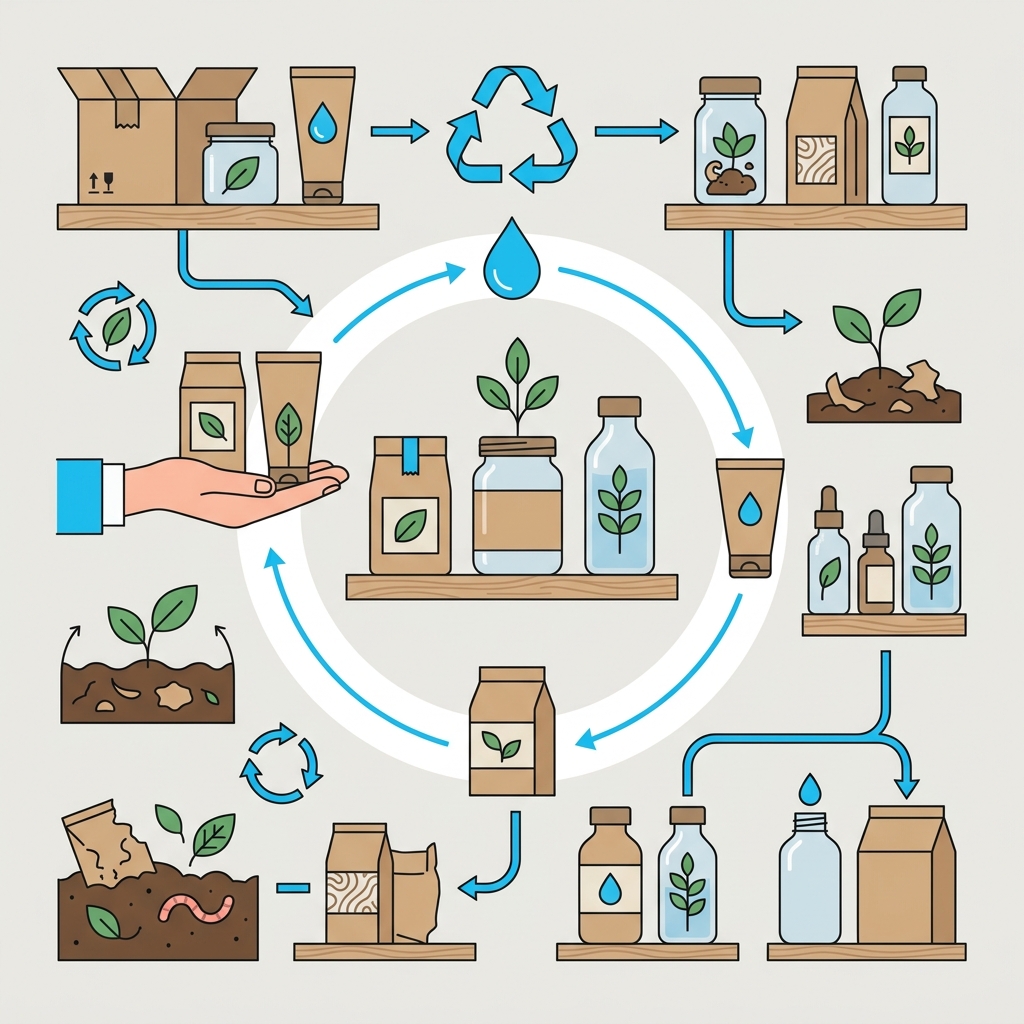
Developing an environmentally friendly packaging strategy involves analyzing the complete lifecycle of the material, from its extraction or origin to its final disposal. The main goal lies in minimizing the carbon footprint, reducing the generation of waste that nature cannot assimilate, and promoting the circular economy through reuse or efficient recycling.
Why Packaging Must Reflect Natural Values
The unboxing experience has become the first physical touchpoint between the consumer and the purchased product. In the eco-friendly sector, this initial interaction is critical. If a customer buys organic cosmetics, locally sourced food, or fair-trade clothing, they expect the packaging to share the exact same philosophy. Finding single-use plastics, synthetic fillers, or boxes laminated with petroleum-derived polymers creates profound cognitive dissonance that damages the perception of quality and honesty.
The Risk of Greenwashing
Using earth tones or leaf symbols on packaging that is structurally neither recyclable nor biodegradable is considered greenwashing. Today's consumers are highly informed and easily detect these practices, which can result in serious reputational crises for any project.
Structural design conceived from an ecodesign perspective not only conveys transparency, but also educates the customer. Well-conceived packaging communicates silently yet effectively that the company cares about the planet's future as much as its profit margins. By integrating sustainable packaging for eco-friendly brands, a solid brand narrative is built, where the container is just as valuable and respectable as the content.
The best packaging is not the one that goes unnoticed, but the one that demonstrates its environmental commitment by extending its useful life or disappearing without leaving a toxic trace in the environment.
Key Materials in Eco-Friendly Packaging
The choice of raw material largely determines the environmental impact of the packaging. Far from standardized solutions based on fossil derivatives, the market offers organic, renewable, and highly durable alternatives. When designing, for example, packaging for handmade natural cosmetics or gourmet food containers, the following materials stand out for their excellent technical and environmental properties.
Forest-Certified Wood (FSC or PEFC)
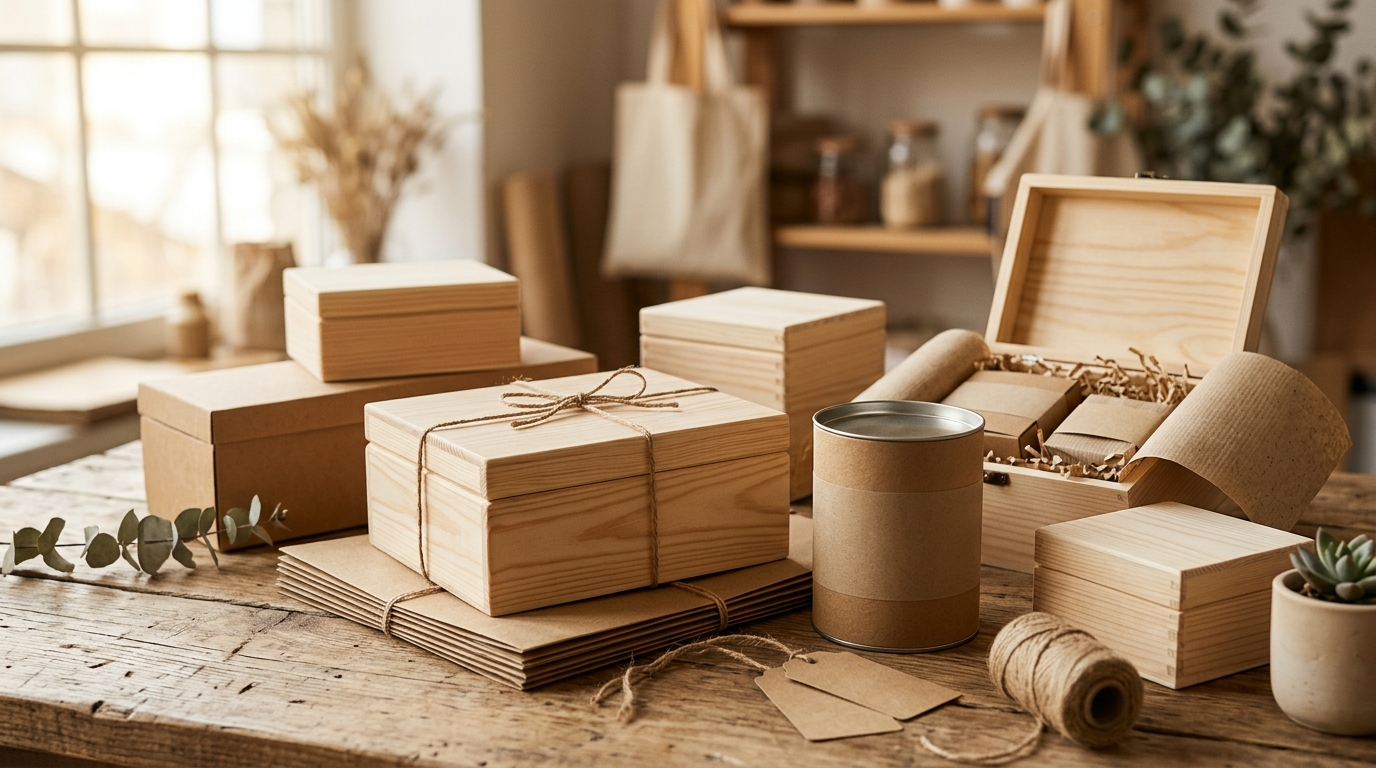
Solid or processed wood sourced from responsibly managed forests is one of the most valued resources in the premium sector. Certifications such as FSC (Forest Stewardship Council) guarantee that harvesting has respected biodiversity, natural regeneration rates, and the rights of local communities. Wooden boxes provide exceptional rigidity and, above all, instinctively invite reuse, becoming storage items in homes for years.
FSCSustainable forests
100%Organic material
0%Single-use plastics
Eco-Friendly Plywood and MDF
Plywood, made of thin bonded wood veneers, and MDF (medium-density fiberboard) are extremely versatile options. For these materials to be truly compatible with an eco-friendly model, it is essential to verify that the adhesives and resins used in their manufacturing are free of added formaldehydes or other harmful volatile organic compounds (VOCs). Their main advantage is dimensional stability, which is ideal for machining parts without wasting resources.
Kraft and Corrugated Cardboard
Natural, unbleached kraft cardboard represents the standard in eco-friendly e-commerce. It is lightweight, which reduces emissions from transport, and boasts extremely high recovery and recycling rates across most European countries. However, its vulnerability to moisture and severe impacts requires meticulous engineering design to protect fragile items without resorting to internal plastic foams.
Material
Main Advantage
Reuse (Second Life)
Ideal End of Life
Certified solid wood
Premium perception and extremely high durability.
Very high (decoration, storage).
Biodegradation / Biomass.
Plywood / MDF
Stability and ease of custom machining.
High (organizer boxes).
Wood recycling.
Kraft Cardboard
Lightweight and low production and shipping costs.
Low / Medium.
Recycling bin.
Criteria for Selecting Low-Impact Packaging
Selecting the right format involves going beyond mere aesthetics. Industrial designers and procurement managers must evaluate a series of technical parameters to ensure that packaging fulfills its primary function (protecting and transporting) while generating the smallest possible footprint.
Verifiable certificationsRequire official seals that endorse the renewable origin and traceability of the materials used.
Monomaterial designAvoid mixing paper with plastics or metals that make separation impossible at recycling plants.
Volumetric optimizationTailor the exact size to the product to avoid shipping "air" and reduce logistical emissions.
Reuse potentialCreate a design robust and aesthetic enough that the end user decides to keep it and give it a second life.
A crucial factor is reducing weight and volume without compromising structural safety. Freight transport is one of the largest contributors to greenhouse gas emissions globally. Reducing the thickness of packaging by just a few millimeters, provided the product's integrity is not at risk, can translate into a significant decrease in the fuel required for every pallet shipped.
Likewise, modularity and smart assembly without using toxic glues provide great value. Friction-fit systems or retention tabs in wood and cardboard eliminate the need for chemical adhesives, greatly facilitating the composting or recycling process at the end of the container's lifecycle.
Custom wooden boxes
Discover our wooden boxes for packaging, hospitality, events and more. In-house manufacturing and full customisation.
Opting for sustainable packaging for eco-friendly brands does not mean giving up visual identity or branding. Customization is vital to stand out on the shelf and communicate required legal information. However, traditional techniques often use chemical solvents, plastic coatings (spot UV), or laminates that ruin the recyclability of the packaging. Today, clean and highly effective methods exist.
Laser Engraving as a "Zero Waste" Solution
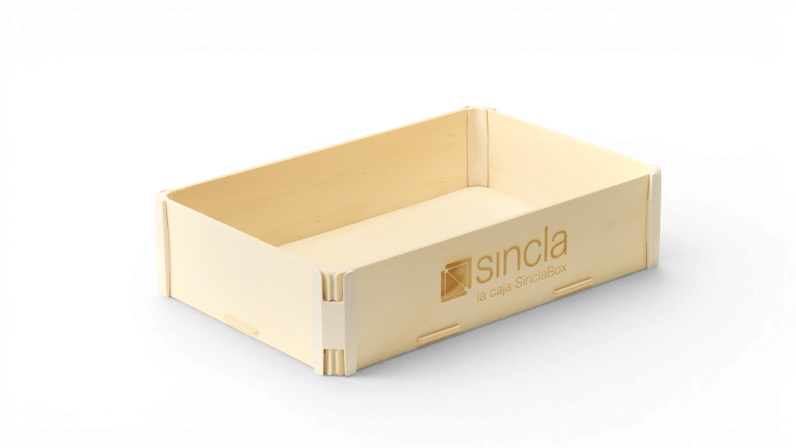
When applying logos or text onto wood using laser engraving, no ink, solvent, or chemical is added to the material. The contrast is achieved by superficially scorching the outer layer, keeping the packaging 100% organic and compostable without generating waste during the marking process.
For projects requiring the application of color, the mandatory alternative is screen printing or pad printing with water-based or vegetable-based inks (such as those derived from soy). These inks dispense with heavy metals and volatile solvents that contaminate groundwater and hinder de-inking processes in paper recycling plants.
Another common technique is hot foil stamping. Although it uses a very thin film to transfer pigments or metallic effects using heat and pressure, the amount of material deposited is so minuscule that current regulations generally consider it suitable for standard cardboard recycling, provided its coverage area is limited.
Step-by-Step Process to Make the Transition
Implementing a new packaging standard in an active business requires a methodical approach to avoid disruptions in the supply chain or unnecessary extra costs. A rushed change can lead to stockouts or the selection of inefficient solutions.
Audit current packaging. Break down all the components that make up the current package (outer box, fillers, adhesive tapes, labels). The goal is to identify which elements provide real value and which are superfluous or highly polluting.
Define technical and design requirements. Establish the maximum weight, product fragility, storage conditions (humidity, temperature), and branding requirements. This will narrow down the families of materials suitable for the project.
Prototyping and physical testing. Before making a large-scale investment, it is imperative to check strength and actual appearance. It is essential to request packaging samples before buying large runs, subjecting the box to stress, stacking, and real-world shipping tests.
Optimize logistics and assembly. Evaluate how much time warehouse staff need to assemble each box and how the empty packaging is stored. Formats delivered flat-pack minimize storage space.
Customer communication. The final, but no less important, step is informing the consumer. If the packaging has an intended second life (for instance, wooden boxes for specialty coffee that later serve as tea or spice organizers), this should be explicitly communicated on the exterior or interior of the packaging itself.
Common Mistakes When Implementing Eco-Friendly Packaging
In the eagerness to project a green image, it is common to fall into certain strategic missteps. The most frequent is overpackaging under a false premise of sustainable luxury. Adding multiple layers of kraft cardboard, sleeves, natural cord ribbons, and excess wood shavings for a tiny product is still a waste of natural resources, no matter how organic they may be. Minimalism and efficiency must prevail over excessive ornamentation.
Pay Attention to Closures and Adhesives
A frequent mistake is designing a perfectly sustainable cardboard or wooden box and ruining it by sealing it with PVC plastic packing tape or synthetic stickers. Comprehensive solutions should always be sought, such as mechanical tab closures, water-activated kraft paper tape, or paper labels with compostable adhesive.
Another common mistake is failing to research the local recycling infrastructure. A material may be certified as biodegradable in a laboratory (under industrial conditions), but if in reality it ends up in a conventional landfill or an incinerator, its supposed environmental benefit is canceled out. Opting for materials with mature, universal, and easily understandable recycling processes for the average user (such as non-laminated paper or clean wood) is always the safest and most honest strategy for any sustainable packaging for eco-friendly brands.
Frequently Asked Questions
What is the difference between compostable and biodegradable packaging?
All compostable materials are biodegradable, but not all biodegradable materials are compostable. Biodegradable matter breaks down in nature through biological action over time, but without a defined timeframe, and sometimes leaving residues behind. Compostable matter breaks down within a strict period under specific conditions (humidity, temperature, oxygen), transforming into nutrient-rich compost without leaving any toxicity.
Is wood a genuinely sustainable option compared to recycled cardboard?
Yes, provided it comes from controlled logging and certified forests (FSC/PEFC). While it requires more resources for its initial harvesting and manufacturing than cardboard, its durability rate is exponentially higher. Wood acts as a carbon sink (storing carbon throughout its useful life), and its extremely high capacity for reuse offsets the impact of its initial production, especially in premium sectors.
Can vivid colors be used in environmentally friendly packaging?
Absolutely. Sustainability does not conflict with color, as long as the right formulations are used. Water-based inks, plant-based pigments (such as those derived from algae or soy), and modern flexographic or screen printing techniques allow for vibrant Pantone colors without using petroleum-derived solvents that hinder the recycling of cellulose fibers or pollute water systems.
How does material weight or thickness affect sustainability?
Directly. The higher the basis weight and thickness, the heavier the packaging. This increases the amount of raw material extracted, production costs, and, crucially, the carbon footprint associated with transport logistics. Efficient packaging engineering always aims to achieve maximum structural strength using the lowest possible thickness (and weight).
What certifications are essential when evaluating packaging suppliers?
Generally speaking, the most recognized and reliable are FSC or PEFC for wood and paper derivatives, guaranteeing responsible forest origin. It is also important to look for ISO 14001 compliance (Environmental Management Systems) and confirm that manufacturing processes adhere to relevant regulations concerning the minimization of heavy metals and packaging waste management.