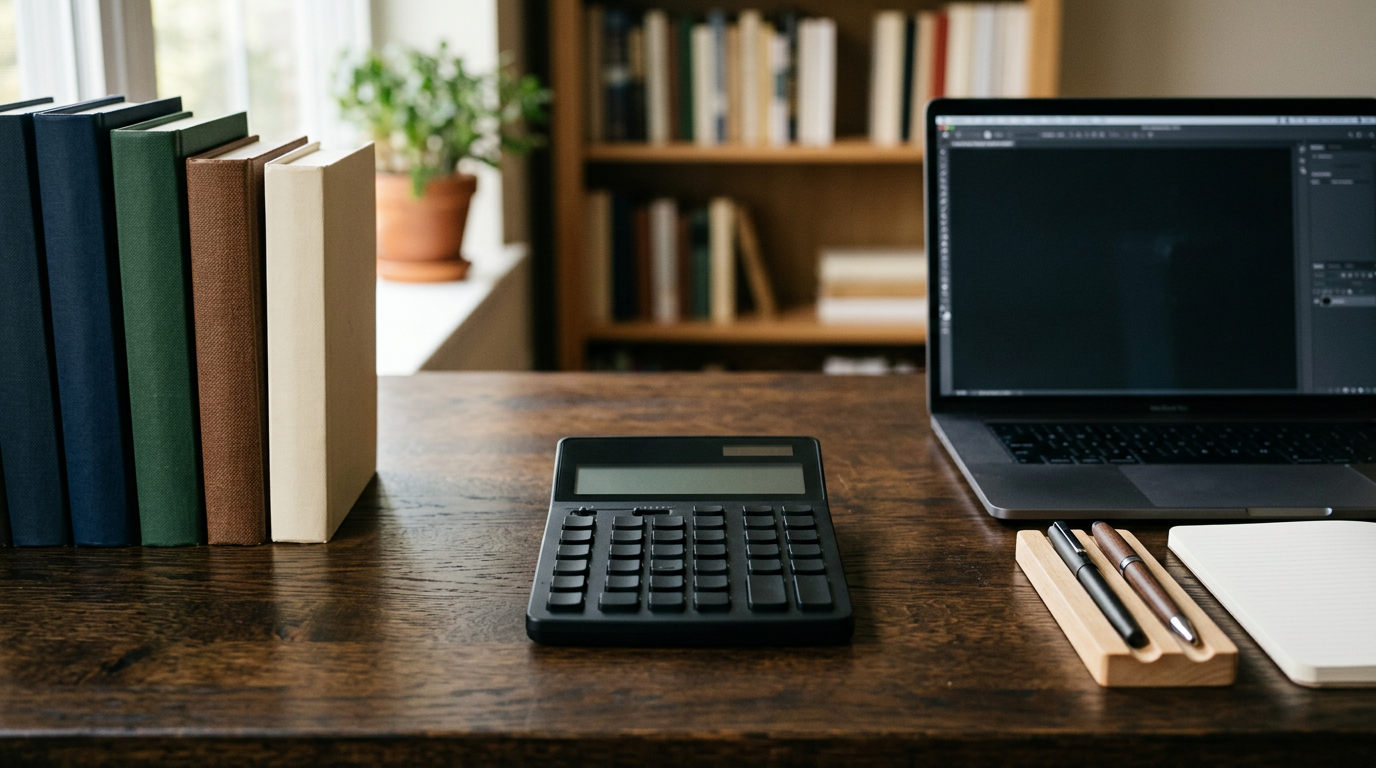
The Calculator: An Essential Instrument in Modern Calculation
The calculator, in its various forms, has been a fundamental tool for humanity since its dawn, facilitating everything from the most basic operations to the most complex scientific calculations. Among the manufacturers that have marked a milestone in the evolution of these devices, certain brands stand out as prominent figures of reliability, innovation, and accessibility. From the first mechanical models to today's sophisticated programmable and graphing calculators, these devices have been constant companions for students, engineers, scientists, and professionals in various fields, adapting to the changing needs of the market and technology.
The Essential
- Leading manufacturers have driven innovation in calculators since the 1950s.
- There is a wide range of calculators, from basic to programmable and graphing.
- Choosing the right model depends directly on the user's specific needs.
- Durability and functionality are the main desired characteristics in these devices.
This article explores the legacy of calculators that have defined the standard, their main types, the distinctive features that have made them the preferred choice for millions of users, and how to choose the most suitable model for each need.
History and Evolution of the Electronic Calculator
The origins of the electronic calculator date back to the mid-20th century, marking a radical change from abacuses, slide rules, and mechanical calculators that dominated the scene for centuries. The development of solid-state electronics and, subsequently, integrated circuits, allowed for the miniaturization and mass production of these devices. Visionary companies recognized the potential of these new technologies to democratize access to complex calculation tools.
One such company, which emerged in this context, stood out for its rapid adoption of technological innovations. In its early days, it focused on relay calculators, quickly evolving into transistorized models and, finally, into accessible pocket calculators, transforming the market and making calculation portable and personal for the first time. This trajectory is a testament to the constant pursuit of efficiency and functionality, always remaining at the forefront of technological possibilities. The history of these machines is a reflection of how technology can be empowering, putting complex tools within everyone's reach.
Innovation and Society
The introduction of electronic pocket calculators not only revolutionized education and science but also democratized access to complex calculations, fostering greater numerical literacy in society.
Types of Calculators and Their Applications
The diversity of needs has led to the development of a wide range of calculators, each designed with specific functions to optimize work in different fields. Below, the most common types are detailed, highlighting their characteristics and uses.
Basic and Desktop Calculators
These are the simplest calculators, designed to perform fundamental arithmetic operations such as addition, subtraction, multiplication, and division. They often include additional functions such as percentage, square root, and memory. They are ideal for home use, retail, and office tasks where calculations are not overly complex.
- Features: Large, easy-to-read displays, spaced buttons, dual power (solar and battery), ergonomic designs for prolonged use.
- Applications: Basic accounting, primary school homework, personal expense management, retail sales.
Scientific Calculators
Designed for students and professionals in science, engineering, and mathematics. They perform a wide range of advanced functions, including trigonometric, logarithmic, exponential, statistical, and fraction handling. They are indispensable in secondary and university education, as well as in professional environments that require technical calculations.
- Features: Structured menus, multiple calculation modes (degrees, radians, gradians), pre-programmed scientific constants, unit conversions.
- Applications: Algebra, calculus, physics, chemistry, engineering, architecture courses.
Smart Choice
For students, considering exam regulations is crucial, as some tests limit or prohibit the use of programmable calculators or those with certain functionalities.
Graphing Calculators
They represent the pinnacle of portable calculator technology. In addition to all the functions of a scientific calculator, they can graph equations, analyze complex statistical data, and, in many cases, run programs. They are vital tools for advanced study of mathematics, physics, statistics, and economics at the university level, and for professionals who require data visualization.
- Features: High-resolution screens, data storage capacity, connectivity with computers, intuitive user interface for programming.
- Applications: Advanced calculus, linear algebra, economic models, function analysis, graphical design of equations, simplified programming languages.
Financial Calculators
Specially designed for finance, accounting, and business professionals. They include functions for compound interest calculations, amortization, net present value (NPV), internal rate of return (IRR), and cash flows. They are essential for investment analysis, financial planning, and economic modeling.
- Features: Dedicated keys for financial functions, simplified spreadsheet modes, cash flow analysis.
- Applications: Banking, accounting, investment management, real estate, corporate finance.
Battery Life
Many models include a combination of solar and battery power, significantly extending the device's lifespan and reducing the need for frequent battery replacements.
Criteria for Choosing the Right Calculator
Choosing a calculator should not be taken lightly, as the right device can be a great ally in study or work. Considering several factors is key to making an informed decision.
- Academic or Professional Level. Fundamental for determining necessary functions.
- Specific Functions. Some disciplines require very specific features for their study.
- Available Budget. The quality-price ratio is an important factor when purchasing.
- Exam Regulations. Crucial for high school and university students.
- Ergonomics and Design. Comfort for prolonged use and visual ease.
Additional Considerations
In addition to the types and criteria mentioned above, there are technical aspects that can influence user experience and device durability. Screen quality, for example, can range from monochromatic LCDs to high-resolution color displays that facilitate the visualization of complex graphs and texts.
Durability is another crucial factor. Models designed for students often feature sliding protective covers and robust constructions to withstand daily use and accidental bumps. The power source is also important: some models run exclusively on batteries, while others incorporate solar panels for greater autonomy, a particularly useful feature for devices used frequently or in places where access to replacement batteries may be limited.
Connectivity, in the case of advanced graphing calculators, allows for the transfer of data and programs to computers or other calculators, expanding their capabilities and facilitating collaborative work or information storage. These features demonstrate the effort to offer complete tools adaptable to a wide range of users.
Certain manufacturers have demonstrated a remarkable ability to integrate these considerations into their designs, offering a wide catalog that ranges from the most basic to the most sophisticated calculators, always with a focus on quality and optimized functionality. This approach has cemented their reputation as a trusted brand in the field of calculation. Even in today's digital world, the value of a physical and reliable tool for quick and precise calculations remains irreplaceable for many. It is a testament to how certain tools, like the pen for writing, retain their irreplaceable niche, beyond mere functionality.