The complete guide to the staple remover: An essential ally in organization

The essentials
- The staple remover is indispensable for safe and efficient staple extraction.
- There are plier-style, wedge-style, and electric types, adapted to different needs.
- Its correct use protects documents, prevents injuries, and facilitates paper recycling.
- The choice depends on the volume of use, paper thickness, and desired ergonomics.
History and evolution of the staple remover
Types of staple removers: Designs for every need
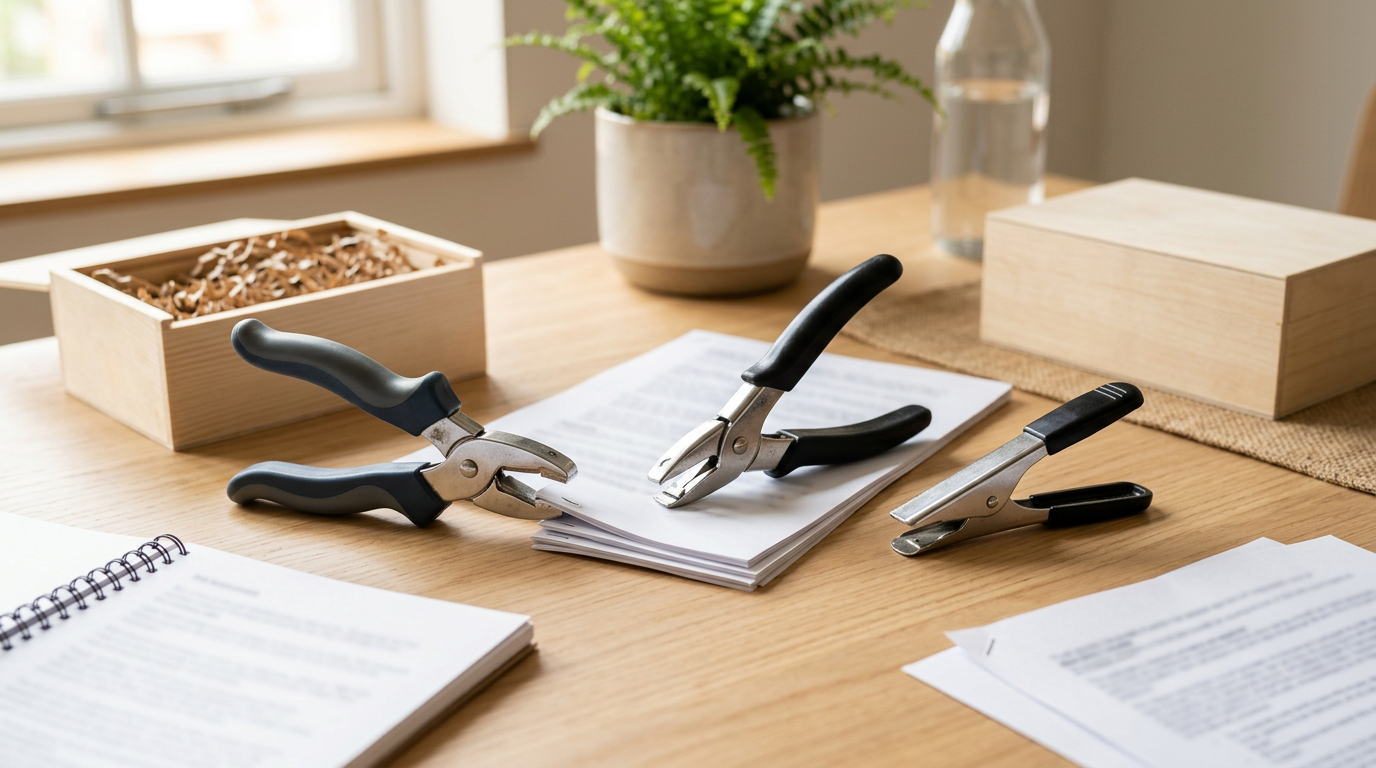
- Plier-style or claw type. Most common design, ideal for general use and medium staple volume.
- Wedge-style or blade type. Compact and portable, perfect for small tasks and standard staples.
- Electric or automatic. For large volumes, speeds up work and reduces effort.
- Specialized. Designed for industrial, upholstery, or large staples.
Plier-style staple removers (or claw type)
- Advantages: Ergonomics, ease of use, good grip on the extracted staple.
- Materials: Metal body (stainless steel, alloys) with plastic or rubber handles.
- Uses: Ideal for most office tasks and standard staples.
Wedge-style staple removers (or blade type)
- Advantages: Portability, discreet design, often more economical.
- Materials: Primarily resistant plastic with a metal tip.
- Uses: Suitable for occasional use, carrying in pencil cases, or for documents with few pages.
Versatility
Wedge-style staple removers are excellent as a backup or for personal use, but may not be as effective with very tight or thick staples.
Electric or automatic staple removers
- Advantages: Speed, reduced physical effort, ideal for users with mobility limitations.
- Materials: High-resistance plastics with internal metal and electronic components.
- Uses: Extracting large quantities of staples in a short time and handling bulky documents.
Specialized staple removers
Key fact
The choice of material is fundamental for durability. Metal staple removers typically offer a longer lifespan and better performance, especially with robust staples.
How to use a staple remover correctly: Step by step
- Identify the staple. Place the document on a flat surface and locate the staple.
- Position the staple remover.
- Plier-style: Open the tips and slide them under the staple's legs.
- Wedge-style: Insert the tip of the wedge under one of the bent legs or under the staple's bridge.
- Activate the mechanism.
- Plier-style: Gently squeeze the handles. The tips will lift and straighten the staple's legs, releasing it.
- Wedge-style: Apply slight leverage upwards. It may be necessary to repeat the movement for each leg.
- Remove the staple. Once released, remove it from the document. Many plier-style staple removers retain it to prevent it from flying off.
- Dispose of the staple. Discard the staple in an appropriate container, preferably metal recycling.
Practical tip
For very tight or multiple staples, use a plier-style staple remover. Always hold the paper firmly to prevent tearing and ensure clean extraction.
Maintenance and care for greater durability
- Cleaning: Regularly remove staple and paper debris.
- Lubrication: For metal models, especially plier-style ones, a drop of lubricant on the joints once a year prevents rust and ensures smooth movement.
- Storage: Store the staple remover in a drawer or pen holder to protect it from drops that could misalign its components.