The Gift Bag: A Wrapper with Purpose and Personality

The Essential
- The gift bag is a versatile and practical wrapper that adds value to any gift.
- There is a wide variety of materials, from recycled kraft paper to luxurious fabric, adapting to different needs and budgets.
- Personalization through printing, handles, and tags allows for communicating a message or reinforcing a brand identity.
- Sustainability and reusability are key factors in choosing gift bags today.
- The right choice involves considering size, material, design, durability, and the message you wish to convey.
Evolution and Relevance of the Gift Bag
- Convenience: They are quick to use, eliminating the need for scissors, tape, or wrapping paper.
- Versatility: They adapt to a wide range of gift shapes and sizes, from small objects to considerable volumes.
- Presentation: They offer a clean and professional finish, ideal for any occasion.
- Personalization: They allow for incorporating branding elements, personalized messages, and aesthetic designs.
- Sustainability: Increasingly, they are made from recycled, recyclable, or reusable materials, aligning with conscious consumption trends.
Key Fact
The widespread adoption of the gift bag correlates with the search for efficient packaging solutions that do not compromise aesthetics.
Types of Gift Bags by Material and Design
Common Materials
- Kraft Paper: A very popular option for its strength, cost-effectiveness, and natural appearance. It comes in plain, printed, recycled, and bleached variants. It's excellent for a rustic or eco-friendly look. Cardboard moving boxes, for example, also benefit from kraft's strength.
- Coated or Art Paper: Offers a smooth, glossy surface, ideal for high-quality prints with vibrant colors and fine details. It is preferred by brands seeking a more premium and sophisticated presentation.
- Recycled/Sustainable Paper: Made from recycled fibers or sustainably managed sources (like FSC-certified paper). It is an environmentally conscious option, highly valued by consumers and businesses with ecological values.
- Fabrics (cloth, cotton, jute, non-woven): Provide a luxurious feel and are highly reusable. Ideal for high-value gifts, special events, or as part of a sustainable brand strategy. Jute, in particular, offers a rustic and organic aesthetic.
- Plastic (Non-woven Polypropylene or PP non-woven): Durable, water-resistant, and highly reusable. It is common in retail stores for its strength and printability. However, its perception of sustainability is lower than that of cellulose-based or natural fiber materials.
FSCCertified Wood and Paper
60%Min. recycled content (paper)
10 kgMaximum load (premium bags)
Handle Types
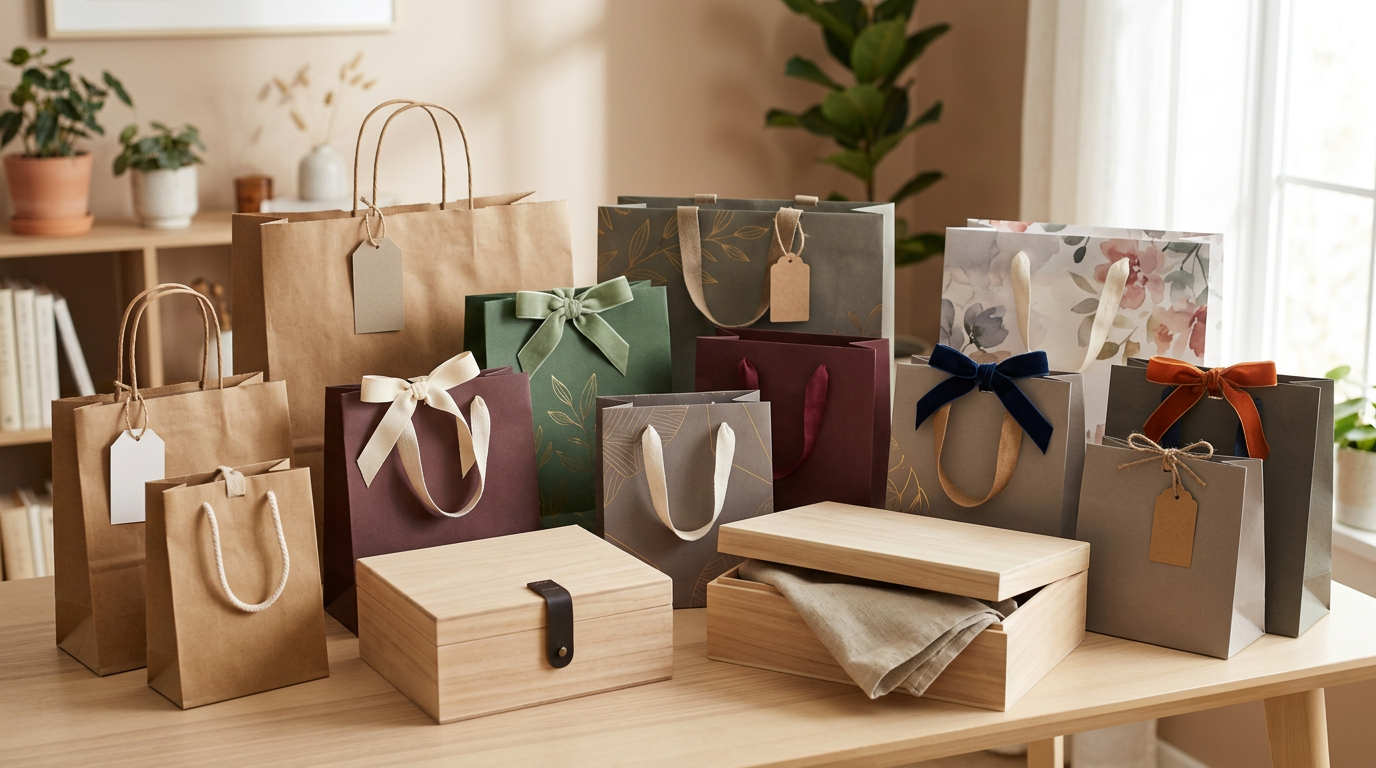
- Die-cut Handles: Simple cuts in the upper part of the bag, common in more economical paper or plastic bags.
- Cord Handles: Made of cotton, PP, or satin, they offer an elegant touch and greater resistance. They can be matching or contrasting colors. Twine is a key element here.
- Flat Paper Handles: Integrated into the bag, they are an economical and robust option for general-purpose paper bags.
- Ribbon Handles: Fabric or satin ribbons that are tied or glued, providing a sophisticated finish, ideal for premium gifts.
- Reinforced Handles: For heavy loads, some bags incorporate internal reinforcements or thicker, sewn handles.
Personalization and Finishes: Brand Identity in Every Detail
- Offset printingIdeal for large runs and complex designs with multiple colors and gradients.
- Screen printingPerfect for logos and text in one or two colors, especially for medium runs.
- Hot stamping (foil blocking)Adds a touch of luxury with metallic (gold, silver) or bright color effects.
- Embossing/DebossingCreates subtle and elegant textures and three-dimensional effects.
- Laminated finishesMatte or glossy lamination that improves resistance and perceived quality.
Design Tip
Consider the contrast between the bag color and the print. A white logo on natural kraft creates a minimalist and organic effect, while golden hot stamping on a dark background elevates luxury.
Sustainability in Gift Bags
Sustainability Criteria
- Recycled Materials: The use of kraft paper or cardboard containing a high percentage of recycled fibers is fundamental.
- Recyclable Materials: It is important that the bag, once its useful life cycle is over, can be deposited in appropriate containers for subsequent recycling.
- Biodegradable/Compostable Materials: Some bags, especially those made from corn starch or certain bioplastics, can decompose in the environment under specific conditions.
- Reuse: Designing durable bags, with resistant materials and comfortable handles, encourages their reuse by the recipient. This reduces the need to produce new bags and extends their useful life.
- Eco-friendly Inks: The use of vegetable-based or water-based inks, free of heavy metals and harmful solvents, is a plus in manufacturing.
- Certifications: Look for seals like FSC (Forest Stewardship Council) for paper, which guarantees responsible forest management.
Common Mistakes When Choosing a Gift Bag
Watch out for this!
A common mistake is prioritizing cost over quality or suitability. A cheap but poor-quality bag can tear, detract from the gift, and project a negative image.
- Incorrect Size: A bag that is too small for the gift to fit comfortably, or one that is too large, causing the gift to "rattle" inside, are aesthetic and functional errors.
- Inadequate Material for Weight: A thin paper bag for a heavy object can tear or give way, creating an awkward moment for the recipient.
- Design Misaligned with the Occasion: Using a bag with childish motifs for a corporate gift, or a very sober one for a vibrant party, clashes with the context. To choose well for an event, you can find inspiration in birthday gift ideas.
- Ignoring Sustainability: In the current era, opting for non-recyclable bags or those made from questionable materials can be perceived negatively.
- Lack of Personalization (for businesses): Not taking the opportunity to add a logo or brand message is losing a valuable touchpoint.
- Weak or Uncomfortable Handles: If the gift is bulky or heavy, the handles must be sturdy and comfortable for transport.
How to Choose the Perfect Gift Bag: A Practical Guide
- Define the Purpose and Occasion: Is it for a birthday, a wedding, a corporate event, a store sale? This will influence the style, color, and level of formality.
- Consider the Size and Weight of the Gift: Make sure the bag is large enough to contain the item and strong enough to support its weight without risk of tearing. Slightly larger is always preferable to too snug.
- Choose the Right Material:
- For an eco-friendly or rustic presentation: Kraft paper or jute.
- For a premium touch and vibrant colors: Coated paper or fabric bags.
- For durability and reuse: Non-woven polypropylene.
- Think About the Design and Finish:
- Do you need logo printing or a specific design?
- A matte or glossy finish?
- A touch of luxury with hot stamping or an embossed effect?
- Evaluate the Handles: What type of handle will be most comfortable and aesthetically appropriate? Cords for elegance, flat for practicality, or reinforced for weight.
- Sustainability Factor: If ecological awareness is important, look for recycled, recyclable, biodegradable materials and certifications.
- Budget: Although quality is important, there are options for all price ranges. A good balance between quality, aesthetics, and cost is key.
| Feature | Standard Gift Bag | Premium Gift Bag |
|---|---|---|
| Material | Kraft paper, recycled paper, thin plastic | High-grammage coated paper, fabric (cotton, linen), jute, thick PP non-woven |
| Handles | Die-cut, flat paper | Cotton/PP cord, satin ribbon, sewn handles |
| Finishes | Simple offset printing, no lamination | High-resolution offset printing, screen printing, hot stamping, embossing, matte/glossy lamination |
| Durability | Single or very limited use | Multiple uses, high resistance |
| Cost (per unit) | Low to medium | Medium to high |
| Perception | Functional, practical | Sophisticated, luxurious, durable |