El bloc de notas: Tu aliado en organización y creatividad
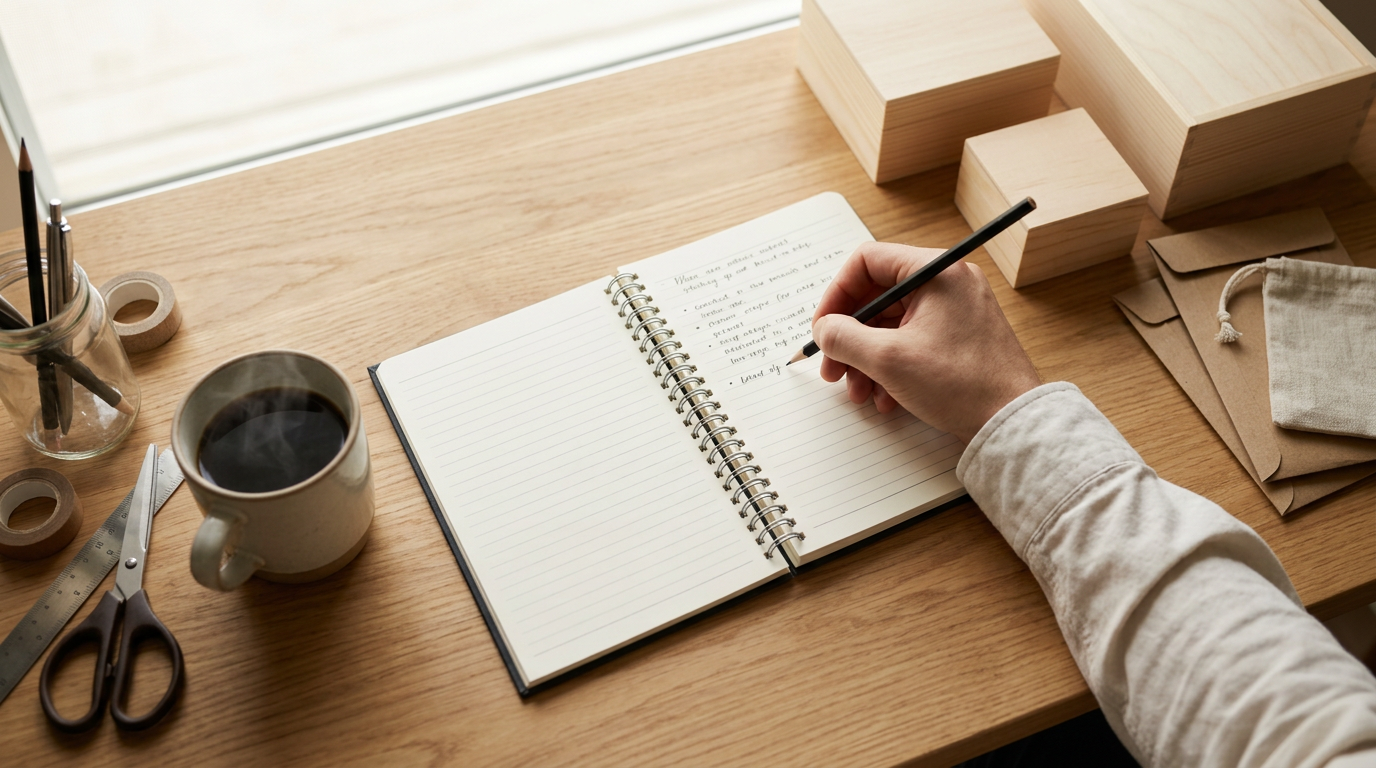
The Notebook: An essential ally in organization and creativity
In an increasingly digitized world, the humble **notebook** maintains its relevance as an indispensable tool for organization, creativity, and productivity. Far from being a simple collection of paper sheets, this everyday object has adapted to diverse needs and styles, offering a tangible space to capture ideas, plan tasks, and express thoughts. From the student taking quick notes to the professional sketching strategies, the artist drawing inspirations, or the enthusiast jotting down shopping lists, the notebook is a versatile companion that promotes mental clarity and efficient information management.The essentials
- The notebook is a versatile tool for organization, creativity, and productivity in the digital age.
- There are various types (spiral, glued, graph, dotted, etc.) adapted for specific uses.
- The choice of material (paper, cover) and format directly influences the user experience.
- It offers cognitive benefits such as improved memory and stress reduction.
- Personalization transforms a simple notebook into a powerful tool for personal or corporate identity.
Types of notebooks: Finding the ideal format
The variety of notebooks available on the market is vast, designed to satisfy a wide spectrum of needs and preferences. Each type offers specific characteristics that make it more suitable for certain tasks or environments.By binding type
- Glued notebooks: These are perhaps the most common for daily use. The sheets are bound along one edge with glue, allowing them to be torn off cleanly and easily. They are ideal for lists, errands, and quick notes that do not need to be permanently archived in the notebook.
- Spiral notebooks: Characterized by a spiral spine (metal or plastic) that binds the sheets and cover. Their main advantage is that they allow the notebook to open completely flat (360 degrees), facilitating writing and the use of both sides of the page. They are very popular for students, professionals, and anyone who needs comfort when writing on the go.
- Stitched or bound notebooks: Similar to traditional exercise books, their pages are sewn or glued more robustly to the cover, which gives them greater durability and a more formal appearance. They are excellent for diaries, long-term projects, or for those who prefer to keep their notes permanently.
- Ring-bound notebooks: These allow sheets to be added, removed, or reorganized, making them extremely flexible. They are perfect for organizing complex projects, keeping a modular record, or creating a personalized filing system.
By page design
- Plain pages (unlined): Offer complete freedom for drawing, sketching, writing, or diagramming without restrictions. They are favorites of artists, designers, and people who value limitless creativity.
- Ruled pages: The classic format, with horizontal lines that guide writing and maintain uniformity. They are ideal for taking notes, writing long texts, and to-do lists. The distance between lines can vary (French rule, simple rule, etc.).
- Graph pages: With a grid of squares, they are perfect for graphs, technical drawings, mathematics, diagrams, and for those who need precise guidance to align text or drawings.
- Dotted pages (dot grid): A hybrid option that combines the flexibility of plain pages with the subtle guidance of graph pages. The dots provide a reference without being intrusive, making them popular for bullet journaling, sketching, and designs.
Choose according to your tool
If you use fountain pens, look for paper with a higher basis weight (90 gsm or more) and low absorption to prevent ink bleed-through or feathering. For pencils, paper with some texture may be more pleasant.
Materials and quality: The foundation of a good experience
The choice of materials in a notebook is not merely aesthetic; it directly influences durability, the feel of writing, and the perceived value.The paper: Basis weight, texture, and origin
- Basis weight (gsm): Refers to the weight of the paper per square meter (g/m²). A standard basis weight for notes is 70-80 g/m². For more premium use, such as diaries or sketches, 90-120 g/m² is preferred, which reduces ink bleed-through and ghosting. Watercolor or drawing papers can exceed 200 g/m².
- Texture: Can be smooth, satin, or with a slight grain. Smoother papers are excellent for gel pens and fine markers, while a slight texture may be preferable for pencils and some fountain pen inks.
- White or off-white: The color of the paper affects visual perception. Bright white offers high contrast, while an off-white or cream tone can be softer on the eyes, especially during long writing sessions.
- Origin and sustainability: Increasingly, consumers value paper with FSC (Forest Stewardship Council) or PEFC (Programme for the Endorsement of Forest Certification) certification, which guarantees it comes from responsibly managed forests. Recycled paper is another important ecological option.
Covers and spines: Protection and aesthetics
- Cardboard: Lightweight and economical, common in basic glued or spiral notebooks.
- Rigid board: Offers greater durability and a firm writing surface. It can be lined with paper, fabric, or a synthetic material.
- Leather or synthetic leather: Provide a premium aesthetic and a pleasant tactile feel, ideal for executive or gift notebooks.
- Wood or bamboo: In some designer notebooks, the cover can be made of natural materials like plywood, MDF, or bamboo, offering a distinctive and ecological touch. These materials often allow for detailed laser engravings, adding considerable aesthetic value, very common in custom wooden boxes and exclusive stationery items.
- Plastic or PVC: Offer water resistance and durability, often used in notebook covers designed for more demanding environments.
- DurabilityRobust materials extend the notebook's lifespan.
- Tactile feelPleasant when writing and handling the object.
- AestheticsReflects professionalism and personal taste.
- SustainabilityChoice of ecological and responsible materials.
Uses and benefits of the notebook in modern life
Beyond its basic function as a writing support, the notebook offers a series of advantages that keep it a relevant tool in multiple contexts.In the professional sphere
- Note-taking in meetings: Allows capturing key information, decisions, and pending tasks quickly, without the distractions of a digital device.
- Brainstorming and idea development: Ideal for sketching concepts, creating mind maps, and structuring thoughts fluidly and non-linearly.
- Project and task planning: A space to break down objectives, assign deadlines, and track progress.
- To-Do List: The satisfaction of crossing off a completed task on paper is a small, but powerful, motivator.
In the personal and creative sphere
- Journal or bullet journal: A personal space to reflect, record experiences, manage habits, and practice gratitude. The bullet journal is a popular method that combines an agenda, to-do list, and diary in one notebook.
- Drawing and sketching: Artists of all levels use it to capture momentary inspiration, practice techniques, or develop visual ideas.
- Learning and studying: Taking notes by hand improves information retention and the understanding of complex concepts.
- Shopping list and errands: The simplest and most reliable way to not forget anything important.
Cognitive benefits of handwriting
Studies suggest that writing by hand activates more brain regions than typing, improving memory, concentration, and critical and creative thinking skills.
Personalization: From functional to distinctive
Personalization transforms a generic notebook into a unique and meaningful object, whether for personal use, as a gift, or as a marketing tool.Personalization options
- Cover printing: This is the most common form of personalization. It allows adding logos, names, graphic designs, inspiring messages, or any image. Techniques such as screen printing, digital printing, or pad printing are common.
- Laser engraving: Especially popular on wood, leather, or metal covers. It offers an elegant, durable, and high-precision finish, creating an embossed or debossed effect. It is ideal for brands looking for a premium touch or for corporate gifts.
- Hot stamping: Consists of applying a metallic (gold, silver, copper) or pigmented foil with heat and pressure, leaving a shiny and sophisticated finish. Widely used on luxury or special edition notebooks.
- Choice of materials and colors: The ability to select the type of paper, the color of the sheets, the cover material, and the color of the spiral or elastic closures allows for a completely custom product.
- Insertion of special pages: Some manufacturers offer the option to include pages with corporate information, personalized calendars, maps, or thematic dividers.
- Packaging personalization: If the notebook is a gift or part of a set, the packaging can also be personalized, using white boxes or colored boxes with printing or stickers that complement the notebook's design.
Applications of personalization
- Promotional and corporate gifts: A personalized notebook with a company logo is a useful and visible item that reinforces the brand. It is a very popular option at trade shows, events, or as a gift to clients and employees.
- Merchandising items: Shops, museums, or artists can sell notebooks with their designs or branding, offering an attractive and functional product to their followers.
- Personal gifts: A notebook with an engraved name, a special date, or a meaningful design becomes a unique and much-appreciated gift.
- Personal use and self-branding: Freelancers or creatives can use notebooks with their own brand to project a coherent and professional image.
Consider volume
For large volume orders, printing and engraving techniques are more cost-effective per unit. For a single notebook or very short runs, options may be more limited or have a higher unit cost.
Criteria for choosing the perfect notebook
Selecting the ideal notebook involves considering various factors that align with your needs and preferences.| Criterion | Key questions to consider | Examples of choice |
|---|---|---|
| Main use | What will you predominantly use it for? (quick notes, drawing, diary, study) | Quick notes: small glued; Drawing: plain, higher basis weight; Diary: bound, dotted. |
| Portability | Will you carry it with you everywhere or will it stay on your desk? | Pocket: A6, softcover; Desk: A4, hardcover. |
| Writing tool | What type of pen, pencil, or marker do you usually use? | Fountain pen: high basis weight paper, low absorption; Pencil: paper with some texture. |
| Style and aesthetics | Do you prefer a classic, modern, minimalist, or vibrant design? | Professional: leather, sober colors; Creative: striking designs, artistic covers. |
| Durability | Do you need it to withstand intensive use or is it for occasional use? | Intensive use: rigid cover, metal spiral; Occasional use: basic glued. |
| Budget | How much are you willing to invest? | Economical: basic cardboard notebooks; Premium: leather covers, high-quality paper. |
| Sustainability | Is it important to you that it is ecological or recycled? | FSC paper, covers made from recycled or sustainable materials. |
The notebook is a mirror of our mind: a blank space ready to capture the essence of our ideas and plans.
Common myths and mistakes when choosing a notebook
- "Any paper works for everything": Not true. Thin paper can cause ink to bleed-through or feather, ruining the experience. The type of paper is crucial for the type of writing or drawing.
- "The bigger, the better": A notebook that is too large can be uncomfortable to carry and use in small spaces. Evaluate the size according to the context of use.
- "Digital notebooks have replaced physical ones": While digital tools are excellent, handwriting offers cognitive benefits and a tactile experience that screens cannot fully replicate. They are complementary, not substitutes.
- "The cheapest notebook is always the best option": A very low price often translates to low-quality paper, weak binding, or less durable covers, which can frustrate the user in the long run. Investing a little more in quality significantly improves the experience.
Frequently Asked Questions
What is the difference between a notebook and a notepad?
Generally, a notepad is designed for sheets that can be easily torn off, often with a glued or spiral binding that allows sheets to be separated without difficulty. Notebooks, on the other hand, usually have more robust binding (stitched, ring-bound, or fixed spiral) and are intended to keep all sheets together permanently, like a continuous record.
What paper weight is best for writing with a fountain pen?
For fountain pens, a paper weight of at least 90 gsm to 100 gsm is recommended to prevent ink bleed-through or feathering. In addition to basis weight, the quality of the paper (its smoothness and its treatment to be less absorbent) is fundamental for a good experience with fountain pens.
Are dot-grid notebooks only for bullet journaling?
No, although they are very popular for bullet journaling due to their flexibility, dot-grid pages are versatile for many other uses. They are ideal for drawing, sketching, designing layouts, taking structured notes without the rigidity of grids, or simply for those who prefer subtle guidance that does not interfere with writing or drawing freedom.
How can I make my personalized notebook more eco-friendly?
For an eco-friendly notebook, look for FSC or PEFC certified paper, which guarantees sustainable forest management, or choose recycled paper. Opt for covers made from recycled or sustainable materials such as Kraft cardboard, bamboo, or cork. Minimize the use of plastics and choose eco-friendly printing inks (water-based or vegetable-based) if possible.
Can notebooks with metal spirals be recycled?
Yes, most notebooks with metal spirals can be recycled, but often require the user to separate the paper from the spiral before discarding. The paper should go into the paper and cardboard bin, and the metal spiral, if possible, into the metal recycling bin (check local recycling regulations). Plastic spirals are usually recycled with plastics.