Transparent Paper: Uses, Materials, and Key Considerations in Packaging and Design
The Essential
- Transparent paper is not a single material, but a category that includes cellophane, acetate, parchment paper, tracing paper, plastic films, and greaseproof paper.
- Its applications range from food and gift packaging to document protection, graphic design, and confectionery.
- The choice of the appropriate type depends on factors such as required transparency, resistance, impermeability, food contact, and sustainability.
- Customization and sustainability are key trends, with biodegradable and recyclable options gaining ground.
Types and Materials: Beyond Simple Transparency
1. Cellophane
- Origin: Made from wood pulp or cotton.
- Properties: It is biodegradable and compostable, making it a more ecological option than many plastics. It offers high transparency and a distinctive shine, in addition to being permeable to water vapor, which can be beneficial for certain foods that need to "breathe." It is quite resistant to fats and oils.
- Common Uses: Food packaging (sweets, bakery, fresh products), gift wrapping, decoration, arts and crafts.
2. Acetate (Cellulose Acetate)
- Origin: Also from cellulose, but chemically modified to form a thermoplastic.
- Properties: Stands out for its exceptional transparency, rigidity, and ability to maintain its shape. It is less prone to wrinkling than cellophane and has a smoother, more plastic-like feel. It is resistant to many solvents and can be easily cut and manipulated.
- Common Uses: Windows in packaging boxes (especially for premium products), document protectors, display screens, electronic product packaging, and in graphic arts for templates or covers.
3. Parchment Paper and Tracing Paper
- Parchment Paper (or Baking Paper): Manufactured by treating paper with sulfuric acid to create a smooth, non-stick, moisture, and grease-resistant surface. It is translucent, not completely transparent.
- Uses: Mainly in the kitchen for baking, steaming, and wrapping greasy foods.
- Tracing Paper: A paper that has been processed to reduce its opacity, making it translucent or semi-transparent.
- Uses: Technical drawing, tracing, invitations, envelopes, business cards with special effects, or as dividers in photo albums.
4. Transparent Plastic Films (Biaxially Oriented Polypropylene, Polyethylene, PVC)
- Biaxially Oriented Polypropylene (BOPP): Widely used in flexible packaging for its shine, clarity, and tensile strength. It is recyclable in many places.
- Uses: Food bags (snacks, pasta), CD/DVD wrappers, transparent labels.
- Polyethylene (PE): Less shiny than BOPP, but very flexible and tear-resistant. It exists in low-density (LDPE, more transparent and flexible) and high-density (HDPE, more opaque and rigid) variants.
- Uses: Shopping bags, stretch films, protective wrappers.
- PVC (Polyvinyl Chloride): Offers excellent transparency and impact resistance, but its use has decreased due to environmental concerns.
- Uses: Shrink films, blisters, packaging windows.
5. Greaseproof Paper
- Uses: Wrapping butter, cheese, cold cuts, and other greasy foods.
Key Difference
While cellophane is biodegradable, plastic films like BOPP or PE are recyclable (provided recycling infrastructures allow it), but not biodegradable in the same sense.
Key Applications of Transparent Paper
1. Packaging and Presentation
- Food Packaging: Cellophane is ideal for sweets, pastries, and fruits due to its breathability. BOPP films are common for snacks and dry products. Parchment and greaseproof paper protect greasy products.
- Gift Packaging: Cellophane and tracing paper are used to wrap baskets, flowers, and gifts, providing an elegant touch that allows the contents to be seen. It is often combined with a selection of gift wrapping paper for an attractive contrast.
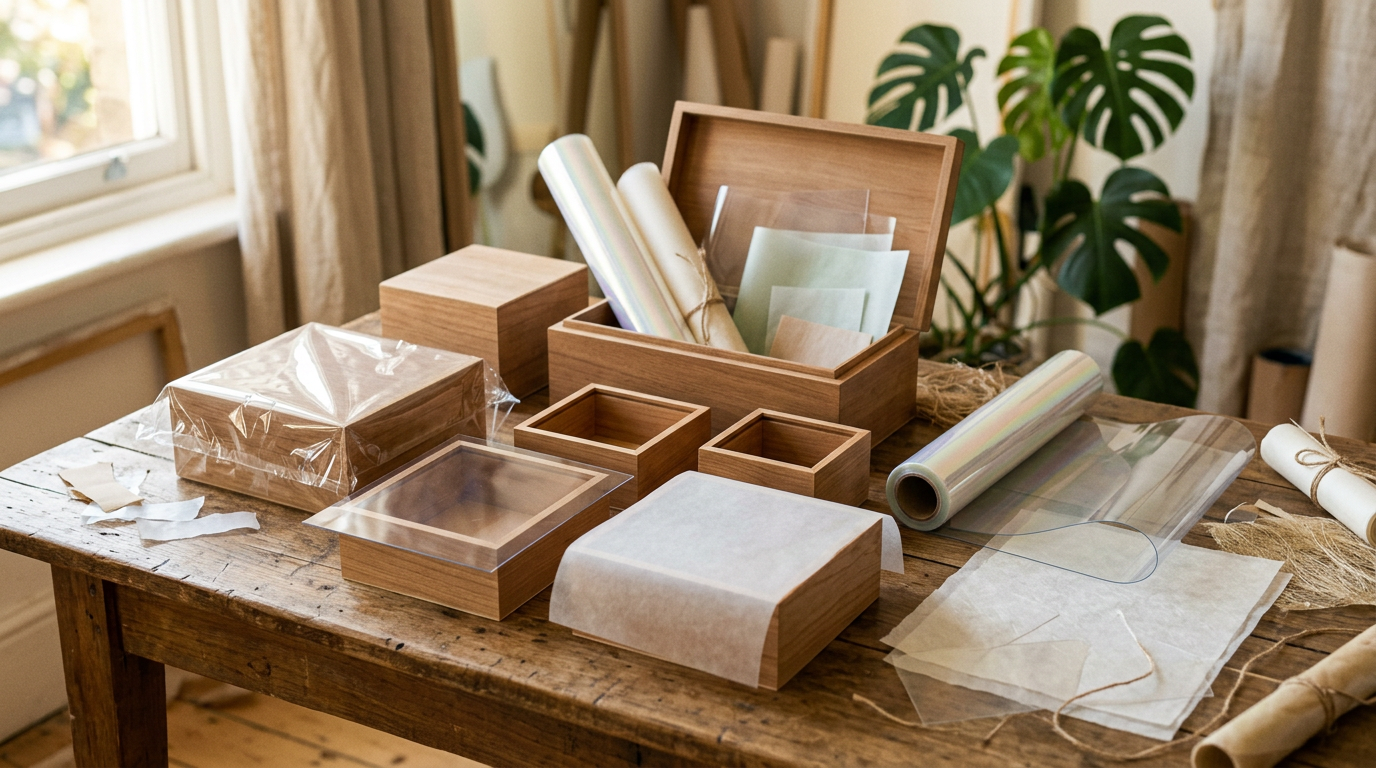
- Premium Packaging: Acetate and certain BOPP films are used to create transparent windows in cardboard boxes or custom wooden boxes, allowing the product to be viewed without opening the package, ideal for cosmetics, jewelry, or high-end electronic products.
2. Graphic Design and Crafts
- Invitations and Stationery: Tracing paper adds a layer of sophistication to wedding invitations, greeting cards, or report covers, creating a veiled or semi-transparent effect.
- Tracing and Drawing: Tracing paper is essential for artists and designers who need to transfer or overlay images.
- Document Protection: Acetate is used to cover or protect important documents, photographs, and artworks due to its rigidity and transparency.
3. Other Applications
- Pharmaceutical and Cosmetics: For wrapping products that require hygienic and visually appealing presentation.
- Floristry: Wrapping bouquets and floral arrangements, protecting them and enhancing their beauty.
- Toy Industry: Transparent packaging that displays the product.
Considerations When Choosing Transparent Paper
- Transparency LevelIs crystal clear visibility or subtle translucency needed?
- Resistance and DurabilityMust the material withstand handling, moisture, or tearing?
- Food ContactIf for food, does it comply with specific sanitary regulations?
- SustainabilityIs a biodegradable, compostable, or recyclable option sought?
- PrintabilityDoes the material need to be printed with logos or designs?
- CostThe available budget will influence the final choice.
Practical Tip
For gift wrapping, consider combining transparent paper with tissue paper of various colors to create a visually attractive layered effect and increase the perceived value.
Customization and Finishes
- Printing: Many types of transparent paper, especially plastic films and acetate, can be printed with specific inks. This allows for adding logos, patterns, product information, or graphic elements that reinforce brand identity or design purpose.
- Die-cutting: Transparent paper can be cut into specific shapes to create viewing windows, labels, or intricate decorative elements.
- Engraving and Embossing: On more rigid materials like acetate, engraving or embossing techniques can be applied to add texture or tactile elements to the design.
- Lamination: Some transparent papers can be laminated to improve their resistance, shine, or barrier properties, although this may affect their recyclability or biodegradability.
Sustainability and the Future of Transparent Paper
FSCResponsible Sourcing
5-8 wks.Cellophane Biodegradation
RecyclablePlastic films (in many cases)
- Cellophane: Being a cellulosic material, traditional cellophane is biodegradable and compostable, positioning it as an attractive alternative to petroleum-derived plastics. It is important to check certifications to ensure it does not contain non-biodegradable coatings.
- Transparent Bioplastics: Research is advancing in the development of transparent films from renewable sources, such as PLA (polylactic acid), which can offer similar properties to conventional plastics but with an improved sustainability profile (biodegradable or industrially compostable).
- Recyclable Monofilms: For plastic films, the trend is towards "monomaterials" (composed of a single type of plastic, such as only BOPP or only PE), which are much easier to recycle than multi-layer packaging.
- Recycled Paper: Although pure transparent paper (like cellophane or acetate) is not usually made with high recycled content due to its clarity requirements, tracing paper and parchment paper can have options with recycled content or be made with FSC (Forest Stewardship Council) certified cellulose, ensuring responsible forest management.
The informed choice of a transparent material not only impacts product presentation but also its environmental footprint, reflecting a commitment to sustainability.
Common Mistakes to Avoid
- Confusing materials: Not all "transparent plastic" is cellophane, nor is all "transparent paper" the same. Each material has unique properties that make it more or less suitable for a specific application.
- Ignoring food contact: If the transparent paper is going to come into direct contact with food, it is crucial to ensure that it complies with all relevant food safety regulations.
- Underestimating sustainability: Assuming that a transparent material is "ecological" without verifying its biodegradability, compostability, or recyclability certifications is a common mistake.
- Forgetting printability: Not all transparent papers accept ink in the same way. It is important to consult printing specifications if the material is to be customized.
- Not considering functionality: Transparency is not the only factor. Tear resistance, vapor permeability, rigidity, or flexibility must align with the desired function. For example, to protect a fragile product, bubble wrap might be more suitable as an inner layer, while an outer transparent film would offer visibility.
Transparent Paper in the Context of Premium Packaging
wooden boxNote on grammage
Grammage in transparent paper is crucial for determining its rigidity and resistance. A higher grammage generally implies a thicker and more robust material, suitable for applications requiring greater protection or durability. For more information, you can consult the article on grammage in packaging.