How to Design Alcohol-Free Corporate Christmas Gift Hampers with Exceptional Packaging
Designing year-end corporate gifts has evolved, and the shift toward more inclusive, health-conscious options is clear in 2026. Alcohol-free corporate Christmas gift hampers are a direct response to diverse teams, strict internal policies at multinational companies, and a broader shift in consumer habits. However, parting with the traditional bottle of wine or cava poses a challenge: how do you maintain the gift's perceived value, volume, and elegance? The key lies in selecting high-end gourmet products and presenting them in premium packaging that elevates the unboxing experience.
Key Takeaways
- Alcohol-free hampers require thoughtful design to preserve the visual impact and perceived value of a corporate gift.
- Packaging—especially wooden boxes—plays a crucial role by providing structure, volume, and a premium finish.
- Curating gourmet products (olive oils, preserves, artisanal sweets) makes up for the absence of traditional bottles.
- Customizing the packaging reinforces brand identity and enhances the unboxing experience.
The Rise of Alcohol-Free Options in the Corporate World
Choosing to give alcohol-free corporate Christmas hampers is no longer an anomaly. Several factors are driving this change. First is inclusion: workforces are increasingly diverse regarding religious beliefs, health reasons, pregnancy, or simply personal lifestyle choices. Offering a hamper suitable for everyone ensures no employee or client feels left out or receives a gift they cannot enjoy.
Second, many corporations have strict compliance policies prohibiting gifts that contain alcohol, especially when dealing with public-sector clients or highly regulated industries. Finally, growing health awareness has turned alcohol-free gourmet goods into highly prized alternatives. To achieve affordable corporate gifts with a high-end feel, the strategy centers on presentation quality and thoughtful product curation.
The Gift’s Visual Weight
Historically, bottles of cava or wine gave Christmas hampers their structure, providing weight and height. When removing them, it is vital to use sturdy packaging and filler materials to prevent the hamper from looking "empty" or unbalanced.
Gourmet Product Selection: Replacing the Traditional
When designing alcohol-free corporate Christmas gift hampers, the goal is to surprise recipients with exceptional flavors. Alternatives must convey the same festive, premium character as traditional spirits. Top recommended options include:
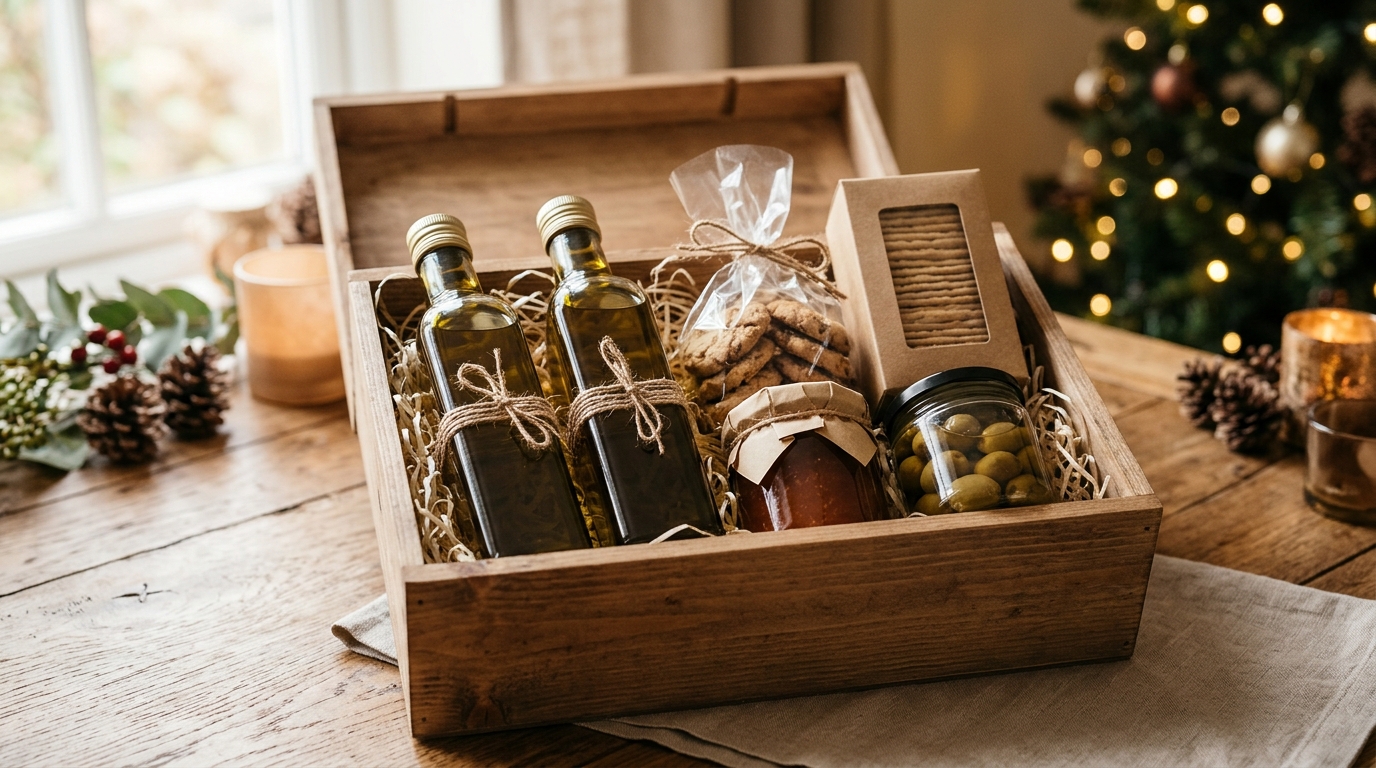
- Extra Virgin Olive Oils (EVOO)Designer bottles filled with premium oils, adding height and prestige to the gift set.
- Delicatessen PreservesRefined formats of seafood, pâtés, or roasted vegetables. They require proper gourmet canned food packaging.
- Artisanal SweetsPremium nougats, single-origin chocolates, and specialty cookies in elevated formats.
- Premium Non-Alcoholic BeveragesArtisan kombuchas, single-varietal grape musts, or high-end teas and infusions.
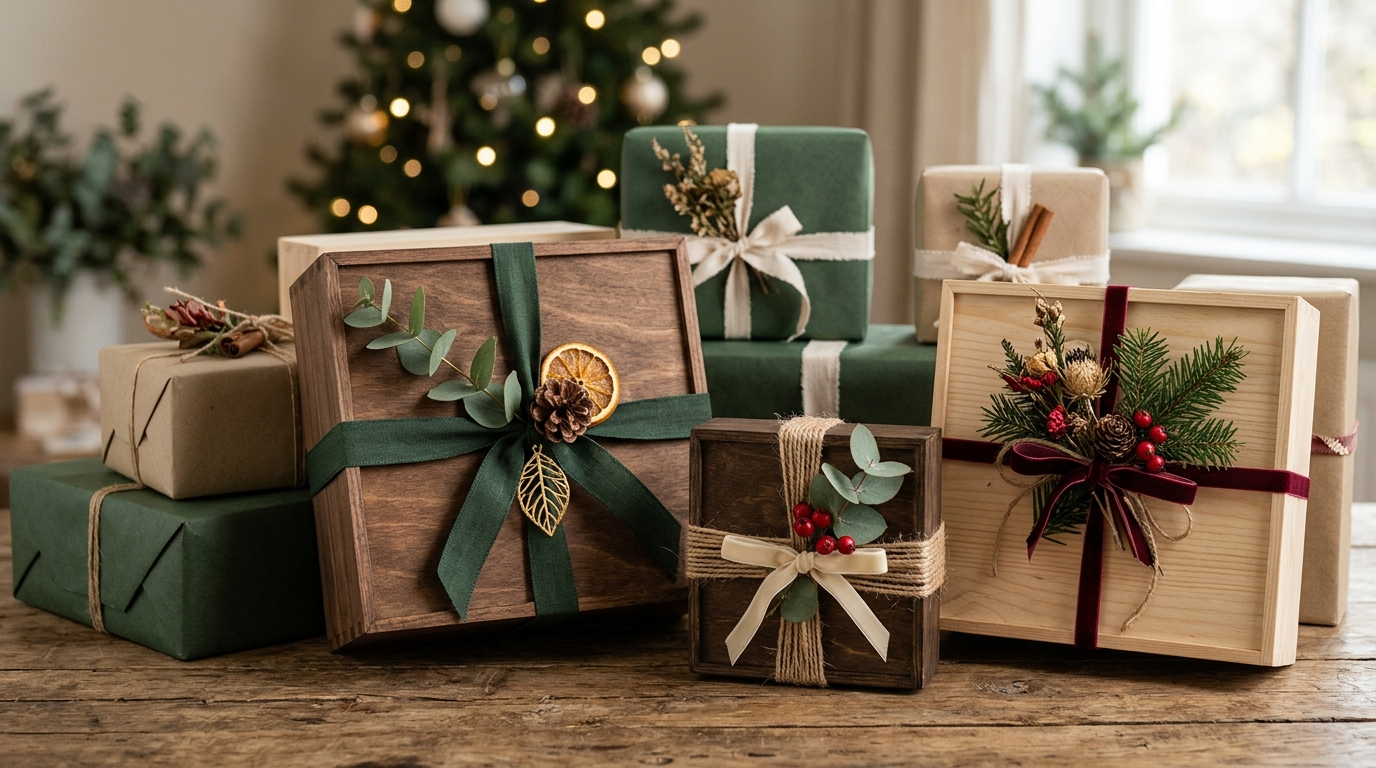
For specific items like jams and confections, wooden boxes for artisanal honey and jams add a rustic, sophisticated touch that significantly boosts recipient perception.
The Role of Packaging in Perceived Value
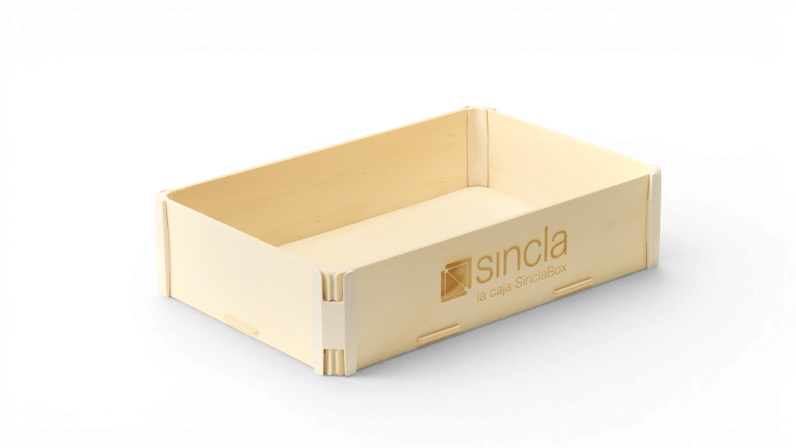
Packaging is the very first physical touchpoint with any gift. Without alcohol bottles to anchor the perceived value, the container itself takes center stage. The advantages of wood over cardboard in packaging become clear in this context: wood provides rigidity, durability, and an aesthetic instantly associated with craftsmanship and luxury.
Sustainability as an Added Value
Using certified wood (such as FSC) and recyclable materials does more than enhance aesthetics; it directly aligns your corporate gifts with modern Corporate Social Responsibility (CSR) policies.
Common Materials for Corporate Gift Sets
| Material | Key Characteristics | Ideal Use in Alcohol-Free Sets |
|---|---|---|
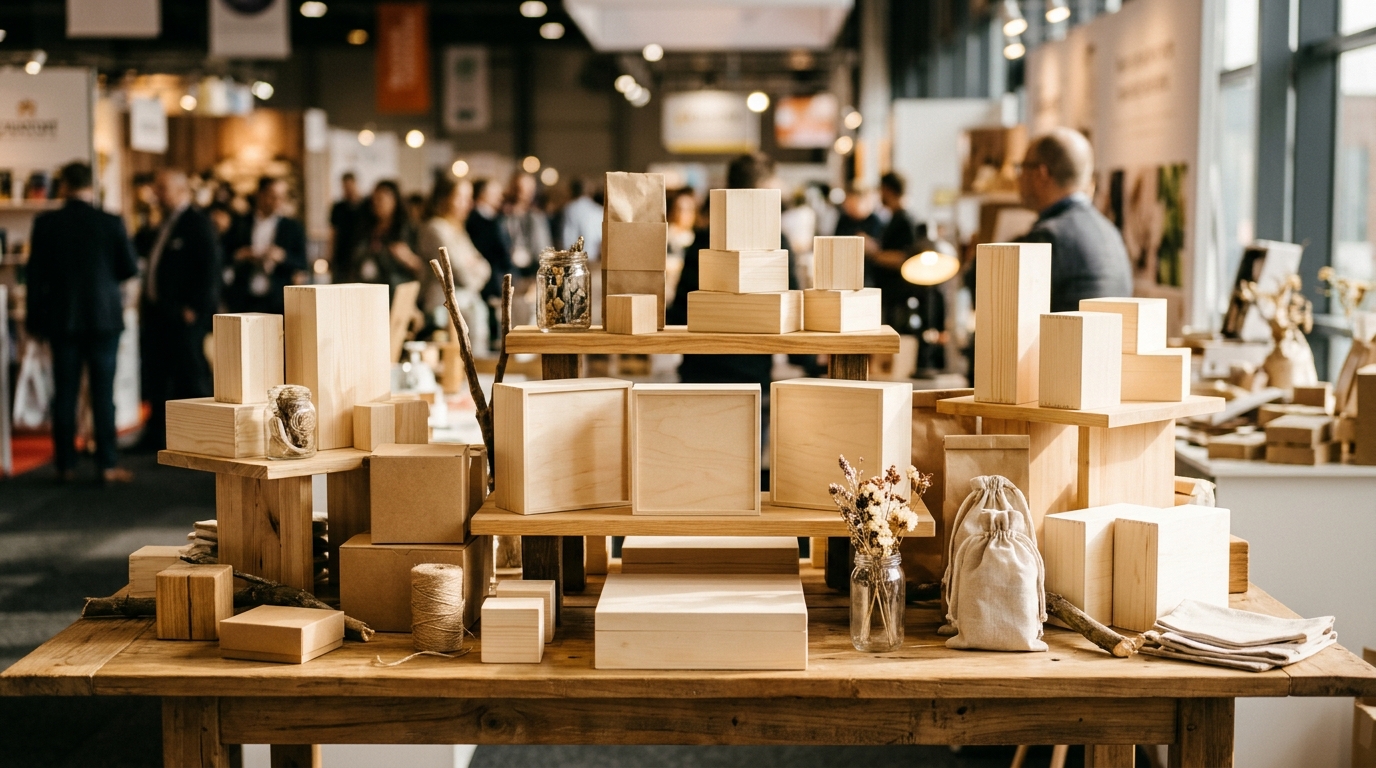
| Pine or poplar wood | Natural finish, lightweight yet sturdy, highly elegant. | Gourmet hampers with multiple small items (preserves, chocolates). |
| Plywood | Excellent structural stability, allows precision cuts. | Boxes with custom internal dividers. |
| MDF (Fiberboard) | Smooth surface, ideal for printing and uniform finishes. | Highly graphic or strictly branded corporate designs. |
| Reinforced kraft cardboard | Cost-effective, lightweight, eco-minimalist look. | Lighter sets (teas, cookies) with tighter budget constraints. |
Presentation and Customization Strategies
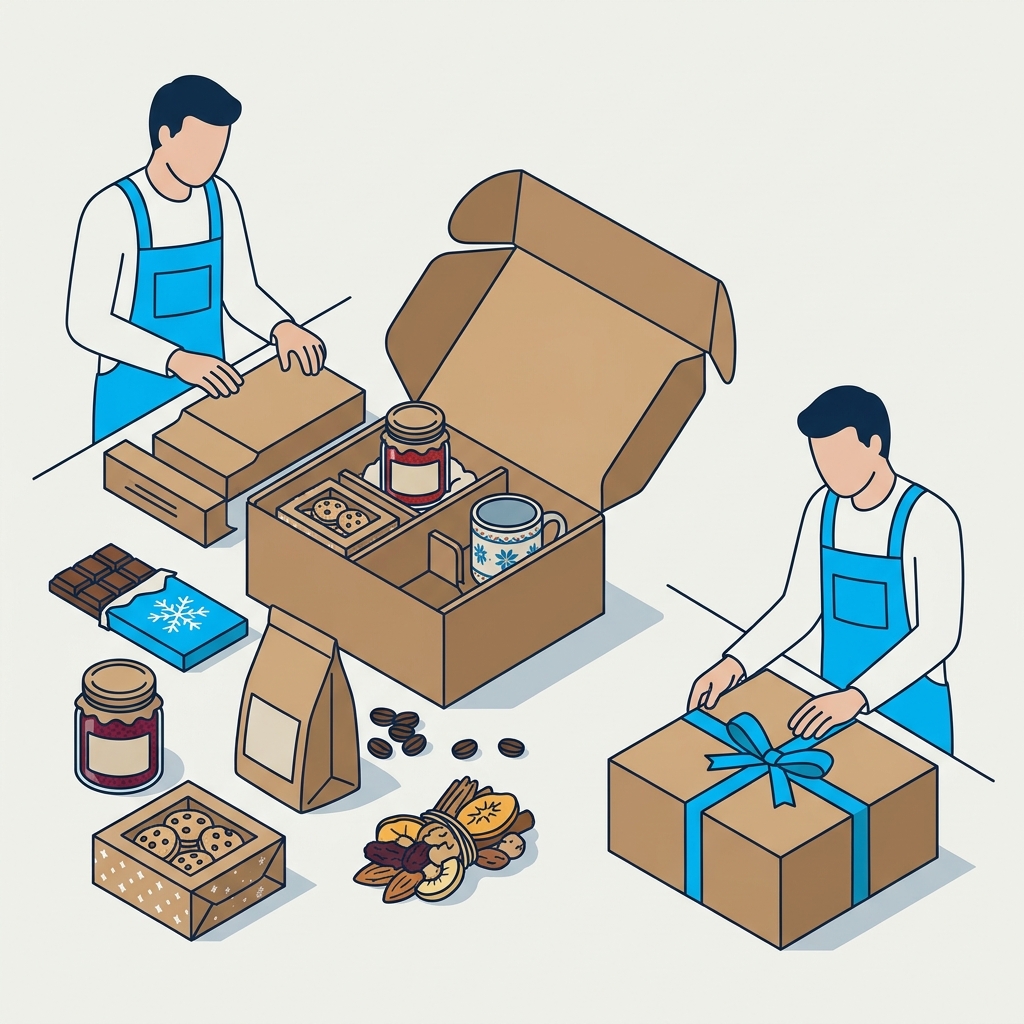
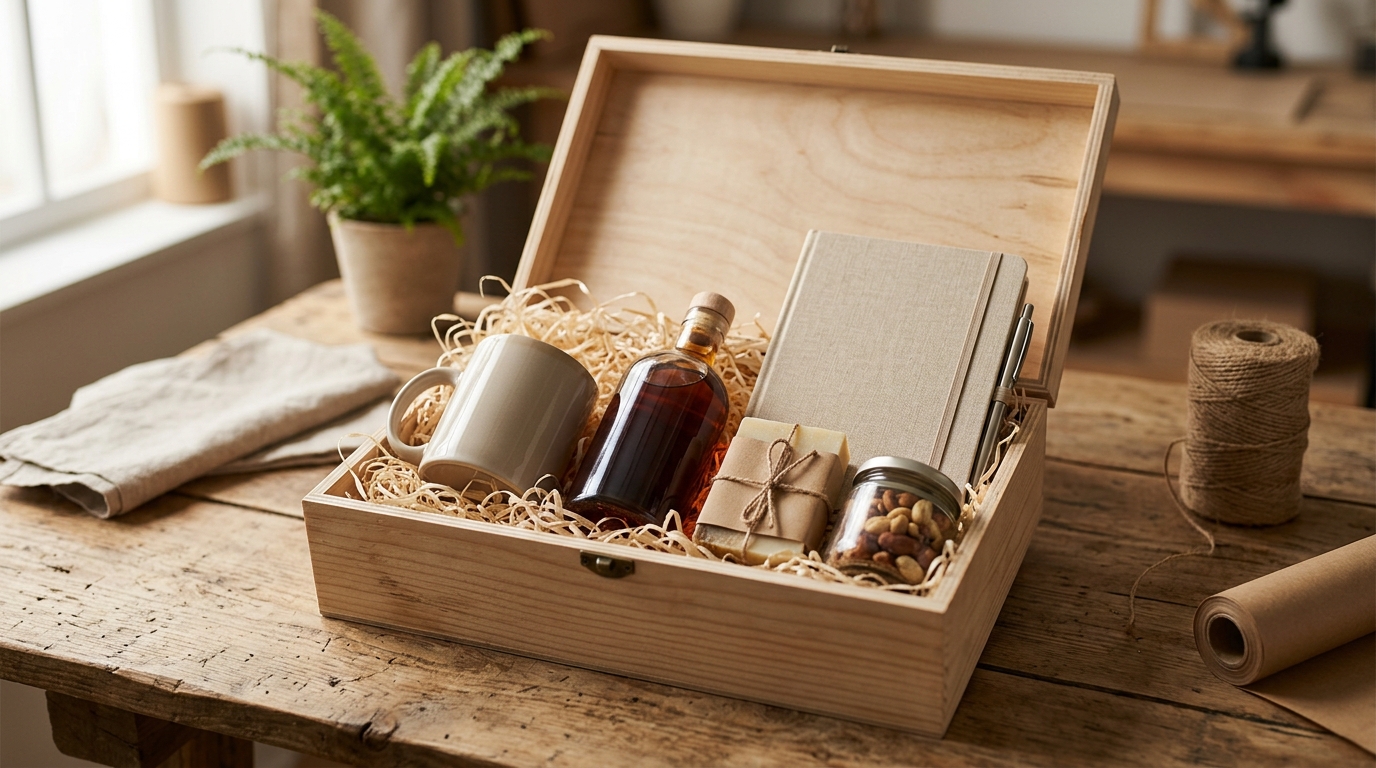
The interior design of the box matters just as much as its exterior. When packing preserve jars, jam pots, or coffee bags, securing each item during transit is essential. Wood excelsior, crinkled kraft paper, or custom cardboard inserts are commonly used to keep products firmly in place.
Customizing the exterior transforms a simple container into an enduring brand reminder. A well-crafted box will often be repurposed in the recipient's home or office, maximizing brand exposure over time.
- Define the format: Decide between a sliding lid, a hinged lid, or an open tray wrapped in cellophane.
- Balance the weight: Place heavier products (like EVOO bottles) at the bottom or center, positioning lighter items (nougats, sweets) around them.
- Choose the branding technique: Opt for laser engraving for an understated look on wood, or single-color screen printing to make a corporate logo stand out.
- Add subtle branded accents: Include a high-quality greeting card or a custom cardstock belly band that seals the presentation seamlessly.
Shipping Considerations
Glass containers (common for oils and preserves) need extra cushioning. Ensuring the box has proper wall thickness and ample filling material is critical to prevent breakage during peak holiday shipping.
The best corporate gift reflects a company's values through thoughtful product curation and flawless presentation, moving beyond outdated conventions.
Budgeting and Planning for Christmas Gift Sets
Setting the budget for corporate holiday gifts requires balance. By skipping bottles of alcohol (which often drive a large share of the cost in traditional baskets), that budget can be redirected toward upgrading the packaging or sourcing products from exclusive artisan brands.
For companies seeking distinctive Christmas gifts for clients, planning should start in September or October. Custom wooden or cardboard packaging suppliers require lead times that extend rapidly as December approaches.