Choose the Best Boxes for Organic Tea and Herbal Infusions
The market for organic infusions and premium teas has experienced remarkable growth in recent years, driven by consumers who are increasingly demanding not only about product quality, but also about the packaging that contains it. Opting for boxes for organic tea and infusions made of wood or other sustainable materials has become an essential standard for communicating the values of respect for nature and health that characterize these types of products.
The Essentials
- Boxes for organic tea must be made from materials that guarantee aroma preservation and protection against moisture.
- Certified wood (such as the FSC standard) and sustainable derivatives are the preferred options for conveying ecological values.
- Multiple customization techniques exist, from laser engraving to screen printing, which allow the product to be differentiated without compromising its sustainability.
- A good packaging choice directly influences the perception of quality by the end consumer.
The Importance of Packaging in the Organic Tea Sector
When a customer looks for a certified organic tea or infusion, they are not just buying a drink; they are acquiring a moment of relaxation, personal care, and environmental commitment. Packaging is the first physical point of contact with that universe. Plastic packaging immediately detracts from any declaration of organic intent. In contrast, noble and natural materials like wood reinforce the message.
Additionally, on a functional level, tea is extremely sensitive. Dried leaves quickly absorb moisture and external odors, losing their organoleptic properties (flavor, aroma, and color). Therefore, the packaging must not only be beautiful, but also provide an adequate protective barrier, preferably with compartmentalized interiors or airtight closures when it comes to long-term product storage.
Light Protection
Unlike transparent containers or bags with windows, wooden boxes provide complete protection against direct light, one of the worst enemies for preserving tea's antioxidants and essential oils.
Sustainable Materials for Herbal Infusion Boxes
The choice of material is probably the most critical decision. In 2026, the sustainable packaging guide dictates that the traceability and environmental impact of materials are top priorities.
| Material | Main Advantages | Drawbacks / Limitations |
|---|---|---|
| Certified Solid Wood (FSC) | Very premium look, high durability, excellent protection, ideal for gifts. | Heavier weight and cost, may require a higher initial investment. |
| Poplar or Pine Plywood | Balance between cost, lightness, and strength, easy to customize, sustainable. | Less "rustic" than pure solid wood, though highly aesthetic. |
| MDF (Medium-Density Fiberboard) | Very smooth surface, ideal for high-quality printing or lacquering. | Sensitive to moisture without proper treatments, less "natural" appearance. |
| Rigid Kraft Cardboard | Very lightweight, affordable, easily recyclable. | Lower durability, lower "gourmet" product perception compared to wood. |
In the realm of premium infusions, wood (whether plywood or solid) is usually the preferred choice. When comparing the advantages of wood over cardboard, its ability to become a reusable object stands out. Many tea boxes end up serving as jewelry cases or storage boxes, extending the packaging's life cycle indefinitely.
Common Formats and Capacities
The dimensions of boxes for organic tea and infusions vary greatly depending on the product's sales format (loose leaf, individual pyramid sachets, or traditional bags) and the product range (individual item or tasting sets).
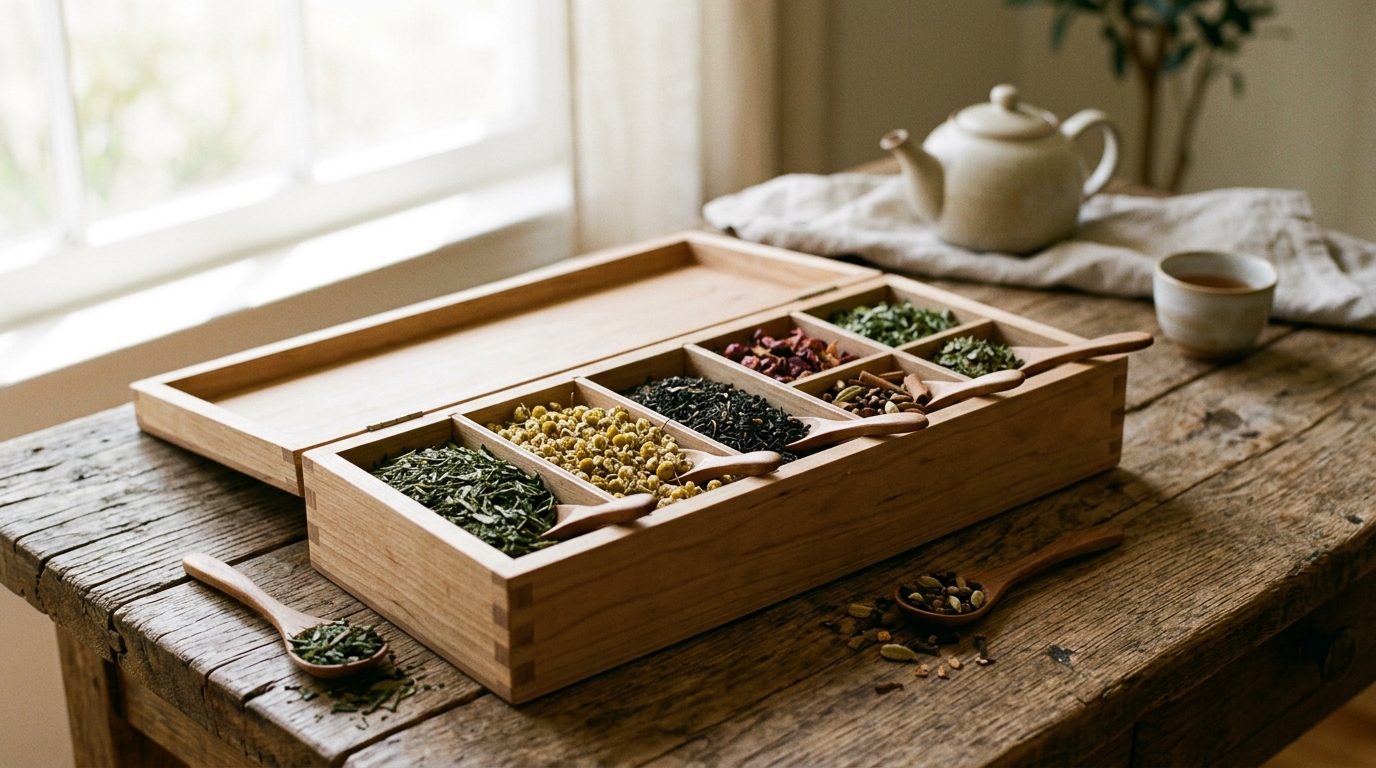
- Compartment BoxesIdeal for tea bag assortments (4, 6, or 9 dividers).
- Cylindrical Wooden CasesA very elegant format, specifically designed for loose-leaf tea.
- Book-Style BoxesFeaturing a hinged lid and metal or magnetic closure, widely used in high-end lines.
- Display TraysFor professional use in hospitality, buffets, or specialty shops.
Finishes and Customization: The Final Touch
The exterior design of the box is the product's silent salesperson. In the case of organic products, the rule is usually "less is more," prioritizing respect for the original texture of the wood. However, this does not mean giving up on visual identity.
Options for decorating and branding wood include:
- Laser Engraving. This is the most purist and eco-friendly option, as it does not use inks, solvents, or varnishes. The laser burns the surface of the wood, creating an elegant, permanent contrast.
- Screen Printing. Allows solid colors to be applied onto the wood. It is important to ensure the supplier uses water-based inks certified as safe for indirect food contact.
- Pad Printing and Hot Stamping. Ideal for adding fine details or metallic finishes (such as gold or copper), lending a very sophisticated look to limited collections.
- Direct Digital Printing. Useful for complex, full-color designs, reproducing photographs or detailed illustrations directly onto the wooden lid.
Packaging that fails to communicate the values of its contents is a missed opportunity on the supermarket shelf or in the specialty store.
Using Eco-Friendly Inks
When ordering custom boxes, always specify that you require eco-friendly inks, preferably water-based. This maintains total consistency with the organic product you are marketing.
Interior Protection and Regulations
It is vital to remember that, in most cases, wood should not be in continuous direct contact with loose-leaf tea. Although wood is non-toxic, it is porous and can absorb the tea's aromas (altering future flavors) or impart subtle woody notes to the infusion. Furthermore, health regulations in many regions require food products to be protected by specific barriers.
The standard solution is to use protective primary packaging inside the wooden box:
- Heat-sealed kraft paper bags with a compostable inner lining.
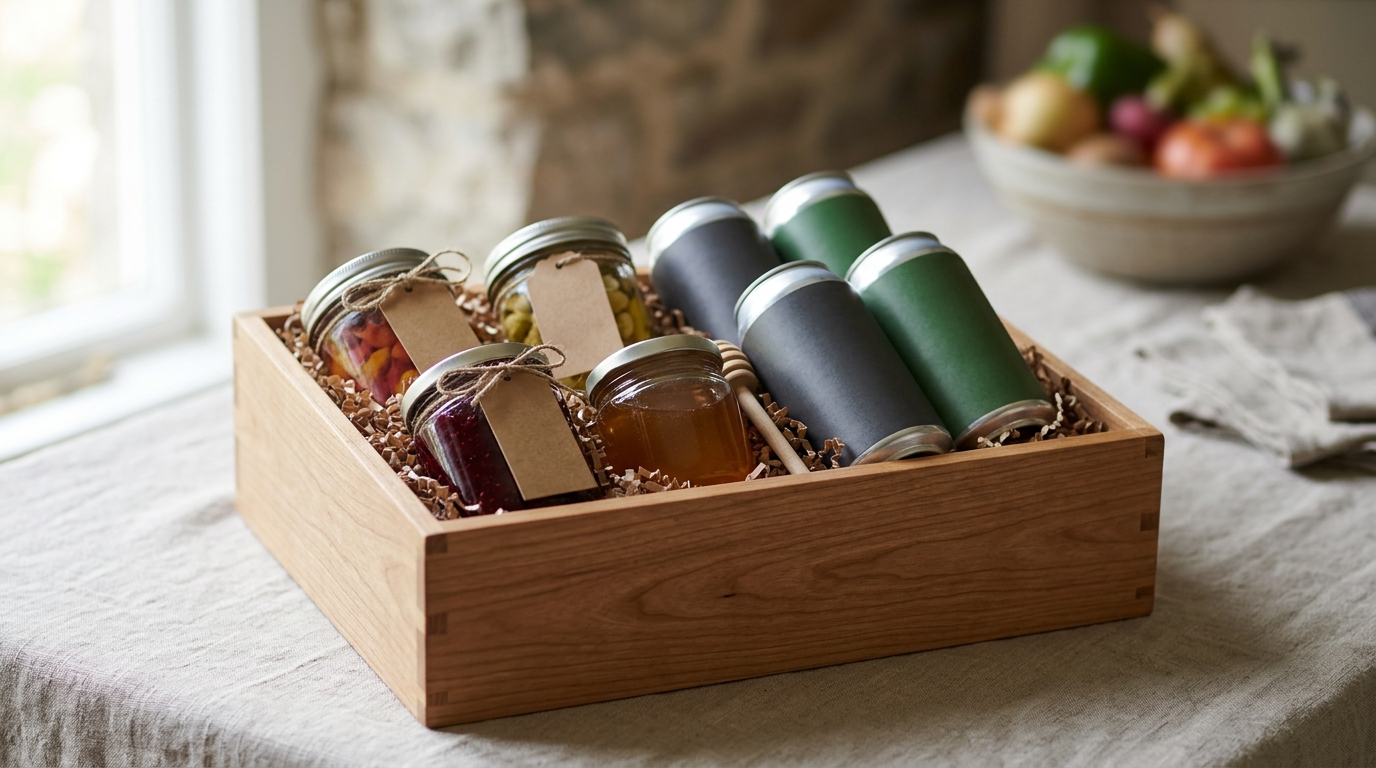
- Glass or tin inner containers (common in gift sets).
- Individual sachets made of waxed paper or compostable cellulose for pyramid teas.
How to Improve the Unboxing Experience
The act of opening the package is crucial, especially when it comes to products given as gifts. Enhancing the unboxing experience builds customer loyalty and encourages recommendations.
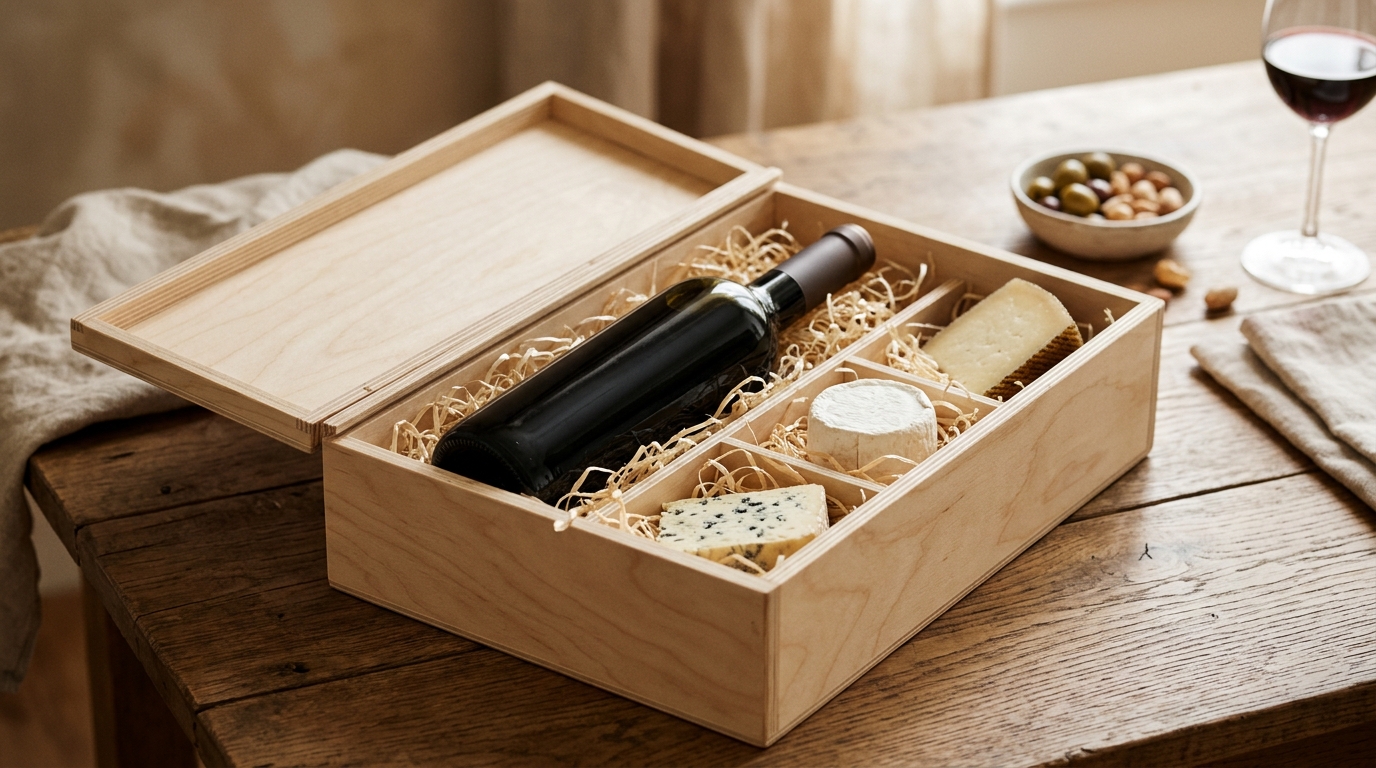
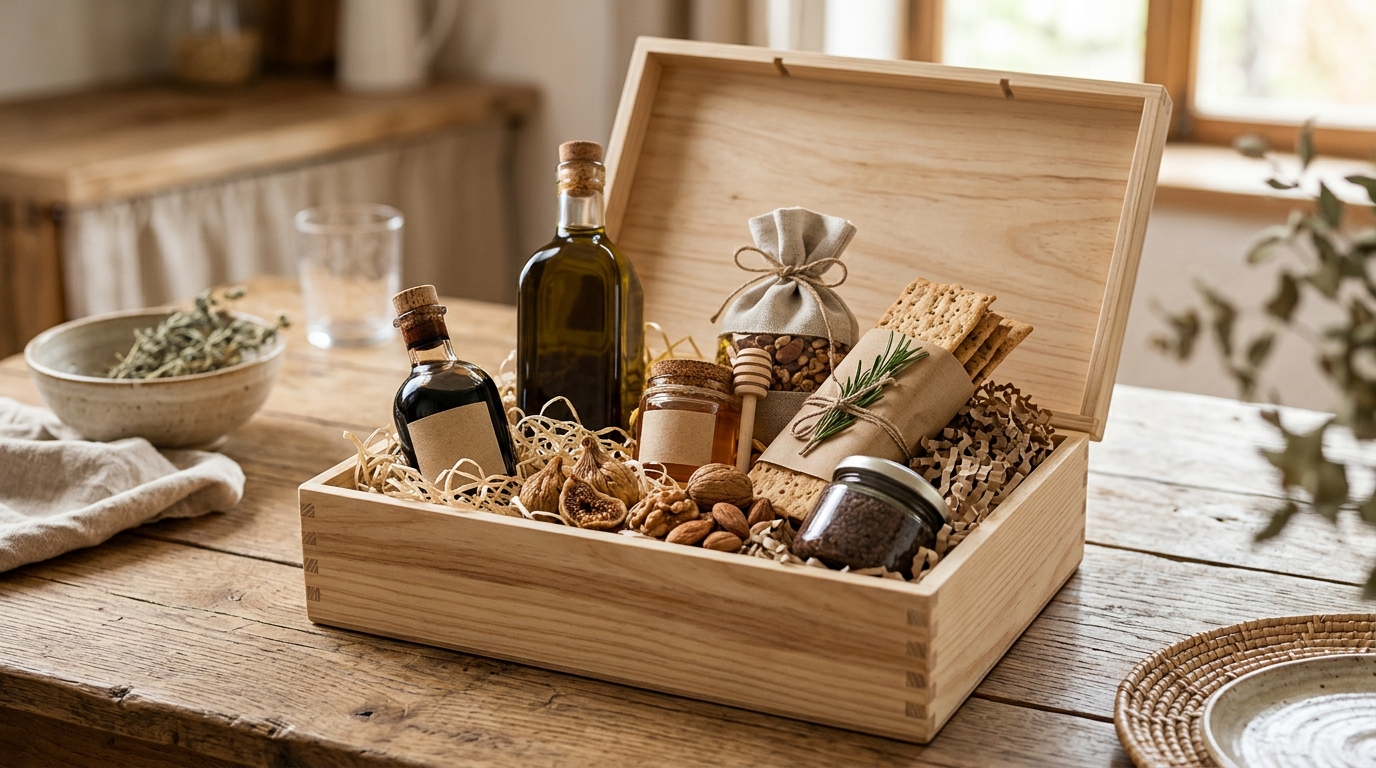
Paying attention to small details makes all the difference. For example, using concealed hinges, ensuring a perfect lid fit, or including natural wood shavings (instead of dyed shredded paper or bubble wrap) to cushion the interior if porcelain cups are included alongside the infusions.
Watch Out for Strong Odors
Ensure that the manufacturer does not use synthetic glues or varnishes with strong residual odors. Tea leaves will quickly absorb these fumes, completely ruining the product.