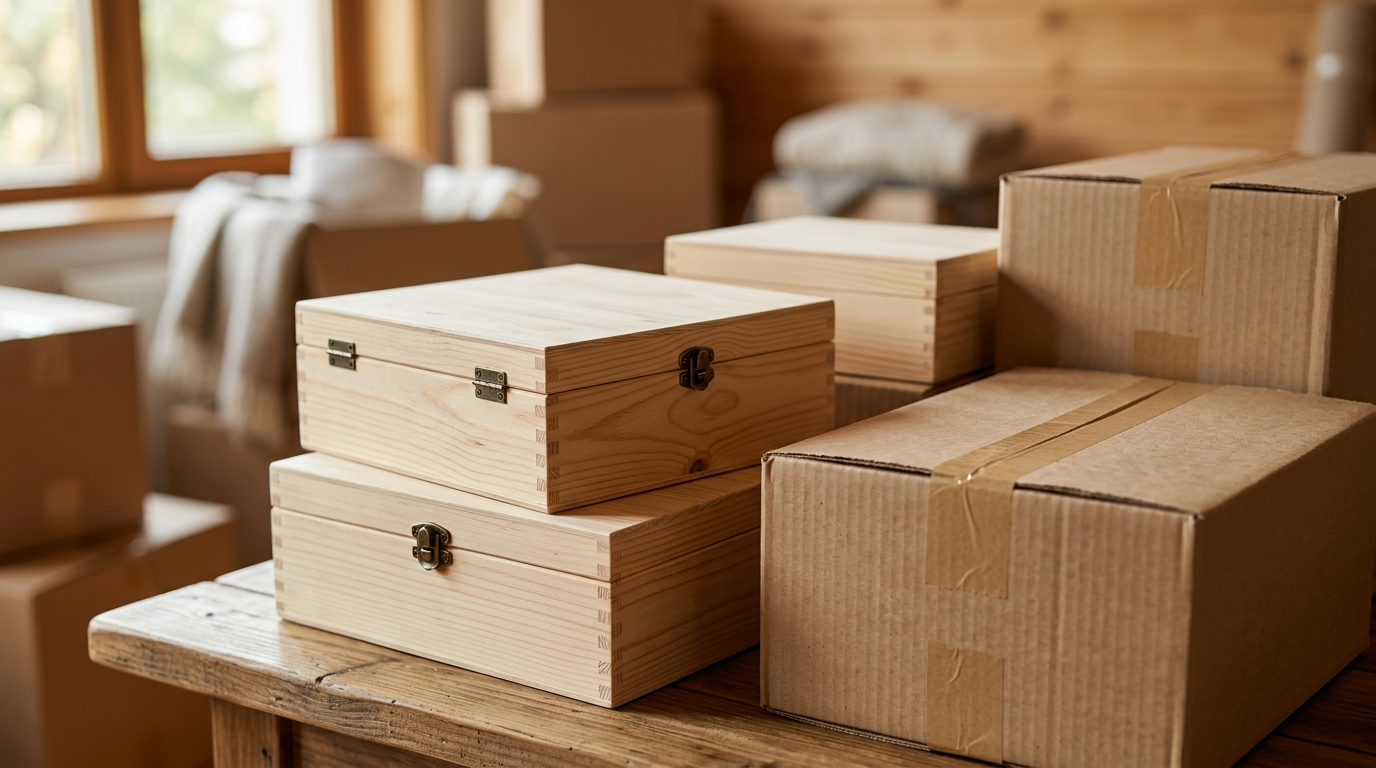
Moving Cardboard Boxes: The Definitive Guide for a Successful Relocation
The essentials
- Choosing the type of cardboard (single, double, triple wall) is key depending on the weight and fragility of the contents.
- Correctly calculating the number and size of boxes avoids unnecessary expenses and optimizes space.
- Adequate packing inside the box is fundamental to protect items during transport.
Types of Moving Cardboard Boxes: Know Your Material
- Single Wall CardboardIdeal for light and bulky items such as bedding, towels, cushions, or non-fragile kitchen utensils.
- Double Wall CardboardThe standard for most moves. Offers greater resistance, suitable for books, dinnerware, small appliances, and medium-weight items.
- Triple Wall CardboardReserved for very heavy or extremely fragile items, such as delicate electronic components, tools, or collection items.
- Cardboard with Special TreatmentsSome boxes incorporate anti-humidity treatments or coatings that make them more resistant to certain environmental conditions.
Factors to Consider in Cardboard Strength
In addition to the number of walls, the quality of the paper used in the cardboard layers (kraft or testliner) and the flute profile (C, B, E, etc.) influence the final strength of the box. Kraft cardboard, for example, is more resistant than testliner type and offers better protection against humidity.
Practical Tip
For very valuable or fragile items, consider using new boxes. Reused cardboard may have lost some of its structural strength.
Dimensions and Formats: The Importance of Variety
| Type of Item | Recommended Box Size | Characteristics |
|---|---|---|
| Books, documents, tools | Small (approx. 30x30x30 cm) | Sturdy, prevent excessive weight. |
| Dinnerware, utensils, small appliances | Medium (approx. 50x30x30 cm) | Versatile, for items of moderate weight and volume. |
| Bedding, towels, toys, light household items | Large (approx. 60x40x40 cm) | For bulky but not heavy items. |
| Clothes on hangers (wardrobe), lamps | Specialized (wardrobe, for pictures) | Designed for specific shapes, minimize packing. |
Specialized Moving Boxes
- Wardrobe boxes: Allow clothes to be transported directly on hangers, preventing wrinkles and saving time.
- Book boxes: Reinforced and smaller in size to support the heavy weight of books without yielding.
- Dish/glassware boxes: Often include internal dividers to individually protect each piece.
- Picture or mirror boxes: Flat and large, often with reinforcements or foam to cushion impacts.
Essential Complementary Materials
- Packing tape: PVC or polypropylene, strong and adhesive, to securely seal boxes. Paper tape can be a more sustainable option but less resistant for heavy items.
- Bubble wrap: Indispensable for wrapping fragile items. There are different bubble sizes depending on fragility and space. For more information, see Bubble Wrap: A Complete Guide for Safe Packing.
- Packing paper/newspaper: Useful for filling empty spaces and cushioning shocks. It is an economical option, although newspaper can stain.
- Moving blankets: Provide an extra layer of protection for large furniture or appliances.
- Foam peanuts or polystyrene chips: To immobilize items inside the box and prevent movement.
- Markers and labels: To identify the contents of each box and its destination room, facilitating post-move organization.
- Twine: Although less common nowadays for closing boxes, it can be useful for grouping items or securing elements within a larger package.
Watch the weight
Avoid filling large boxes with very heavy items. It's better to use several small boxes for books than one large, unmanageable one that could break or cause injury.
Moving Planning and Organization
Calculating the Number of Boxes Needed
This is one of the most frequent questions. There is no exact answer, as it depends on the volume of belongings and the size of the home. A general estimate could be:
- Studios/Small apartments (1 person): 20-30 boxes.
- 2-bedroom apartments (2 people): 40-60 boxes.
- 3-bedroom homes or more: 70-100+ boxes.
It is always advisable to acquire 10-15% more boxes than estimated, for unforeseen circumstances or to have as a reserve.
Packing Strategies
- Start in advance: Begin packing non-essential items well before the moving date.
- Declutter and donate: Take advantage of the move to get rid of what you no longer need. Fewer items mean fewer boxes and less work.
- Pack by categories/rooms: Group similar items from the same room. This will facilitate unpacking.
- Protect fragile items: Wrap each fragile item individually with bubble wrap or packing paper. Use filler to ensure they don't move inside the box.
- Do not overload boxes: An excessively heavy box is difficult to handle and risks breaking.
- Label clearly: Indicate the contents, the destination room, and if the box contains fragile items. Use color codes or numbers for a more detailed system.
Common Mistakes to Avoid
- Using supermarket boxes: Although free, they often lack the necessary strength for a move and can be dirty or weakened by moisture.
- Not securing the bottom of boxes: Reinforce the bottom with several layers of tape, especially on boxes with heavy items.
- Leaving empty spaces: Items will move and can get damaged. Fill with paper, old clothes, or bubble wrap.
- Mixing items from different rooms: This makes unpacking extremely difficult.
- Not labeling boxes: A critical mistake that prolongs the organization process in the new home.
- Ignoring valuables: Important documents, jewelry, money, or irreplaceable keepsakes should travel with you personally, not in moving boxes.
Sustainability and Recycling of Cardboard Boxes
- Reuse: If the boxes are in good condition, they can be kept for future moves or for storing items. Many communities or moving companies have reuse programs.
- Recycling: If they are not going to be reused, make sure to recycle the cardboard correctly. Remove all adhesive tape and any plastic or paper remnants that are not cardboard.
- Certifications: Some boxes are made with FSC (Forest Stewardship Council) certified cardboard, which guarantees that the material comes from sustainably managed forests.
Interesting Fact
Corrugated cardboard is composed of at least 70% recycled fibers in many countries, making it a relatively sustainable packaging option.
Where to Buy Moving Cardboard Boxes?
- Specialized packaging stores: Offer a wide range of sizes and strengths, including specific moving boxes. They also usually sell complementary materials.
- Moving companies: Many companies offer box packs as part of their services or sell them separately.
- Large retailers and hardware stores: Often have a basic selection of cardboard boxes.
- Online: Numerous online stores sell cardboard boxes in different formats and quantities, often with the convenience of home delivery.
"Proper packing is the foundation of a smooth move. Investing time and resources in the right boxes translates into peace of mind and the integrity of your belongings."