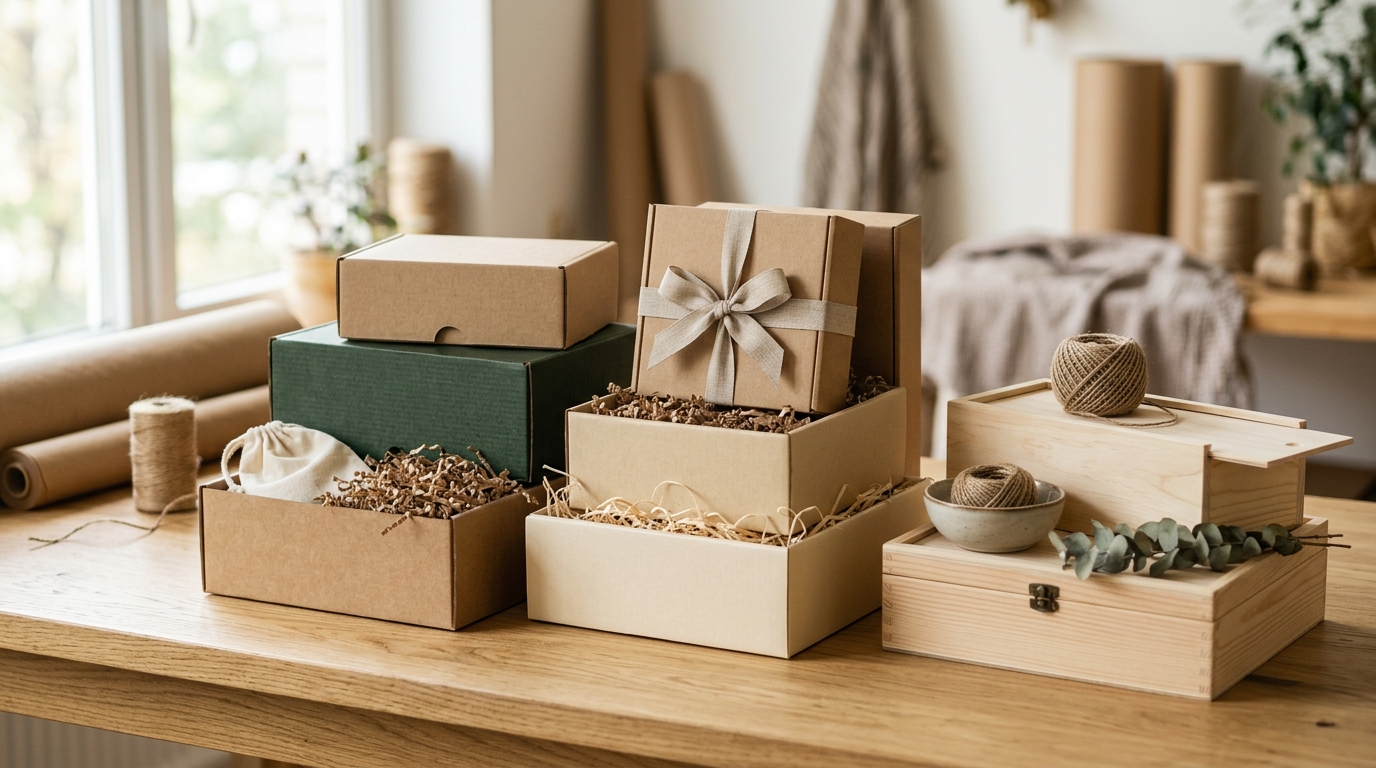
Custom Cardboard Boxes: Boosting Brand Identity Through Packaging
In today's competitive retail landscape, packaging is no longer just a means of transport; it has evolved into a powerful marketing tool. Custom cardboard boxes play a crucial role in conveying a brand's values, creating a memorable unboxing experience, and protecting the product. This guide explores the essential aspects of cardboard box customization from a professional perspective, tailored for businesses looking to optimize their packaging strategy.
Key Takeaways
- Custom boxes strengthen brand image and enhance the customer experience.
- Material selection and printing techniques are critical to the final outcome.
- Design must balance aesthetics with functionality and product protection.
- Sustainability is an increasingly valued factor among consumers.
Why Invest in Custom Packaging
First impressions are essential, and in e-commerce, that impression is often created by the package in which the product arrives. Well-designed custom packaging communicates professionalism and attention to detail.
- Brand Recognition Helps customers quickly identify the company.
- Unboxing Experience Drives customer loyalty and organic word-of-mouth marketing.
- Proper Protection A tailored design ensures a perfect fit and minimizes breakage.
- Passive Marketing Every box shipped serves as a moving billboard.
The Power of Unboxing
Market studies suggest that a high percentage of consumers make repeat purchases from brands that deliver a premium unboxing experience.
Types of Cardboard for Custom Boxes
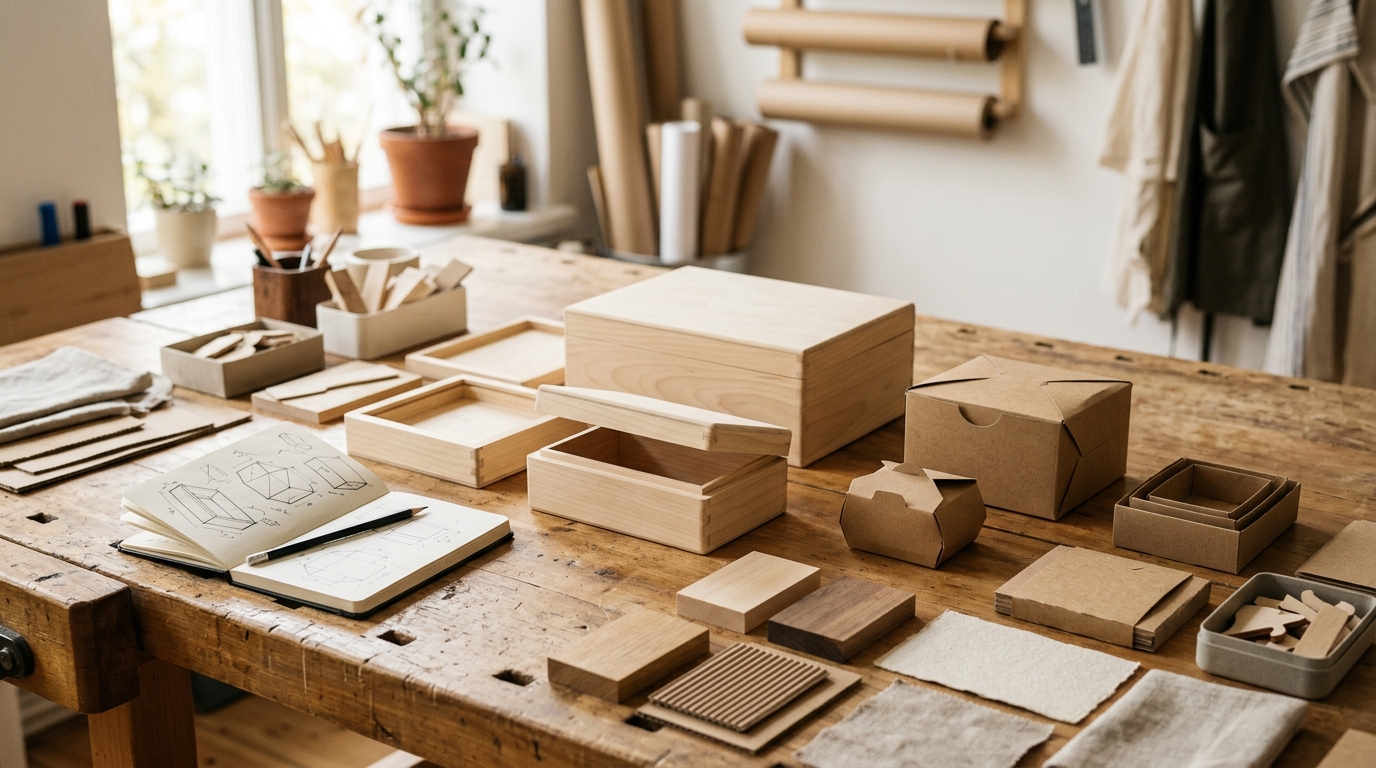
Selecting the right material is the first critical step. Thickness and strength must match the weight and fragility of the contents, while the surface must be compatible with the chosen printing technique.
| Material | Key Characteristics | Recommended Use |
|---|---|---|
| Corrugated Cardboard (Single Wall) | Good strength-to-weight ratio. | Standard shipping, lightweight to medium products. |
| Corrugated Cardboard (Double Wall) | High compression and impact resistance. | Heavy or fragile products, international shipping. |
| Paperboard / Folding Carton | Smooth surface, ideal for high-quality printing. | Cosmetics, jewelry, small retail items. |
| Rigid Cardboard | High thickness (1.5mm - 3mm), premium feel. | Corporate gifts, luxury items, limited editions. |
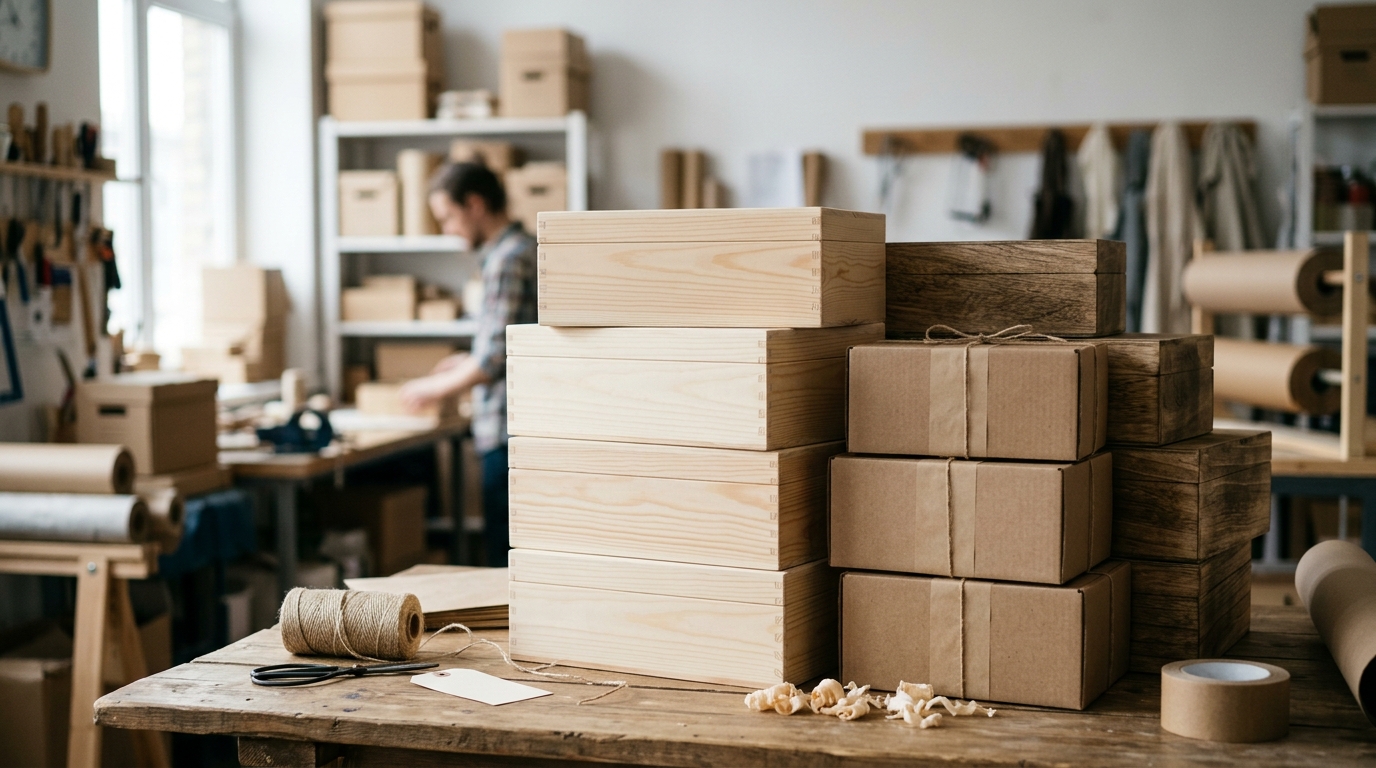
| Kraft Cardboard (Recycled) | Natural, eco-friendly, and rustic look. | Sustainable brands, eco-friendly or handcrafted products. |
Printing Techniques and Finishes
Once the substrate is chosen, printing techniques and finishes turn a simple box into a distinctive asset. As detailed in guides on the packaging design process, each technique yields different results.
Offset Printing
Offers the highest quality and color fidelity. It is ideal for large runs and can reproduce photographic images and complex designs with extreme sharpness. It is typically printed on paperboard or liner paper, which is subsequently laminated onto the corrugated cardboard.
Flexographic Printing
The most common and cost-effective technique for printing directly onto corrugated cardboard, especially for custom e-commerce boxes. It is suitable for simple designs and 1- or 2-color logos, but is not recommended for photographs or very fine details.
Digital Printing
Prints directly onto the cardboard without requiring printing plates, making it ideal for short runs or variable data (e.g., individual names on each box). The quality is very high, although unit costs are generally higher than for long runs with offset printing.
Special Finishes (Premium)
To elevate the design, various finishes can be added for texture and sheen:
- Hot Foil Stamping: Application of metallic foils (gold, silver, copper) using heat and pressure.
- Spot UV Varnish: Application of a glossy varnish to specific areas to create visual and tactile contrast.
- Embossing and Debossing: Creating 3D relief or indented textures without ink.
- Lamination: Matte, gloss, or "soft touch" film coatings that protect the print and improve tactile quality.
Less is More
A minimalist design printed via flexography on Kraft cardboard often looks more elegant and cost-effective than a box saturated with color and complex finishes.
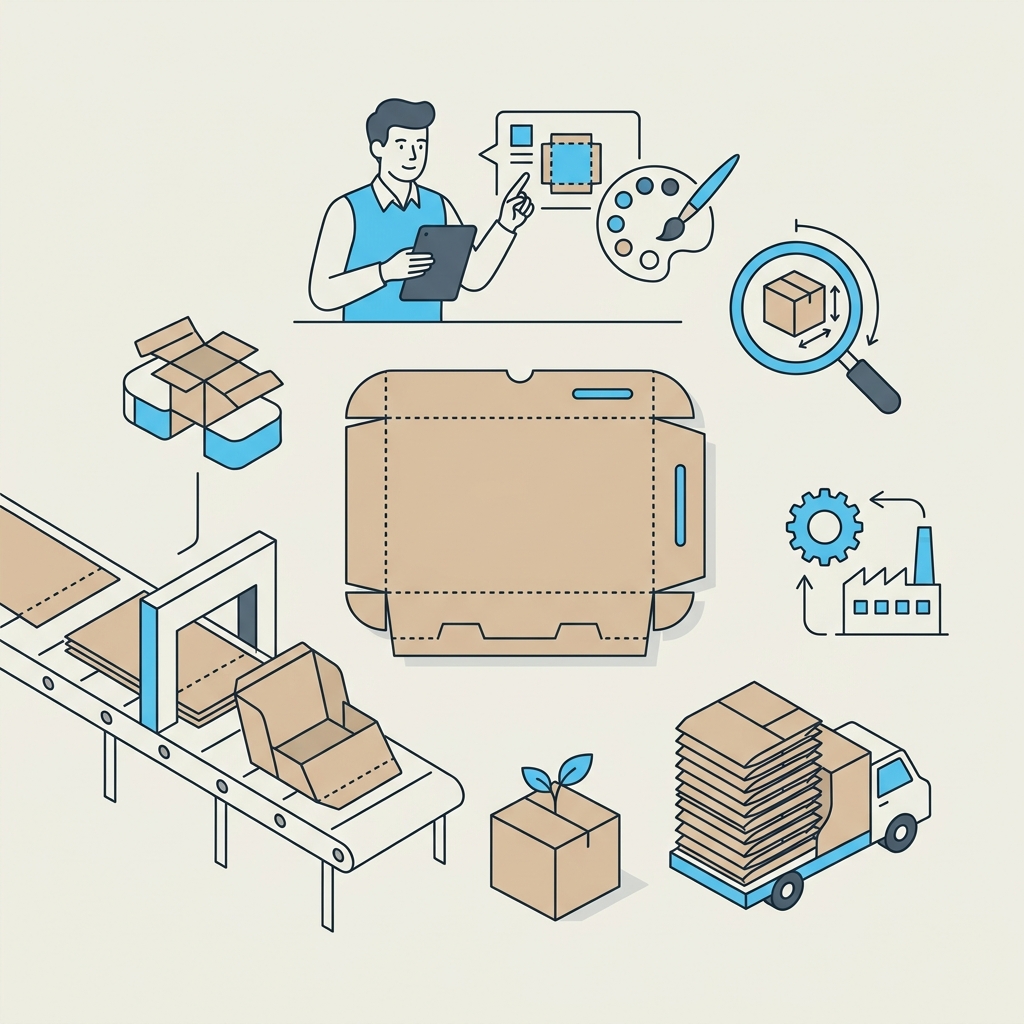
Custom Cardboard Box Creation Process
Developing custom packaging requires thorough planning.
- Needs Assessment: Analyze the product (size, weight, fragility) and the distribution channel.
- Format and Material Selection: Choose the box structure (mailer, roll-end tuck-top, lid-and-base, tube) and the cardboard type.
- Dieline Creation: Obtain the structural vector template onto which the graphic design will be applied.
- Graphic Design: Adapt the visual identity to the dieline, taking safety margins and the printer's technical specifications into account.
- Prototyping: Request a physical sample (ideally printed) to verify dimensions, structural integrity, and overall appearance before mass production.
- Production and Delivery: Final sign-off and manufacturing.
Structural Design and Void Fill Considerations
Graphic design must go hand-in-hand with efficient structural design. A precise fit minimizes the need for void fill materials, cutting both material costs and dimensional weight.
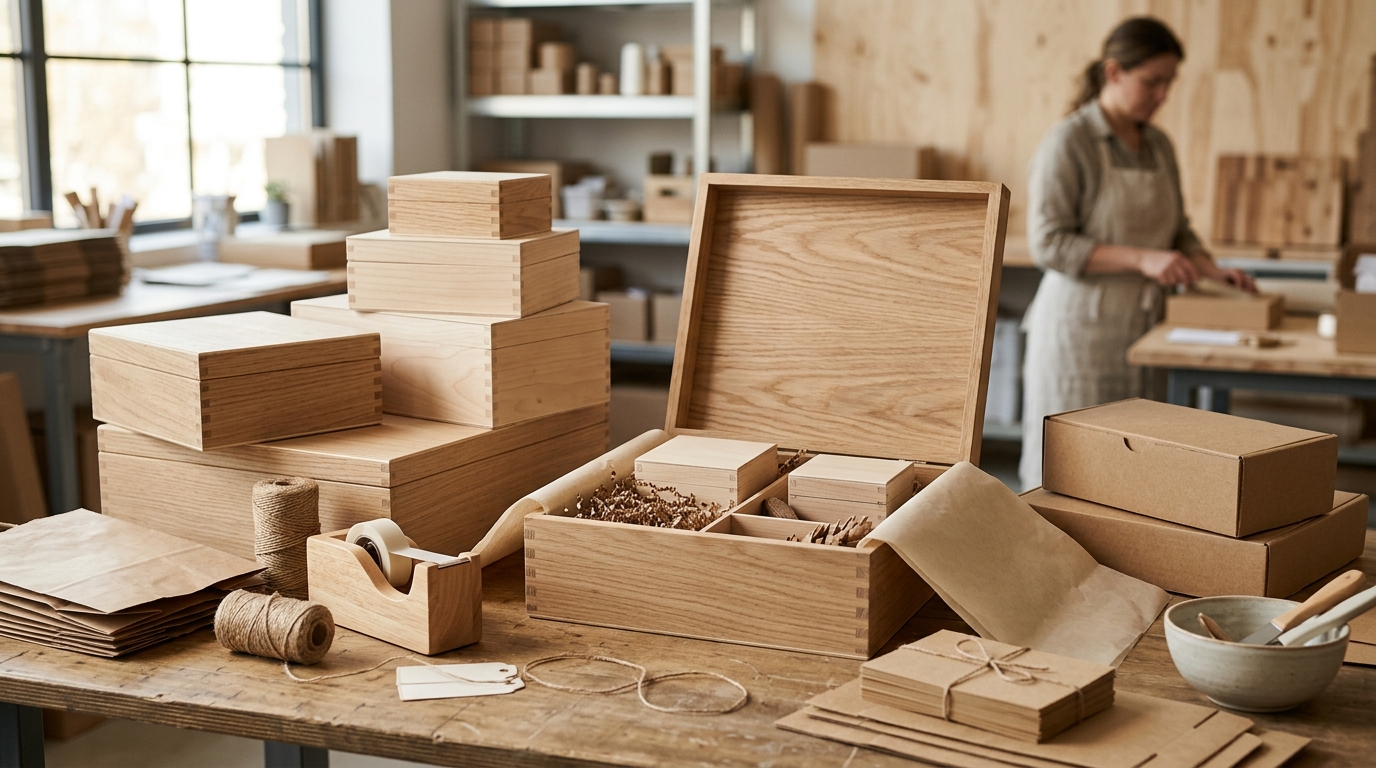
If the product is fragile, internal protective inserts should be incorporated. These can be made of the same cardboard (partition grids, fold-out inserts), custom die-cut foam, or eco-friendly loose fill (crinkle paper, cornstarch packing peanuts). For particularly delicate goods, explore options such as custom-made packaging to ensure optimal transit protection.
The best packaging is that which protects the product flawlessly while telling the brand's story quietly yet impactfully.
Sustainability: The New Standard in Packaging
Environmental awareness is a key deciding factor for many modern consumers. Custom cardboard boxes should align with sustainable practices.
- Using Recycled or Certified Materials: Prioritize cardboard backed by forest certifications (such as FSC) that guarantee responsible forestry practices.
- Eco-Friendly Inks: Opt for water-based or vegetable-based inks rather than traditional solvent inks to facilitate recycling.
- Size Optimization: Eliminating empty space reduces the carbon footprint associated with shipping and logistics.
- Design for Reusability: Crafting durable, appealing boxes encourages consumers to repurpose them.
Watch Out for Greenwashing
Ensure that sustainability claims are accurate and verifiable. Packaging that appears eco-friendly but is difficult to recycle (due to excessive plastic laminations, for example) can damage brand credibility.