Boxes for Christmas? Order as early as you can: the factory gets overloaded and lead times get longer.Last day to order up to 1,000 boxes: 25 October 2026.See all deadlines
Custom Boxes: Key Tips for Protecting Your Shipments
Sincla
Custom boxes: the ultimate solution to protect and showcase your products. Packaging is no longer just a functional container; it has become an essential part of the brand experience and the logistics chain. In a highly competitive and globalized
Custom Boxes: The Ultimate Solution to Protect and Showcase Your Products
Packaging has ceased to be a simple functional container and has become an essential part of the brand experience and the logistics chain. In a highly competitive and globalized market, opting for custom boxes allows you to properly protect items, optimize shipping costs, and create a memorable visual impact from the very first second. Unlike standardized solutions, custom packaging design adapts millimeter by millimeter to the physical needs of the product, maximizing operational efficiency and aligning with the aesthetic values of the company that markets it.
The Essentials
Millimeter-tailored packaging reduces the use of void-fill materials and lowers logistics costs driven by dimensional weight.
The choice of materials (wood, plywood, MDF, or cardboard) depends on the item's fragility and the desired market positioning.
Exterior customization options, such as laser engraving or screen printing, transform the container into a direct marketing tool.
Sustainability is a market requirement in 2026, making the use of recyclable or forest-certified raw materials indispensable.
Why Choose Custom Boxes Over Standard Formats?
The decision between buying standardized boxes in bulk or investing in the development of custom formats is often based on a false perception of initial savings. While a generic container may have a lower unit cost at the purchase stage, in the medium and long term it presents inefficiencies that drive up the entire product lifecycle cost.
When an item is placed into a container that was not designed for its exact proportions, empty space is created that must be compensated for with void-fill materials (bubble wrap, packing peanuts, crumpled kraft paper, etc.). This not only increases the cost of auxiliary supplies, but also increases the final volume of the parcel. Shipping carriers calculate their rates based on dimensional weight, meaning an artificially large parcel will cost more to ship. For this reason, reading about Custom E-commerce Boxes: Ideal Packaging Guide can be key to understanding how sizing precision impacts profit margins.
The primary benefits of custom dimensions are detailed below:
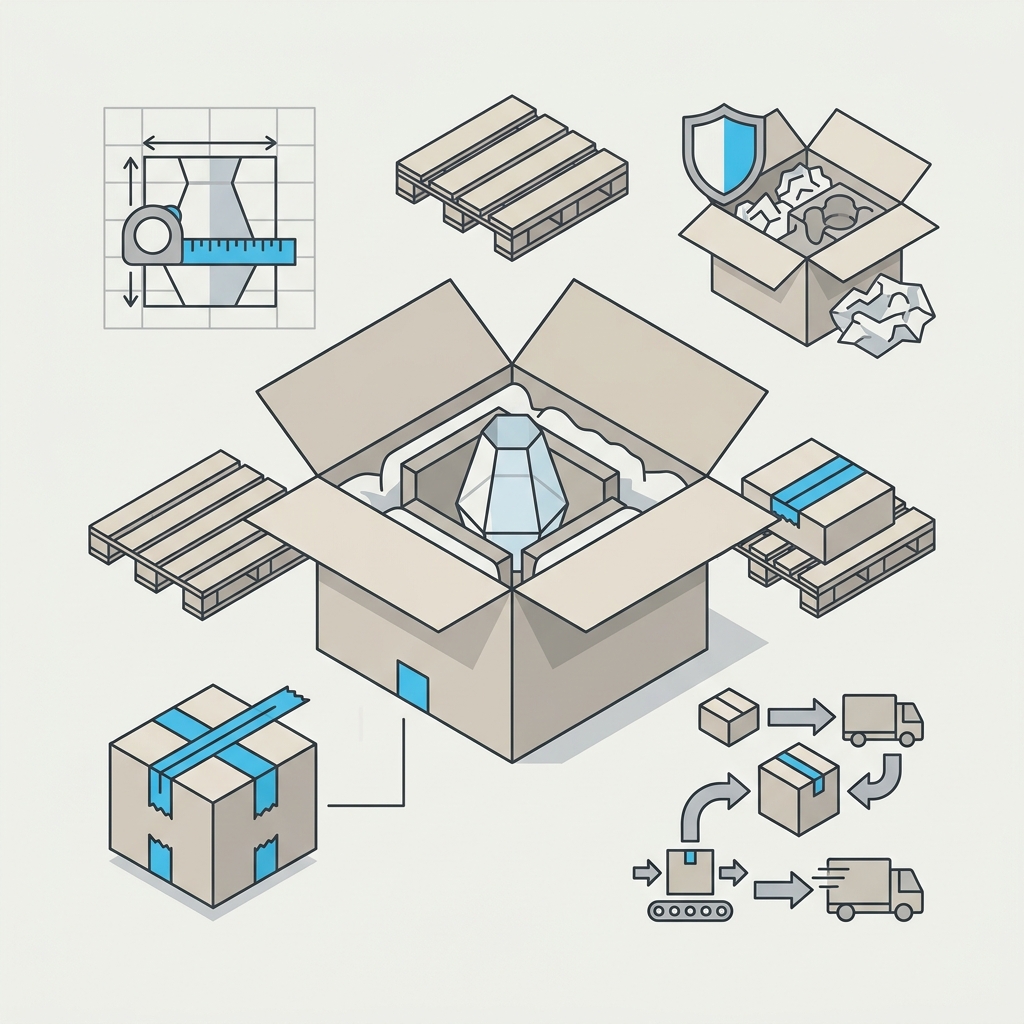
Superior ProtectionA perfect fit immobilizes the contents, drastically reducing breakages caused by impact or vibration during transport.
Storage OptimizationBy occupying only the exact space required, storage capacity is maximized in the warehouse and on pallets.
Customer Experience (Unboxing)A container designed down to the last detail elevates perceived value, conveying quality and care for the details.
True SustainabilityBy eliminating excess volume and the need for plastic void fills, the overall carbon footprint is minimized.
Key Materials for Custom Packaging Design
The functionality and aesthetics of packaging depend entirely on the choice of raw material. There is no universally superior material; each option responds to different requirements regarding strength, weight, budget, and market positioning. It is common to consult a wooden box catalog or other materials to explore the various densities and finishes available.
Among the most widely used materials in the rigid and intermediate packaging industry, the following stand out:
Material
Main Characteristics
Recommended Uses
Visual Appearance
Solid wood (pine, oak)
High strength, long durability, considerable weight. Often requires more artisanal or advanced mechanical manufacturing processes.
Uniform, opaque, perfect for painting or wrapping.
Kraft or corrugated cardboard
Lightweight, highly recyclable, economical, and easy to die-cut. Moderate shock absorption capacity.
Mass-market e-commerce, fashion, dry food goods.
Functional, eco-friendly, minimalist.
Forest Certification in 2026
In today's regulatory landscape, the use of raw materials sourced from unsustainable origins is heavily penalized, both by European regulations and by consumers. Ensuring that woods and boards carry FSC or PEFC certification guarantees that the material's origin supports responsible forest management.
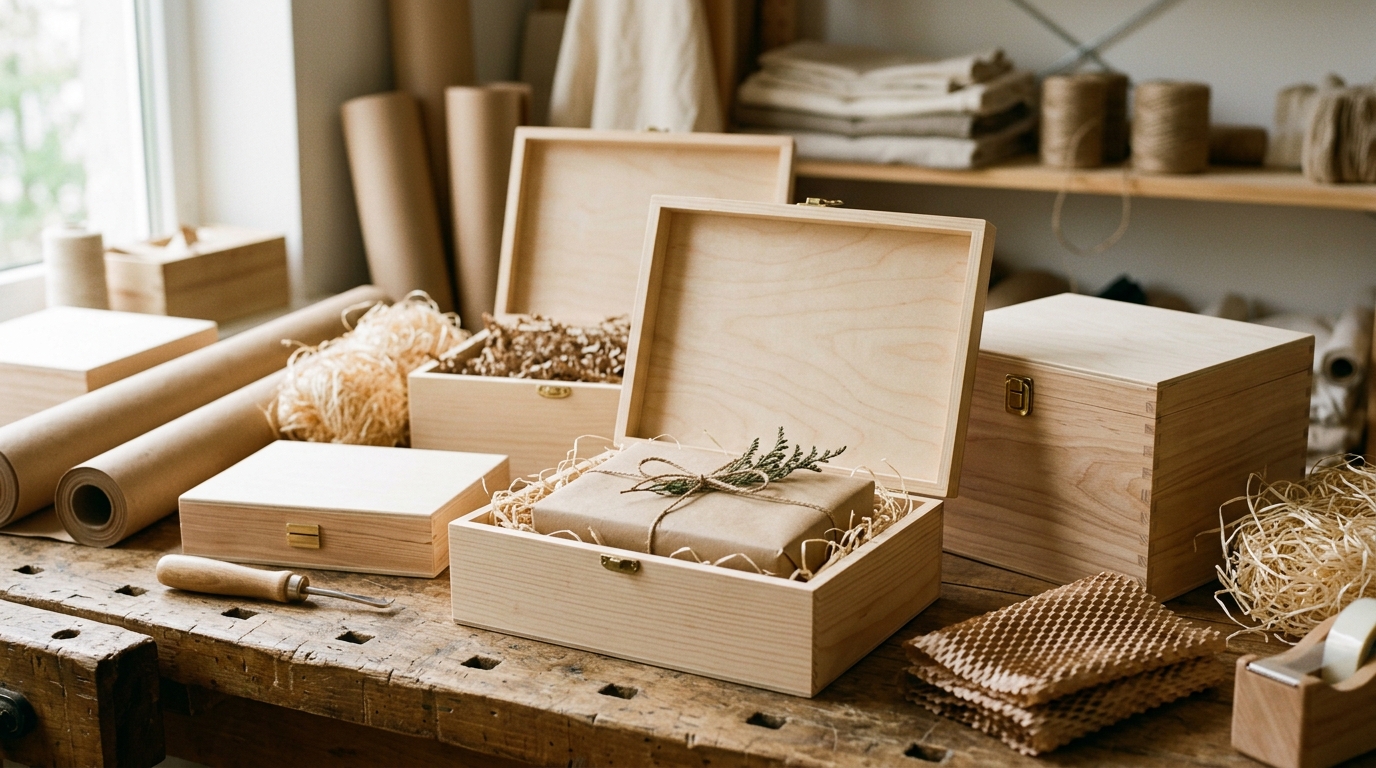
Custom wooden boxes
Discover our wooden boxes for packaging, hospitality, events and more. In-house manufacturing and full customisation.
Once the structure and material of the custom boxes have been defined, the next critical step is graphic and tactile customization. Visual design is what transforms a functional container into a brand ambassador. Having an in-depth understanding of Custom Packaging: Keys to Differentiating Your Brand helps in selecting the most suitable printing method according to the material and budget.
The most widespread finishing methods across the industry encompass several technologies:
Laser Engraving: Particularly popular on solid wood, plywood, or MDF surfaces. A high-precision light beam burns the surface of the material, leaving a bas-relief finish with toasted tones. It is permanent, requires no inks or chemical solvents, and conveys a very handcrafted, elegant appearance.
Screen Printing: A classic technique that transfers ink through a stretched mesh. It is ideal for applying solid, vibrant, and opaque colors (such as pure whites or corporate Pantone colors) onto almost any flat surface. It is highly cost-effective for medium to large runs.
Pad Printing: Used when the printing area has irregular or curved shapes. A silicone pad picks up ink from an etched plate and transfers it to the packaging. Although the print size is more limited than in screen printing, its adaptability is unmatched.
Hot Stamping: Using heat and pressure, a thin metallic foil is transferred onto the material, achieving metallic finishes (gold, silver, copper). It has historically been associated with luxury goods, perfumery, and high-end spirits, as it provides a very eye-catching reflective contrast.
Packaging is the only marketing medium that achieves a 100% open rate. Every box delivered is a direct, inescapable opportunity to communicate a brand's values.
How to Design the Architecture of Your Custom Boxes
Developing non-standard packaging is not a process to be taken lightly. It requires technical planning and mechanical testing to ensure that the final result is viable, secure, and aesthetically flawless. The fundamental steps in the creation process are detailed below:
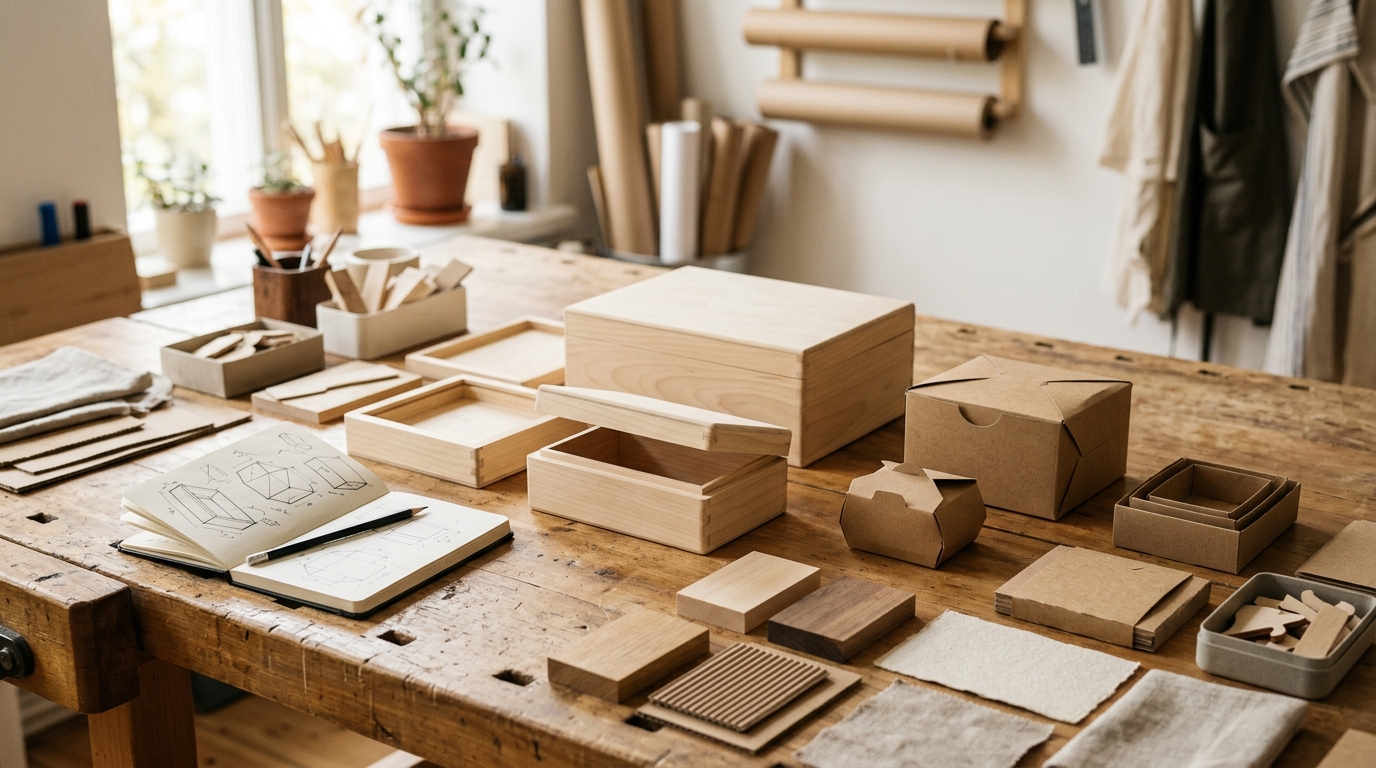
Product Audit. Every component that will go inside must be accurately measured and weighed. It is vital to consider the manufacturing tolerances of the product itself and whether it will undergo thermal expansion.
Closure Type Selection. The opening mechanism defines the unboxing experience. Options include sliding lid boxes (very common in the wine sector), boxes with hinges and clasps (for items meant to be stored in the box long-term), or shoebox-style slip lids.
Interior Insert Design. To prevent internal movement, inserts, dividers, or custom cradles are designed. These can be made from the same material as the exterior, high-density die-cut foam, or molded pulp, depending on the required level of impact protection.
Prototyping. Before initiating mass production, a physical prototype should always be produced, often referred to as a "white sample" if it lacks printing. This allows tolerances, fits, and assembly ease to be verified.
Logistical Stress Testing. The prototype loaded with the actual product must undergo drop, stacking, and vibration simulations (often governed by international transport standards) to certify its durability.
The Overpackaging Pitfall
One of the most common mistakes when designing custom containers is calculating exterior dimensions without accounting for material thickness. A 5 mm thick plywood panel reduces usable internal space by 1 cm across each geometric dimension. You must always clearly specify whether you are working with internal (usable) or external dimensions.
Sustainability and the Future of Custom Packaging
In the year 2026, the perception of sustainability has matured tremendously. Consumers have learned to spot greenwashing and demand packaging solutions that genuinely respect the environment. In the custom box space, this demand translates into several well-established trends.
The first is designing for reuse. A box built with durable materials, such as quality MDF or plywood, and strong joinery rarely ends up in the trash bin. It transforms into a storage piece in the user's home (for photographs, documents, accessories, etc.), keeping the brand logo visible for years.
The second trend involves drastically cutting back on chemical adhesives and toxic varnishes. Modern packaging engineering prioritizes pressure-fit assemblies, water-based glues, or tool-free assembly systems (such as finger-jointed laser cuts). This facilitates packaging recycling at the end of its useful life, as it is free from persistent resins.
FSCForest management
100%Reusable
3 kgAverage optimal load
Frequently Asked Questions
How much more expensive is custom design compared to standard boxes?
Although the initial cost per unit can be slightly higher due to the development of molds, laser-cutting files, or printing plates, this expense is offset by lower logistics costs from reduced dimensional weight and the elimination of void-fill purchases. In addition, breakages drop dramatically, saving on replacement costs and reshipments.
Is there a minimum viable order quantity for custom boxes?
It depends on the manufacturing technology. Traditional die-cut corrugated cardboard packaging usually requires large production runs (thousands of units) to offset the cost of the die. However, thanks to laser cutting and digital manufacturing applied to materials like MDF or plywood, producing highly cost-effective short runs is now possible, starting from just a few dozen units.
What file format is required for graphic customization?
Generally, printers and manufacturers require vector files (such as .AI, .EPS, .SVG, or vectorized .PDF). Unlike raster images (JPEG, PNG), vectors can be scaled without loss of quality, and laser cutting or engraving machines can read the path lines with sub-millimeter precision.
Is it better to varnish wooden packaging or leave it natural?
Leaving it natural reinforces an ecological, organic, and artisanal message, making it ideal for food and sustainable products. Varnishing or lacquering, on the other hand, provides greater protection against moisture, dust, and stains, elevating the product toward a more premium and sophisticated aesthetic, although it can slightly complicate downstream recycling if water-based varnishes are not used.