Boxes for Christmas? Order as early as you can: the factory gets overloaded and lead times get longer.Last day to order up to 1,000 boxes: 25 October 2026.See all deadlines
Custom Packaging: Keys to Differentiating Your Brand
Sincla
The power of custom packaging to differentiate your brand The first physical contact a consumer has with a product after an online purchase or a gift is its wrapping. Choosing custom packaging is not just a matter of aesthetics, but a fundamental strategy
The Power of Custom Packaging to Differentiate Your Brand
custom packaging
Key Takeaways
Custom packaging elevates perceived value and builds customer loyalty.
The choice of materials—from certified wood to kraft cardboard—dictates both environmental and aesthetic impact.
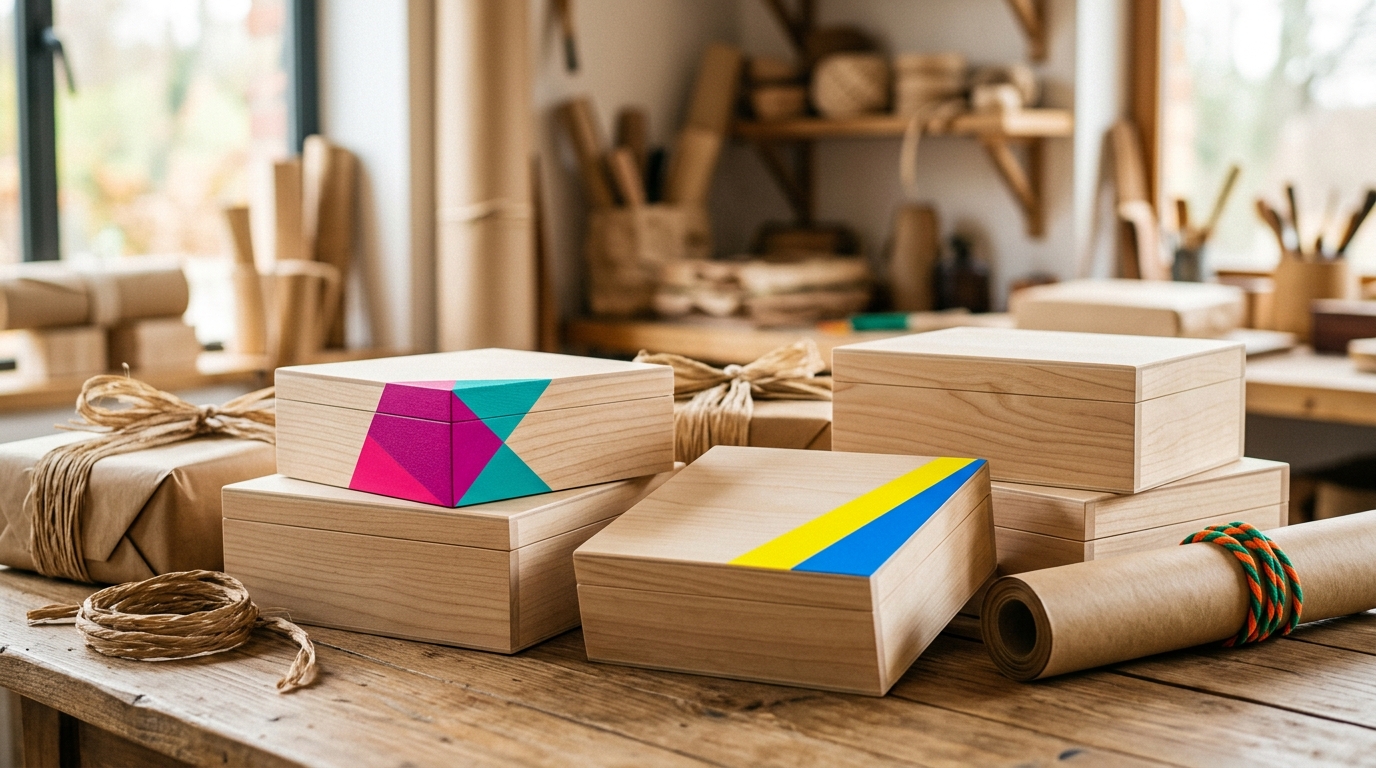
Techniques such as laser engraving or screen printing allow packaging to adapt to different budgets and styles.
Direct Benefits of Investing in Tailor-Made Packaging
Instant RecognitionEnables customers to identify the brand even before opening the parcel.
Optimized ProtectionPackaging tailored to exact product dimensions minimizes transit damage.
Increased Perceived ValuePremium materials and refined finishes justify a higher retail price point.
Visible SustainabilityUtilizing eco-friendly and certified materials reflects an authentic commitment to the environment.
The Unboxing Phenomenon
The unboxing experience has become a deciding factor for buyers. An attractive presentation dramatically increases the likelihood of customers sharing the product on social media, generating high-value organic word-of-mouth.
Essential Materials for Outstanding Packaging
Wood and Derivatives: Durability and Premium Appeal
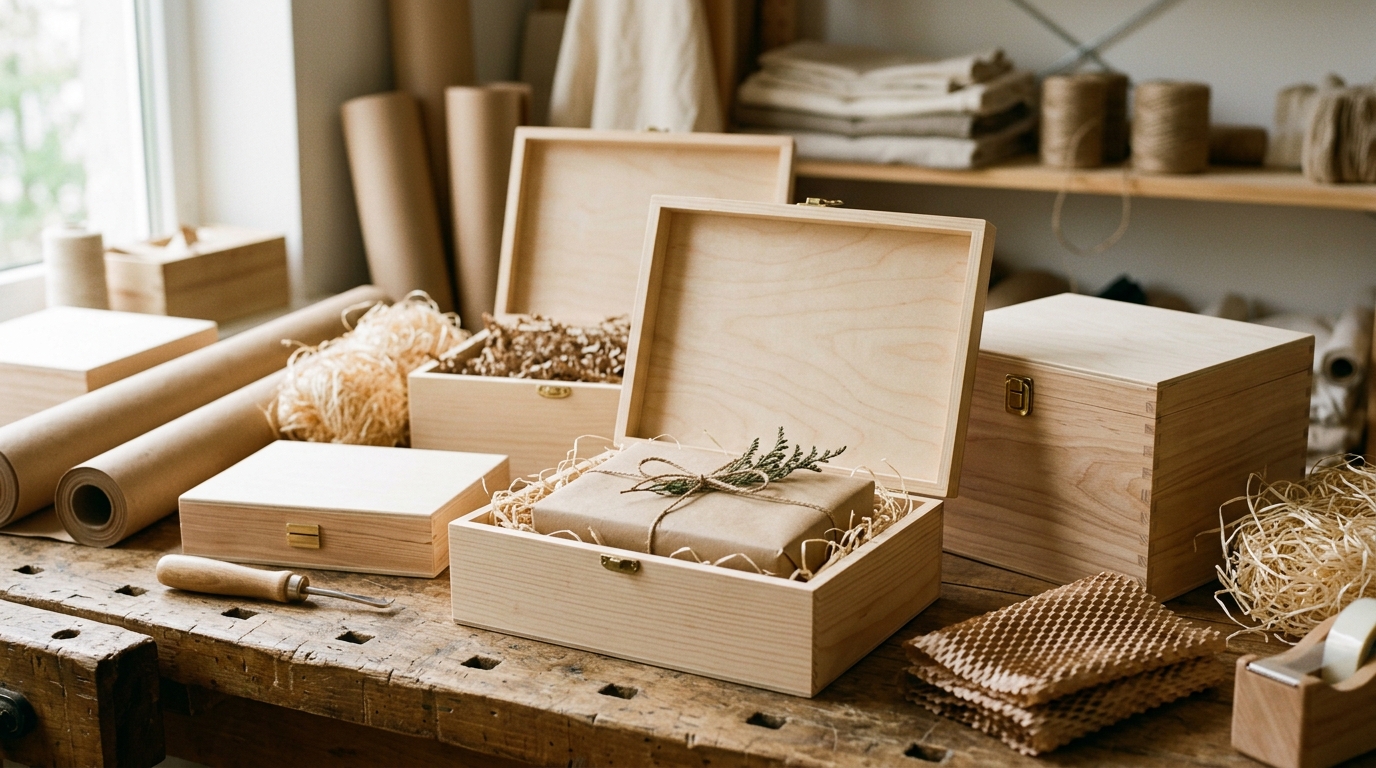
Solid Pine Wood: Classic, remarkably sturdy, and featuring a natural grain that ensures every piece is unique. Ideal when sourced under certifications like FSC (Forest Stewardship Council) or PEFC.
Plywood: Constructed from glued thin wood veneers. Delivers excellent structural rigidity with less weight than solid timber. Highly versatile for intricate cuts and joins.
MDF (Medium-Density Fibreboard): Made from compressed wood fibers. Its uniform, completely smooth surface makes it the premier candidate for crisp prints and lacquered finishes.
Subtly burns the surface using a focused light beam, producing a dark, precise, recessed finish.
Solid wood, plywood, MDF, and leather. Ideal for detailed logos and low-volume production.
Screen Printing
Transfers ink through a tensioned mesh screen. Yields solid, fully opaque brand colors (Pantone matching).
Flat surfaces made of wood, cardboard, or metal. Highly cost-effective for medium to large runs.
Pad Printing
Uses a flexible silicone pad to transfer ink. Highly adaptable to non-standard shapes.
Curved surfaces, irregular textures, or miniature parts where screen printing cannot reach.
Hot Stamping (Foil Stamping)
Applies a metallic foil (gold, silver) using heat and pressure.
Premium cardboard, coated paper stocks, and rigid boxes. Superb for cosmetics and jewelry.
Material Contrast
Pairing deep laser engraving with the organic warmth of natural wood often yields a significantly more refined and timeless aesthetic than attempting multi-color prints on textured surfaces.
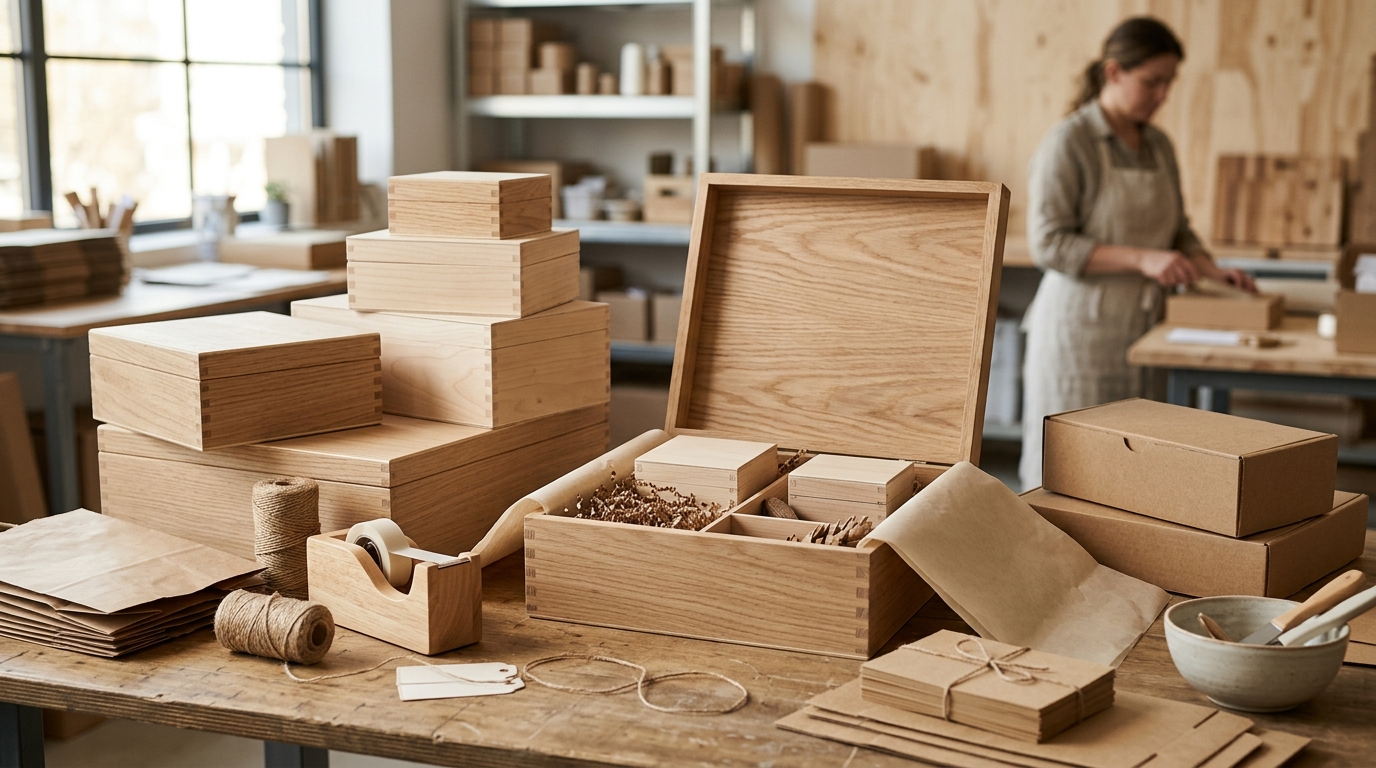
Custom wooden boxes
Discover our wooden boxes for packaging, hospitality, events and more. In-house manufacturing and full customisation.
Product Assessment: Precisely measure the product's dimensions, calculate its weight, and assess fragility. This dictates required wall thickness and whether interior cushioning (foam inserts, cardboard dividers, wood wool) is needed.
Graphic Identity Definition: Select the brand elements to display: logos, brand copy, usage guidelines, or certification marks. Maintain clean layouts without overcrowding the available print space.
Material and Technique Selection: Match substrates (wood, MDF, cardboard) and application methods (laser, screen print) to your allocated budget and target market positioning (luxury, eco-conscious, mass market).
Prototyping (Mockups): Before committing to full production, order a physical prototype or review accurate 3D renderings to verify fit, structural proportions, and text legibility.
Logistical Review: Factor in outer dimensions and total packed weight. Inefficient packaging designs significantly drive up freight, handling, and storage costs.
"Packaging is the silence that precedes the product’s symphony; preparing it well ensures the melody is heard with absolute clarity."
Common Mistakes When Developing Custom Packaging
Overdesigning
A prevalent mistake is treating the outer box like a promotional flyer. Overloading surfaces with excessive copy, social handles, QR codes, and clashing colors creates visual clutter that degrades perceived quality. Restraint and minimalism invariably project greater prestige.
What file formats are required for custom packaging artwork?
Vector files (.AI, .EPS, .SVG, or vector .PDF) are standard and necessary. Unlike raster images composed of pixels (JPEG or PNG), vector paths scale without loss of fidelity and can be directly interpreted by automated cutting and laser engraving equipment.
Is wooden packaging more expensive than cardboard?
Yes, solid timber and plywood involve higher raw material and fabrication costs compared to corrugated or kraft cardboard. However, for premium-margin items (fine wines, luxury cosmetics, jewelry), the substantial boost in perceived product value more than offsets initial packaging costs by supporting higher retail margins.
What does FSC certification indicate on wooden packaging?
The FSC (Forest Stewardship Council) certification confirms that the timber originates from forests managed to rigorous environmental, social, and economic standards. It represents a vital sustainability credential expected by modern consumers and mandated by European regulations in 2026.
Can custom packaging be manufactured in small batches?
Feasibility depends on the chosen material and customization technique. While offset-printed cardboard boxes generally require substantial minimum order quantities due to setup costs, modern digital printing and precision laser engraving on wood make short runs and even individual custom pieces economically practical.