Packaging is not just a wrapping: it is a strategic tool that protects your product, communicates your brand, and enhances the customer experience. Choosing the right packaging can make the difference between a one-time purchase and a loyal customer, as well as reduce costs and logistical errors.
The essentials
- Define what you want to achieve with your packaging before thinking about materials or designs.
- Each product has unique characteristics that determine the most suitable type of packaging.
- Packaging should not only look good but also withstand transport and storage.
However, many companies make mistakes when selecting their packaging, either by focusing solely on aesthetic design or by ignoring critical aspects such as product protection, sustainability, or logistics.
To help you make informed decisions, we have prepared a comprehensive checklist with practical tips that will guide you through each step of the process to choose the perfect packaging.
1. Define the objective of your packaging
Before thinking about materials or designs, it is essential to define what you want to achieve with your packaging. This will allow you to prioritise between aesthetics, functionality, and sustainability.
Key questions:
- Attraction Are you looking to attract customers at the point of sale or in online sales?
- Functionality Will the packaging be primarily functional (protection) or communicative (brand reinforcement)?
- Sustainability Do you want it to be reusable, recyclable, or disposable?
- Sales Channel Will it be adapted for e-commerce shipments or physical store sales?
Practical Tip
Make a list of priorities and classify them: protection, marketing, sustainability and cost. This will help you make objective decisions when compromises arise.
2. Know your product and its needs
Each product has unique characteristics that determine the most suitable type of packaging:
- Fragility Delicate products need resistant materials like corrugated cardboard, foam, or blister packaging.
- Size and shape Modular or adjustable packaging helps reduce transport and storage costs.
- Product type Food, cosmetics, or chemical products require different levels of hygiene, safety, and labelling.
- Weight Packaging that is too light for heavy products can be easily damaged during transport.
Test prototypes using your actual product to ensure that the packaging protects it correctly and avoid returns or damages.
3. Consider the customer experience
Packaging is the first impression of your product and can differentiate your brand from the competition.
- Ease of opening: Avoid complicated packaging that causes frustration.
- Presentation: Organised and visually attractive packaging improves the perception of quality.
- Interaction: Packaging that surprises the customer, for example with innovative closures, textures, or aromas, increases perceived value.
- Unboxing: In e-commerce, "unboxing" is key. The packaging should protect and excite when opened.
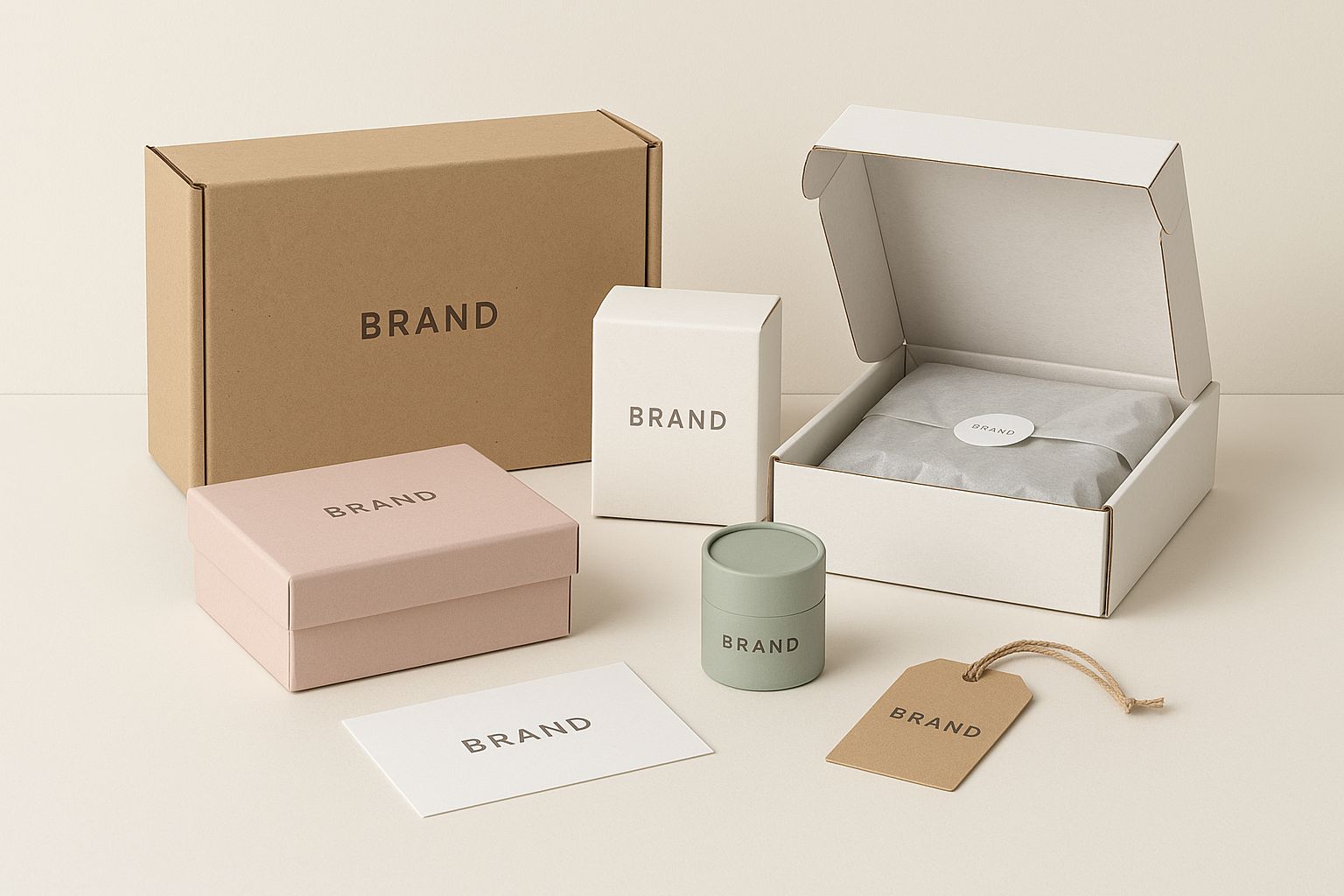
Include personalisation elements such as tissue paper, stickers, or easy closures, which improve the opening experience without significantly increasing the cost.
4. Select the appropriate materials
The material influences the protection, cost, sustainability, and appearance of the packaging:
- Cardboard and paper Economical, recyclable, and versatile. Perfect for boxes and bags.
- Plastics Transparent and resistant; choose recyclable or biodegradable options.
- Glass Premium and recyclable, ideal for food and cosmetics. Heavy and fragile.
- Metal Aluminium and steel offer durability and protection against humidity and light.
- Innovative materials Bioplastics, compostable, or ecological blends for a sustainable approach.
Practical Tip
Evaluate cost vs. durability vs. environmental impact. Sometimes investing in sustainable materials improves brand perception and attracts environmentally conscious customers.