Crafts for 10-12 Year Olds: Fostering Creativity and Skills
The Essential Takeaways
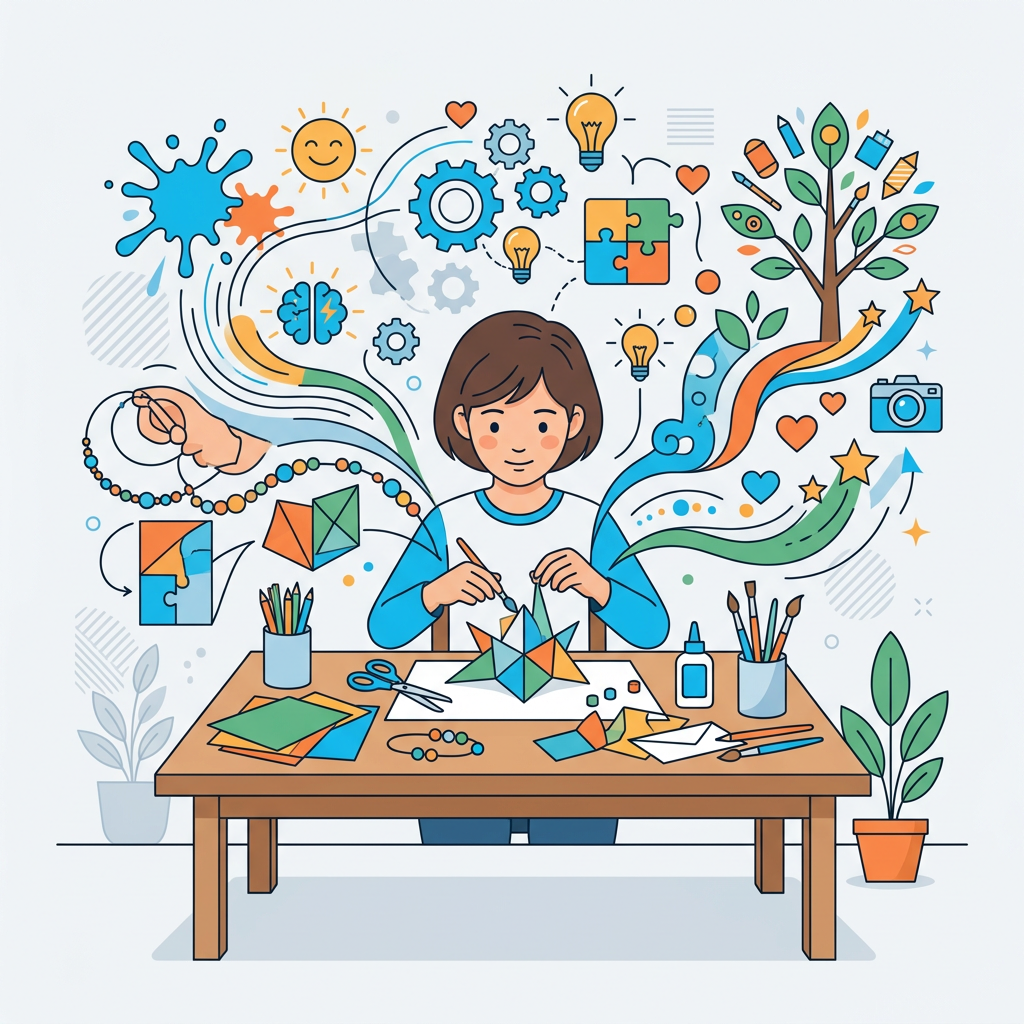
- Crafts at this age boost creativity, problem-solving, and self-esteem.
- It's crucial to choose challenging but achievable projects, tailored to their changing interests.
- They can explore anything from simple robotics to jewelry design or advanced painting.
- Sustainable and recycled materials add significant educational value.
Key Benefits of Crafts in Pre-Adolescence
- Creativity and Innovation. They stimulate lateral thinking and the search for original solutions.
- Fine Motor Skills. They improve hand-eye coordination and manual dexterity, essential for many future activities.
- Problem Solving. They face practical challenges and learn to find solutions.
- Concentration and Patience. They foster persistence and the ability to stay focused on a task.
- Self-esteem and Confidence. The achievement of a successful project reinforces the feeling of competence and self-worth.
- Personal Expression. They offer a means to communicate emotions and ideas non-verbally.
Beyond Fun
Creative projects at this age can also be a valuable tool for developing critical thinking and the ability to follow complex instructions, skills transferable to other academic and life areas.
Types of Crafts for 10-12 Year Olds: Ideas and Approaches
1. Wood Crafts: From Simple to Detailed
- Models and miniatures: Build dollhouses, vehicles, or miniature landscapes from kits or from scratch with small plywood or MDF strips.
- Engraving and pyrography: Decorate wooden pieces (small boxes, coasters) with their own designs. Pyrography requires adult supervision due to heat.
- Sculpting with balsa wood: A soft, easy-to-carve material for beginners in sculpture.
- Creating simple toys or musical instruments: Pan flutes, basic xylophones, or toy cars with wheels.
2. Sewing and Knitting Projects: Threads and Fabrics for Developing Patience
- Creating coin purses or pencil cases: Using felt or simple fabrics, and learning basic stitches by hand or with a toy sewing machine.
- Designing fashion accessories: Hair bows, fabric bracelets, or even customizing t-shirts with appliques.
- Amigurumis or small crocheted stuffed animals: Start crocheting with simple patterns of animals or characters.
- Basic embroidery: Decorate garments or small canvases with colorful threads and simple designs.
3. Art and Painting: Exploring Colors and Textures
- Canvas painting: Use acrylics or watercolors to create artworks, exploring different techniques.
- Modeling with clay or polymer clay: Create figures, jewelry, or decorative utensils that can be baked to harden.
- Creating comics or graphic novels: Develop narrative and artistic skills by combining drawing and writing.
- Drawing with advanced techniques: Explore perspective, shading, and composition with graphite pencils or charcoal.
4. Creative Recycling: Sustainability and Reuse
- Building robots or sculptures with recycled materials: Cardboard boxes, plastic bottles, cans, old CDs.
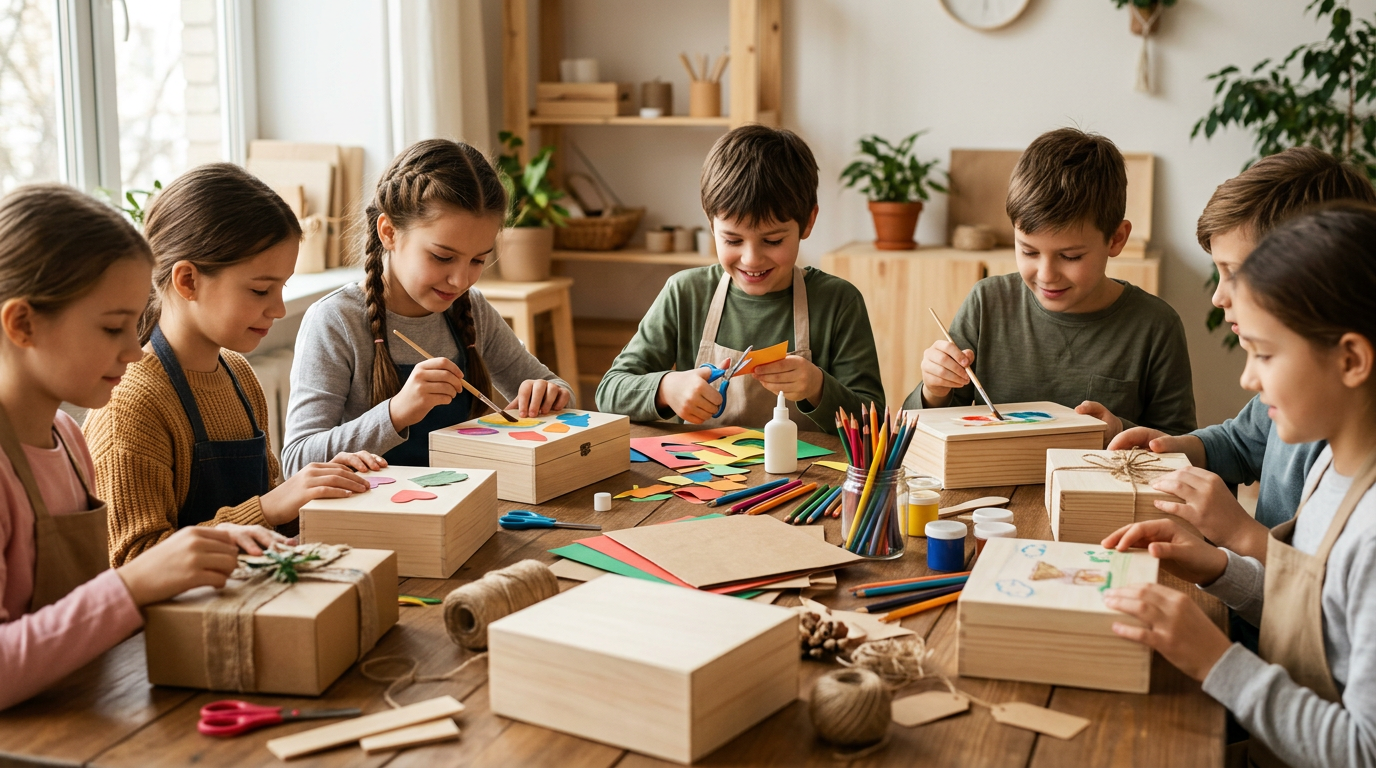
- Creating jewelry boxes or cases: Using yogurt pots, cereal boxes, or even custom wooden boxes that are no longer used for their original purpose, decorating them with paint, paper, or fabric.
- Making recycled paper: An educational project that shows the life cycle of materials and allows them to create their own paper for drawing or writing.
- Small furniture or decorative elements: With pallets, fruit crates, or even thick cardboard, as one might see in a guide on cardboard boxes for moving, but adapted for decoration.
Encourage Autonomy
While supervision is important, allow the child to make decisions about design, colors, and materials. This reinforces their sense of ownership over the project and their ability to choose.
5. Applied Science and Technology: Smart "DIY"
- Simple electrical circuits: Create lamps, small fans, or alarms with batteries, wires, and LED bulbs.
- Basic robotics: Kits to assemble small robots that move or follow lines.
- Creating homemade scientific instruments: A periscope with cereal boxes, a baking soda and vinegar volcano, or a simple electric motor.
- Designing and building resistant bridges or structures: Using popsicle sticks, straws, or cardboard to understand engineering principles.
Safety First
Always supervise the use of tools such as sharp scissors, utility knives, strong glues, hot glue guns, or pyrography tools. Ensure they work in a well-ventilated space if using paints or glues with strong odors.
Essential Materials and Tools
Basic Materials:
- Paper and cardstock: Of different weights, colors, and textures.
- Cardboard: Kraft cardboard boxes (from packaging or cereal), foam board, corrugated cardboard.
- Fabrics: Felt, cotton, old clothing scraps.
- Wood: Popsicle sticks, tongue depressors, balsa wood strips, small pieces of plywood or MDF.
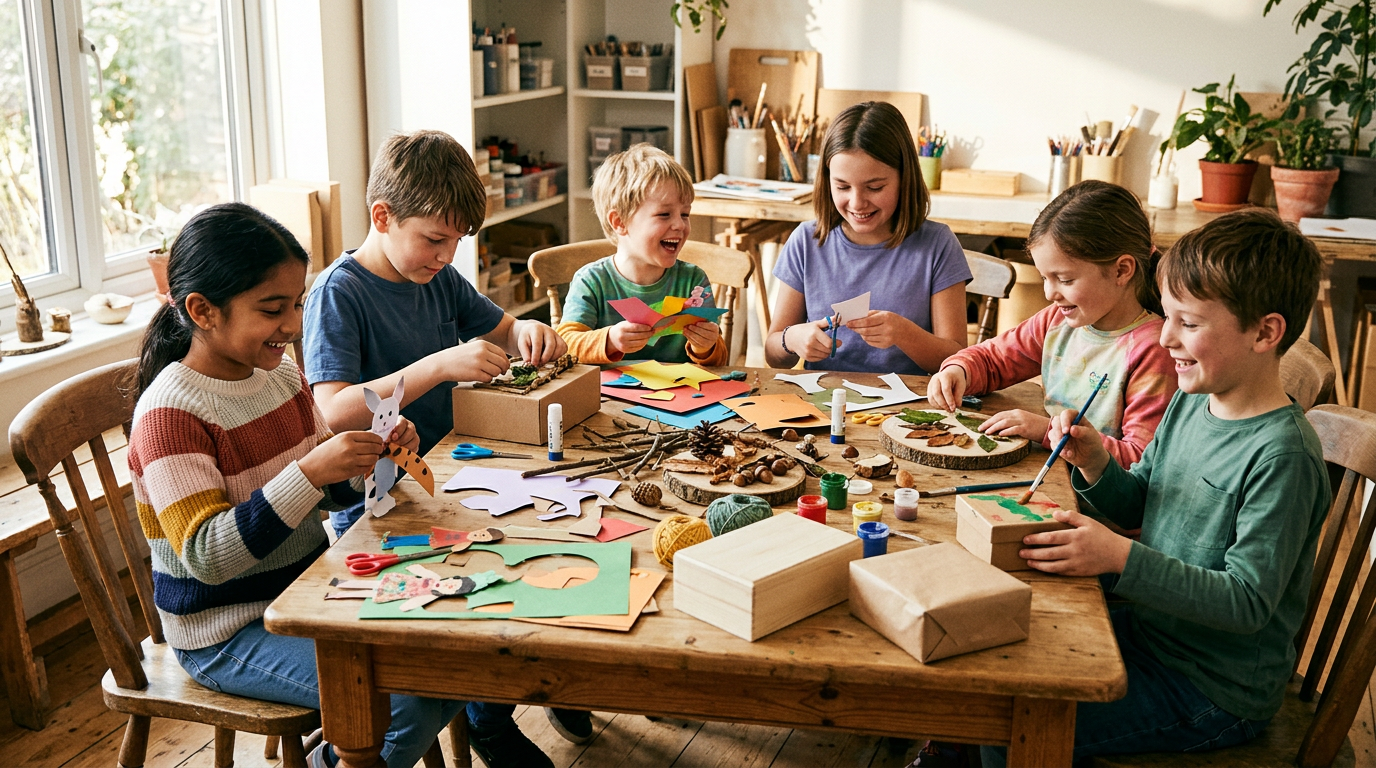
- Natural elements: Pinecones, dried leaves, small branches, stones (collected responsibly).
- Recycled materials: Plastic bottles, caps, cardboard rolls from toilet paper/kitchen towels, cans, old CDs.
- Beads and embellishments: Beads, buttons, sequins, threads, yarn, ribbons.
Common Tools:
- Scissors: Various sizes, including precision ones.
- Adhesives: Glue stick, liquid school glue, white wood glue, all-purpose glue. A hot glue gun is useful but requires supervision.
- Paints: Acrylics, watercolors, tempera paints, markers of various thicknesses.
- Brushes: Of different sizes.
- Pencils and erasers.
- Rulers and set squares.
- Paper punches.
- Safety cutter: Always under strict adult supervision.
"Creativity is intelligence having fun." – Albert Einstein. A principle that crafts perfectly embody in pre-adolescence.
How to Introduce Crafts: Inspiration and Organization
- Offer a "menu" of options: Instead of imposing an activity, present several ideas that suit their interests. You can use visual references (photos, videos) to inspire them.
- Create a workspace: A clean, tidy, and well-lit area. A protected table to prevent stains and facilitate subsequent cleaning.
- Organize materials: Having materials at hand and organized makes the process easier and minimizes frustration. Storage boxes (similar to those used for communion boxes or wedding packaging, but adapted for craft materials) can be very useful.
- Start with a guide, but encourage freedom: Provide clear instructions for the beginning of the project, but allow them to deviate and add their personal touch.
- Celebrate the outcome: Showcase the finished work, regardless of perfection. Valuing effort and creativity is the most important thing.
Common Mistakes to Avoid
- Too high expectations: The main goal is to enjoy the process and learn, not to create a masterpiece.
- Frustration over mistakes: Encourage them to view mistakes as opportunities to learn or to improvise new solutions.
- Lack of time: Some projects require multiple sessions. Planning adequate time avoids rushed work and stress.
- Excessive supervision: Allowing them to experiment and make small mistakes is part of learning. Intervene only if there is a safety risk or extreme frustration.