Product Display Ideas for Shop Windows
Visual presentation in a retail environment is one of the most decisive factors in capturing customer attention and conveying a brand's value. Product display ideas for shop windows have evolved into settings where materials, lighting, and spatial arrangement tell a story. Within this context, natural wood has established itself as an essential aesthetic resource to elevate the perceived quality of any displayed item.
Key Takeaways
- The shop window is the first physical touchpoint between the consumer and the product.
- Natural wood brings warmth, sustainability, and an immediate premium perception.
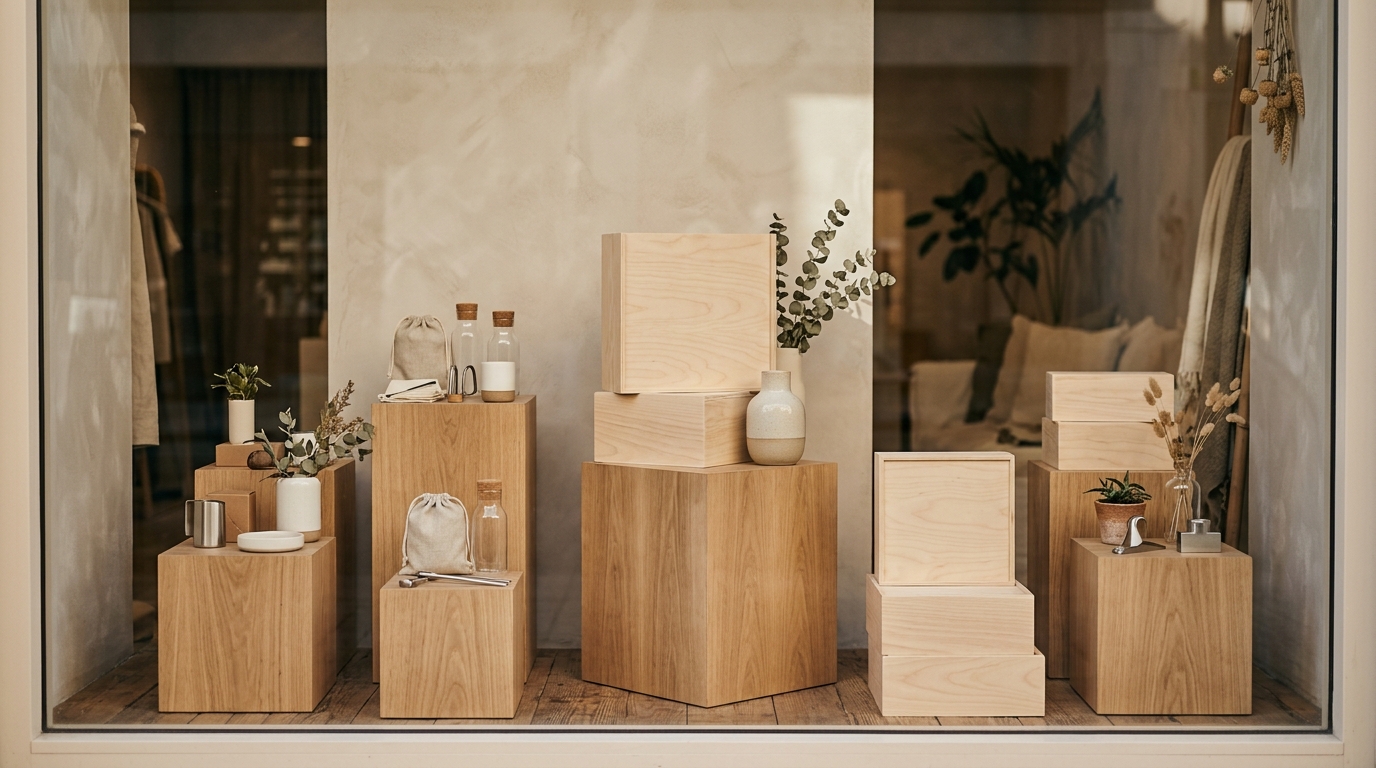
- Using stands, plinths, and custom cardboard boxes combined with wood creates highly effective visual contrasts.
- Proper lighting and respecting negative space are crucial to avoid overwhelming the composition.
Designing an effective shop window involves much more than placing merchandise behind glass. It is about creating a harmonious composition that guides the passerby's gaze toward the desired focal points. The use of organic materials, especially wood in its various forms (plywood, MDF, solid pine), allows for the construction of displays that communicate authenticity, craftsmanship, and attention to detail.
Why Wood Transforms Product Perception
Integrating wooden elements into visual merchandising is not a random choice. Psychologically, wood evokes nature, solidity, and durability. When a product—whether jewelry, cosmetics, technology, or fashion—is presented on a well-crafted wooden stand, the consumer's brain unconsciously associates those organic qualities with the featured item.
The Power of Tactile Contrast
Presenting products with smooth, cool textures (such as glass, metal, or glossy plastics) on porous, grained wood surfaces creates a visual contrast that instantly highlights the merchandise's features.
Furthermore, in 2026, sustainability is a non-negotiable factor for the modern shopper. Using FSC (Forest Stewardship Council) certified wood in window display design communicates a genuine commitment to the environment, aligning the store's values with the expectations of an increasingly eco-conscious audience.
Arrangement Strategies with Wooden Displays
There are several ways to incorporate wood into a shop window setting to enhance product presentation. The key lies in modularity and the ability to adapt the setup to different seasons or campaigns.
-
Blocks and Plinths at Varying Heights
They create visual rhythm and allow products to be grouped by collection without competing for attention. -
Tiered Risers
Ideal for shallow shop windows, they make the most of vertical space while maximizing visibility. -
Floating Frames
Slim wooden slat structures that frame the hero product, focusing attention just like a piece of art. -
Integrated Wooden Boxes
Using the packaging itself (open or stacked) as part of the decor, displaying the product in its natural context.
When planning product display ideas for shop windows, it is essential to keep the "pyramid principle" or triangle rule in mind. Arranging elements to form imaginary triangles (with a higher focal apex) is naturally pleasing to the human eye and makes visual exploration of the entire display effortless.
Materials and Finishes: Choosing the Right Wood
Not all wood conveys the same message. The selection of the base material and its subsequent finish will define the style of the window display.
| Material | Aesthetic / Message | Recommended Window Display Uses |
|---|---|---|
| Raw Solid Pine | Rustic, organic, handcrafted, approachable. | Sturdy risers, backdrops, displays for natural or eco-friendly goods. |
| Plywood | Modern, industrial, minimalist, Scandinavian. | Geometric structures, modular shelving, clean-lined plinths. |
| Stained Wood (Walnut, Dark Oak) | Elegance, luxury, tradition, exclusivity. | Bases for jewelry, watches, high-end cosmetics, fine wines, or spirits. |
| Lacquered MDF | Versatility, solid grainless color, contemporary. | Pop-up elements, vibrant seasonal campaigns where shape matters more than grain texture. |
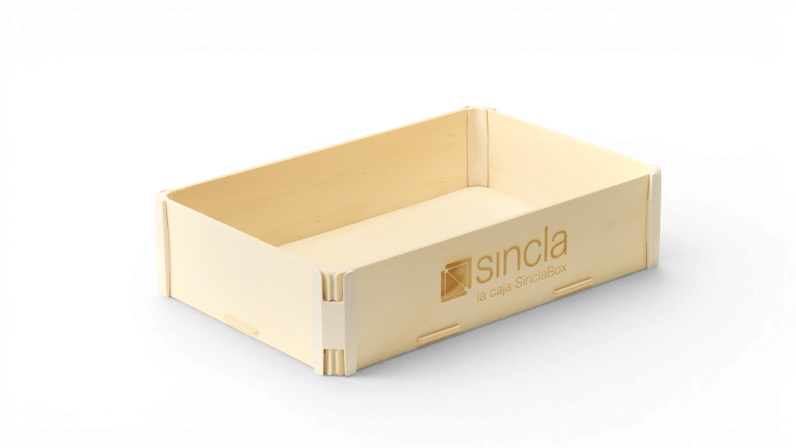
To further enhance the premium feel, the finishes applied to the wood play a crucial role. Techniques such as laser engraving allow brand logos or subtle patterns to be etched directly onto the displays, delivering a highly professional level of personalization. Similarly, the strategic use of metal plates or labels on wooden displays adds refined touches of sophistication.
Packaging as a Centerpiece of the Window Display
One of the strongest trends in visual merchandising is using product packaging as an integral part of the exhibit. Thoughtful packaging, such as wooden cases, does not need to be hidden away in the backroom; on the contrary, it should be showcased as proof of the overall quality of the offering.
The "Static Unboxing" Concept
Display the product in three simultaneous stages within the window: the sealed packaging, the packaging slightly opened to reveal the interior, and the product completely out of its box. This tells the story of the purchasing experience.
This strategy is especially effective during seasonal campaigns. For instance, during the holiday season or for special events, presentation is everything. A window display featuring gift items showcased in elegant boxes immediately signals to the shopper that the gift-wrapping challenge is already solved and the result will be stunning.
Common Mistakes When Using Wood in Visual Merchandising
Although wood is a versatile and forgiving material, improper use can ruin even the best product display ideas for shop windows. It is important to avoid certain conceptual and execution pitfalls.
- Texture Overload. Mixing too many different wood species (varying tones, grains, and finishes) in a single window creates visual clutter. It is better to choose a single wood tone and use it as a cohesive thread.
- Lack of Maintenance. Raw wood can visibly collect dust or fade if exposed to constant direct sunlight without UV protection. Plinths and stands must be cleaned and inspected regularly.
- Disproportionate Sizing. Using wooden blocks that are overly large or visually heavy for small items (such as a ring or a perfume bottle) will swallow the product. The stand should frame and elevate, not overpower.
- Incorrect Lighting. Illuminating wood with light that is too cool (bluish-white) can make it look pale or synthetic. Wood requires warm color temperatures (between 2700K and 3200K) to bring out its rich tonal depth.
Negative space in a shop window is just as important as the product itself; it is the breathing room that allows the merchandise to stand out.
Visible Sustainability: The Message Behind the Aesthetic
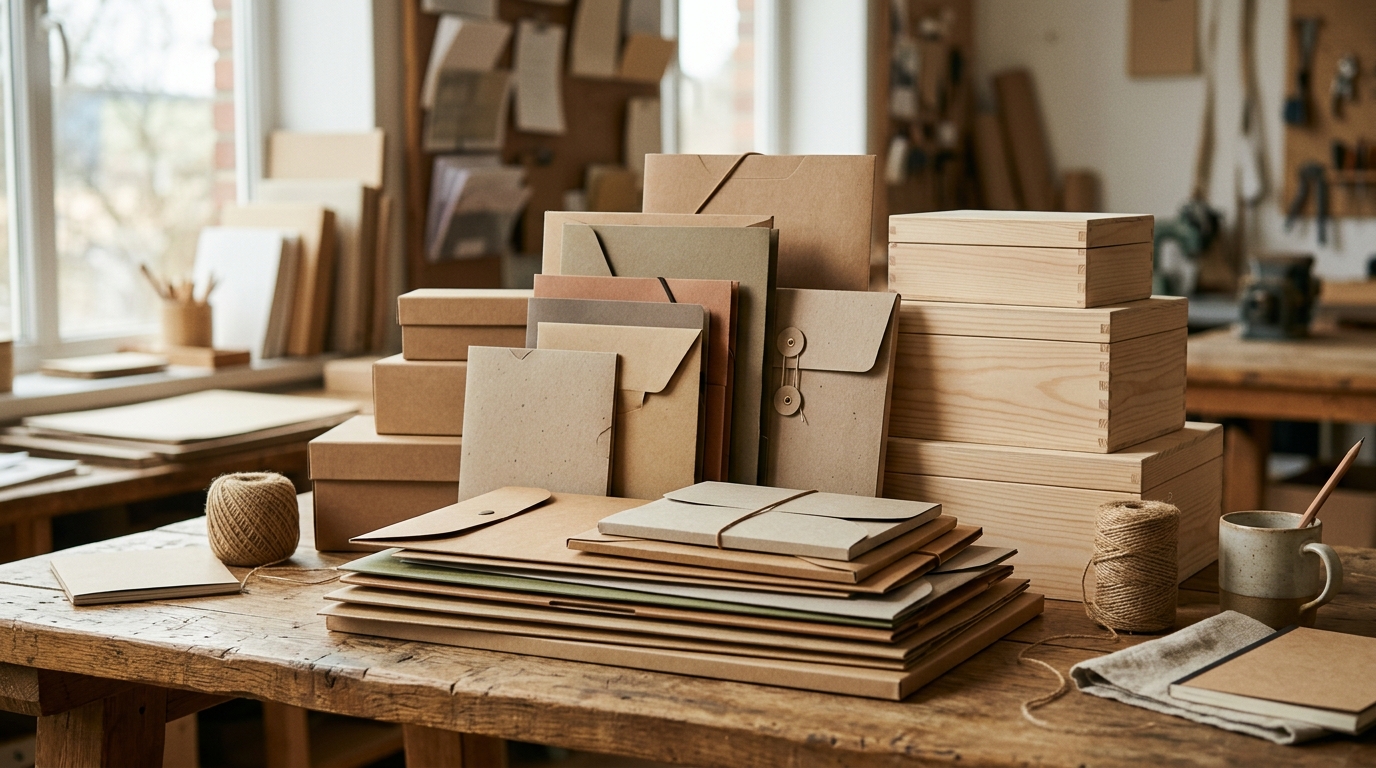
In today's retail landscape, aesthetics cannot be divorced from ethics. The choice of materials for a window display communicates brand values directly. Using certified woods or recycled materials (such as kraft cardboard or recovered fiber derivatives) not only delivers an organic look, but also resonates with consumers who reject single-use plastic waste in temporary decor.
Designing modular wooden window display props ensures these fixtures are not discarded when the season changes. By simply rearranging the cubes, updating backdrops, or applying a temporary wrap, the initial investment pays for itself over time, drastically reducing the carbon footprint associated with visual merchandising.
Lighting and Color: Enhancing the Presentation
Wood provides an exceptionally warm, neutral base, allowing you to play with color in the window backdrops or through accent lighting. If the products are dark, light-toned wood (such as pine or poplar) against a vibrant background will make a dramatic statement. Conversely, if the products are very colorful, a neutral background paired with natural wood stands will help balance the composition without stealing the spotlight from the items.
Using accent lighting with directional LED spotlights creates sharp or soft shadows depending on the intended effect. Grazing light raking across a textured wood surface will accentuate the wood grain, adding tactile depth to the scene—a highly effective technique when displaying rustic, artisanal, or gourmet products.
Watch Out for Glare
High-gloss varnished wood can produce distracting reflections from window spotlights or outdoor sunlight, compromising product visibility. For visual merchandising, matte or satin finishes are always recommended.