The Essentials
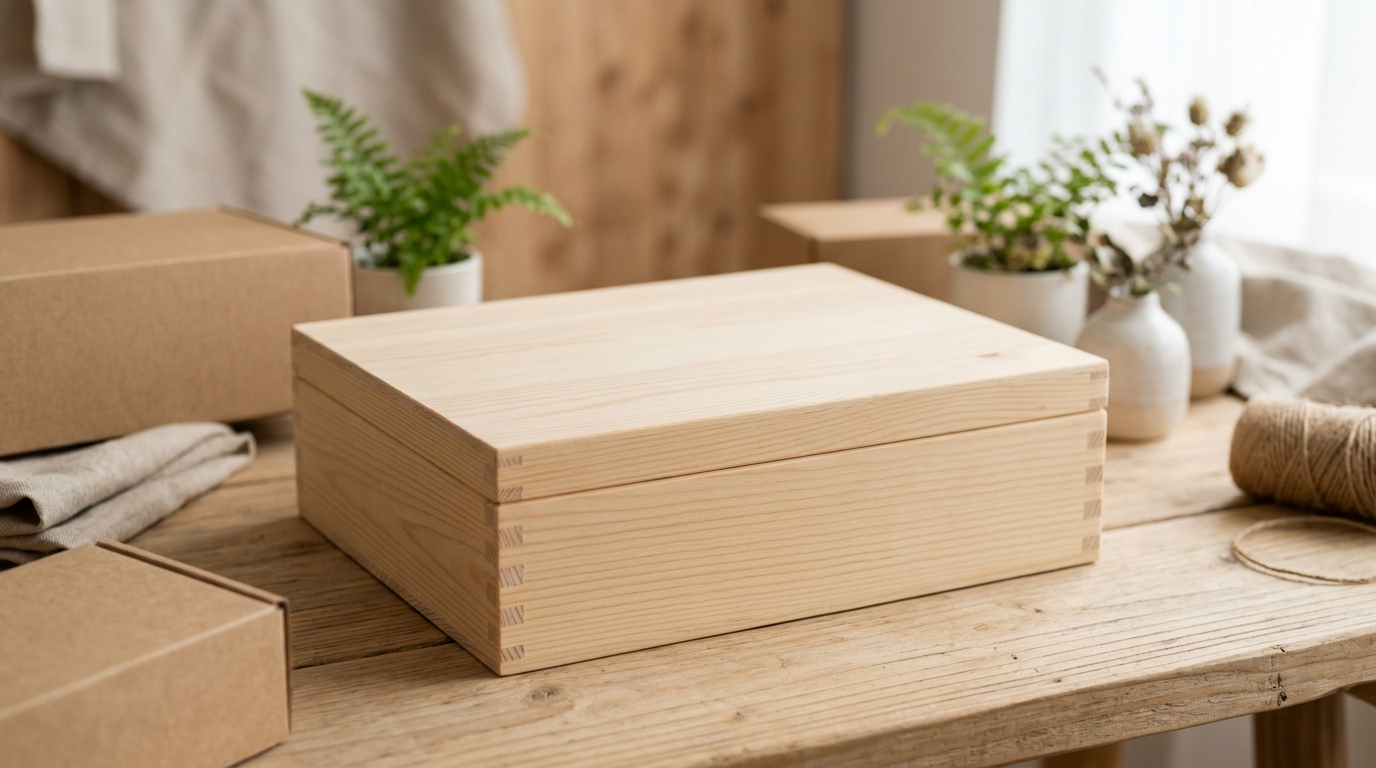
- Custom boxes with a logo reinforce visual identity and increase the perceived value of the product or corporate gift.
- Various materials are suitable for engraving, notably FSC-certified wood, birch or pine plywood, MDF, and heavy-weight kraft cardboard.
- Laser engraving, screen printing, and hot stamping are the most requested techniques due to their durability and professional finish.
- The choice of material and technique must align with both the budget and the brand's sustainability values.
Boxes Engraved with the Company Logo: The First Visual Contact
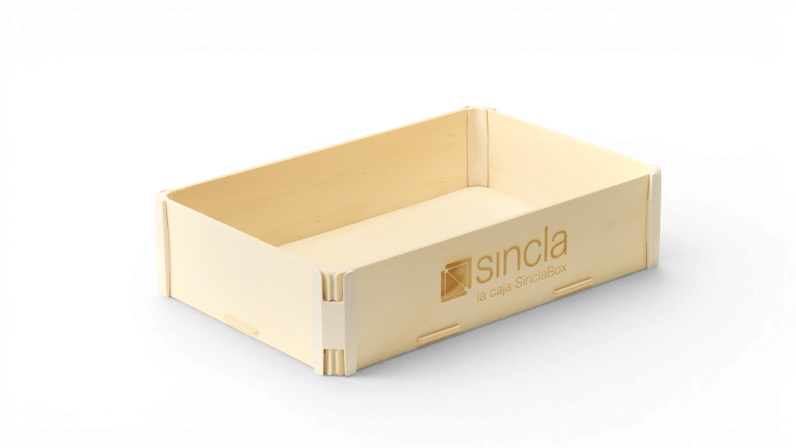
The experience of receiving a package begins long before seeing the product itself. The outer packaging is the first physical point of contact between the company and the recipient, whether it is a customer who made an online purchase, a strategic supplier, or an employee receiving a holiday gift set. In this context, boxes engraved with the company logo act as silent ambassadors for the business. When a company invests in custom packaging, it sends a clear message of attention to detail. An anonymous, generic box serves its protective function, but it represents a missed opportunity to create brand impact. Conversely, a logo precisely engraved on a quality surface conveys solidity, professionalism, and care. Furthermore, in 2026, the "unboxing" phenomenon continues to be an essential organic marketing tool. Consumers and professionals enjoy sharing aesthetically pleasing packages on their social media. A logo well-integrated into the packaging design exponentially increases the chances of the brand gaining free visibility in the digital landscape.The Power of Reuse
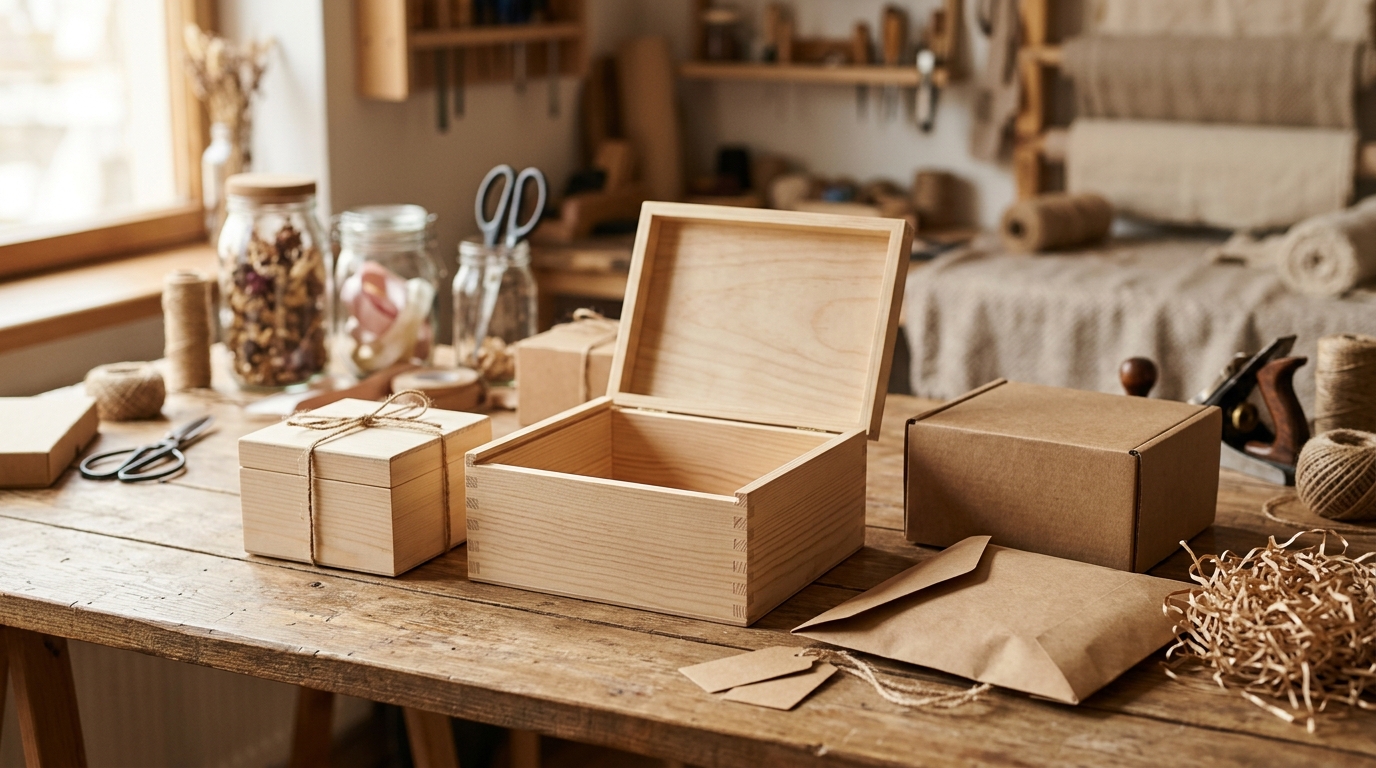
Unlike ephemeral wrappings, engraved boxes made from sturdy materials have a high reuse rate. Recipients often keep them to store documents, jewelry, or other items, meaning the corporate logo will remain visible in their environment for months or even years.
Ideal Materials for Corporate Engraving
| Material | Main Characteristics | Recommended Engraving Technique |
|---|---|---|
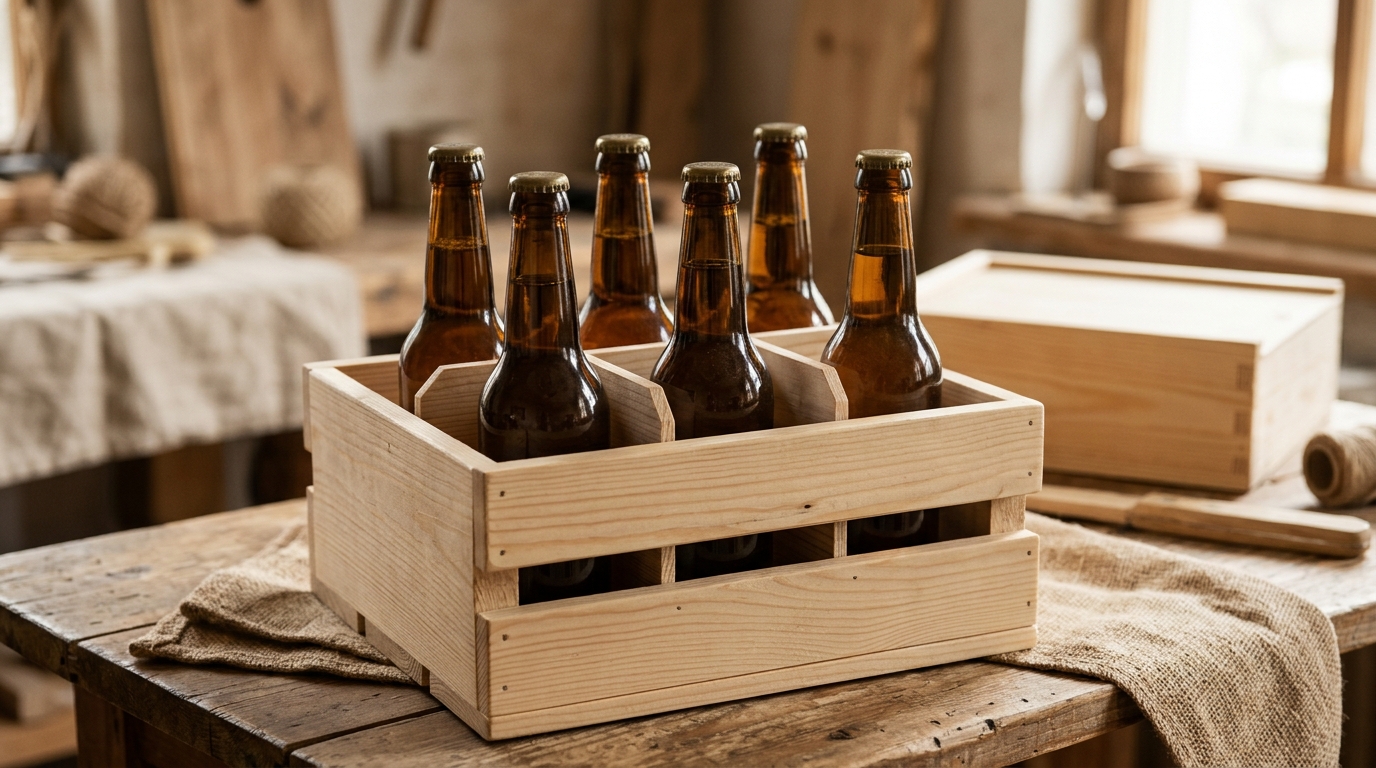
| Solid wood (pine, poplar) | Rustic and premium finish, great structural strength. Ideal for bottles, gourmet products, and high-value institutional gifts. | Laser engraving, hot stamping. |
| Plywood (birch, poplar) | Very lightweight and stable, does not warp easily. Smooth, light-colored surface that provides excellent contrast. | Laser engraving, screen printing. |
| MDF board | Homogeneous material without grain, made from compressed wood fibers. An economical choice for lacquered finishes. | Screen printing, UV printing. |
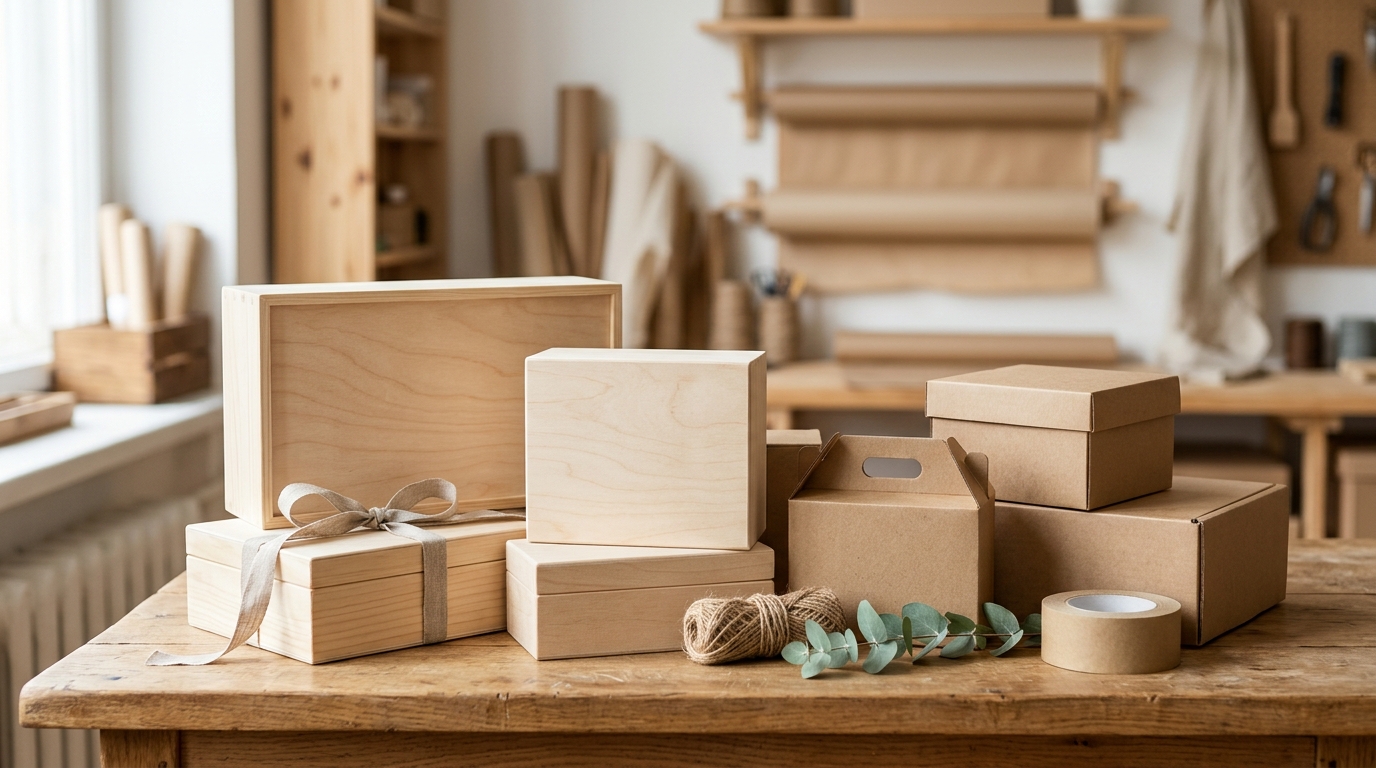
| Kraft or corrugated cardboard | Lightweight, recyclable, and widely used in e-commerce and bulk shipments. Conveys eco-friendly values and simplicity. | Screen printing, flexography, pad printing. |
Marking Techniques: How to Express Brand Identity
Once the substrate is selected, the next critical step in ordering boxes engraved with the company logo is determining how the design will be applied. The packaging industry offers various methodologies, each with its own technical and aesthetic advantages.-
Laser Engraving
Offers an elegant, permanent bas-relief finish with a toasted tone. It is the quality standard for wood and plywood due to its absolute precision and its artisanal yet modern aesthetic. -
Screen Printing
Allows the application of flat inks matching exact corporate identity colors (Pantone). Excellent for cardboard boxes and highly polished wooden surfaces. -
Hot Stamping
Also known as foil stamping, it adds metallic details (gold, silver, copper) using pressure and heat. It brings an undeniably premium touch, widely used in cosmetics and jewelry. -
UV Digital Printing
Enables full-color printing with gradients and even photographs directly onto the packaging. Ideal when the logo is complex or requires strict full-color process printing.
Pay Attention to the Original Design
Laser-engraved boxes require the logo to be vectorized and in monochrome format. Gradients, drop shadows, and overly thin fonts may not reproduce properly when burning the material's surface. It is always recommended to have a simplified version of the brand mark.
How to Choose the Right Format Step by Step
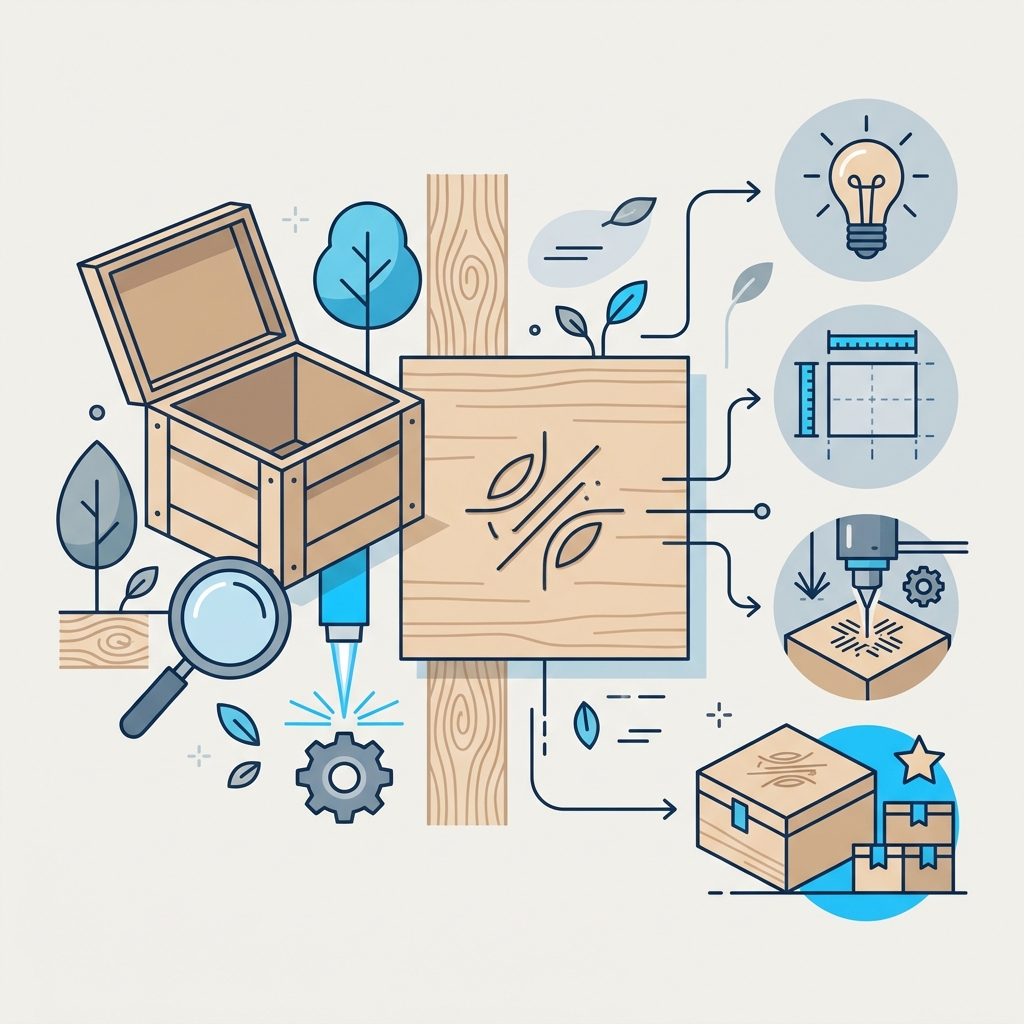
The process of designing and selecting packaging should not be left to chance. A careless design can have the opposite effect of what is intended, devaluing the product inside. To ensure an optimal result, it is advisable to follow a clear methodology when ordering the development of these boxes.- Define the purpose of the packaging. Is it for protection in complex e-commerce shipping, for a year-end corporate gift, or for direct display in a retail storefront? This will determine the thickness and sturdiness of the required materials.
- Measure volumes and tolerances. The interior dimensions are what matter when fitting the product. It is essential to account for whether void fill will be added—such as wood shavings, die-cut foam, or tissue paper—leaving a safety margin of several millimeters.
- Adapt the graphic file. The design department must prepare the logo in vector format (PDF, EPS, SVG) at 1:1 scale, ensuring that lines meet the minimum thickness required by the industrial marking equipment.
- Position the logo strategically. The emblem is usually centered on the outer lid to create the maximum initial impact. However, engraving it on the inside of the lid so it is only revealed upon opening the box is an excellent storytelling technique to add a surprise element.
- Request a sample unit. Whenever possible, it is highly recommended to produce and review a physical prototype to verify logo legibility, part fit, and overall finish against brand standards before launching mass production.
Quality packaging is not just a logistical container; it tells the brand's story and establishes an unmistakable visual and tactile connection with the customer from the very first moment.
Corporate Packaging Trends in 2026
The packaging sector is constantly evolving to adapt to market demands and environmental regulations, which are becoming increasingly strict across the European Union. Sustainability has ceased to be a niche and has become the general standard, prompting companies to rethink their logistics and presentation strategies. Today, looking for original packaging ideas for sustainable stores means prioritizing responsibly sourced materials, such as FSC (Forest Stewardship Council) or PEFC-certified wood and recycled cardboard. Laser-engraved boxes are particularly valued in this space, as this technique uses no inks, solvents, or chemicals, significantly reducing the package's ecological footprint. On the other hand, minimalist design continues to dominate corporate aesthetics. Rather than cluttering surfaces with overwhelming text or excessive graphics, the trend favors clean finishes: the natural texture of the material (the grain of the wood or the texture of kraft) paired simply with a understated, elegant central logo.Accessories to Complement Engraving
To further elevate the perception of the packaging, you can add metal latches, concealed hinges, or wax seals. Combining an understated logo engraved in wood with a high-quality functional metal detail creates an appealing visual contrast for institutional gifts or premium campaigns.
Frequently Asked Questions
Is it necessary to order large quantities to have a logo engraved on a box?
It depends on the manufacturer and the technique used. Because laser engraving and digital printing do not require printing plates or screen frames, they allow for very short runs or even customization from just a few units. However, to obtain competitive prices and offset machine setup costs, the industry typically recommends minimum orders of 50 to 100 units.
How much does engraving increase the total price of the packaging?
The cost varies greatly depending on the engraving area, the chosen technique, and the order volume. Standard laser engraving on a wooden box can add a modest increase to the base price, proving very cost-effective thanks to the return in brand value and presentation. Multi-color screen printing tends to have higher upfront fixed costs due to screen preparation.
Can I engrave photographs or complex images on wood?
Laser engraving is optimized for vector logos, text, and monochrome icons. While it is possible to engrave bitmap images (photographs) using halftone dithering, the result may lack sharpness depending on the image's contrast and the wood grain. For full-color photographs, direct-to-substrate UV digital printing is the appropriate technical alternative.
Are laser-engraved boxes recyclable?
Yes, completely. Because laser engraving relies solely on the controlled application of heat to scorch or darken the surface, no plastic inks or chemical substances are added. If the box is made of natural wood or pure cardboard, it retains its 100% biodegradable and recyclable properties, making end-of-life waste management simple.