Kleenex: A Deep Analysis of Facial Tissues, Their History, and Current Relevance
The gist
- Facial tissue originated as a filter for gas masks during World War I.
- Kleenex popularized the product initially as a makeup remover before its use as a disposable tissue.
- Modern manufacturing involves virgin or recycled cellulose, treated for softness and strength.
- There are eco-friendly, scented, balmed, and specialized variants for various needs.
Origins and Historical Evolution of the Facial Tissue
The power of the brand
Kleenex is a classic example of a "genericized trademark," where a product name becomes the generic term for an entire category, regardless of the manufacturer.
Manufacturing Process and Materials
Raw Materials:
- Wood cellulose: Mainly from fast-growing trees like eucalyptus (for softness) and pine (for strength). It can be virgin or recycled cellulose.
- Water: Essential at all stages of the process, from pulp to sizing.
- Additives: Glues (like starch) to increase wet strength, softeners, non-chlorine bleaches, perfumes or balms in specialized versions.
Process Steps:
- Pulp preparation: Wood is chemically or mechanically broken down into cellulose fibers, creating an aqueous suspension. If recycled paper is used, it is de-inked and processed to separate the fibers.
- Bleaching (optional): The pulp is bleached, often with oxygen or hydrogen peroxide, to achieve the desired white color without using elemental chlorine.
- Sheet formation: The pulp suspension is poured onto a fine mesh where the water drains, forming a wet paper sheet.
- Drying and pressing: The sheet is passed through hot rollers that remove remaining water and press it to improve its cohesion.
- Creping: A crucial step that gives tissues their characteristic softness and flexibility. The sheet is lightly scraped from a hot cylinder with a thin blade, creating small microscopic wrinkles.
- Addition of layers and treatments: Two or more layers of paper are combined to provide the desired strength. At this stage, balms, lotions, or perfumes can be applied to the surface of the sheets.
- Cutting and folding: Large rolls of creped paper are cut to the desired tissue size and then folded so they can be easily dispensed from the box.
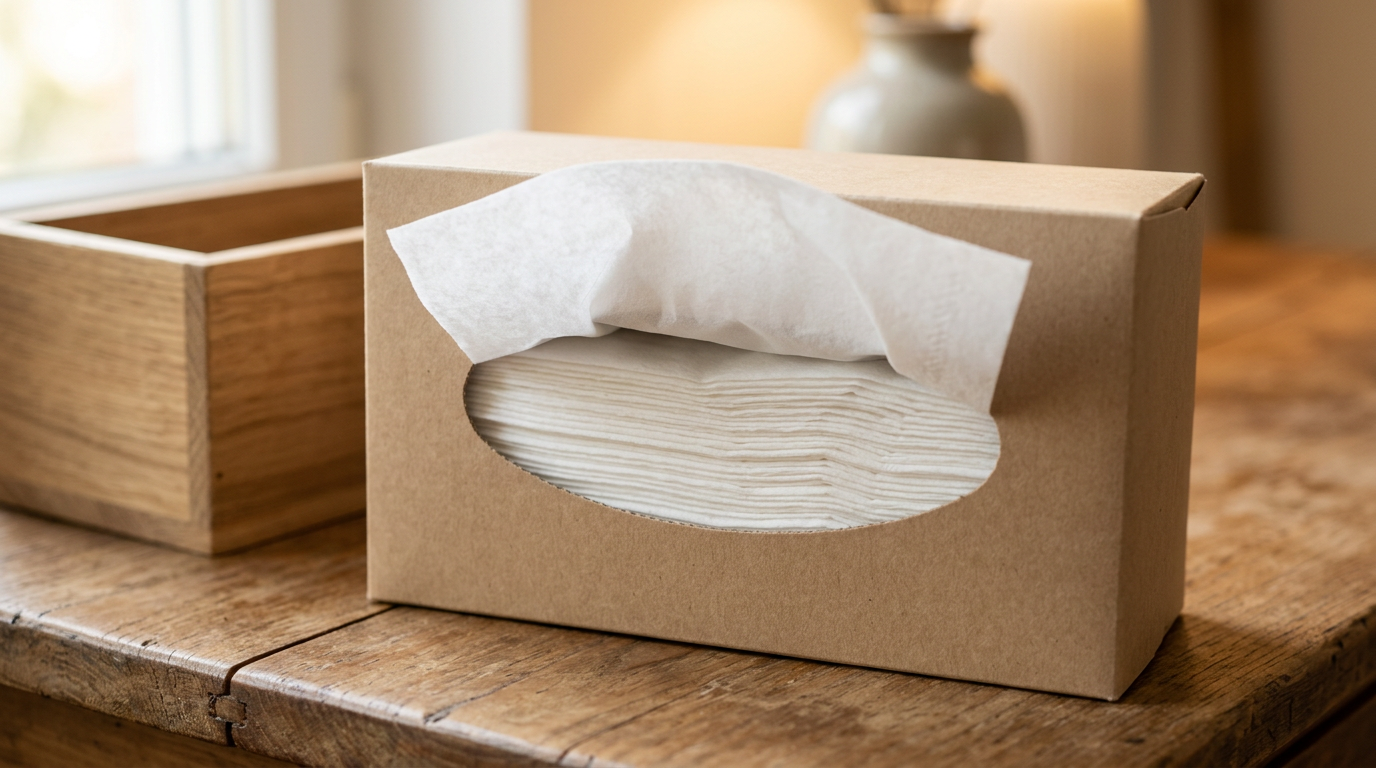
- Packaging: The folded tissues are placed in their dispensers, usually cardboard boxes, and sealed for distribution.
Softness and layers
The softness of a tissue not only depends on the type of fiber and creping but also on the number of layers. 2 or 3-ply tissues are common, while premium ones may have 4 or even more for an extra soft feel and greater strength.
Types of Facial Tissues and Their Applications
- StandardBasic 2-3 ply tissues, without additives, ideal for general daily use.
- With balmEnriched with lotions like aloe vera or vitamin E to prevent skin irritation, especially during prolonged colds.
- ScentedWith mild fragrances, often floral or herbal, for an additional sensory experience.
- Eco-friendlyMade with recycled or FSC-certified cellulose, aiming to reduce environmental impact. Many avoid chlorine bleaches.
- For allergiesOften with more layers and greater softness, designed for frequent use without irritating sensitive skin.
- Pocket-sizedPresented in small, portable packets, ideal for carrying in a purse, backpack, or pocket.
Examples of use:
- Personal hygiene: For blowing your nose, wiping away tears, drying sweat, or removing small traces of makeup.
- Improvised cleaning: Wiping small spills, drying accidental drips, wiping glasses or electronic device screens.
- Baby care: As a soft alternative to wet wipes for cleaning a baby's face or hands.
- Office and home environments: Strategically placed dispensers on desks, waiting rooms, or common areas for everyone's convenience.
Environmental and Sustainability Considerations
Impact and solutions:
- Raw material: The demand for cellulose can contribute to deforestation. Solutions include using wood pulp certified by organizations such as the FSC (Forest Stewardship Council), which guarantees responsible forest management. The use of recycled pulp also reduces pressure on virgin forests. You can learn more about the versatility and sustainability of other packaging materials in articles such as Kraft Paper: Versatility and Sustainability in Packaging.
- Manufacturing process: Bleaching with elemental chlorine is a pollutant. The trend is towards totally chlorine-free (TCF) or elemental chlorine-free (ECF) bleaching. Water and energy management are also key factors.
- Waste: Disposable tissues are biodegradable, but proper disposal must be emphasized. They should not be flushed down the toilet, as this can cause blockages and problems in sanitation systems.
- Packaging: Cardboard boxes are generally recyclable, but it is important for consumers to properly separate them into recycling bins. Some manufacturers are exploring more sustainable packaging options, such as compostable plastics or minimalist designs.
FSCCertified wood
RecycledEco-friendly alternative
Biodeg.Final product
Innovation and Market Trends
Current trends:
- Tissues enhanced with additives: The popularity of tissues with balm, lotions, and antimicrobial properties continues to grow, offering solutions for sensitive skin or during flu and cold seasons.
- Innovative formats: Beyond traditional rectangular boxes, decorative box designs and more compact and aesthetic pocket packs are observed.
- "Free from" options: Perfume-free, dye-free, and allergen-free tissues are gaining ground for an increasingly ingredient-conscious public.
- Packaging customization: Although tissues are a mass-consumption product, some brands explore limited editions with artistic designs on the boxes or even the possibility of customization for events or gifts.
- Reusable tissues: In response to waste concerns, a small niche market is emerging for washable and reusable fabric tissues, although their mass adoption is limited for some uses.
The disposal dilemma
Despite being biodegradable, used tissues often carry germs. It is crucial to dispose of them in the trash to prevent the spread of diseases and not confuse them with flushable products.
How to Choose the Right Facial Tissue
- Softness: If you have sensitive skin or anticipate frequent use (such as for allergies or colds), softness is paramount. Look for tissues with additives like aloe vera or with a higher number of layers.
- Strength: Some tissues are stronger when wet, which prevents them from tearing easily during use. This is useful for more demanding cleanups.
- Layers: Generally, more layers mean greater absorbency and strength. 2-ply tissues are basic, while 3 or 4-ply offer superior performance.
- Additives: Choose versions with balm/lotion to protect the skin, or scented for an aromatic experience. If you are allergic, opt for unscented and dye-free options.
- Sustainability: Look for certifications like FSC, or choose recycled paper options to minimize environmental impact.
- Format: For home or office, dispenser boxes are practical. For on-the-go, pocket packs are the best option.
Facial tissues, in their apparent simplicity, summarize the evolution of consumption and the adaptation of industry to hygiene, comfort, and, increasingly, ecological awareness.
Facial Tissue in the Context of Public Health
Health benefits:
- Reduction of germ transmission: By disposing of the tissue immediately after use, the persistence of viruses and bacteria in the environment is minimized, reducing the likelihood of contagion.
- Improved personal hygiene: Provides a clean and dry method for handling nasal secretions and tears, avoiding direct contact with hands and the subsequent transfer of germs to other surfaces.
- Convenience in emergencies: Useful for cleaning small wounds, spills, or for post-sneeze hygiene in public places where access to water and soap is limited.