The Insulated Bag: An Essential Ally for Product Preservation
The Essentials
- Insulated bags are designed to maintain internal temperature, whether cold or hot.
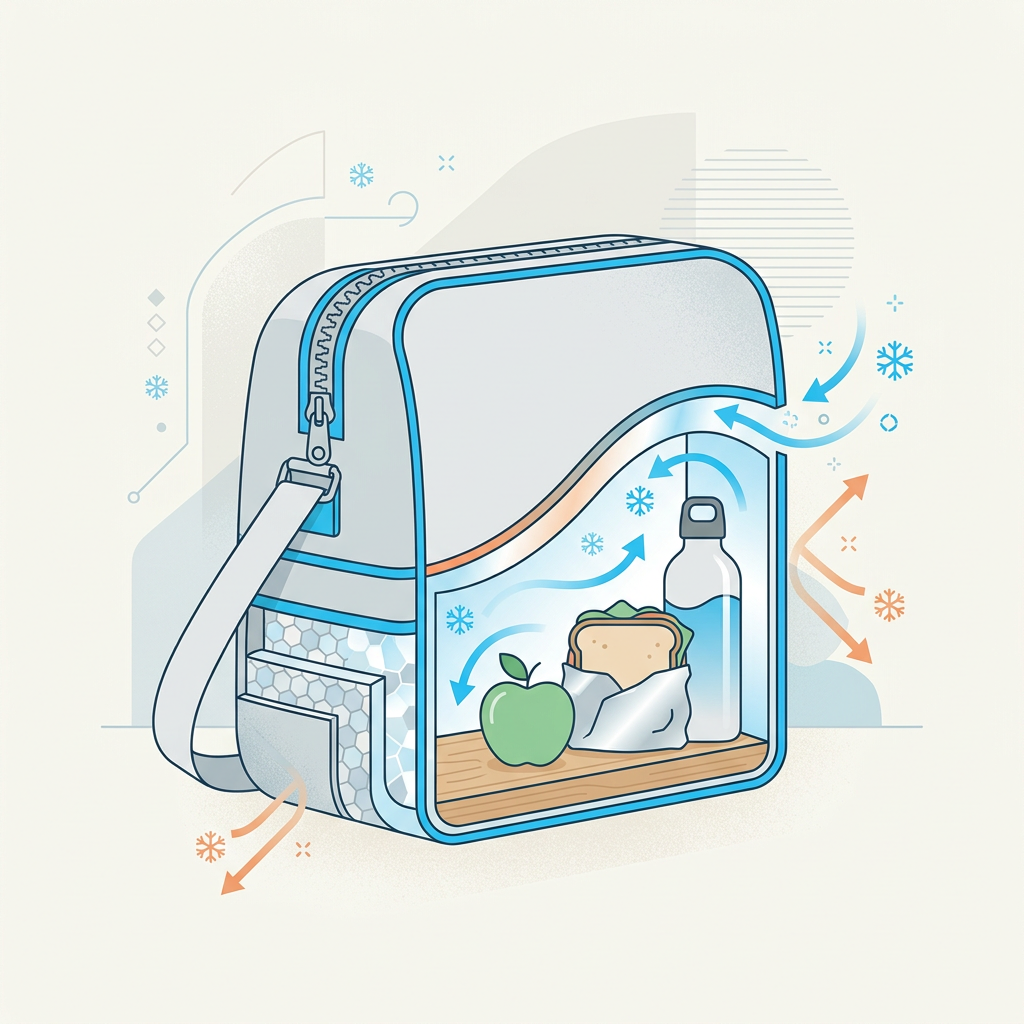
- Their effectiveness lies in insulating materials like EPE, EVA, and aluminum, which minimize heat transfer.
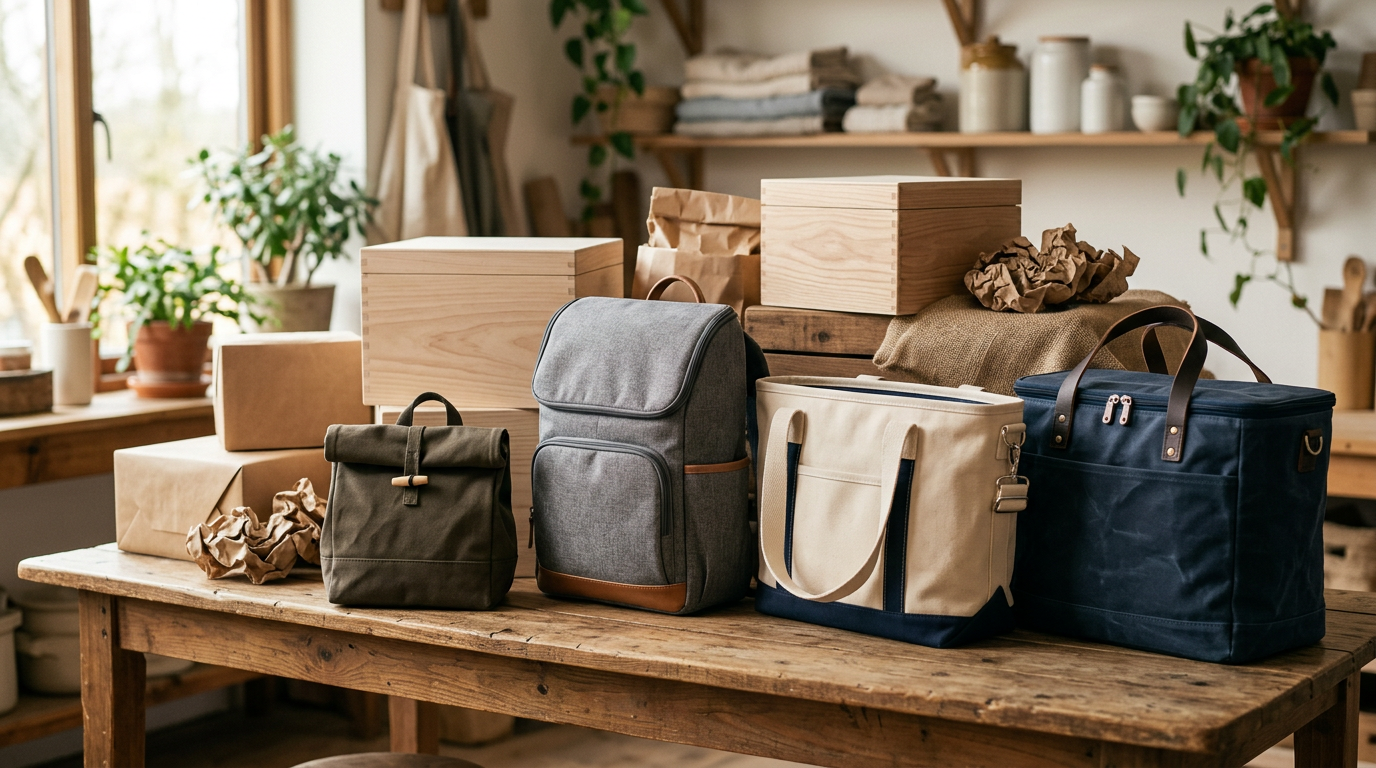
- There are various types depending on their use: personal, delivery, pharmaceutical, or promotional.
- The appropriate choice involves considering size, insulation capacity, durability, and ease of cleaning.
Working Principles and Key Materials
Insulating Materials and Their Properties
- Expanded Polyethylene (EPE) and Ethylene Vinyl Acetate (EVA): These are lightweight plastic foams with excellent insulating capacity. Their closed-cell structure traps air, which is a poor conductor of heat, preventing its passage. They are flexible, moisture-resistant, and, in their higher-density variants, offer good impact protection.
- Aluminum (in sheets or coatings): Aluminum foil or metallized layers are used for their high reflectivity. They reflect thermal radiation (both heat trying to enter and heat trying to exit), significantly reducing energy transfer. Additionally, they act as a barrier against moisture and odors.
- Polyester and Nylon: These fabrics are commonly used in the outer layer of bags due to their wear resistance, lightness, and ease of cleaning. They often have treatments to make them waterproof or water-repellent.
- Coolant gel or ice packs: Although not part of the bag's structure, they are essential complements inserted inside to prolong the duration of the cold effect. They contain substances that absorb and release heat slowly, maintaining the desired temperature for longer.
Thermal Reflection
The aluminum or metallized layer in insulated bags not only blocks conductive heat but also reflects infrared radiation, which is an efficient form of heat transfer. This principle is key to insulation effectiveness.
Types of Insulated Bags and Their Applications
1. Personal and Leisure Insulated Bags
These are the most common and are designed to carry meals or drinks for individuals or small groups. They are usually lightweight, foldable, and come in various designs. Ideal for:
- Work or school lunches: Allow for fresh and safe homemade food.
- Picnics and excursions: Keep drinks cold and sandwiches fresh for hours.
- Shopping for perishable foods: Useful for preserving frozen or refrigerated products until reaching home.
2. Delivery Insulated Bags
With the rise of home delivery, these bags have become crucial. They are usually larger, with more robust structures, and often with internal dividers to organize orders. They are made with materials resistant to intensive use and are easy to clean. They are essential for:
- Restaurants: To deliver hot or cold food in optimal condition.
- Supermarkets and food stores: For shipping refrigerated or frozen products.
- Catering services: To transport large quantities of food to events.
3. Insulated Bags for Medical and Pharmaceutical Applications
In this sector, precision in temperature control is critical. These bags are designed with high insulation standards and often incorporate thermometers and data loggers to ensure compliance with regulations. Their uses include:
- Transport of vaccines and medications: Whose maintenance at a specific temperature is vital for their efficacy.
- Biological samples and organs: Where any thermal deviation could compromise their viability.
- Emergency kits: To keep serums or medical supplies in appropriate conditions.
4. Promotional and Customized Insulated Bags
Companies from all sectors use insulated bags as a marketing tool. They offer a large surface for customization with logos and messages, becoming a useful and visible item for the customer. They are popular as:
- Corporate gifts: Valued for their utility and durability.
- Promotional items at events: Such as trade shows or conferences, to distribute with refrigerated contents.
- Reusable shopping bags: For supermarkets or gourmet stores that want to reinforce their brand.
Maximize Insulation
To prolong the effectiveness of your insulated bag, fill it to its maximum capacity. Less empty space means less air to heat or cool, and therefore, a more stable temperature. Use ice packs if you need to maintain the temperature for longer.
Factors to Consider When Choosing an Insulated Bag
1. Capacity and Size
- Volume: Expressed in liters, it should adjust to the quantity of products to be transported. It is preferable for the bag to be as full as possible for better performance.
- Dimensions: Ensure that the measurements fit the containers to be used, and also consider ease of transport and storage.
2. Level of Insulation
Not all bags offer the same performance. This factor is determined by:
- Thickness of insulating material: The thicker the material, the better the insulation.
- Materials used: The combination of EPE, EVA, and metallized layers is crucial.
- Closures: Quality zippers, overlapping flaps, or airtight closures minimize temperature leaks.
3. Durability and Resistance
For frequent use, the resistance of external and internal materials is vital:
- Outer fabric: High-density polyester or nylon are usually more durable. Often, they are sought to be tear and abrasion resistant.
- Seams and zippers: Must be robust and of good quality to withstand weight and continuous use.
- Inner lining: It is preferable for it to be puncture-resistant and easy to clean.
4. Portability and Ergonomics
- Handles and straps: Must be comfortable and resistant, adapted to the expected weight to be carried. Some bags include adjustable shoulder straps.
- Empty bag weight: Especially important for large capacity bags, as the final weight with products can be considerable.
- Foldable design: Facilitates storage when not in use.
5. Ease of Cleaning
This is a crucial factor, especially for food or medical products:
- Washable interior linings or those that can be wiped clean with a damp cloth are ideal.
- Non-porous materials prevent the accumulation of bacteria and odors.
6. Additional Considerations
- Exterior pockets: For storing dry items, utensils, or small accessories.
- Internal compartments: Useful for separating different types of products or for carrying ice packs.
- Design and aesthetics: Although secondary to functionality, an attractive design can be a plus, especially for personal or promotional bags.
- CapacityAdjust the volume to your needs.
- InsulationCheck materials and thickness for greater effectiveness.
- DurabilityResistant materials ensure a long lifespan.
- CleaningChoose easily washable and hygienic linings.
Common Mistakes When Using Insulated Bags
- Failure to pre-cool or pre-heat the bag: For optimal performance, especially when transporting very cold or very hot products, it is advisable to cool the bag with ice packs or warm it slightly with warm water (and then dry it thoroughly) before introducing the products.
- Opening the bag unnecessarily: Every time the bag is opened, the internal air mixes with the external air, compromising the temperature. Minimize openings to maintain thermal stability.
- Not using cold/hot packs: Insulated bags do not generate cold or heat themselves; they only preserve it. To maintain low temperatures, ice packs are indispensable. For high temperatures, special thermal compresses can be used.
- Overloading or underutilizing capacity: Filling the bag beyond its capacity can damage seams and closures. Conversely, a half-empty bag with a lot of air space compromises insulation. As mentioned, it is best to keep it as full as possible.
- Not cleaning the bag after each use: Food residues or liquids can cause bad odors, bacterial growth, and damage to the inner lining. Cleaning and drying completely after each use will prolong its lifespan and ensure its hygiene.
- Storing the bag wet or incorrectly folded: Trapped moisture can generate mold and bad odors. Make sure it is completely dry before storing. If it is foldable, avoid forced folds that could damage the insulating materials.
Sustainability and Insulated Bags
Reuse and Waste Reduction
The main contribution of insulated bags to sustainability is their design for multiple uses. By replacing single-use bags or less efficient containers, they contribute to the reduction of plastic and other material waste.
Materials and Manufacturing
The sector is exploring and adopting more sustainable materials:
- Recycled materials: Increasingly, the outer layers of polyester or nylon are made from post-consumer recycled plastics, such as PET bottles.
- Biodegradable or compostable materials: Although less common in the insulating core due to performance requirements, alternatives are being investigated for other parts of the bag.
- More efficient manufacturing processes: Reduction of energy and water consumption in production.
Customization and Added Value for Businesses
custom wooden boxesCustomization Options
- Logo and design printing: Using techniques such as screen printing, sublimation, or thermal transfer, logos, brand names, slogans, or complex graphic designs can be applied to the outer surface of the bag. Print quality is key for a professional image.
- Choice of colors and finishes: Bags can be manufactured in a wide range of colors that match a brand's corporate identity. Additionally, specific finishes, such as textures or more premium materials, can be chosen to enhance the perception of value.
- Custom design: For very specific needs, it is possible to design insulated bags from scratch, adapting their shape, size, number of compartments, or special features (such as pockets for documents or bottle holders).
- Labels and hang tags: Adding labels with brand information, care instructions, or even QR codes can increase interactivity and promotional value.
Advantages for Businesses
- Brand visibility: A personalized insulated bag with a visible logo becomes a walking advertisement. Every time the user uses it, the brand is exposed to new audiences.
- Brand image strengthening: Offering a useful and quality item like an insulated bag can improve brand perception, associating it with practicality, product care, and customer attention.
- Customer loyalty: Useful promotional items tend to be valued by customers, which can foster loyalty and brand recall.
- Market differentiation: In competitive sectors, offering a personalized insulated bag as part of a service (for example, in food delivery or in the sale of delicate products) can be a key differentiator.
The insulated bag not only preserves, but also carries value and care, reflecting the commitment to the quality of the content it holds.