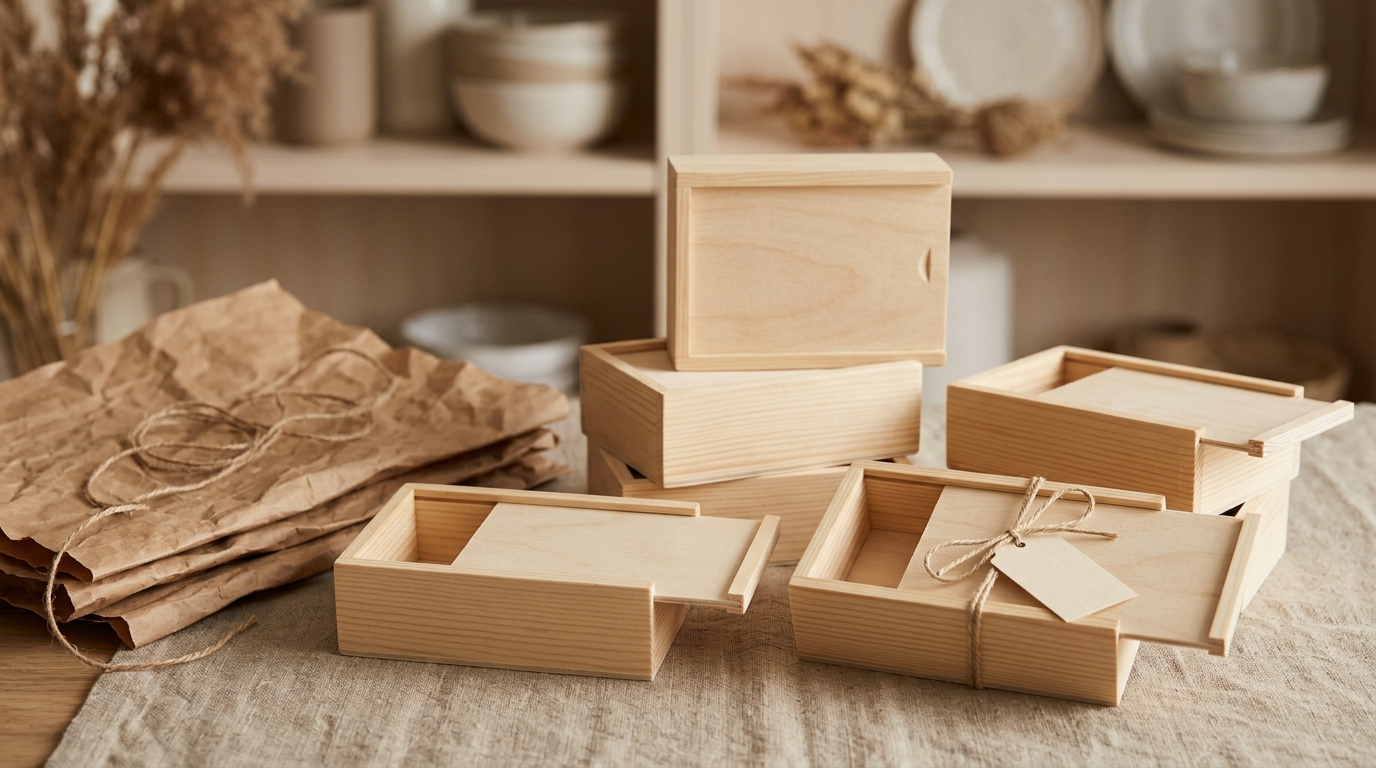
Premium presentation: Small wooden gift boxes
The presentation of a gift is almost as important as the gift itself. Small wooden gift boxes have established themselves as a preferred choice for events, celebrations, or commercial launches where an artisanal, durable, and environmentally friendly finish is desired.
Key takeaways
- Small wooden boxes add perceived value to any gift or event favor.
- Various materials are available, such as plywood, MDF, or solid pine, each with specific characteristics.
- Customization through laser engraving or screen printing transforms standard packaging into a lasting keepsake.
- It is essential to consider sustainability by looking for certifications such as FSC or PEFC.
Throughout 2026, the trend toward noble and sustainable materials has continued to grow. Opting for custom wooden boxes not only protects the contents, but also communicates a message of care and exclusivity that other materials can rarely convey.
Why choose small wooden boxes for gifts and favors?
The use of wood in packaging is no coincidence. It offers a series of advantages that make it an exceptional packaging choice for corporate gifts, wedding favors, or premium product presentations.
-
Perceived value Wood instantly elevates the status of the gift.
-
Reusability The recipient is very likely to keep the box for other uses, extending the memory of the event.
-
Protection Its rigidity ensures that fragile items arrive intact.
-
Versatility They adapt to a multitude of formats and closure systems.
Common types of wood in packaging
The choice of material will determine both the cost and the final appearance of the box. In the small-scale packaging sector, three main options stand out:
| Material | Main characteristics | Ideal use |
|---|---|---|
| Plywood (poplar or pine) | Lightweight, resistant, and smooth-surfaced. Excellent for engraving. | Boxes with sliding lids, jewelry cases, or USB flash drive boxes. |
| Solid wood (pine) | Traditional look, heavier, and robust. Visible wood grain. | Premium gifts, small bottles, gourmet items. |
| MDF (Medium-density fibreboard) | Affordable, very uniform surface. No wood grain. | Painted or lined boxes, high-volume production runs. |
Forest certification
When selecting wooden packaging, it is advisable to verify that it carries FSC or PEFC certification, ensuring that the raw material comes from responsibly and sustainably managed forests.
Lid styles and closure systems
A crucial detail in small wooden boxes is how they open. The closure mechanism affects both the user experience and the overall design:
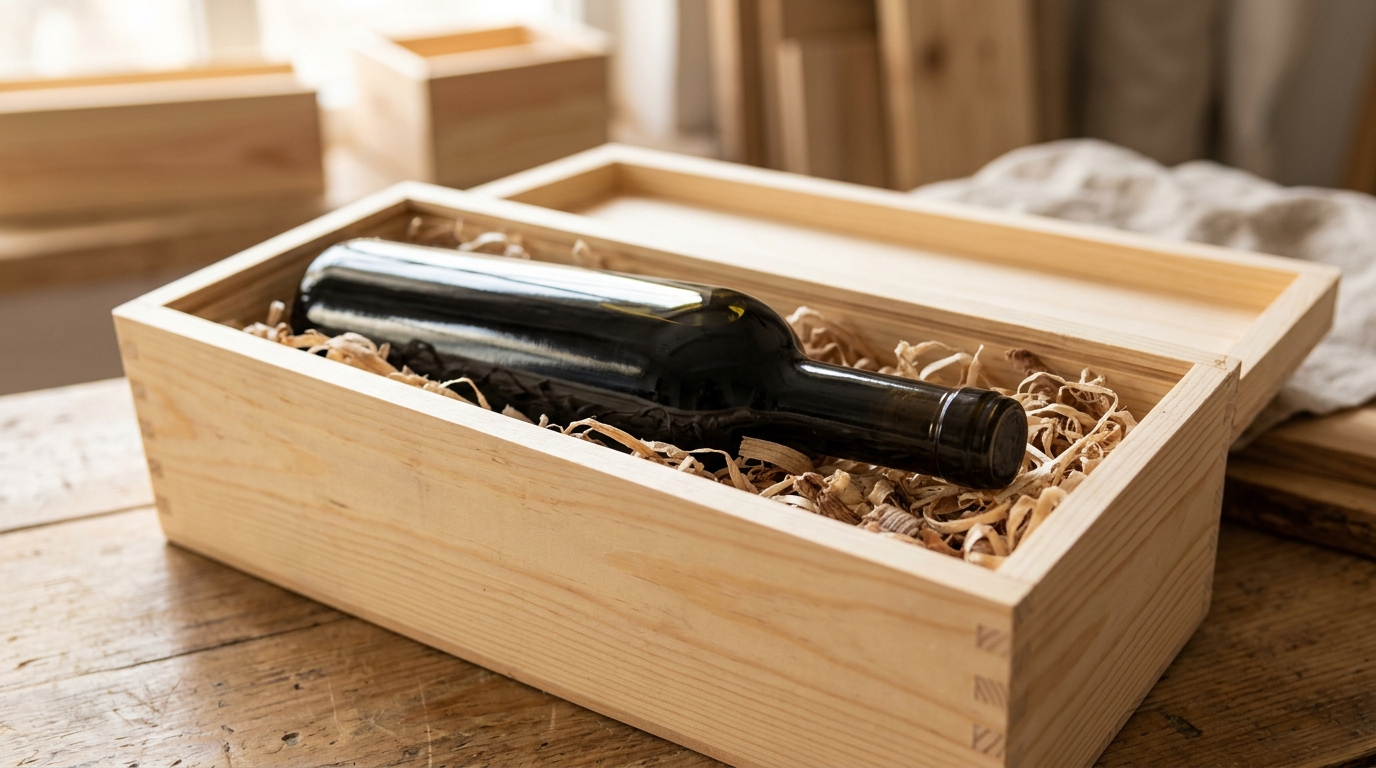
- Sliding lid: A timeless classic. Simple, elegant, and requires no metal hardware. Very common for small wine gift boxes or photo keepsakes.
- Hinged lid with clasp: Provides a traditional chest-like appearance. Ideal for jewelry or sentimental keepsakes.
- Drop-on lid (telescopic box): The lid lifts off completely. Often used in minimalist designs.
- Clear acrylic lid: Allows the contents to be viewed without opening the box, combining the warmth of wood with a modern product display.
Customization techniques
Customization is what turns a generic box into a unique piece. Several widely used techniques exist to brand gift packaging for events or corporate gifts:
- Laser engraving: Literally burns into the surface of the wood, creating a dark, shallow relief. It is permanent, highly precise, and offers an elegant, rustic finish. Ideal for logos or names.
- Screen printing: Allows flat inks to be applied to the wood. It is excellent for reproducing one- or two-color designs with sharp detail.
- Direct digital printing: Enables full-color images, photographs, or intricate designs to be printed directly onto the porous surface.
- Pad printing: Useful for stamping small logos onto irregular or curved surfaces.
Packaging is the primary ambassador of a gift; its touch and appearance anticipate the value of what is kept inside.
Small wooden boxes for weddings and communions
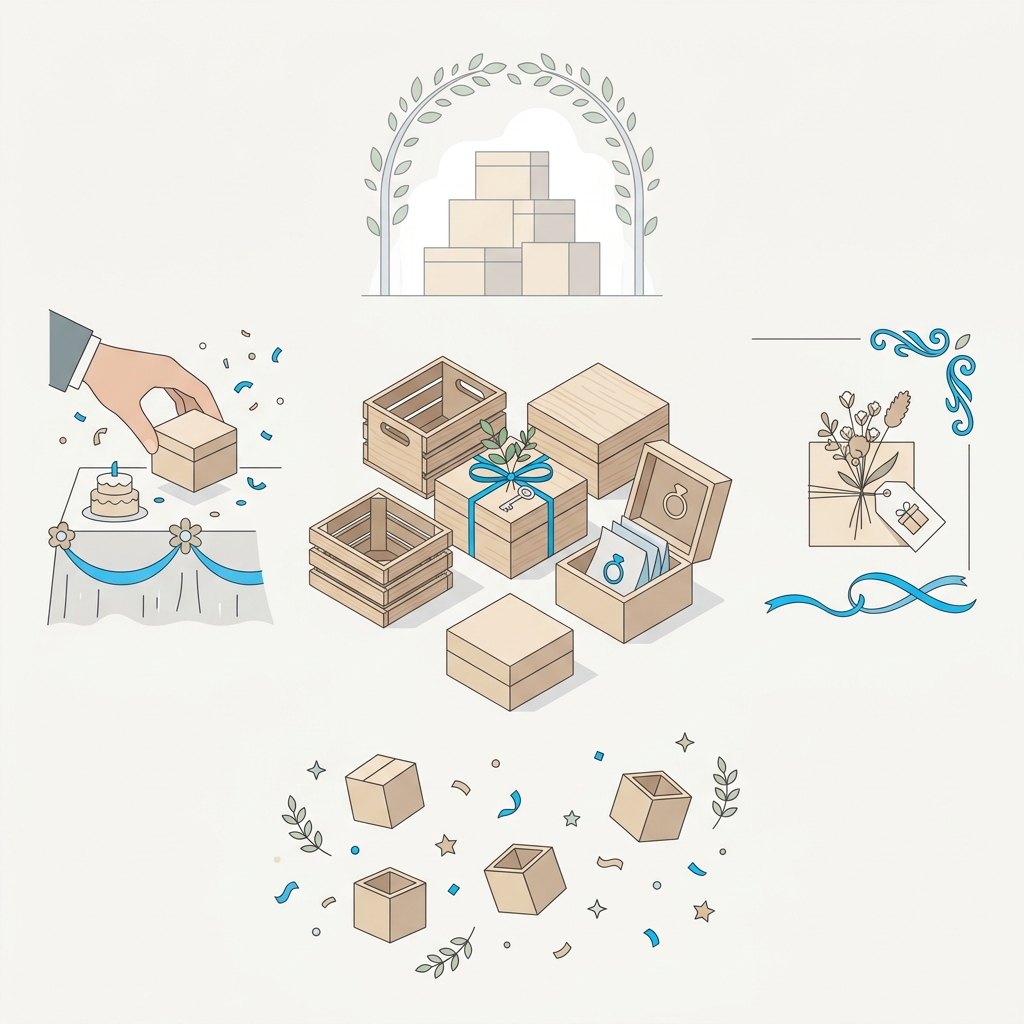
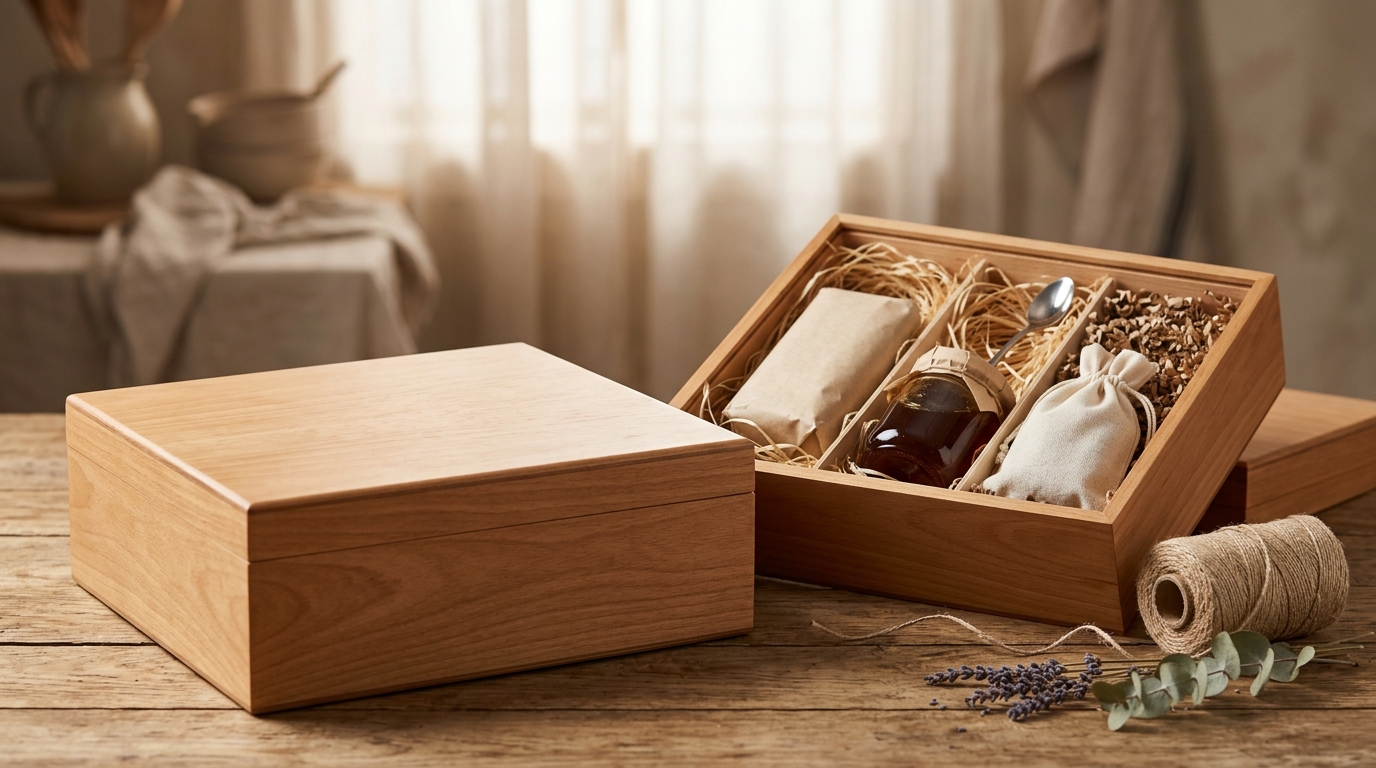
In the realm of personal celebrations, packaging takes on an emotional tone. Wedding packaging requires delicacy and, often, customization with the names of the couple and the wedding date. Small wooden boxes are frequently used to present wedding rings, unity coins, cigars, USB drives containing event photos, or mini gourmet favors (such as jams or honey).
Similarly, communion boxes are often designed with more youthful or traditional motifs, serving as cases for rosaries, bracelets, or remembrance keepsakes. In these cases, light-colored plywood is usually the preferred material due to its clean and luminous appearance.
Interior filler
To protect small or fragile items inside the wooden box, consider using wood wool, tissue paper, preserved moss, or custom die-cut foam. This prevents the item from moving around and enhances the presentation.
Common mistakes when ordering wooden boxes
When purchasing this type of packaging for an event or campaign, it is easy to overlook certain technical details. Avoiding these mistakes will ensure a successful presentation:
- Overlooking usable interior dimensions: It is vital to remember that wood has a thickness (usually between 3 and 10 mm). Exterior dimensions will always be larger than the actual usable space. Always check the interior dimensions against the item you plan to insert.
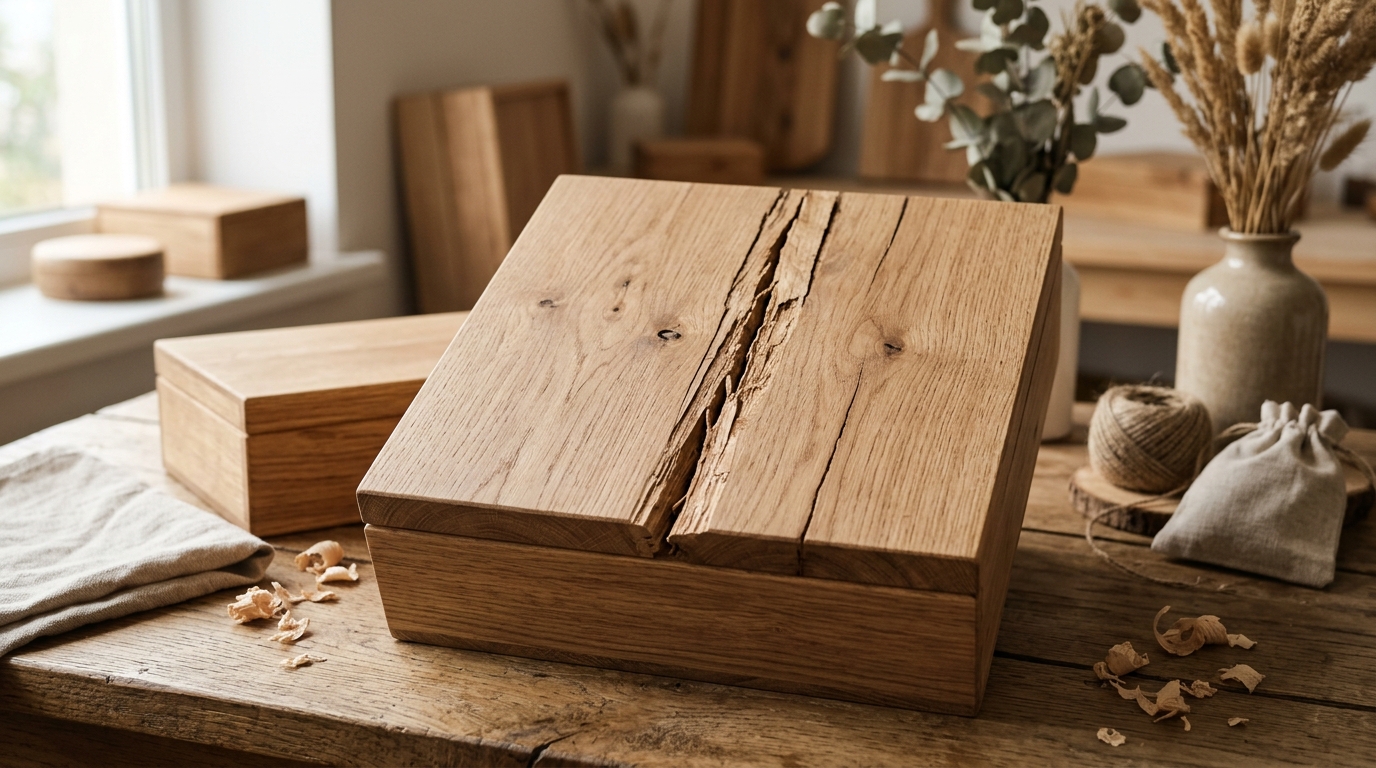
- Ignoring wood drying: In low-quality solid wood, high residual moisture can cause the box to warp or sliding lids to jam with temperature changes.
- Designs that are too intricate for engraving: If opting for laser engraving, remember that excessively fine lines may lose definition due to the natural texture and grain of the material.
- Forgetting total weight: If gifts will be sent by mail, the weight of the wooden box will add to the shipping costs.