Tape: The Versatile and Essential Adhesive in the World of Packaging and Beyond
The essentials
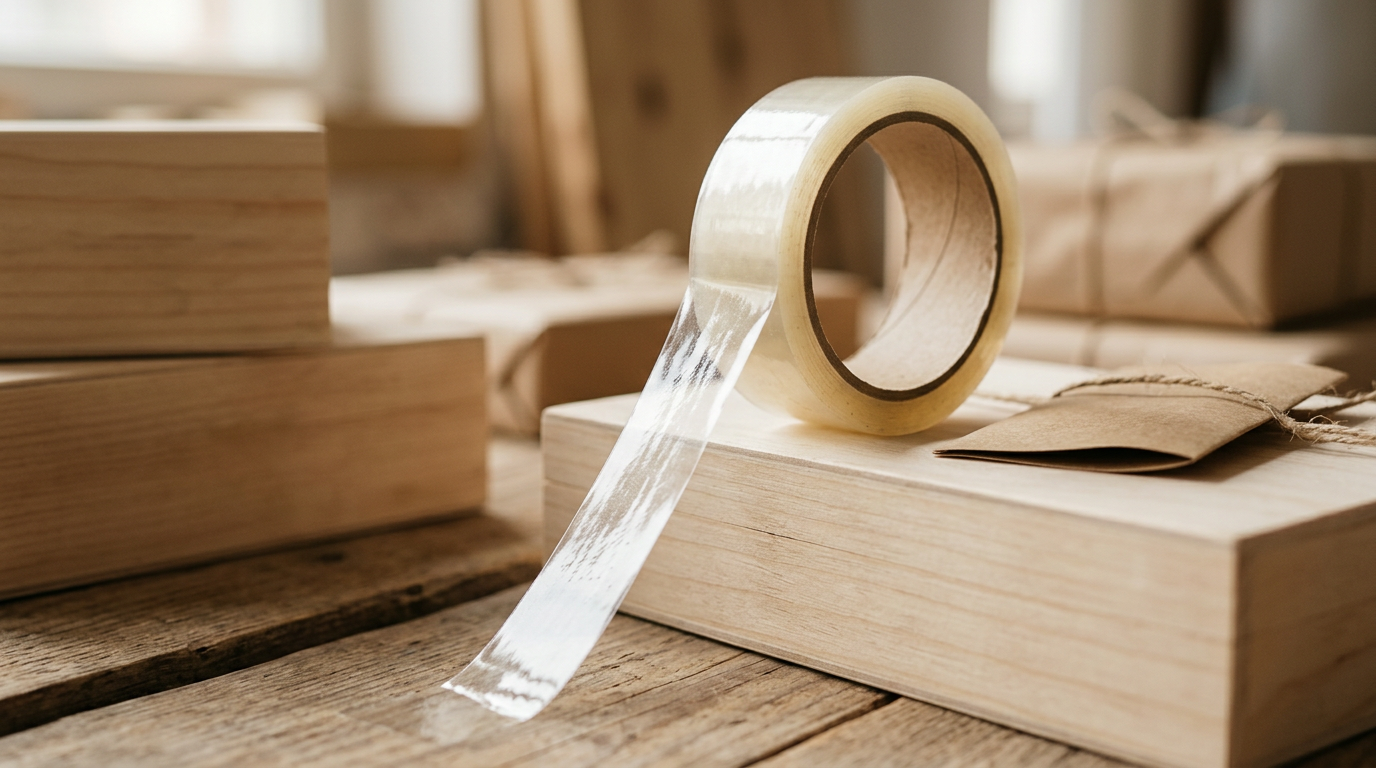
- Tape is an adhesive tape, usually transparent, composed of a backing and an adhesive layer.
- There are various types depending on the backing material (polypropylene, cellophane, PVC, etc.) and the type of adhesive (acrylic, rubber, silicone).
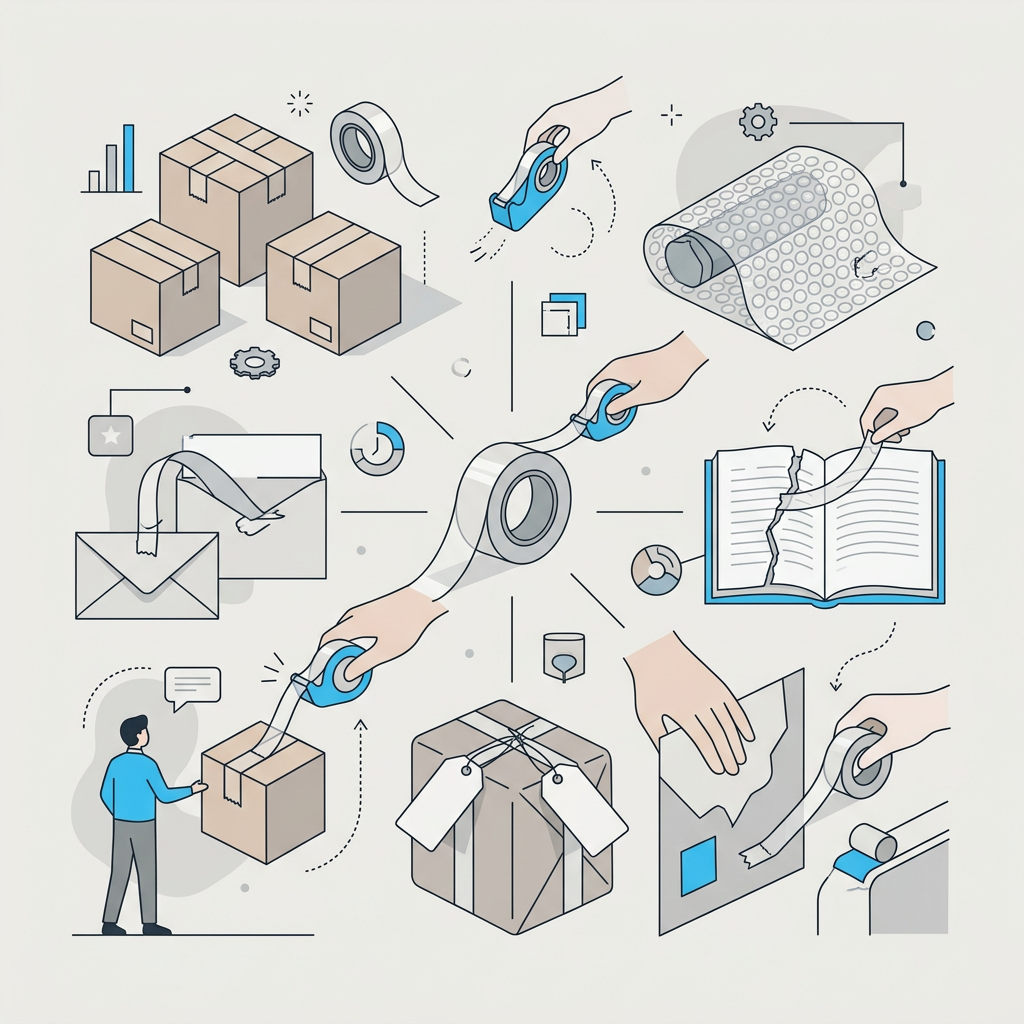
- Its uses range from sealing cardboard boxes to domestic repairs and artistic works.
- The appropriate choice depends on the use (resistance, durability, transparency) and the type of surface to be adhered.
- Sustainability is a growing factor, with biodegradable and recyclable options emerging in the market.
History and Evolution of Tape
Key Components of Tape
- BackingThe base or film on which the adhesive is applied. It defines the strength and flexibility of the tape.
- AdhesiveThe sticky substance that allows bonding between surfaces. Its composition determines the adhesion strength and special characteristics.
- Release coating (optional)A layer on the back of the backing that facilitates unwinding without sticking to the roll.
Common Backing Types
- Cellophane (Rayon/Regenerated cellulose film): Was the original material. Biodegradable and transparent, but less resistant to moisture and tension than modern plastics. Provides a classic finish and tears easily by hand.
- Polypropylene (BOPP - Biaxially Oriented Polypropylene): The most common backing today for packaging tape. Offers high tensile strength, is economical, transparent, and moisture-resistant. Can be harder to tear by hand.
- PVC (Polyvinyl chloride): Offers excellent tear and abrasion resistance. It is more elastic and adaptable to irregular shapes. Less common for general-purpose clear tape due to its cost and environmental concerns.
- Paper: Although not "tape" in the strict transparent sense, paper tapes, such as masking tape or gummed kraft paper, are important in the packaging field and have their own category.
Types of Adhesives Used
Pressure-sensitive adhesives
Most tapes use pressure-sensitive adhesives (PSA), which adhere with just slight pressure, without the need for water or heat activation.
- Acrylic: This is the most common adhesive. Offers excellent transparency, high UV resistance (prevents yellowing), good temperature resistance, and slow aging. Suitable for long-term applications.
- Rubber (solvent or water-based): Provides very strong initial adhesion (tack). Resists well at low temperatures and is ideal for sealing heavy boxes. However, it can yellow over time and is less UV resistant than acrylic.
- Synthetic Rubber (Hot Melt): A type of rubber adhesive that is applied hot. Offers high initial adhesion and is very competitively priced. However, it is less resistant to extreme temperatures and UV rays than acrylic.
- Silicone: For very specific applications, such as those requiring resistance to extremely high or very low temperatures, and for adhering to silicone surfaces.
Uses and Applications of Tape
1. Packaging and Shipping
cardboard boxes2. Office and Home
3. Arts and Crafts
4. Specialized Applications
- Double-sided tapes: With adhesive on both sides, to permanently join two surfaces without the tape being visible.
- Removable tapes: Designed to be removed without leaving residue or damaging the underlying surface.
- Filament tapes: Reinforced with glass or polyester fibers for extreme tensile strength, used in heavy packages or grouping objects.
- Security tapes: That leave an "opened" or "tampered" message when removed.
Maximize Adhesion
To ensure optimal tape adhesion, the surface must be clean, dry, and free of dust or grease. Ambient temperature can also influence adhesive performance.
Criteria for Choosing the Right Tape
- Identify the primary use. Is it for sealing heavy boxes, repairing a document, wrapping a gift, or a specific industrial application? This will determine the necessary strength and adhesive type.
- Consider the weight and type of package. For light packages, standard polypropylene tape may suffice. For heavy wooden boxes or robust packaging, tapes with higher tensile strength and a more powerful adhesive will be required.
- Evaluate environmental conditions. Will the package be exposed to extreme temperatures, humidity, UV rays, or prolonged storage conditions? Acrylic adhesives are generally better for UV resistance and aging, while rubber ones may be more suitable for low temperatures.
- Surface type. Rough or recycled surfaces (like some cardboard) may require tape with higher initial "tack" for effective adhesion. For delicate surfaces, removable tape is preferable.
- Transparency vs. Opacity. Most often transparency is sought, but for security or marking applications, opaque or specific colored tapes exist.
- Ease of application. Some tapes are easier to cut by hand than others. Compatibility with manual or automatic dispensers is important for efficiency.
- Sustainability. If the company or consumer is looking for more ecological options, there are tapes with recycled backings, biodegradable adhesives, or paper bases.
Common Mistakes When Using Tape
Avoid these mistakes
Applying tape to dirty or wet surfaces drastically reduces its adhesion. Not stretching the tape enough or stretching it too much can also compromise the seal strength.
- Applying to unsuitable surfaces: Tape does not adhere well to greasy, dusty, or excessively rough surfaces.
- Incorrect application temperature: Applying tape in very cold or very hot environments can affect the adhesive film and reduce its initial effectiveness.
- Improper storage: Exposing tape rolls to direct sunlight, high temperatures, or humidity can degrade the adhesive over time, causing it to lose its stickiness.
- Using the wrong type of tape: Using office tape to seal a heavy box intended for international shipping is a common mistake that leads to packaging failure.
- Not using the proper dispenser: Trying to cut packaging tape with scissors or by hand can be inefficient and result in uneven cuts or poor sealing.
Sustainability and Future of Tape
50%+Recycled material in some backings
FSCCertified paper tapes
BiodegradableOptions for industrial composting
- Bio-based tape: Using materials like PLA (polylactic acid) or reinforced cellophane, which are biodegradable or compostable.
- Tape with recycled content: Incorporating recycled plastics into the tape backing.
- Paper tape: A durable and completely recyclable alternative, often water-activated, that integrates seamlessly with cardboard packaging. See also "Cardboard: Versatility and Sustainability in Packaging."
- Greener adhesives: Development of solvent-free or water-based adhesives with a lower environmental impact.
- Waste reduction: Longer rolls or smaller roll cores to optimize transport and reduce waste generation per unit of product.