The Trash Bag: An Essential Element in Waste Management The trash bag, an everyday and seemingly simple object, plays a fundamental role in hygiene, public health, and modern environmental management. Since its invention, it has evolved considerably, adap
The Trash Bag: An Essential Element in Waste Management
The essentials
Trash bags are crucial for hygiene and waste management.
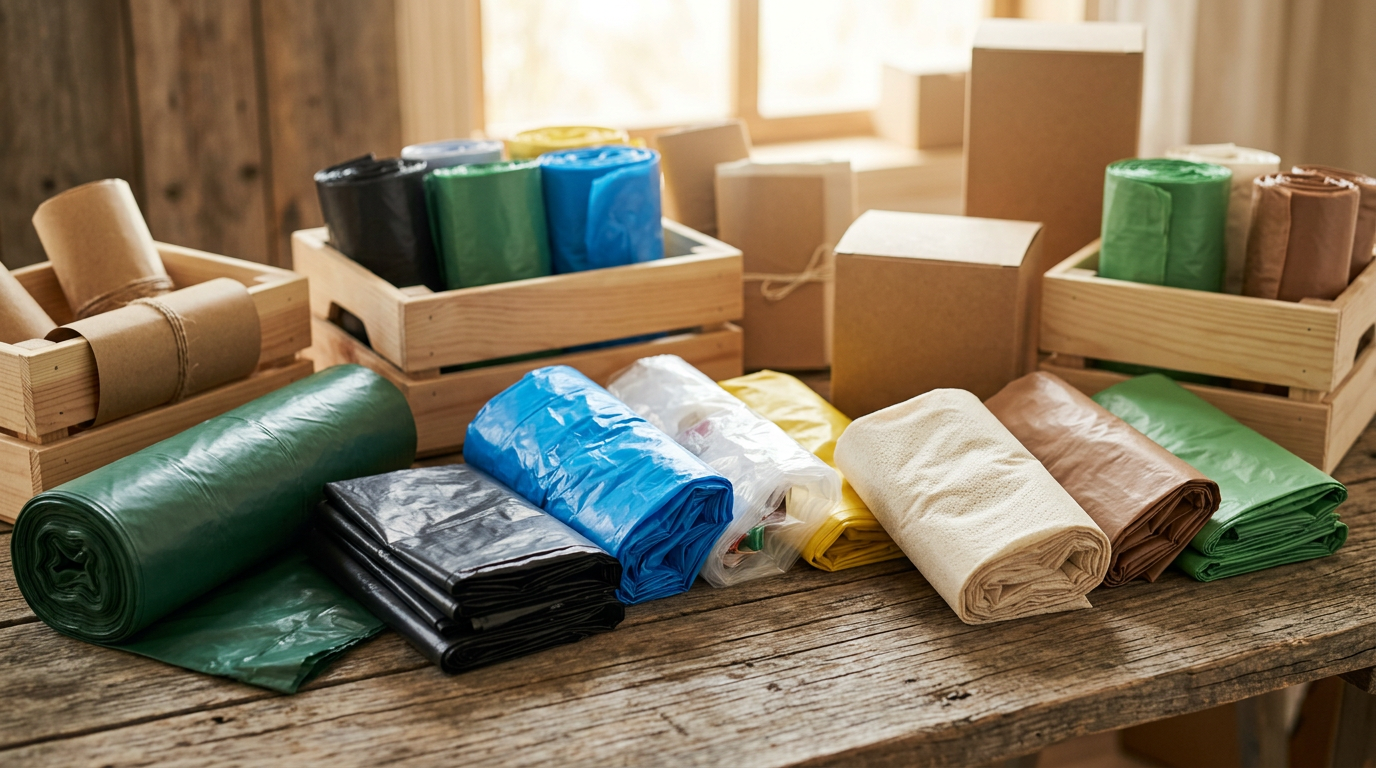
Various types exist based on material (LDPE, HDPE, compostable), capacity, and strength.
Correct selection influences recycling efficiency and sustainability.
Innovation focuses on recycled, biodegradable materials and improved functionalities.
History and Evolution of the Trash Bag
Custom wooden boxes
Discover our wooden boxes for packaging, hospitality, events and more. In-house manufacturing and full customisation.
For waste with sharp or heavy edges, opt for LDPE or blends to prevent breakage. For office paper, HDPE can be sufficient and more economical.
Recycled Materials
Compostable and Biodegradable Bags
Biodegradable Bags: Decompose into natural elements (water, CO2, biomass) through the action of microorganisms, under certain conditions. However, not all "biodegradable" bags degrade in all environments (e.g., in oxygen-deprived landfills).
Compostable Bags: Are a subset of biodegradable bags that decompose within a specific time and under controlled conditions (such as those of an industrial composting plant), turning into compost without leaving toxic residues. They are usually made from corn starch, PLA (polylactic acid), or other biomasses. They are ideal for collecting organic waste, facilitating the composting process.
Types of Trash Bags According to Their Use and Design
By Capacity
By Strength
With Closure
Drawstring closure: Allows the bag to be closed securely and easily transported.
Self-adhesive tape closure: Some bags incorporate an adhesive strip for hygienic and airtight sealing.
No closure: The most basic bags, which are tied manually.
For Differentiated Recycling
Strength is crucial to prevent spills and dirt.
Capacity appropriate to the volume of waste and bin.
Material adapted to the type of waste and sustainable goal.
Closures for hygiene and ease of transport.
Color coding to facilitate waste separation.
Guide to Choosing the Right Trash Bag
The correct choice of a trash bag goes beyond price; it involves considering the type of waste, volume, emptying frequency, and environmental impact.
Identify the type of waste. Is it general waste, organic, paper, packaging, sharp objects, or construction waste? Each type has different requirements. For example, organic waste benefits from compostable bags to facilitate its treatment, while rubble requires highly resistant sacks.
Determine the necessary capacity. Measure the bin or container where the bag will be used. Ensure the bag has the appropriate capacity so that it is neither too loose (wasting material) nor too tight (making it difficult to place and remove).
Consider the strength. If the waste includes heavy, sharp, or wet objects, it is crucial to choose a bag with a higher micron count or made with LDPE. For light and dry waste, thinner HDPE may be sufficient.
Assess the environmental impact. Prioritize bags made with recycled material or, for organic waste, opt for certified compostable bags. Find out about local waste management regulations and the types of bags accepted in each recycling stream.
Additional functionalities. Is an easy and secure closure important? Are odor neutralizers required? These small details can significantly improve the user experience.
Shop smart. Buying bags in large packs is usually more economical and reduces packaging.
Waste Regulations
Legislation regarding trash bags, especially plastic ones, is constantly evolving. Many regions have restricted the use of single-use bags or encouraged the use of more sustainable alternatives. It is advisable to check local or regional regulations.
Innovation and Sustainability in the Trash Bag Industry
The packaging and disposable products industry, including trash bags, is under constant pressure to become more sustainable. Innovations are focused on several fronts:
Increased Recycled Content: Ways are being sought to increase the percentage of recycled material in bags, both post-consumer and post-industrial, without compromising strength or functionality.
"Bag-in-Box" Bags: A newer solution for bulk purchasing, where bags come in dispenser boxes that reduce contact with the environment and facilitate their use. This relates to the concept of plastic boxes or cardboard used as dispensers for various products.
Advanced Biodegradable and Compostable Materials: Research into bio-based polymers that degrade effectively in various environments, not just in industrial composting plants.
Designs to Optimize Use: Bags with pre-cuts or dispensers that facilitate the extraction of one unit at a time, minimizing waste.
Odor Technology: Incorporation of additives that neutralize odors more effectively, improving household hygiene and the environment around containers.
Beyond the Bag
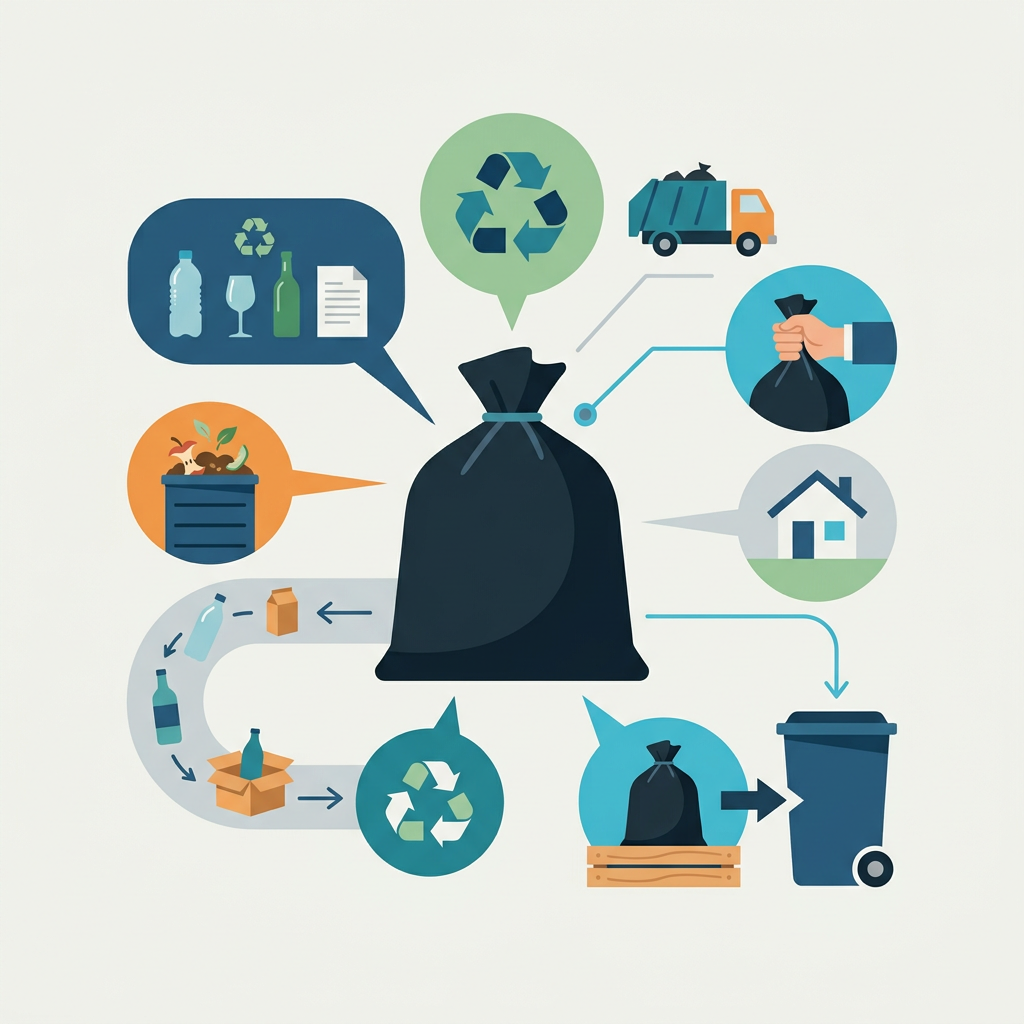
Waste management is an ecosystem. The effectiveness of the trash bag is complemented by other elements such as appropriate containers and the municipal recycling system. Even something like the grammage of the paper or cardboard we dispose of impacts how and where it should go.
Common Mistakes When Using Trash Bags
Incorrect use of trash bags can have negative consequences, from dirt and odors to problems in waste management.
Overloading the bag: Filling it excessively causes tears, making it difficult to transport and empty, and generating spills.
Not using the right size: A bag that is too small is inefficient and prone to tearing. One that is too large is a waste of material and money, and can make it difficult to handle.
Mixing waste: Putting organic waste in non-compostable bags or mixing packaging with food scraps contaminates the recycling stream and negates separation efforts.
Disposing of sharp objects without protection: Broken glass, blades, or skewers can puncture the bag and cause injuries to those handling the waste. They should be wrapped in thick paper or cardboard before disposal.
Not closing the bag properly: An inadequate closure allows odors and liquids to escape and attracts pests. Drawstring or adhesive closures are more effective than a simple knot.
The trash bag, far from being a simple wrapper, is a fundamental tool in our daily lives and in the sanitation infrastructure of any society. Its continuous evolution reflects a growing commitment to efficiency, hygiene, and, increasingly, environmental sustainability. Informed choice and proper use of this common product are small actions that, together, have a significant impact on the quality of life and the care of our planet.
Frequently Asked Questions
What's the difference between a biodegradable and a compostable bag?
Biodegradable bags decompose in the environment through the action of microorganisms, but this process can be very slow and does not always leave benign residues. Compostable bags, on the other hand, comply with specific standards (such as the European EN 13432 norm) that guarantee their complete decomposition into high-quality compost within a controlled period and conditions, like those of an industrial composting plant. Not all biodegradable bags are compostable.
How can I tell if a trash bag is truly compostable?
To ensure a bag is compostable, you should look for recognized certifications, such as the "industrial compost" mark (with the seedling symbol or "OK compost industrial") or the EN 13432 standard in Europe. These certifications guarantee that the bag will decompose correctly in a composting plant.
Why do some trash bags have odor-neutralizing additives?
Odor-neutralizing additives, such as baking soda or encapsulated fragrances, are added to some bags to contain and mask bad odors emanating from waste. This improves hygiene in the home or office and makes waste management more pleasant, especially for organic waste or diapers.
Can I use supermarket bags for trash?
Supermarket bags (often thin HDPE) can be used for light and dry waste. However, they are not designed for general trash. They are typically less resistant to punctures and weight, which increases the risk of tears and spills. For effective and hygienic waste management, it is preferable to use specific trash bags that offer greater strength and closure options.