Masking Tape: A Versatile Ally in Packaging and Beyond
Masking tape, also known as painter's tape, is a fundamental adhesive in a wide range of applications, from painting and home decoration tasks to specific industrial uses and, of course, in the field of packaging. Its popularity lies in its ability to effectively adhere to various surfaces, while allowing for clean removal without leaving residue or damaging the underlying surface. This distinctive feature differentiates it from other more permanent adhesive tapes and makes it an indispensable tool for jobs that require precision and temporality.
The Essential
- Masking tape is a crepe paper adhesive with pressure-sensitive adhesive, ideal for temporary applications.
- Its main advantage is clean removal without leaving residue or damaging surfaces.
- It comes in different widths, adhesion levels, and heat resistances to adapt to various needs.
Originally developed for masking areas during automotive painting processes, its utility has expanded exponentially, finding an important niche in surface protection, temporary fastening, and marking. Its construction, which generally combines a crepe paper backing with a low-tack acrylic or rubber adhesive, gives it unique flexibility and conformability. Understanding the specifics of this material is key to maximizing its properties and selecting the appropriate variant for each project.
Origins and Evolution of Masking Tape
The history of masking tape dates back to the 1920s, when Richard Drew, a 3M engineer, observed how car painters struggled to achieve clean lines when painting two-tone vehicles. They used glue on butcher paper for masking, which often damaged the paint upon removal. Drew devised a tape with a softer adhesive on the edges that allowed for easy and clean removal. This invention revolutionized not only the automotive industry but also laid the groundwork for the development of many other adhesive tapes.
Over the years, its composition and properties have evolved. New adhesive formulations have been introduced to improve UV resistance, high temperatures, or for applications on delicate surfaces. The crepe paper backing has also been subject to improvements, making it more resistant, more conformable, or, in some cases, thinner for sharper paint lines. This constant innovation has allowed masking tape to remain relevant and adapt to the increasing demands of various industries.
Composition and Key Characteristics
Masking tape, in its most basic form, consists of two main components:
- Crepe paper backing. This paper, treated with a release agent on the back, is flexible and easily conforms to curves and contours. Its crepe texture gives it the ability to stretch slightly without breaking, which is vital for precise masking. The choice of paper type and its creping degree influence tear resistance, flexibility, and the ability to absorb or repel paints and other liquids.
- Pressure-sensitive adhesive. Generally acrylic or rubber-based, this adhesive is designed to offer moderate adhesion. The key is that it is strong enough to hold the tape firmly during application, but weak enough to allow for clean and residue-free removal, even after several hours or days. The specific adhesive formulation determines the strength of adhesion, temperature resistance, and compatibility with different types of surfaces.
Some fundamental characteristics that define the performance of masking tape are:
- Controlled adhesion: Its tack level is moderate, intended for temporary application.
- Clean removal: Leaves no sticky residue or paint tearing when removed correctly.
- Conformability: Adapts well to curves and corners thanks to its flexible crepe paper backing.
- Tear resistance: Although flexible, crepe paper offers good tear resistance during application.
- Operating temperature: Some tapes are designed to withstand high temperatures, essential in paint curing processes.
- UV resistance: Special versions exist that resist degradation from prolonged sun exposure without hardening the adhesive.
Essential Tip
To ensure clean removal, do not leave masking tape applied longer than recommended by the manufacturer, especially outdoors or with high sun exposure.
Types of Masking Tape and Their Applications
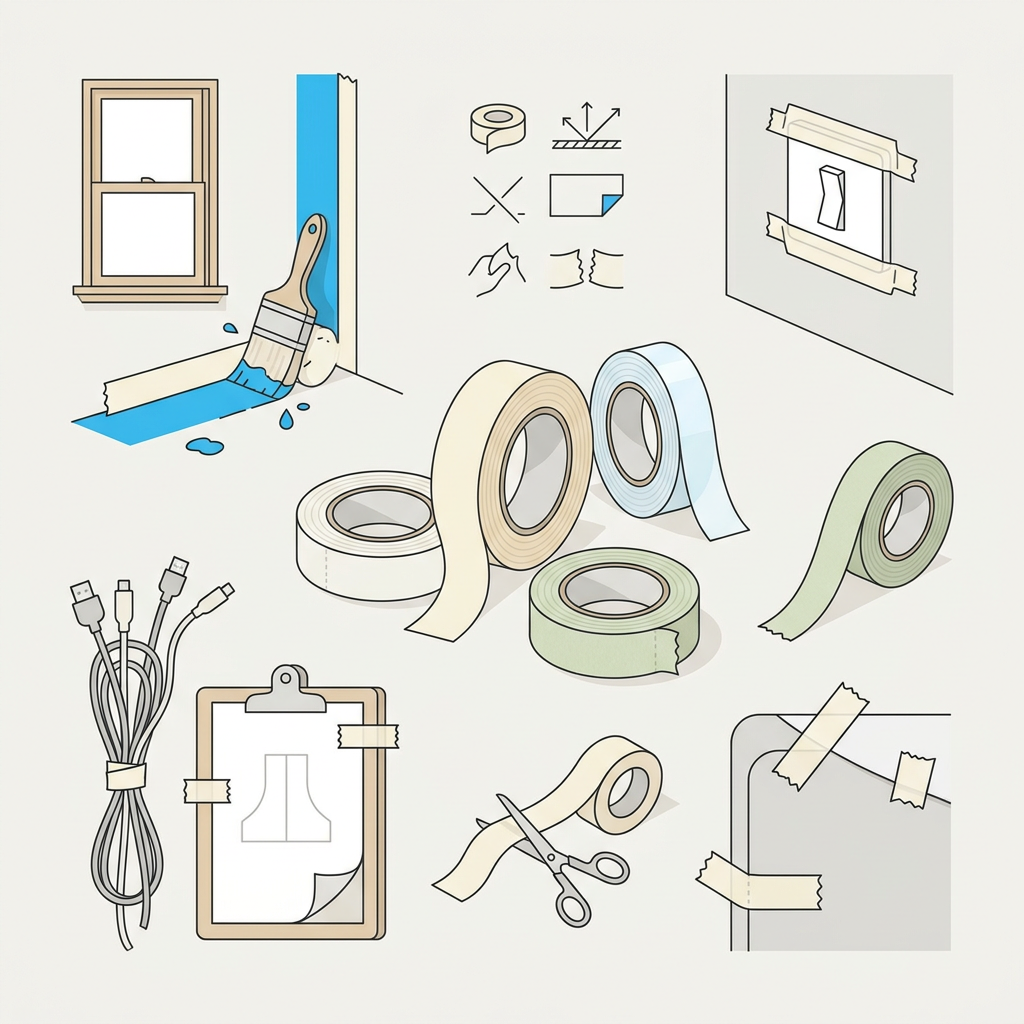
Although often grouped under the same name, there are various types of masking tape, each optimized for specific uses. The correct choice depends on the type of surface, the environment, and the duration of the application.
| Tape Type | Characteristics | Common Uses |
|---|---|---|
| Standard (General Purpose) | Medium adhesion, good conformability, clean removal in the short term (24-48h). Cream or off-white color. | Interior painting, light temporary fastening, general marking, crafts. |
| Professional (Medium Adhesion) | Optimized adhesion for multiple surfaces, greater tear resistance, clean removal up to 3-7 days. | Painting on delicate surfaces (wallpaper), automotive, demanding DIY projects. |
| For Delicate Surfaces (Low Adhesion) | Very gentle adhesive, formulated not to damage fragile finishes. Clean removal up to 14 days. Blue or purple color. | Painting on fresh plaster, wallpaper, freshly painted surfaces, untreated wood. |
| For Outdoors / UV (High Resistance) | Longer lasting adhesives, resistant to UV rays and humidity. Clean removal up to 14-21 days. Blue or green color. | Exterior painting, outdoor construction use, prolonged exposure. |
| High Temperature | Adhesive and backing that withstand high temperatures without degrading or leaving residue. | Paint curing processes, industrial baking, some automotive applications. |
| Precision (Fine Edges) | Very thin paper backing with high flexibility, designed to create extremely sharp paint lines. | High-quality painting jobs, airbrushing, automotive detailing. |
Applications in Packaging and Logistics
Although its name evokes painting, masking tape finds valuable uses in the packaging sector. It is not the primary tape for permanently sealing boxes (for that, we would look for an adhesive tape for packaging), but it is irreplaceable for:
- Temporary fastening: Ideal for holding pieces together before final assembly, securing internal protectors inside a box, or fixing loose components during transport.
- Surface protection during shipping: If a custom wooden box has delicate parts or special finishes, masking tape can be used to secure protective material (foam, cardboard, etc.) without risk of damaging the surface upon removal.
- Temporary marking and identification: Allows boxes, components, or specific areas to be labeled in a way that can be easily changed or removed. This is useful in picking and packing processes or for identifying temporary batches.
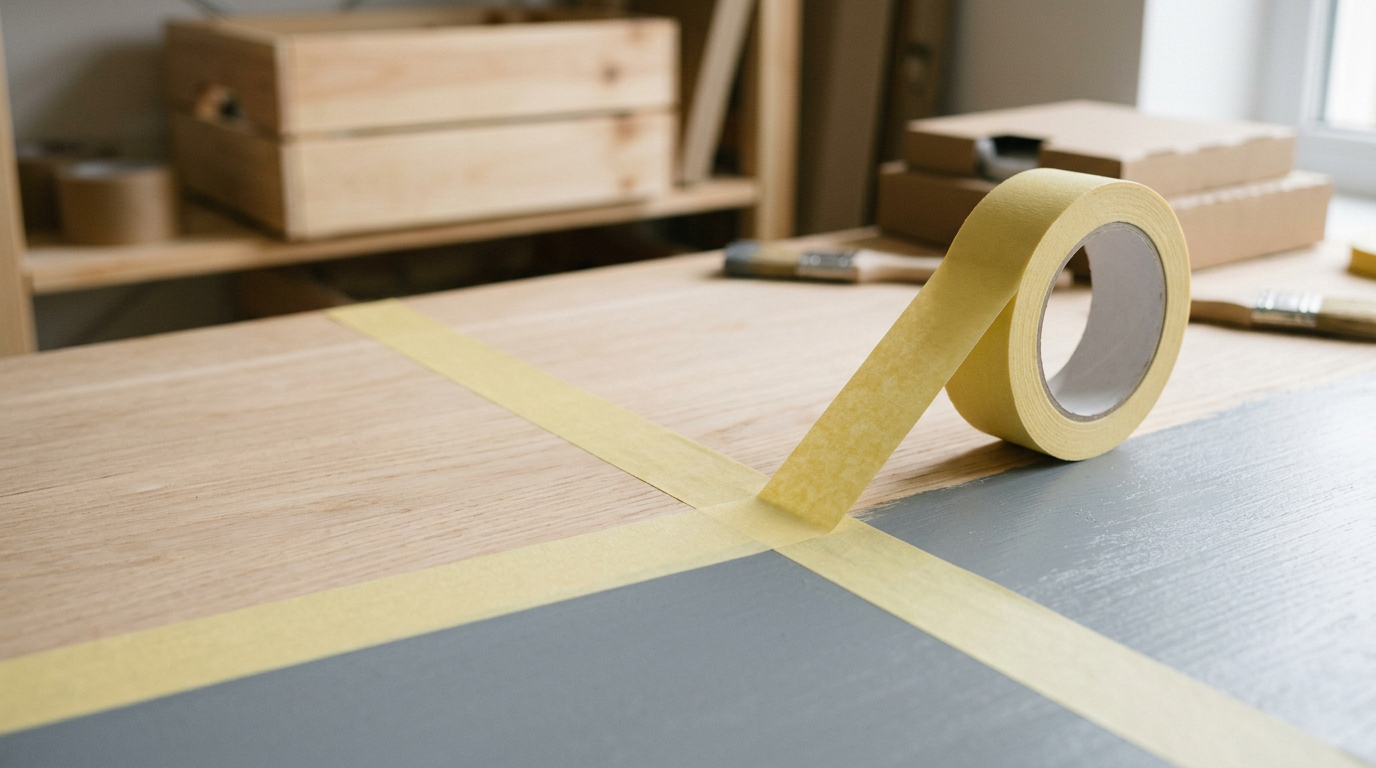
- Creating templates for customization: In the customization of custom wooden boxes, if painting or engraving techniques that require masking are used, precision masking tape is essential to define the work areas.
Importance in Premium Packaging
In premium packaging, where presentation and product integrity are crucial, using masking tape for temporary fastening or protection prevents surface damage that other tapes could cause.
How to Use Masking Tape Correctly
Proper use of masking tape is crucial to ensure optimal results and avoid problems such as adhesive residue or paint removal.
- Prepare the surface. Ensure the surface is clean, dry, and free of dust or grease. The presence of dirt can compromise adhesion or, worse, become embedded in the adhesive and cause imperfections upon removal.
- Apply the tape firmly. Press the tape evenly along its entire length to ensure good contact between the adhesive and the surface. This is especially important to prevent paint or protective material from seeping under the edges. Use a spatula or finger to smooth the edges well.
- Do not overstretch. Although crepe paper is flexible, stretching it too much during application can cause the tape to retract after application, lifting the edges and allowing seepage, or breaking during removal.
- Remove at the right time. Generally, it is recommended to remove the tape when the paint (or the material that has been applied) is "touch dry" but not yet completely dry and hardened. If you wait too long, the adhesive can overcure and leave residue, or the paint may crack when the tape is removed. In the case of packaging, remove it as soon as its temporary function is fulfilled.
- Remove at a 45-degree angle. Pull the tape slowly, forming a 45-degree angle with the surface. This helps the adhesive residue to detach more easily and the cut line to be cleaner. Avoid pulling it straight up (90 degrees), as this can damage the surface or paint.
Common Mistakes and How to Avoid Them
Despite its apparent simplicity, using masking tape can lead to errors if certain factors are not taken into account:
- Leaving it on too long. The adhesive can "bake" onto the surface, leaving sticky residue or being difficult to remove without pulling up the underlying layer. Always follow manufacturer recommendations for maximum application time.
- Using the wrong tape. Standard tape on a delicate surface can lift paint, while low-tack tape won't hold well on rough surfaces.
- Not pressing the edges. This allows paint to seep underneath, creating imperfect lines.
- Removing tape too quickly or at a right angle. Can cause tearing or residue.
- Exposing it to unsuitable conditions. Prolonged exposure to sun (without being a specific UV tape) or humidity can degrade the adhesive.
Attention
Never use acrylic or polypropylene packing tape as a substitute for masking tape for masking or temporary fastening tasks. Its permanent adhesive is designed for maximum adhesion and will almost always leave residue or damage the surface upon removal.
Sustainability and Environmental Considerations
Sustainability is a growing concern, even for everyday products like masking tape. Although traditionally not considered a "green product," there are advances in this field:
- Recycled materials: Some manufacturers experiment with crepe paper made from recycled fibers.
- Water-based adhesives: Adhesives that do not contain volatile organic compounds (VOCs) are prioritized, reducing environmental impact during their manufacture and use.
- Biodegradability: Certain tapes are beginning to incorporate biodegradable backings and adhesives, although this remains a less common option to ensure performance.
For users and buyers, the best practice is to use the right amount of tape, optimize selection to avoid waste, and dispose of waste responsibly according to local regulations. Being primarily paper, the backing of masking tape is compostable or recyclable in many regions, as long as adhesive residue is not excessive and it does not contain other materials that prevent its treatment.
Sustainability in packaging goes beyond tape. When choosing packaging, considering materials like FSC (Forest Stewardship Council) certified wood or recycled cardboard is essential for a more environmentally friendly life cycle.
Conclusion
Masking tape is an inconspicuous but essential product in countless tasks. Its clever design, balancing adhesion and clean removal, makes it a versatile and indispensable tool. Whether for achieving a perfect paint finish, protecting delicate surfaces in shipments, or for temporary identification in logistics or packaging, understanding its types and correct usage ensures not only efficiency but also the integrity of the material to which it is applied. Choosing the right tape and applying it correctly are the keys to avoiding frustration and achieving professional results.