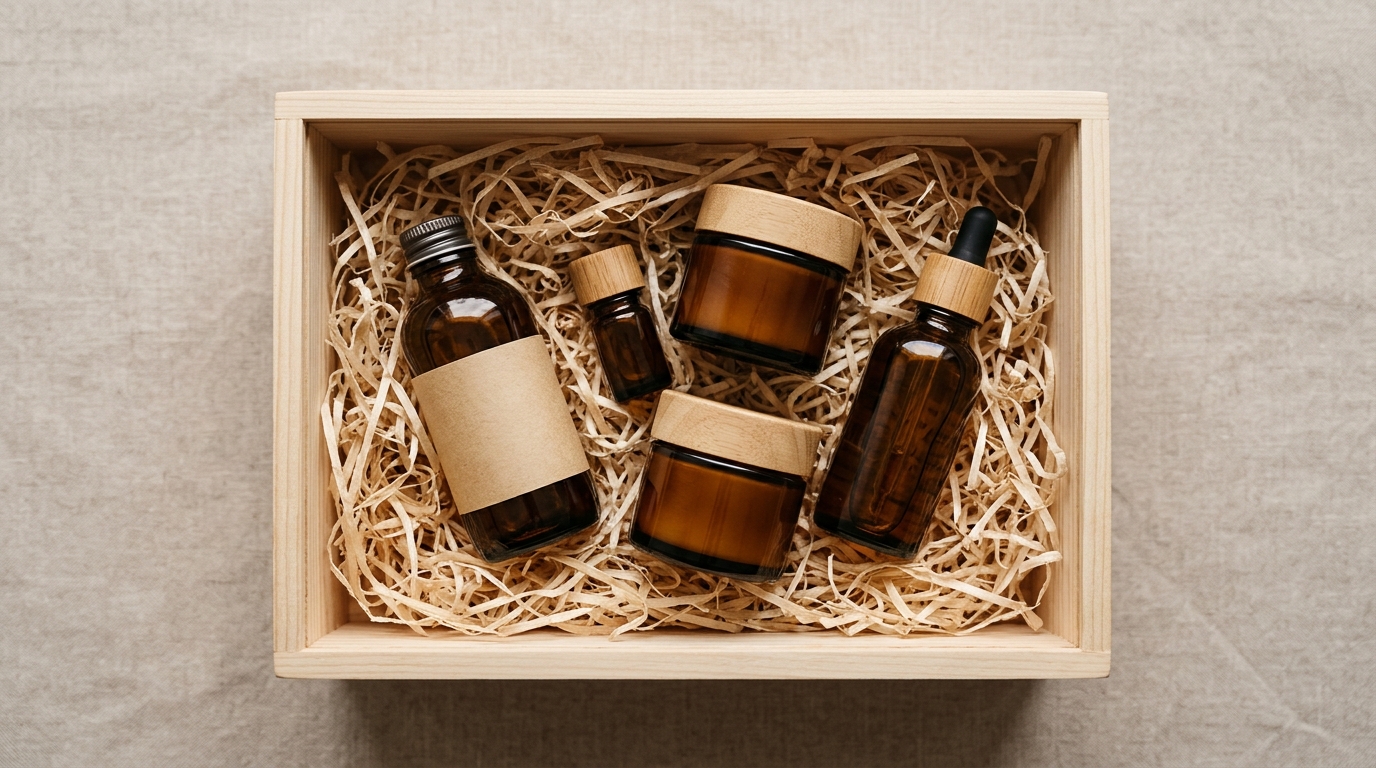
Comprehensive Guide to Natural Cosmetics Gift Sets and Boxes: Sustainability and Design
Packaging is the very first physical and visual touchpoint a consumer has with a product. In a market where ethical values, transparency, and environmental stewardship are paramount, selecting the right boxes for natural cosmetics sets has become a purely strategic decision for any brand. The presentation of these items must convey purity, honesty, and a meticulously crafted aesthetic that justifies the product's premium positioning—ensuring the outer casing remains completely aligned with the botanical or mineral formula inside.
Key Takeaways
- Packaging must genuinely reflect the organic, eco-friendly values of the cosmetic itself.
- FSC-certified lightweight wood delivers a premium aesthetic, high durability, and sustainability compared to conventional plastics.
- Chemical-free customization methods, such as laser engraving, elevate presentation without hindering recyclability.
- Protecting interior glass bottles requires precise spatial planning and shock-absorbing natural cushioning.
The Impact of Visual Cohesion in Eco-Friendly Cosmetics
Well into 2026, beauty and personal care consumers are more informed than ever. They not only thoroughly scrutinize ingredient lists (INCI) to ensure the absence of parabens, sulfates, or silicones, but they also extend that same level of scrutiny to the packaging. Housing a serum formulated with pure, organic essential oils inside a non-recyclable plastic container or wrapped in industrial cellophane sends a contradictory message that severely tarnishes product image.
This is precisely where the importance of proper packaging for artisan natural cosmetics: guide and key factors comes into play. Utilizing noble base materials, organic textures, and neutral tones quietly yet powerfully signals that the product is natural. Boxes crafted from lightweight wood or high-grammage kraft cardboard do more than just protect; they elevate the unboxing experience into a sensory journey that starts with the grain of the wood, continues with the gentle sound of sliding or opening the lid, and culminates in the aroma of the products within.
The Value of a Second Life
One of the primary benefits of rigid wooden packaging in cosmetics is its potential for reuse. Consumers frequently repurpose these boxes to store jewelry, cotton pads, or tea bags, keeping your brand’s logo visible in their homes for years to come.
Recommended Materials: Balancing Strength and Weight
The main challenge when designing boxes for natural cosmetics sets lies in finding the exact sweet spot between safeguarding fragile containers and keeping volumetric weight manageable for shipping. Below are the most common materials used in the industry alongside their technical attributes.
| Packaging Material | Key Advantages | Recommended Application |
|---|---|---|
| Plywood (FSC-certified) | High structural rigidity, extremely lightweight, visible natural grain. | Premium gift sets, complete skincare routines, and limited editions. |
| Corrugated Kraft Cardboard | Cost-effective, ships and stores flat, 100% recyclable in curbside paper bins. | Standard e-commerce shipping, entry-level lines, or solid cosmetics (shampoo bars). |
| MDF (Medium-Density Fiberboard) | Entirely smooth, uniform surface without knots or grain variations. | Rigid lined presentation boxes or designs demanding ultra-fine engraving detail. |
| Solid Pine Wood | Rustic look, distinct natural pine scent, exceptional durability. | Luxury keepsakes and high-tier corporate gifting. |
Structuring the Interior of Natural Cosmetics Packaging
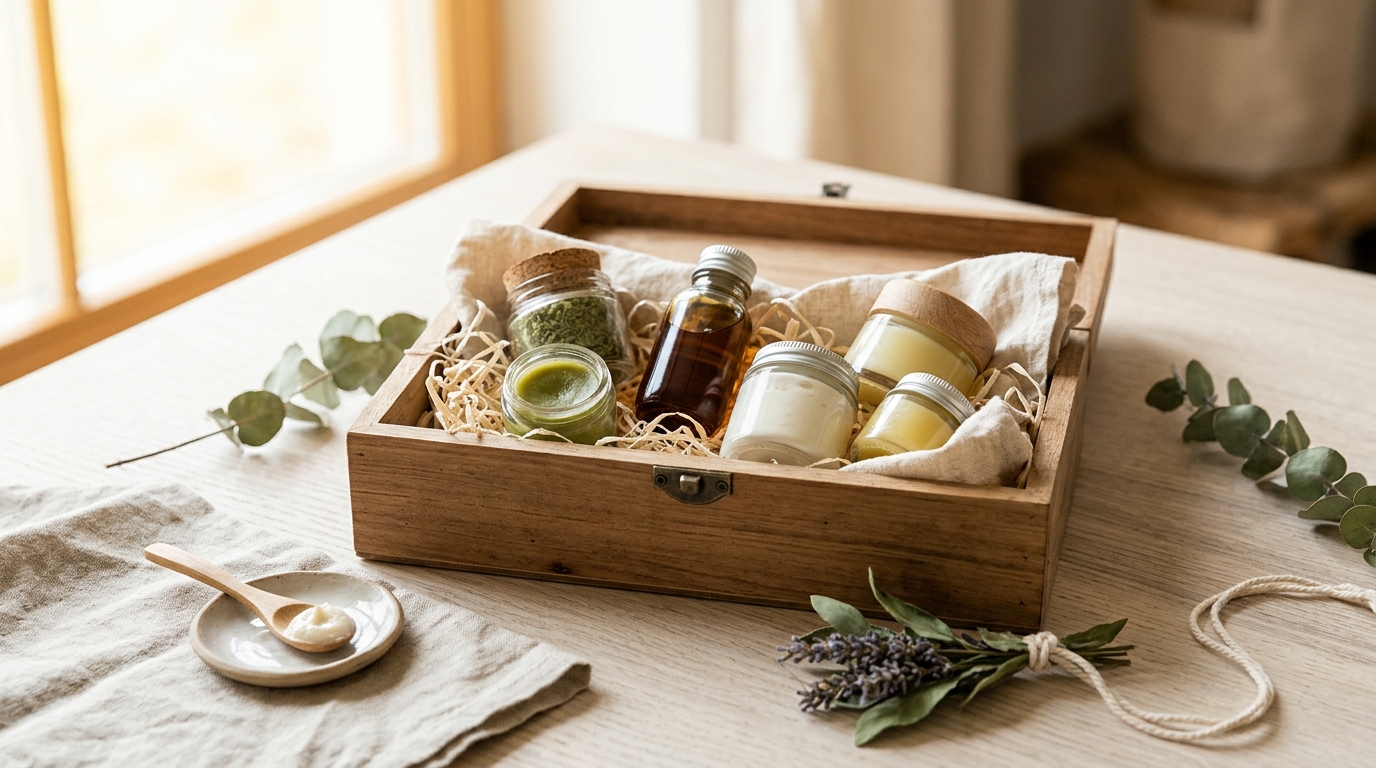
While the exterior captures attention, the interior guarantees the contents arrive intact. Natural cosmetics routinely eschew plastic for primary packaging, opting instead for amber glass bottles, frosted glass jars, or aluminum tins. This introduces significant weight and high fragility. If two glass bottles strike one another during transit, the likelihood of breakage spikes dramatically.
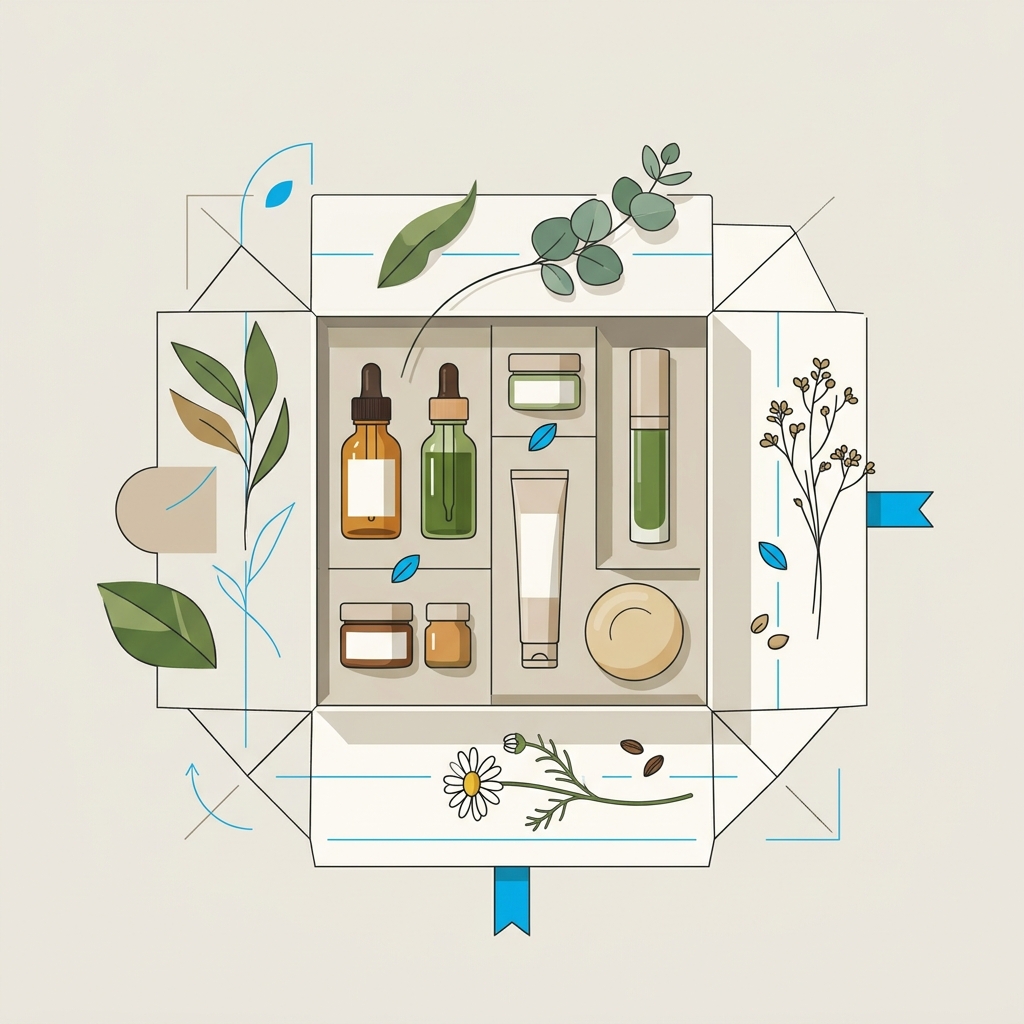
Consequently, the interior architecture of the box must be engineered with absolute precision, preventing items from shifting or rubbing against one another.
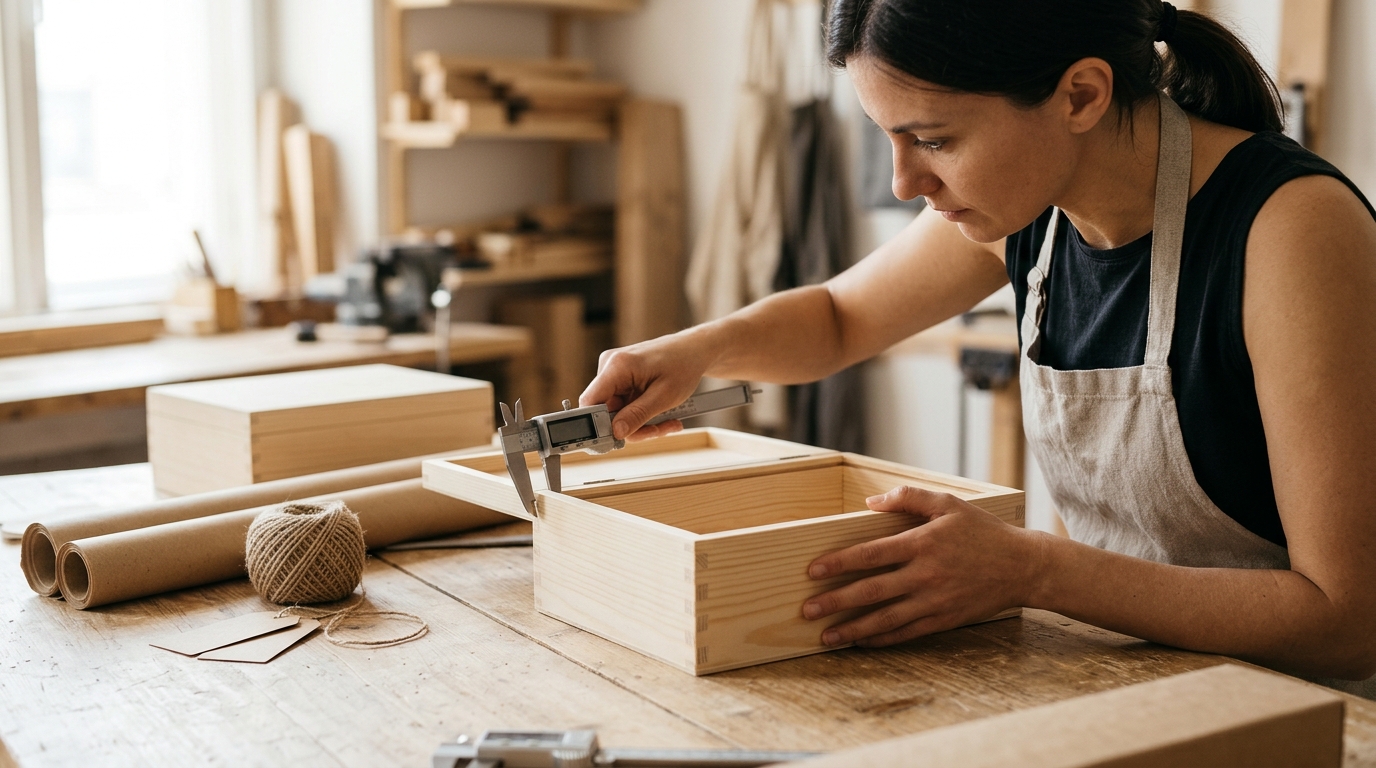
- Volumetric measurement of containers. Calculate the exact diameter, width, and overall height—including droppers, pump dispensers, or spray nozzles.
- Selection of the partition system. For premium gift boxes, built-in wooden dividers or grid inserts are recommended. Custom die-cut cardboard inserts that lock the base of each container in place serve as an effective alternative.
- Integration of protective filler. Any remaining void space must be secured. Natural wood wool (excelsior) or crinkle-cut kraft paper cushions mechanical impacts efficiently while reinforcing an organic, artisanal look.
- Safety testing (Drop Test). Prior to mass production, it is best practice to request packaging samples before buying, fit the actual products inside, and run drop tests to confirm impact absorption and ensure seals hold firm.
Watch Out for Essential Oils
If your cosmetic formulas include pure essential oils or bi-phase solutions, ensure primary containers feature airtight seals. Even minor leaks can irrevocably stain porous surfaces like cardboard or raw, unsealed wood, ruining the unboxing aesthetic.