Why Ordering Packaging Samples Before Buying Is Vital
Making decisions about product packaging is a critical step in any product launch or brand redesign. In this context, ordering packaging samples before buying becomes an essential measure to ensure that design, quality, and functionality meet real-world expectations. Launching a line of items without previously validating their container can lead to logistical issues, damage during transit, or a negative perception from the end consumer. Evaluating a physical prototype allows you to adjust dimensions, check the resistance of the chosen materials, and confirm that customization finishes align perfectly with your corporate identity.
The Essentials
- Requesting prototypes prevents costly production errors and sizing issues.
- It allows you to validate the material's physical strength and the quality of printing or engraving finishes.
- It facilitates real-world shipping and storage testing before placing a bulk order.
In the competitive market of 2026, the unboxing experience is a direct extension of the product itself. A defective box, a closure that does not fit properly, or blurry printing can ruin customer perception in a matter of seconds. Therefore, the tactile and visual evaluation of a physical prototype is not a waste of time, but an investment in safety and quality.
What to Evaluate When Receiving a Packaging Sample
When a company decides to request a free sample or a paid one from its supplier, the goal should be to subject that packaging to rigorous scrutiny. It is not enough to simply see if the box looks aesthetically pleasing; it must be analyzed from a technical and functional perspective. Professional packaging buyers typically focus on several key areas to determine whether the container will be viable for their supply chain.

Dimensional Accuracy and Clearances
The first step upon receiving the prototype is to place the actual product (and any accessories) inside. It is essential to verify that the internal dimensions provide an appropriate fit. Packaging that is too loose will require additional void fill material, driving up per-unit costs and reducing the package's sustainability. Conversely, an overly tight fit can make it difficult for the customer to remove the product or, even worse, cause tears or breaks in the box due to structural stress.
Test with the Final Product
Never approve a sample using a similar product or a 3D-printed model if it differs in weight or texture from the final item. Packaging behavior varies significantly depending on actual weight distribution.
Material Quality and Performance
Both the premium and standard packaging sectors utilize a wide variety of substrates, and ordering packaging samples before buying is the only way to verify their integrity. Some of the most common materials include:
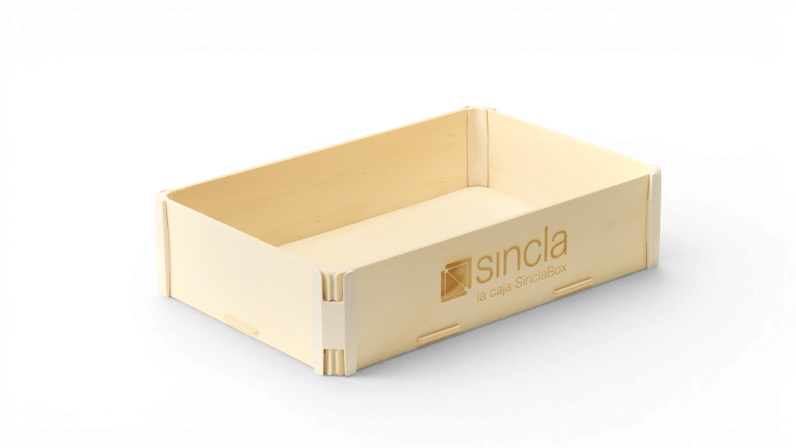
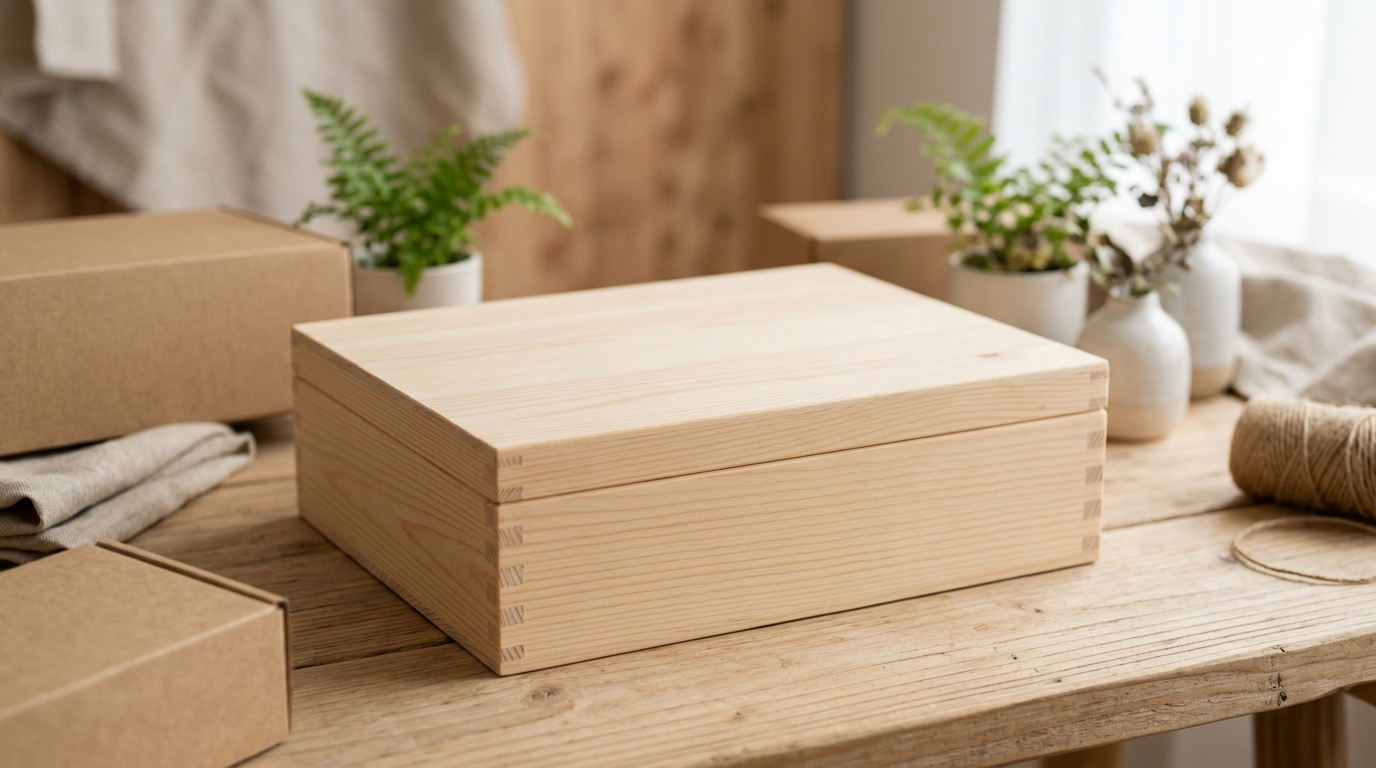
- Solid or Certified Pine Wood (FSC): Check that grain patterns, sanding, and thickness are consistent. Wood provides a very high perceived value, but it requires precision assembly.
- Plywood: It is vital to inspect the edges to ensure they do not splinter and that the layers are firmly bonded together.
- MDF (Medium-Density Fiberboard): An excellent material for highly polished finishes. On the sample, check whether the edges are smooth and if the surface takes engravings well.
- Heavyweight Kraft Cardboard: Evaluate its rigidity, resistance to folding (ensuring it does not crack at the creases), and its ability to support weight without deforming.
To streamline the decision-making process, it is common practice to consult a wooden box catalog or check other materials, requesting different options to compare them on-site.
| Material | Structural Strength | Recommended Use | Sustainability |
|---|---|---|---|
| Pine wood | Very high | Premium batches, bottles, corporate gifts | High (with FSC or PEFC certification) |
| Plywood | High | Sliding-lid boxes, secure shipping | High |
| MDF | Medium-High | Decorative packaging, rigid cases | Medium-High (recyclable) |
| Rigid Kraft cardboard | Medium | Lightweight e-commerce shipments, cosmetics | Very high (biodegradable and recycled) |
Validating Customization and Finishes
One of the main reasons to order packaging samples before buying at scale is to validate how the logo or graphic design looks when applied to the material. What appears perfect on a computer screen (digital render) can vary drastically when applied to a porous surface like wood or recycled cardboard.
-
Laser Engraving Check the burn depth and the legibility of small typography on the wood.
-
Screen Printing It is crucial to review ink opacity, edge sharpness, and verify that colors accurately match corporate Pantone values.
-
Hot Stamping Applied to premium details, inspect that the metallic foil stamping does not bubble or peel off.
-
Varnishes and Stains On wooden containers, verify that the stain is uniform and leaves no strong odors that could affect the product inside.