Grammage in Packaging: An Essential Guide for Product Packing and Protection
The essentials
- Grammage measures a material's surface density (g/m²) and is key for packaging.
- It directly influences the rigidity, strength, feel, opacity, and cost of packaging.
- The choice of grammage depends on the product, its weight, fragility, transport method, and desired finish.
- High grammage offers greater protection, while low grammage is lighter and more economical.
What is Grammage and why is it important?
- Rigidity and Strength. Higher grammage usually correlates with greater rigidity and resistance to tension, compression, and puncture.
- Content Protection. Packaging with higher grammage offers a better physical barrier against knocks, abrasion, and other damage during transport.
- Aesthetics and Feel. Higher grammage materials often convey a sense of superior quality and a more robust feel, which is key in premium packaging.
- Printability. Certain grammages are more suitable for specific printing techniques, affecting the sharpness and saturation of the design.
- Sustainability and Cost. Lower grammage reduces material consumption and packaging weight, decreasing transport costs and environmental impact.
Grammage vs. Thickness
Although they often go hand in hand, grammage and thickness are not the same. Two materials can have the same grammage but different thickness due to the density of their fibers or their structure (like corrugated cardboard). However, in homogeneous materials like paper or solid board, higher grammage usually indicates greater thickness.
Types of Materials and Their Common Grammage in Packaging
Paper and Cardboard
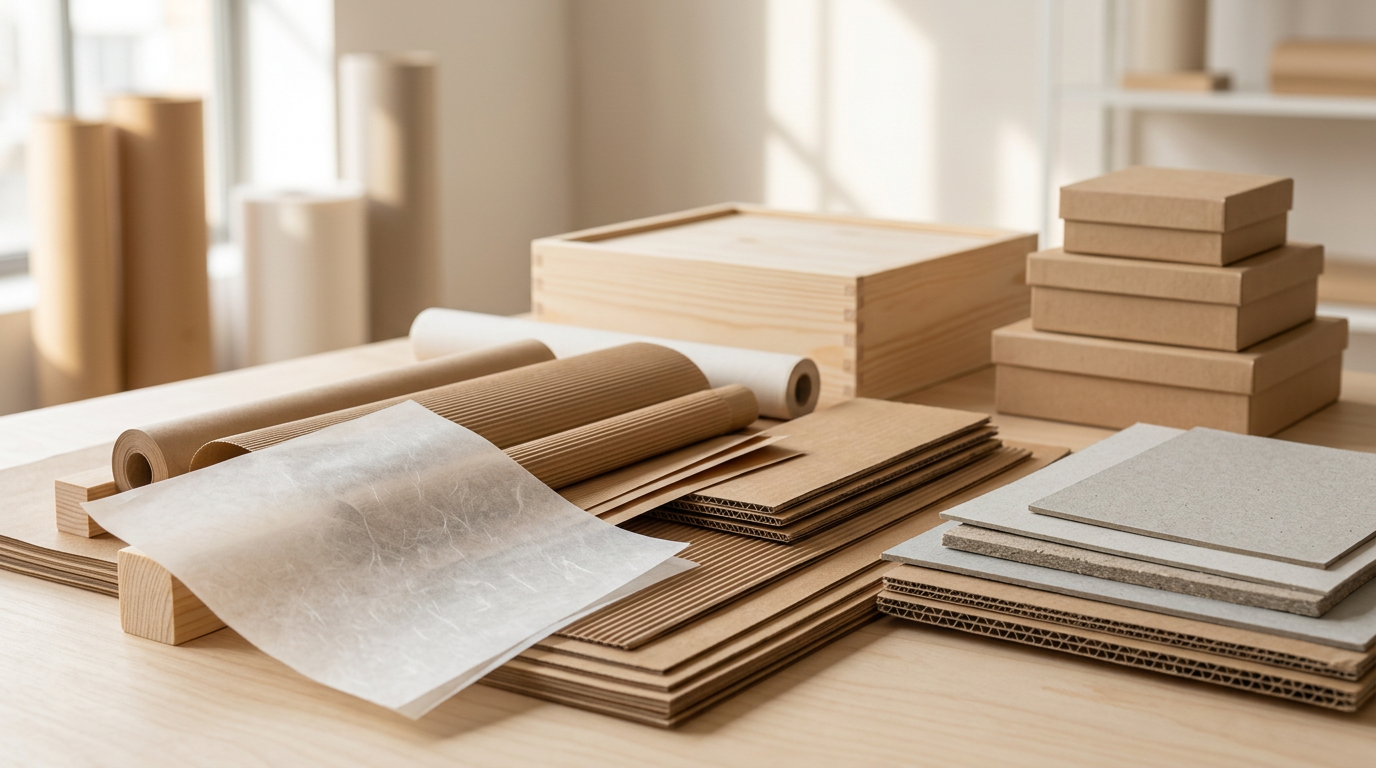
- Thin Paper (10-80 g/m²): Includes tissue paper, greaseproof paper, light packaging paper. Used for wrapping delicate products, filling spaces in boxes (Tissue Paper: Uses, Types, and Complete Guide) or as secondary protection. Its main advantages are lightness and malleability.
- Standard Paper (80-150 g/m²): Common in brochures, paper bags, and some wrappers. Offers a good printing surface and some resistance.
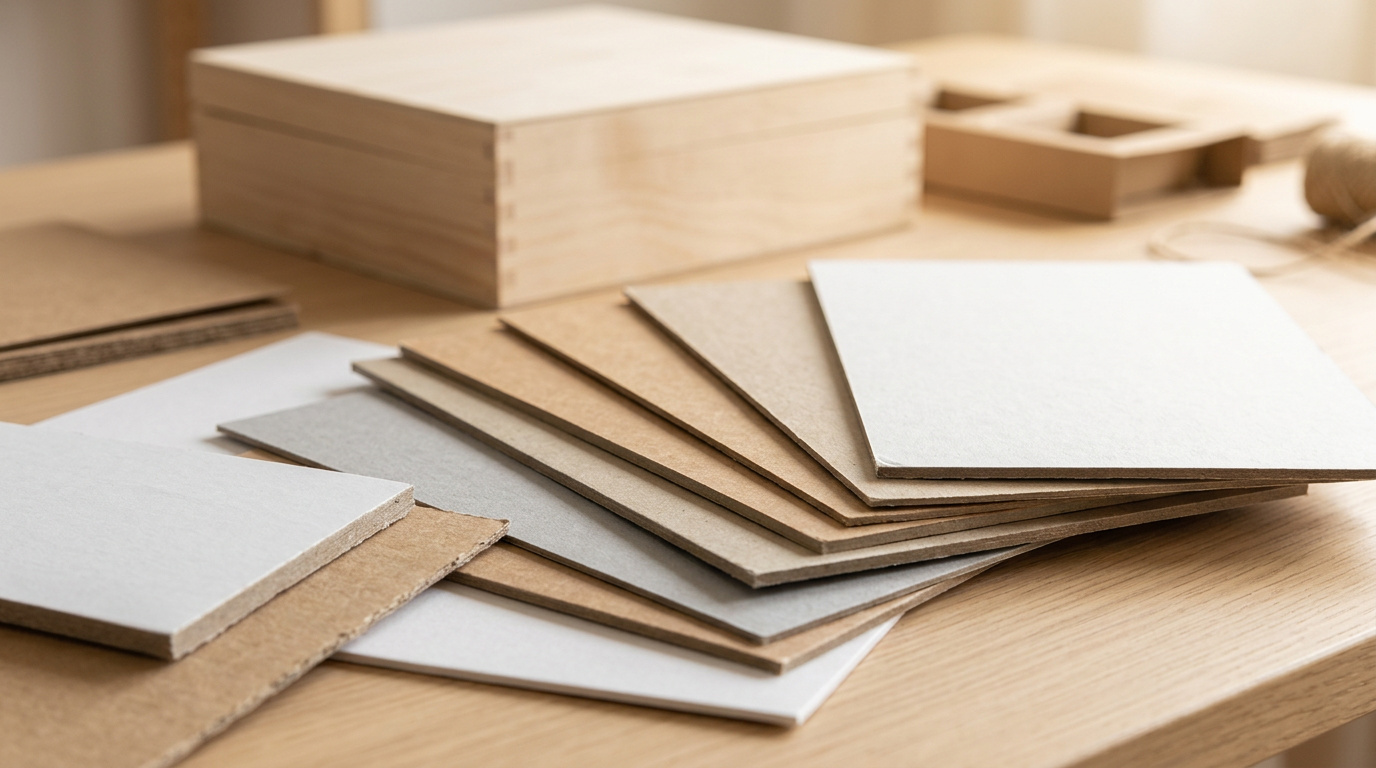
- Cardboard (150-350 g/m²): Cardboard is a versatile material. Lower grammages (150-250 g/m²) are used in boxes for light products such as cosmetics, food, or medicines. Higher grammages (250-350 g/m²) provide greater rigidity and are ideal for more robust boxes or presentation bases.
- Solid Board (350-600+ g/m²): Dense and resistant material, often used for luxury boxes, displays, or as structural reinforcement. Offers an excellent surface for premium finishes like hot stamping or embossing.
Corrugated Cardboard
- Single Wall (single flute): Used for packaging light to medium products. Its combined grammages can vary widely, from 200 g/m² for very light applications to 600 g/m² or more for stronger boxes.
- Double Wall (double flute): Offers greater strength and cushioning. Ideal for heavier or fragile products. Total grammages can range from 700 g/m² to over 1200 g/m².
- Triple Wall (triple flute): For transporting very heavy or industrial loads. Its grammages easily exceed 1500 g/m².
Consider the Grammage/Thickness Ratio
For cardboards, especially corrugated ones, not only grammage is important, but also the wave structure. A cardboard with a lower total grammage but a thicker flute can offer better cushioning than one with a higher grammage and a thinner flute.
Wood and its Derivatives
- Plywood: Thin sheets of wood glued with perpendicular grains. Thickness (e.g., 3mm, 6mm, 9mm) is the main factor determining its strength and weight.
- MDF (Medium Density Fiberboard): Made from wood fibers. Its density can vary, but like plywood, board thickness is the crucial parameter.
- Solid Wood: For premium wooden boxes, thicknesses ranging from 3-4 mm for light gift boxes to 10-20 mm for wine or robust transport boxes are used. The choice depends on the required protection and aesthetics. A catalog of wooden boxes can show the variety of available options.
Factors to Consider When Choosing the Right Grammage
1. Product Type and Weight
| Product | Typical Grammage (reference) | Considerations |
|---|---|---|
| Jewelry, light cosmetics | 180-300 g/m² (cardboard) | Premium aesthetics, soft touch. |
| Clothing, small electronics | 300-450 g/m² (solid board or micro-flute) | Balance between protection and elegance. |
| Wine bottles, books, tools | 450-800+ g/m² (double wall cardboard) | Need for impact and compression resistance. |
| Industrial components, small furniture | >800 g/m² (triple wall cardboard, wood) | Maximum protection and load capacity. |
2. Content Fragility
bubble wrap3. Transport and Storage Method
- Parcel Shipping: Requires higher grammage and resistance to stacking and impacts.
- Palletized Transport: Although boxes are stacked, weight is distributed, but they still need good compression resistance.
- Extended Storage: Adequate grammage prevents deformation due to humidity or the passage of time.
4. Finishes and Customization
custom wooden boxesSample Testing
Before large-scale production, it is highly recommended to request a free sample of the packaging with the selected grammage to evaluate its performance and appearance under real conditions. This allows verification of strength, product fit, and finish quality.
5. Sustainability and Cost
Common Mistakes in Grammage Selection
- Underestimating necessary protection. Choosing too low a grammage can lead to product damage during transport or storage, resulting in returns and economic losses.
- Overestimating protection (excessive grammage). Using excessively high grammage when not necessary unnecessarily increases packaging cost and shipping weight, leading to higher transport expenses and a larger carbon footprint.
- Ignoring design impact. Poor structural design can cause even high grammage packaging to fail. Box shape, reinforcements, and inserts are as important as material quality.
- Not considering humidity. The strength of many packaging materials (especially paper and cardboard) decreases significantly in humid environments. Higher grammage or special treatment may be necessary in these cases.
Grammage in Premium and Gift Packaging
wedding packagingcommunion boxesGrammage is the silent weight that communicates the quality and care behind a product, creating a first impression that lasts.