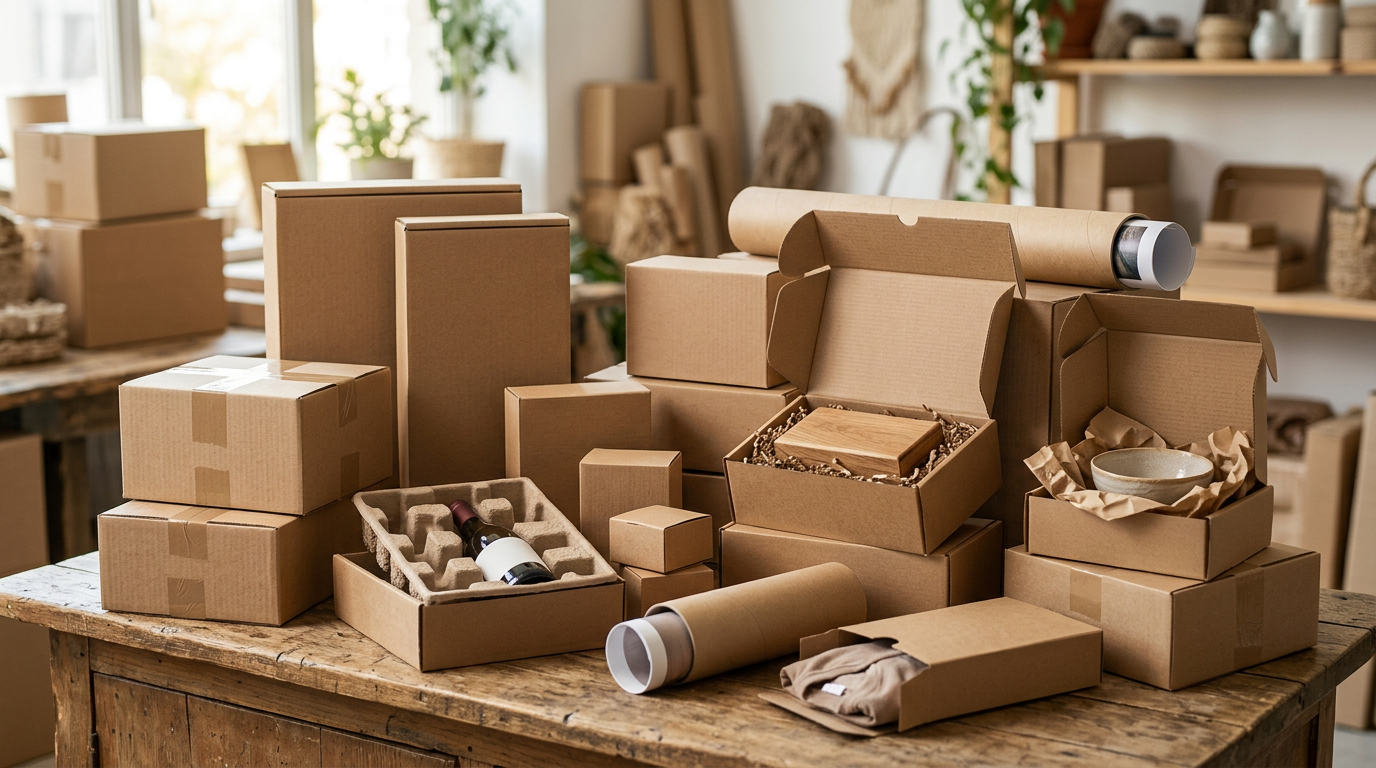
Cardboard: Versatile and Sustainable Material in Modern Packaging
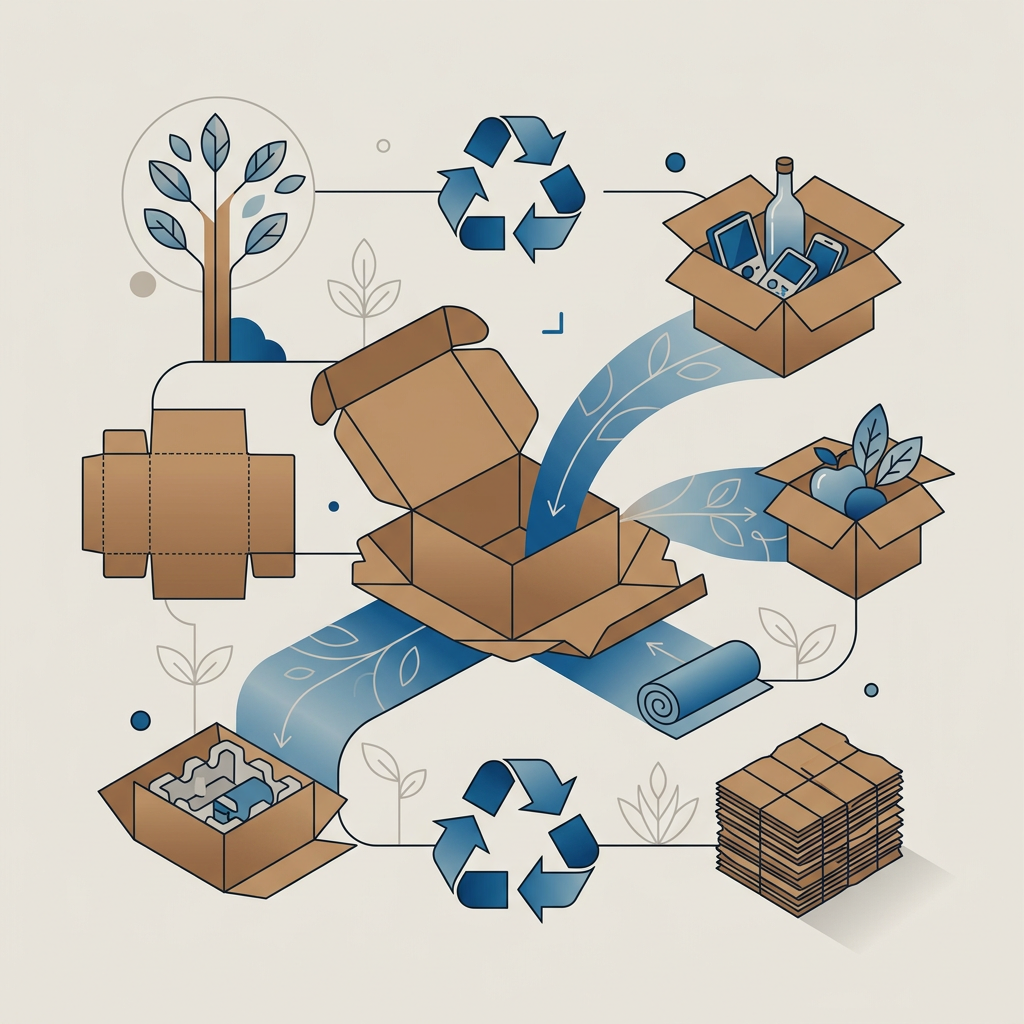
The Essentials
- Cardboard is a fundamental packaging material due to its versatility, cost, and sustainability.
- There are various types of cardboard (solid, corrugated, Kraft, recycled) adapted to different needs.
- The correct choice depends on factors such as product weight, fragility, and presentation requirements.
- Sustainability and customization possibilities are key aspects of current cardboard use.
- From primary packaging to transport packaging, its applications are very varied.
Types of Cardboard: An Essential Classification
Solid Board or Compact Board
- Characteristics: High rigidity and compression resistance. Smooth surface ideal for high-quality printing.
- Common Uses: Cereal boxes, frozen food packaging, cosmetic cases, pharmaceutical products, point-of-sale displays, and small-volume product packaging requiring good presentation.
- Advantages: Excellent printing properties, allows precise die-cutting and folding, takes up little storage space before assembly.
Corrugated Cardboard
The Flute: Key to Resistance
The "flutes" or cannelures of corrugated cardboard are the key to its resistance. The taller and denser the flute, the greater the cushioning capacity and compression resistance, essential for protecting fragile contents. They are classified with letters such as A, B, C, E, F and their combinations.
Types of Corrugation:
- Single Face Corrugated: One flute glued to one liner. Less common as complete packaging, but useful for wrapping and protecting individual products.
- Single Wall Corrugated: One flute between two liners. This is the most common for general packaging, ideal for shipping boxes for light to medium products.
- Double Wall Corrugated: Two flutes (usually of different sizes) between three liners. Offers greater strength and protection for heavy or fragile products, such as appliances, and often replaces cardboard packaging when greater robustness is required.
- Triple Wall Corrugated: Three flutes between four liners. Used for heavy or large industrial packaging, even as a substitute for wood in some applications.
Kraft Cardboard
- Characteristics: High tear and burst resistance. Natural and rustic appearance. Often used for corrugated cardboard liners.
- Common Uses: Packaging for ecological products, postal shipments, boxes requiring high strength in transport, shopping bags, and as material for Kraft paper packaging.
- Advantages: Biodegradable, often made from virgin or recycled fibers, which gives it a high perceived sustainability.
Recycled Cardboard
- Characteristics: Can vary in strength and appearance depending on the percentage and quality of recycled fibers.
- Common Uses: Wide range of applications, from shipping boxes to primary packaging, as long as it meets the technical and regulatory requirements of the product.
- Advantages: Lower environmental impact, contributes to the circular economy and reduces demand for virgin fibers.
Cardboard Manufacturing Process
Criteria for Choosing the Right Cardboard
- Product WeightDetermines the necessary strength and thickness (single, double, triple flute).
- Content FragilityDictates the need for cushioning (tall flutes) or internal reinforcements.
- Transport ConditionsFactors such as humidity, stacking, and handling influence the choice.
- Brand ImagePrint quality and exterior finish are crucial for perception.
- SustainabilityChoice of recycled or certified materials (FSC/PEFC).
Common Mistakes in Cardboard Selection:
- Underestimating Weight: Using cardboard that is too thin for heavy products, resulting in collapses and damage during transport.
- Ignoring Humidity: Failing to consider exposure to humidity can weaken the cardboard structure, especially in flutes and adhesives.
- Over-Packaging: Using excessively strong cardboard for products that do not require it, leading to unnecessary costs.
- Poor Design Attention: Not taking advantage of the cardboard surface to communicate brand or product information.
- Forgetting Sustainability: Not considering recycled or certified options, missing an opportunity to improve corporate image.
Finishes and Customization Options for Cardboard
Printing:
- Flexography: Ideal for large volumes and simpler designs. Economical and fast.
- Offset: Offers high print quality, superior in detail and color. Used for packaging that requires a premium image, such as cosmetic or electronics cases.
- Digital: Perfect for short runs or variable personalization, without the need for tools, as is the case with some custom wooden boxes, and which can be applied to certain cardboard designs.
Other Finishes:
- Varnishes and Laminates: Provide gloss, matte, or extra protection against humidity and wear. Laminates can be plastic or cellulose, offering different textures.
- Die-cutting: Allows the creation of complex shapes, windows, handles, or tabs for closure.
- Embossing/Debossing: Creates textures on the surface, adding a tactile and visual touch of sophistication.
- Hot Stamping: Application of metallic or colored foils using heat and pressure, ideal for logos or decorative elements that seek to stand out. This decorative process is also frequently applied in the premium gift sector.
Play with Texture
While full-color printing is impactful, textures and finishes such as embossing or hot stamping can elevate the perceived quality of the cardboard, making the packaging feel more premium and differentiated to the touch and sight.
Sustainability and Cardboard
- Renewable Sources: Comes from sustainably managed forests, often certified by entities such as FSC or PEFC.
- Recyclability: It is one of the most recycled materials globally. The infrastructure for its collection and processing is widely accessible.
- Biodegradability and Compostability: In its natural state, cardboard is biodegradable. Compostable options are gaining ground, although they require specific conditions for decomposition.
- Carbon Footprint Reduction: The use of recycled cardboard significantly reduces the energy and water needed in its production compared to virgin fibers.
Sustainability Challenges
While highly sustainable, challenges such as the presence of non-biodegradable inks, plastic laminates, or the use of complex adhesives can hinder its recycling. It is important to choose mono-material or easily separable options when the goal is a complete circular economy.
Cardboard Applications in Various Sectors
Food:
- Primary Packaging: Boxes for sweets, cookies, cereals, dairy or juice packaging (laminated cardboard).
- Secondary Packaging: Grouping of products, trays for fruits and vegetables.
- Food Service: Pizza boxes, take-out containers.
E-commerce and Logistics:
- Shipping Boxes: Robust solutions for the safe transport of products. This is one of the most important uses of cardboard, where protection is paramount, and often requires the use of quality adhesive tape.
- Internal Protection: Dividers, custom cushioning, and void fill to prevent movement and breakage.
- Cardboard Envelopes: For documents or flat products requiring rigidity.
Textile and Fashion:
- Clothing and Footwear Boxes: Offering protection and attractive presentation.
- Cardboard Hangers: Sustainable alternative to plastic hangers.
Cosmetics and Pharmacy:
- Premium Cases: For perfumes, creams, or medicines, with high-quality finishes that reinforce brand image. In this sector, the choice of appropriate pharmaceutical packaging is also important.
- Point-of-Sale Displays: Die-cut promotional elements with high-resolution printing.
Gifts and Special Events:
- Gift Boxes: From simple designs to more elaborate options with special finishes, they are an alternative to wooden boxes for certain products.
- Event Packaging: Custom boxes for weddings, communions, or corporate events, serving not only as protection but also as part of the experience.