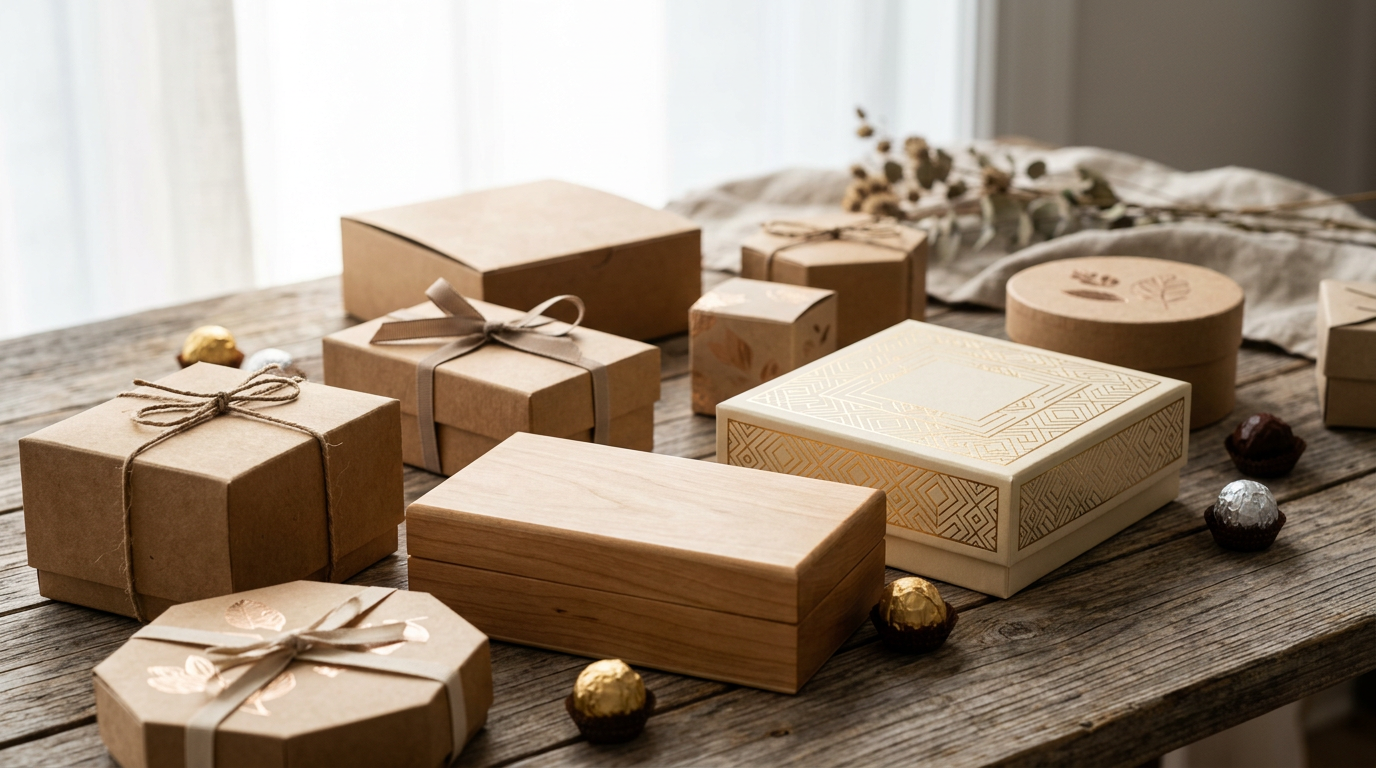
The Chocolate Box: A Journey Through the Art of Premium Sweet Packaging
The essential
- Chocolate boxes are crucial for the protection and presentation of premium sweets.
- The choice of materials like cardboard, wood, and tin defines durability and aesthetics.
- Personalization through printing, engraving, or stamping is key for branding and experience.
- Considerations such as sustainability and adaptability are fundamental in modern design.
Materials: The Foundation of a Luxury Presentation
Cardboard and Paperboard: Versatility and Options
Wood: Timeless Elegance and Durability
Choose according to value
For high-end chocolates or corporate gifts, wood communicates exclusivity. For larger productions or an ecological approach, kraft cardboard or FSC-certified options are excellent choices.
Other Materials
- ProtectionThe material must safeguard the chocolates from impacts, temperature, and humidity.
- AestheticsConvey the quality and value of the product at first glance.
- FunctionalityEase of opening, closing, and display.
- SustainabilityPrefer recyclable, biodegradable, or certified options.
Finishes and Personalization: The Mark of Exclusivity
Printing and Marking Techniques
custom wooden boxesSurface Finishes
The importance of the unboxing experience
The design of the box, its finishes, and the way it opens, significantly contribute to the "unboxing" experience. Good design invites consumers to keep the box even after consuming the chocolates, extending the brand's presence.
Types and Formats: Adapting to Every Occasion
wooden boxes50%Perceived value by design
FSCCertified wood
∞Personalization options
Key Considerations for Selection
- Purpose and Occasion. Is it for a luxury gift, retail sale, a special event like weddings or communions, or for daily consumption? This will influence the level of sophistication and the budget.
- Type of Chocolate and Size. The shape, fragility, and size of the chocolates will determine the need for internal supports, the space between them, and the strength of the box. Filled or more delicate chocolates will require greater protection.
- Temperature and Humidity. For temperature-sensitive chocolates, certain materials or coatings can offer an additional barrier, although the box itself is not usually a primary thermal solution.
- Environmental Impact. Sustainability is a growing factor. Opting for recycled, recyclable, biodegradable, or certified (FSC) materials is a responsible choice. Designing for box reuse also adds ecological value.
- Budget. Costs can vary drastically depending on the material, finishes, design complexity, and production volume. It is vital to balance desired quality with economic viability.
- Brand Image. The box is an extension of the brand. It must reflect its values, aesthetics, and value proposition. Coherent design strengthens identity.
- Logistics and Transport. The weight, volume, and strength of the box are important for storage, shipping, and protection during distribution.
"Packaging is the silent salesman; in the case of chocolates, it is also the first visual bite."
Common Mistakes to Avoid
decorative boxBeware of closures
A weak or unreliable closure can lead to the box opening accidentally, exposing or damaging the chocolates. Magnetic closures or those with a precise fit are preferable for premium boxes.