Color-Printed Wooden Boxes for Brands: Visual Impact in Premium Packaging
The Essentials
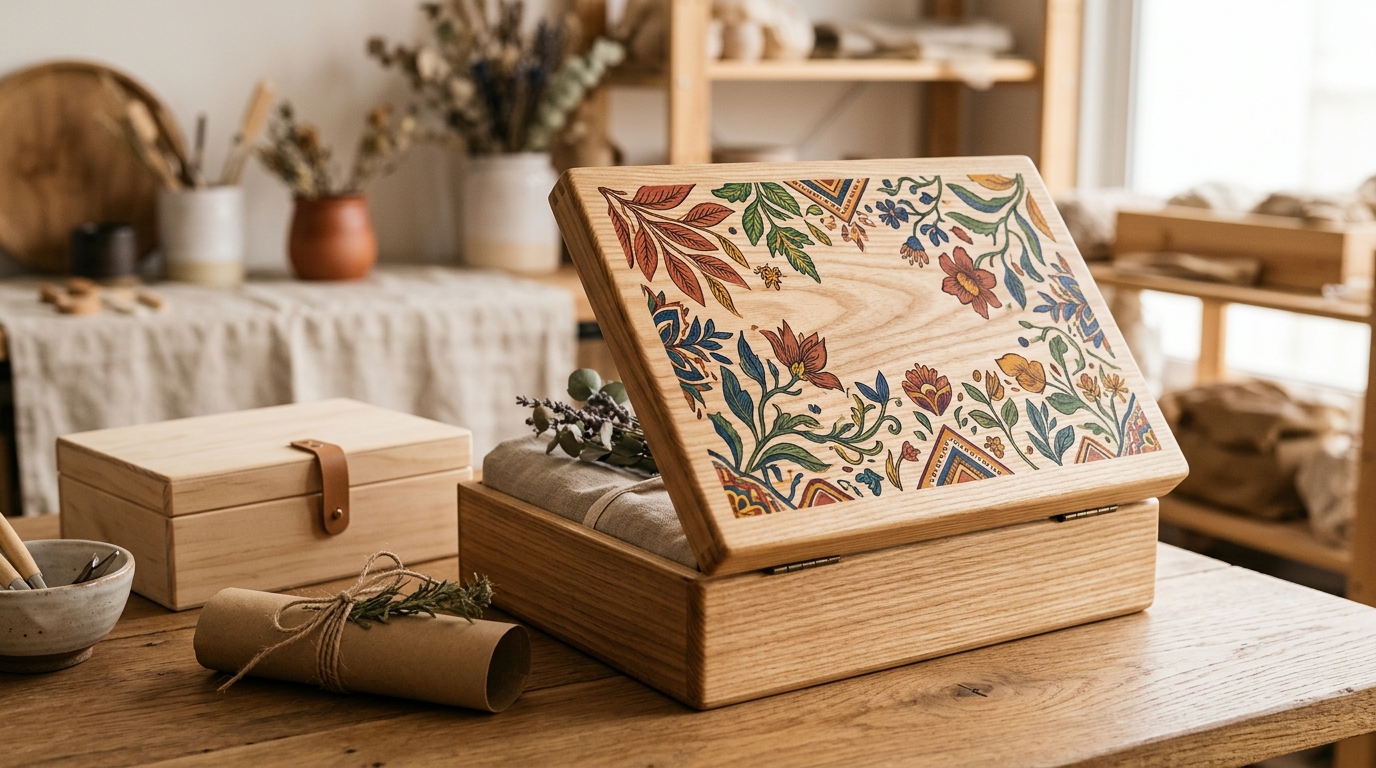
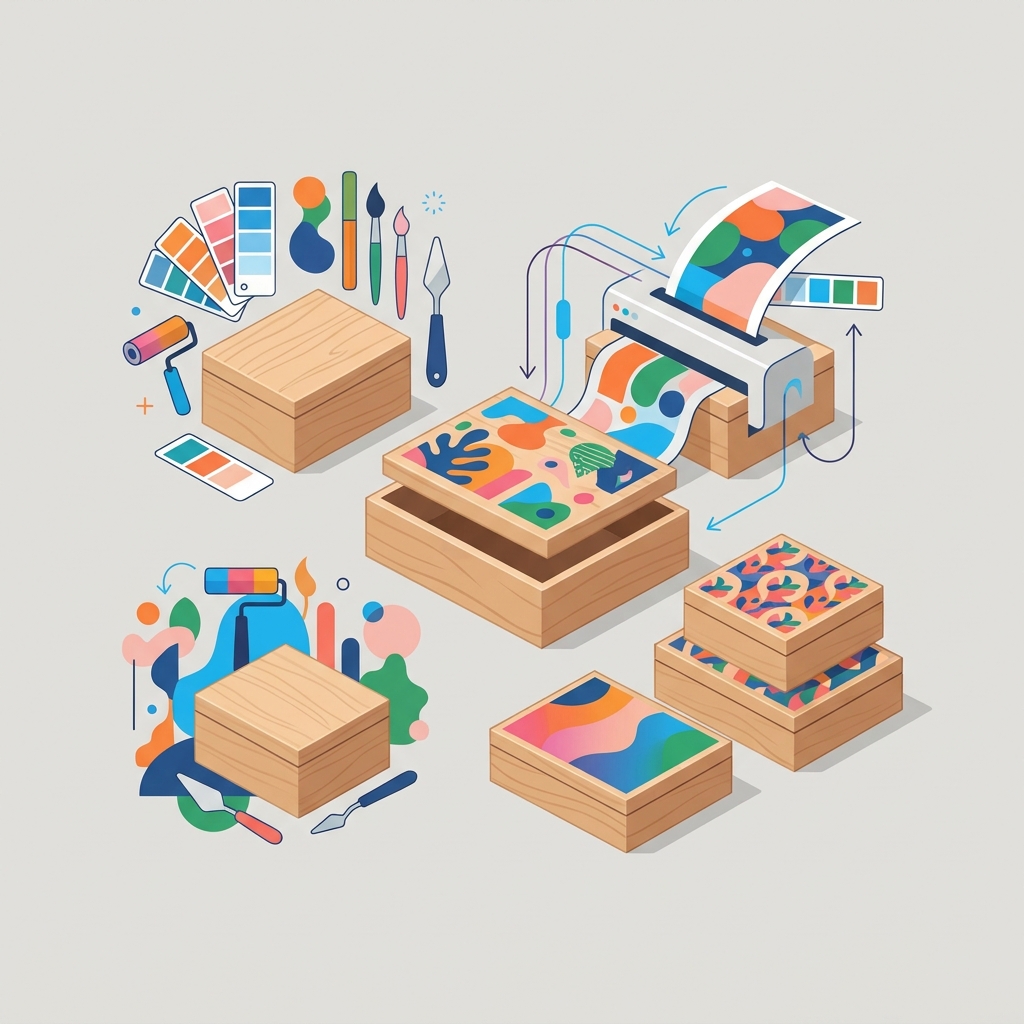
- UV digital printing makes it possible to apply any color from the CMYK spectrum plus white ink onto wooden surfaces with photographic resolution.
- The type of substrate (plywood, solid wood, or MDF) and the natural tone of its grain directly influence the final perception of corporate colors.
- Adapting graphic design involves adjusting color profiles, planning for white underbase layers, and leveraging organic texture as part of the design itself.
- The use of eco-friendly inks and certified wood ensures packaging complies with today's strict sustainability standards and expectations.
Evolution of Printing Systems on Wood
| Printing Technique | Mechanism and Characteristics | Recommended Optimal Application |
|---|---|---|
| Direct Digital Printing (UV) | Uses printheads that jet liquid ink, which is cured (dried) almost instantly with ultraviolet light. Allows four-color process (CMYK) plus white. | Complex multicolor designs, photographs, gradients, and short-to-medium runs with high variability. |
| Industrial Screen Printing | Transfers ink by blocking areas with a tensioned mesh. Delivers highly opaque, solid, and extremely durable layers of color. | Logos using one, two, or three flat colors (Pantone) in high-volume production runs. |
| Pad Printing | Uses a flexible silicone pad that picks up ink from an etched plate and transfers it to the substrate. Adapts well to uneven surfaces. | Marking legal copy, small logos, or printing onto curved box components. |
| Hot Stamping (Foil Stamping) | Applies a pigmented or metallic foil using heat and pressure with a magnesium or brass die. | Luxury finishes, such as gold, silver, or copper lettering, for limited or premium editions. |
The Crucial Role of White Ink
In modern digital printing on wood, the use of white ink is a game-changer. Applying a base layer (white underbase) before printing CMYK colors prevents the natural tone of the wood from altering the design's colors. This technique ensures that a brand's vibrant red or cyan blue remains pure and true to corporate standards, acting like a localized primer.
Base Materials: Choosing the Right Canvas
-
Poplar or Pine Plywood Offers a light, uniform, and highly stable surface. It is the most versatile substrate for reproducing true colors and minute graphic details without distortion.
-
Solid Pine Wood Features a pronounced grain and visible growth rings. It delivers a rustic and authentic texture, although it requires integrating these natural visual features into the graphic design.
-
MDF (Medium-Density Fiberboard) Extremely smooth and grain-free. It enables unmatched print sharpness, making it the preferred material when a design requires full, solid color coverage across the packaging.
-
Dark Hardwoods (Walnut, Oak) Due to their high light absorption, they require substantial white underbases or high-opacity screen printing techniques for colors to pop effectively.
How to Adapt Brand Visual Identity to Wooden Packaging
- Color space conversion and calibration. All files must be prepared and exported in a CMYK profile (typically Fogra39 or ISO Coated). It is essential to recognize that highly saturated colors—especially neons or certain pure RGB blues and oranges—will experience a slight loss in brilliance when printed with physical inks.
- Managing the white channel (White Spot). To ensure specific elements (like a logo) stand out crisply against the wood, you must set up an additional vector layer designated as a spot color. This instructs the printer's RIP software where to lay down the white base prior to printing the color.
- Leveraging negative space. The most sophisticated designs are often those that breathe. Rather than masking the entire box behind heavy blocks of color, consider leaving exposed wood areas. The contrast between digital design and the natural wood grain gives the packaging its unique character.
- Resolution settings and bleed margins. Raster images or photographs within the artwork must have a minimum resolution of 300 dpi at actual print size. Furthermore, if the design includes background color running all the way to the edges of the lid or sides, including a bleed margin of approximately 3 to 5 millimeters is mandatory.
Producing Physical Samples or Mockups
Because wood is a natural and variable material, ink interaction can vary slightly between batches. Before greenlighting a full production run, it is always recommended to produce a physical sample to review text legibility, real-world contrast, and ink adhesion on the surface in person.