The Essentials
- Wooden boxes provide superior protection for heavy and fragile glass jars of honey and jam.
- FSC-certified plywood and solid wood are the most sought-after materials due to their strength and sustainability.
- Customization through laser engraving or screen printing reinforces the artisanal and premium character of the product.
- It is vital to include internal securing systems, such as wooden dividers or wood shavings, to prevent breakage during transit.
Why Choose Wooden Boxes for Honey and Jams
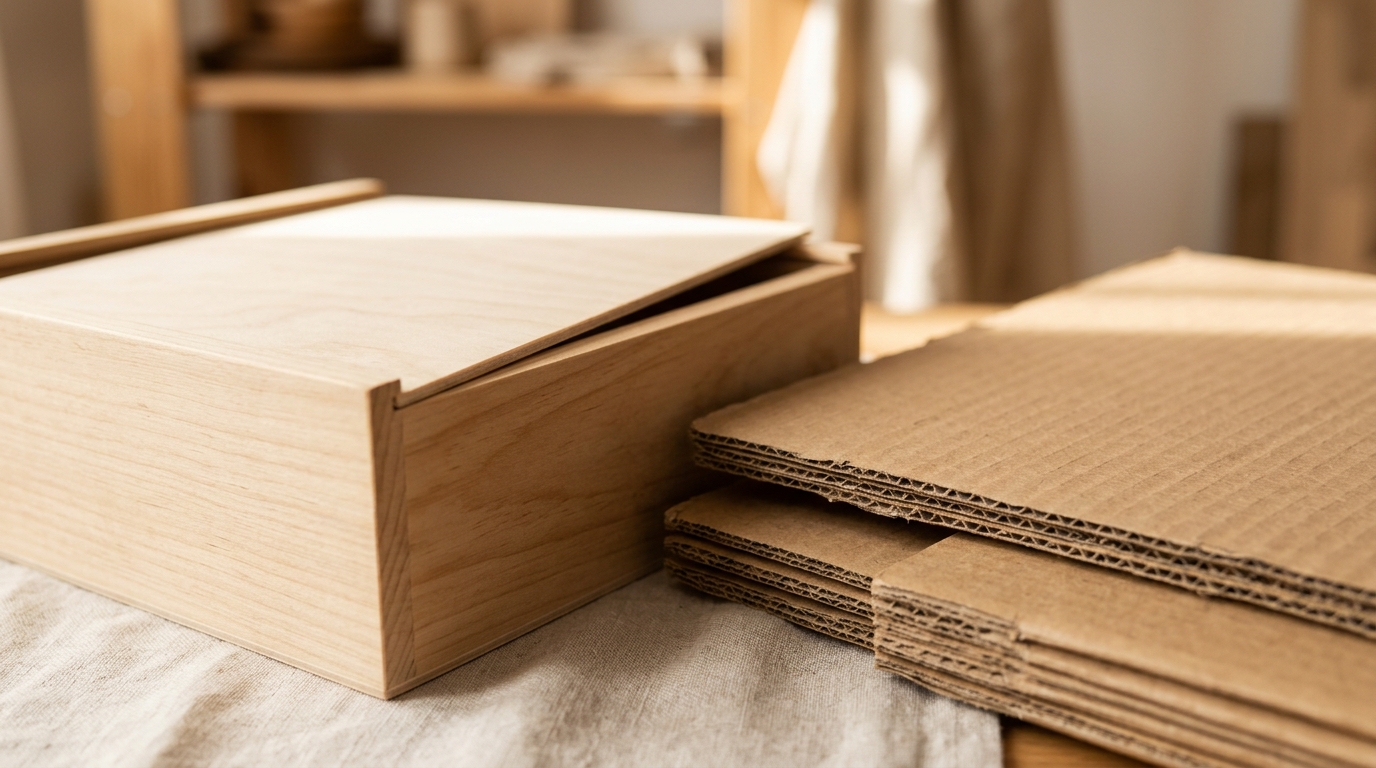
In the competitive gourmet food sector, the primary packaging (the jar) and the secondary packaging (the box) must work in perfect harmony. Due to its high density, honey, along with artisanal jams rich in fruit textures, is typically packaged in thick glass jars that require secondary packaging capable of withstanding impacts. Analyzing the Advantages of wood over cardboard in packaging reveals that, when dealing with heavy products, wood fibers offer unmatched rigidity, preventing the base from sagging when the package is lifted. Beyond mechanical functionality, the psychological dimension of consumption plays a crucial role. A wooden box immediately communicates concepts such as "origin," "nature," "care," and "time." These are precisely the values that consumers look for when purchasing an artisanal product.-
Structural Protection The rigidity of wood absorbs impacts and prevents jars from colliding with one another or being crushed under external pressure.
-
Increased Perceived Value Transforms a simple food product into a premium gift suitable for special occasions and corporate gifts.
-
Guaranteed Reuse The end user rarely discards a wooden box, giving the packaging a second life as a storage item.
-
Genuine Sustainability By opting for wood from managed forests, the use of plastics in secondary and tertiary packaging is eliminated.
Ideal Materials for Packaging Sweet Preserves
The Weight of Honey
Honey is a dense product (approximately 1.4 kg per liter). A seemingly small container can be very heavy. It is crucial that the joints of wooden boxes are properly glued, stapled, or assembled using dovetail or box joints to support the load.
The Shipping Challenge: How to Protect Glass
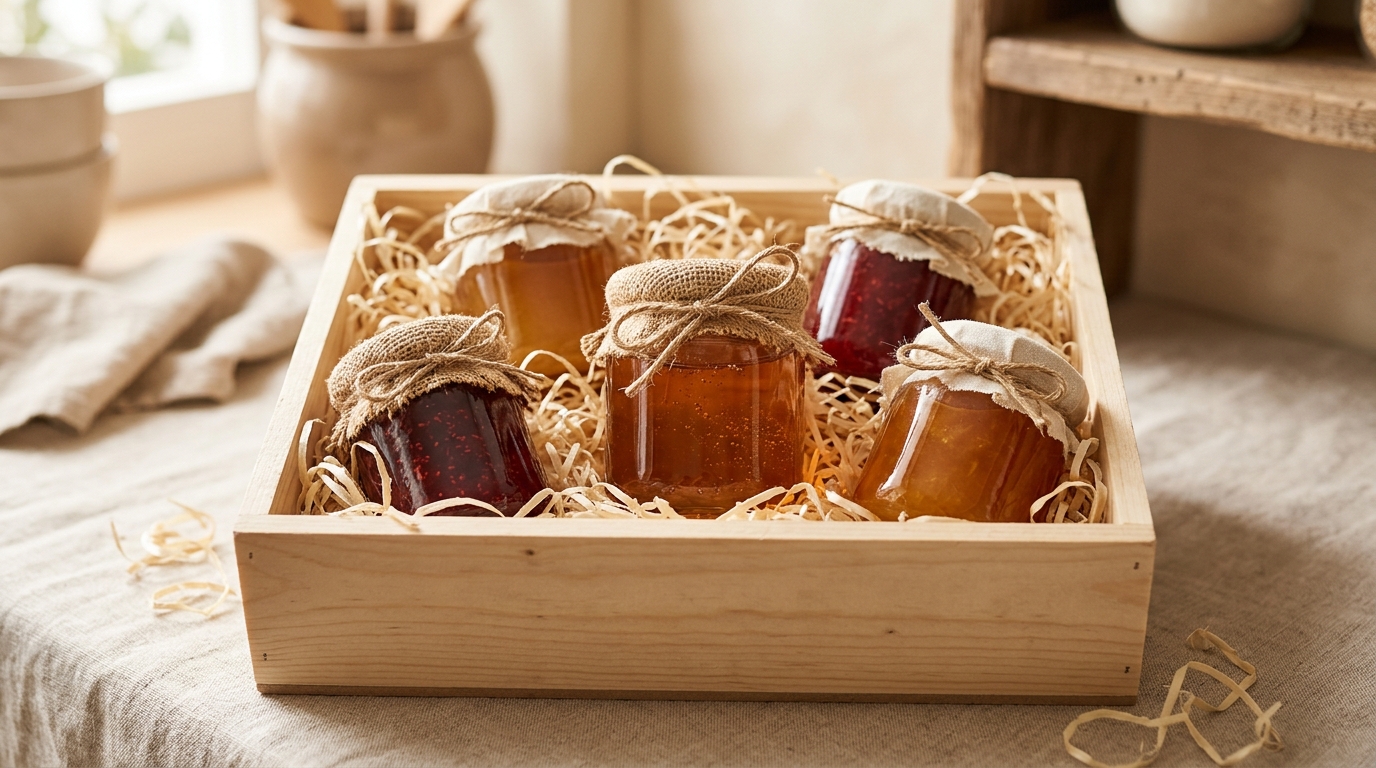
One of the main causes of shrinkage in gourmet food e-commerce is container breakage during transit. Glass is rigid yet brittle, and the energy from a side impact is transmitted directly to the glass if there are no cushioning elements. Therefore, achieving Safe packaging for shipping gourmet honey: key guide is essential. Within wooden boxes for honey and jams, several immobilization strategies exist: 1. Wooden dividers: Internal grids (egg-crate style) made of the same material as the box. They create individual cells for each jar, preventing them from colliding with each other (the notorious "clink-clash" that causes so many breakages). 2. Die-cut inserts: Inner bases with circular cutouts matching the exact diameter of the jar's base. They keep the product stationary in the center of the box. 3. Cushioning fill material: Wood shavings are the most aesthetically cohesive option. They not only fill empty spaces to prevent movement, but they also act as a natural cushion against shocks and vibrations while maintaining an impeccable rustic presentation.Customization Options for Artisanal Brands
The box is the canvas where the brand tells its story even before the customer tastes the product. By 2026, printing techniques on wood have achieved extremely high definition, allowing complex logos, origin details, and organic certification seals to be applied directly to the surface of the box.| Technique | Visual Description | Best Use in Gourmet Products |
|---|---|---|
| Laser engraving | Lightly burns the surface, creating a debossed relief in toasted tones. | Raw honeys and organic jams. Conveys a rustic and enduring aesthetic. |
| Screen printing | Application of spot inks through mesh screens. Enables exact corporate colors (Pantone). | Modern product lines, signature jams featuring innovative flavor pairings. |
| Hot Stamping (Branding) | Thermal stamping with a metal die, often incorporating metallic foils (gold/silver). | Limited editions, premium corporate gifts, and high-value honeys (e.g., Manuka). |
| Pad printing | Ink transfer via a silicone pad. | Ideal for printing small logos on irregular surfaces or narrow lids. |
The Secret of Internal Measurements
When designing or ordering boxes, never use the diameter of the glass jar's base as your sole reference. The widest point of a preserve jar is often the metal lid or the safety seal. Always measure the bulkiest section and add between 3 and 5 millimeters of clearance on each side to facilitate product removal.
How to Select the Right Format: Step by Step
Choosing the right wooden boxes for honey and jams requires analyzing sales goals, the buyer profile, and the physical characteristics of the containers.- Define the product bundling. Will a single half-kilo jar be sold as a premium item, or a tasting pack of three small 100-gram jars? The grouping defines the proportions of the box.
- Choose the opening style. Hinged boxes are excellent for face-out shelf display. Sliding-lid boxes are more cost-effective and robust for bulk shipping.
- Design the internal securing system. Decide whether you will use wood shavings (more economical and rustic) or custom wooden dividers (neater and more professional).
- Select the surface finish. Raw wood for a 100% natural and eco-friendly look, or varnished/stained to repel dirt and add a sophisticated touch.
- Plan the tertiary packaging. Keep in mind that the wooden box must travel inside a corrugated cardboard box for courier shipping. Ensure the exterior dimensions of the wooden box fit standard shipping boxes to optimize logistics costs.
Packaging does not simply wrap the product; it is the first ingredient of the gastronomic experience. In artisanal products, the quality of the exterior must be an exact reflection of the purity within.
Most Popular Presentation Formats
Consumer behavior has continuously shaped presentation formats. In today's market, three main configurations stand out, addressing different commercial needs: The individual box is reserved for products with the highest added value: single-origin high-mountain honeys, jams made with exotic ingredients, or seasonal editions. It is often paired with small accessories, such as a wooden honey dipper or a non-drip spout, creating a complete gift set. The three-pack or tasting set format is the undisputed leader in impulse buying and tourist gift shops. This rectangular box accommodates three smaller jars (usually between 150 g and 250 g) separated by wooden slats. It allows producers to showcase the breadth of their catalog (for instance: orange blossom, rosemary, and eucalyptus honey) in a single purchase. Finally, large hampers or chests are widely used for corporate campaigns and holiday gift baskets. These are spacious wooden crates that combine large honey jars with bee pollen, royal jelly, propolis, or selections of jams and cheeses.Pay Attention to Wood Drying
Ensure that the wood used in the boxes has a moisture content below 12–14%. Poorly dried wood can warp with temperature fluctuations, causing sliding lids to stick or deforming the overall structure of the packaging.
Sustainability and Packaging Trends in 2026
Contemporary consumers demand transparency and environmental responsibility. Wooden boxes meet this demand by being a renewable, biodegradable resource with a significantly low carbon footprint when sourced from locally managed, controlled logging. In 2026, European packaging and packaging waste regulations strongly encourage the use of mono-materials or components that are easily separated. A wooden box assembled without plastics, using natural wood shavings as filler, is 100% recyclable within the biomass or wood recycling stream, or directly compostable over time, solidifying the food brand's ecological reputation.Frequently Asked Questions
What wood thickness is needed to support 1 kg honey jars?
For one-kilogram jars, a minimum thickness of 8 mm to 10 mm in woods like pine or plywood is recommended. It is crucial that the base of the box is properly secured (grooved and glued/stapled) to prevent the weight from pushing the bottom out when lifted.
Can wood alter the flavor or smell of jams?
No, as long as the jars are hermetically sealed, which is standard for food safety. However, the use of overly resinous woods or varnishes with strong chemical odors inside the box is discouraged to avoid interfering with the consumer's olfactory experience upon opening.
Is a sliding lid better than a hinged lid?
It depends on the sales channel. A hinged lid is excellent for retail store displays because it allows the box to remain open showcasing the product. A sliding lid is typically more secure and cost-effective for e-commerce shipments, minimizing the risk of accidental opening during transit.
How do you prevent glass jars from clashing and breaking inside the box?
The most effective method is using interlocking wooden dividers that create individual compartments. If dividers are not available, thoroughly filling the voids with natural wood shavings or crushed kraft paper will effectively immobilize the glass jars.