How to Successfully Display Products at Medieval Markets
Sincla
The Magic of Immersion: How to Successfully Display Products at Medieval Markets Knowing how to display products at medieval markets is a decisive factor not only in attracting the public's attention, but also in meeting the strict requirements of event organizers
The Magic of Immersion: How to Successfully Display Products at Medieval Markets
Knowing how to present products at medieval markets is a determining factor not only for capturing the public's attention, but also for meeting the strict requirements set by organizers of these events. In 2026, historical fairs have evolved into fully immersive experiences where even the smallest anachronistic detail can shatter the magic of the atmosphere. Therefore, packaging, display units, and the layout of the artisan stall must be planned with absolute aesthetic rigor, prioritizing noble materials and rustic finishes.
Key Takeaways
The use of natural materials such as certified wood, linen, and kraft cardboard is mandatory at most historical fairs.
Wooden boxes serve a dual purpose: they act as secure transport packaging and modular display units at the stall.
Avoiding visible plastics, modern typography, and loud colors is essential to pass the vetting process of themed market organizers.
Visual presentation at a medieval market is not simply about dressing in costume or hanging a burlap tarp. It involves a visual merchandising strategy tailored to the era, where volume, texture, and presentation materials communicate the handcrafted value of the product. An excellent quality item can go completely unnoticed if displayed on a flat table, whereas a tiered arrangement using wooden crates and baskets can multiply sales exponentially.
Organizer Regulations
The vast majority of town halls and event promoters managing medieval markets include exclusion clauses if visible modern elements are detected, such as plastic zip ties, electrical cords, acrylic containers, or perspex display stands. Wood and wrought iron are the safest alternatives.
The Role of Wood in Market Stall Design
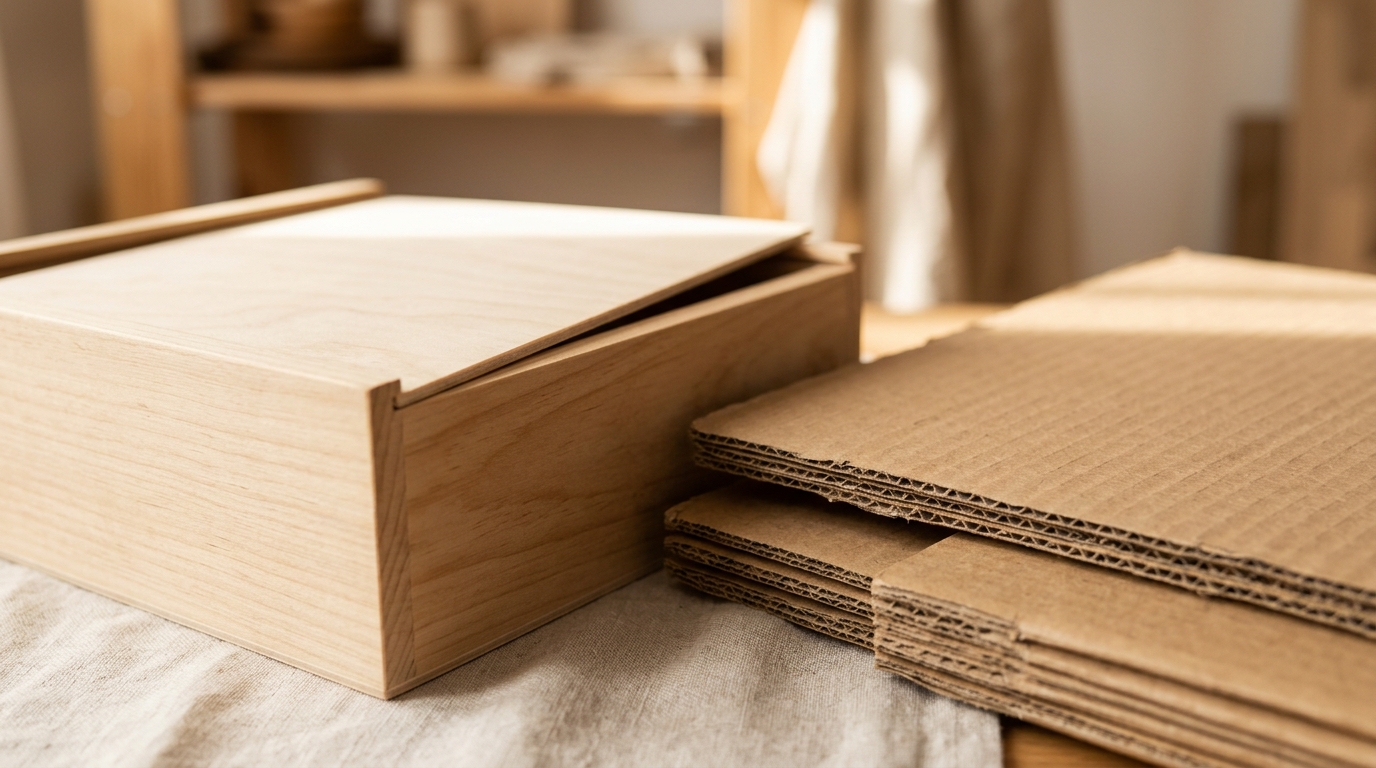
When structuring a street sales stall, artisans and vendors need storage solutions that are durable, stackable, and true to the theme. This is where wooden boxes become the most versatile resource. There are numerous advantages of wood over cardboard in packaging, but within a medieval context, the primary one is its undeniable historical authenticity.
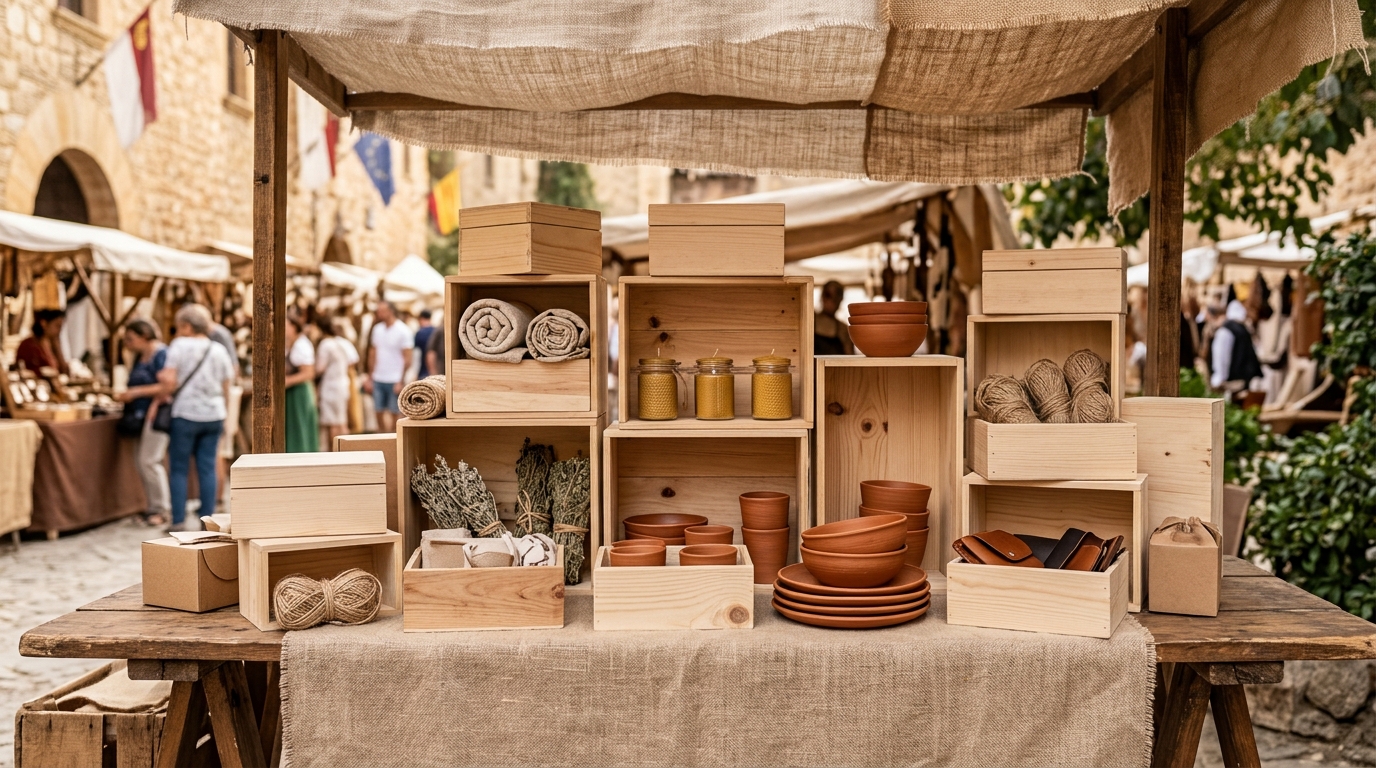
Modular structures based on wooden boxes make it possible to create varied heights and depths. This technique, known as pyramid or stepped display, prevents visual monotony and encourages customers to visually scan the entire product range. Furthermore, the technical properties of wood protect goods during transit and buffer against the temperature fluctuations typical of outdoor sales.
Dual FunctionalityThey serve both to transport goods in the van and to display them to the public.
Scalable ModularityThey allow you to build shelving, counters, and display tiers without using modern screws.
Immersive AtmosphereTheir texture and natural scent enhance the shopping experience at a historical-themed fair.
High StrengthThey support considerable weight, making them ideal for cheeses, cured meats, pottery, or glass bottles.
Selecting the Right Materials
Not all wood projects the same image. In today's market, choosing the right material based on intended use and budget is vital, while always ensuring it carries sustainability credentials, such as the FSC (Forest Stewardship Council) certification guaranteeing responsible forest management.
Pine or poplar plywood is highly prized for its lightweight nature and natural grain, which fits seamlessly into a rustic setting. Composed of layered natural wood veneers, it offers great structural stability without the excessive weight of solid timber, making stall assembly much easier. On the other hand, materials such as MDF (medium-density fiberboard) are very economical and easy to machine, but their smooth, industrial finish can look out of place at a medieval market. If MDF is used for internal framing, it is advisable to face it or paint it using distressing techniques, or simply reserve it for internal packaging that remains hidden from customer view.
FSCCertified Wood
100%Recyclable Material
3-5 kgTypical load per box
Strategies and Steps for Setting Up Your Medieval Stall
The way items are arranged can mean the difference between a visitor walking past and one stopping to engage. Mastering the techniques of product presentation at trade shows and events: key insights is essential for making the most of your allocated space, which at these types of markets is often limited (frequently 2x2 or 3x2 meters).
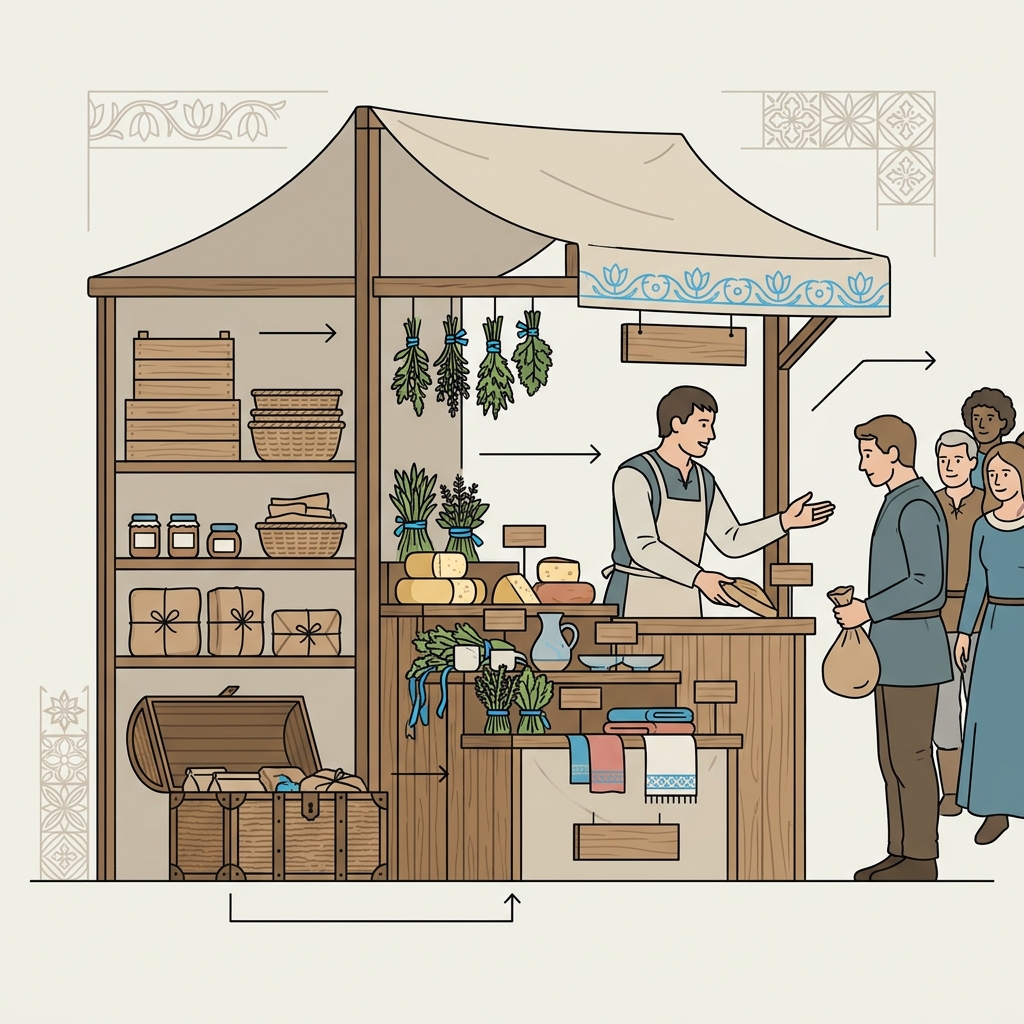
Step one. Create depth and height levels. Use wooden boxes of varying sizes turned toward the public or stacked like bleachers. Smaller impulse-buy items should sit at the front on lower tiers, while star products should be positioned at eye level.
Step two. Group by color scheme or function. Do not scatter your inventory. Grouping offerings creates visual "hotspots." For example, dedicating one rustic crate exclusively to lavender soaps and another to calendula salves simplifies the buyer's choice.
Step three. Conceal modern logistics. Use straw bales, linen or burlap fabrics, and wooden chests to hide restock boxes, card payment terminals, cables, and personal water bottles.
Step four. Consistent labeling. Eliminate glossy paper adhesive labels. Use kraft cardboard tags tied with jute twine, or small engraved wooden plaques to indicate product names and prices.
"At a themed market, the customer does not merely purchase an artisan product; they buy into the experience of having traveled back in time during their purchase."
Custom wooden boxes
Discover our wooden boxes for packaging, hospitality, events and more. In-house manufacturing and full customisation.
Customization Techniques That Respect Historical Accuracy
A crucial aspect when solving how to present products at medieval markets is brand presence. Artisans and brands need their logo to be visible, but a backlit acrylic sign or a glossy vinyl sticker will ruin the aesthetic. To maintain cohesion, branding on wooden packaging and displays should use techniques that emulate the craft methods of the past.
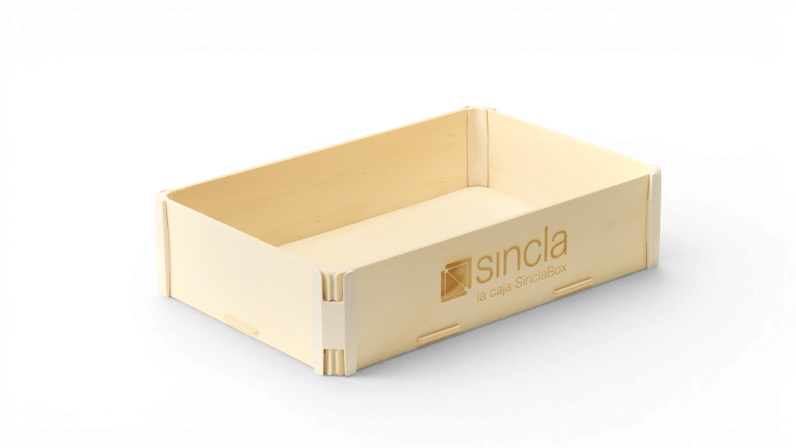
Laser engraving is undoubtedly the standout technique. By literally burning the surface of the wood, the visual finish resembles traditional branding with hot irons, characteristic of the Middle Ages. This finish is not only permanent, but it also creates a debossed relief that invites touch. Furthermore, since it uses no inks, it preserves the recyclability of the packaging intact.
Another popular option is screen printing, provided inks in natural tones such as browns, ochres, blacks, or burgundies are used. Avoiding fluorescent or metallic colors (such as shiny foil stamping) is critical. Pad printing is useful for very small containers (such as cosmetic jars or spice pots), applying the logo with precision across irregular surfaces.
The Power of Blind Debossing
Hot stamping or blind debossing (without metallic foil) is a technique that depresses the logo into the wood using heat and pressure. It creates an elegant, antique seal effect that aligns perfectly with the aesthetic of Renaissance and medieval fairs.
Adapting Packaging to Product Categories
The type of merchandise dictates packaging requirements, both for display and for hand-off to the end customer. The presentation cannot be the same for a wedge of aged cheese as it is for a forged silver pendant.
Food and Gourmet Products
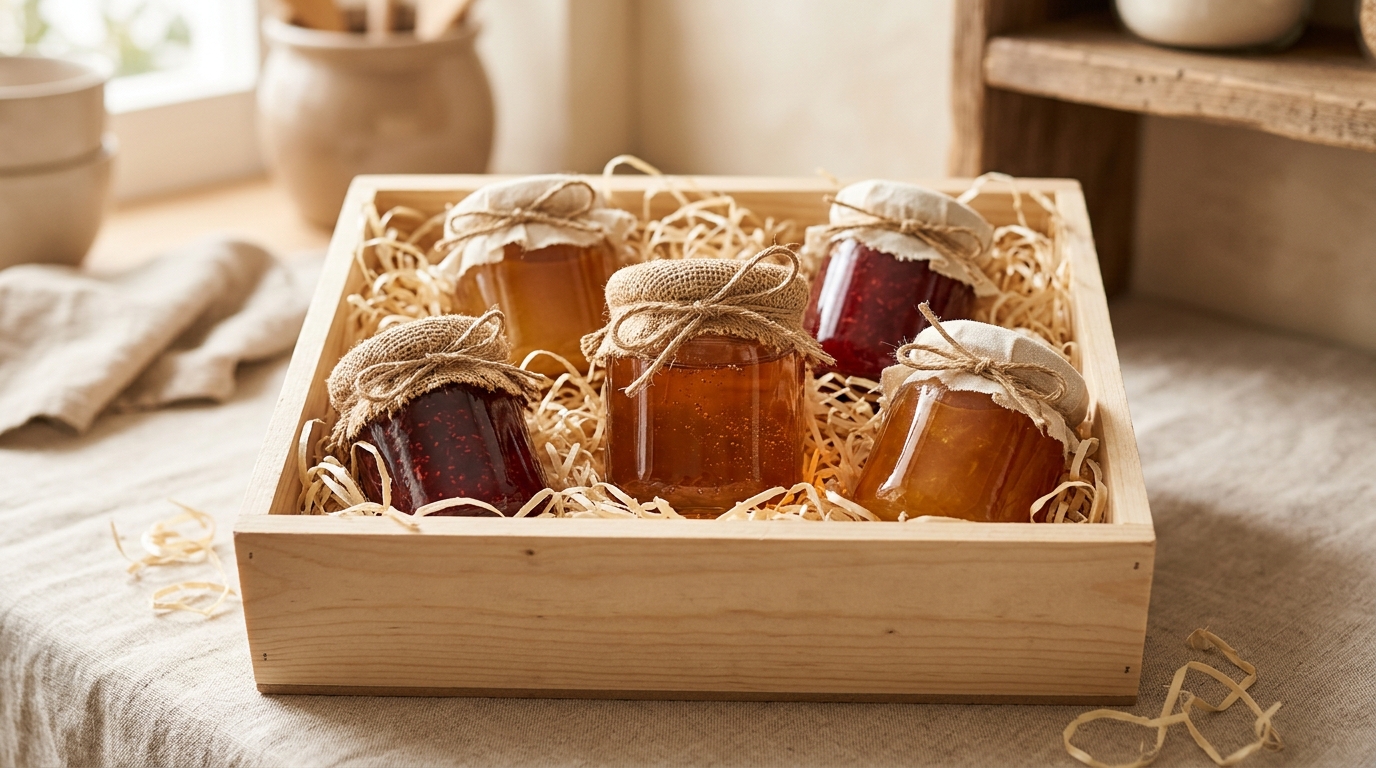
The sale of gourmet goods such as cheeses, cured meats, artisan breads, honey, preserves, and spirits is one of the main draws of these fairs. For food safety reasons, these items usually require primary packaging (glass, waxed paper, or vacuum seals). However, secondary packaging is what must deliver the period ambiance. Using wooden boxes for artisan honey and jams is a reliable way to justify a premium price point, offering the customer not just food, but a reusable, decorative gift box. Wooden trays with dividers are ideal for presenting preserve jars in an orderly fashion.
Crafts, Jewelry, and Natural Cosmetics
Handmade soaps, balms, leather goods, and Celtic- or medieval-inspired jewelry require display units that highlight fine details. In these instances, small open-top wooden boxes, lined inside with velvet or dried moss, act as natural showcases. For checkout, linen pouches, cotton drawstrings, or small engraved plywood boxes add immense perceived value to the purchase.
Product Category
Recommended Display
Takeaway Packaging (End Customer)
Food (Cheese / Cured Meats)
Large stackable wooden crates, cutting boards.
Greaseproof kraft paper, rustic twine.
Honey, preserves, and spirits
Tiered wooden shelving, slatted trays.
Wooden presentation boxes with dividers, paper bags.
Natural cosmetics and soaps
Shallow wooden tray boxes, wicker baskets.
Small plywood boxes, jute pouches.
Jewelry and accessories
Wood log slices, fabric-lined boxes.
Small engraved wooden chests, cotton bags.
Common Mistakes That Spoil Market Presentation
When researching how to present products at medieval markets, knowing what to avoid is just as critical as knowing what works. Commercial overzealousness often leads to visual anachronisms that alienate purists and event organizers alike.
One of the most frequent missteps is the overuse of visible shrink wrap or bubble wrap. While protecting items from dust and unpredictable weather is understandable, transparent plastic wrap completely shatters the historical illusion. If a product requires protection, opt for glass cloches instead, or store bulk inventory out of sight inside trunks or slide-lid wooden boxes, leaving only sample units on display.
Lighting Considerations
Lighting remains one of the greatest challenges. Avoid directly visible cool-white or blue LED strips. Use wrought iron lanterns, tin fixtures, or wooden sconces that conceal modern bulbs, always selecting very warm color temperatures (1800K - 2200K) to replicate the glow of open fire or candlelight.
Another common oversight is neglecting the rear of the stall. Many vendors focus all their efforts on the front counter, forgetting that in the narrow streets of artisan fairs, customers frequently see the sides or the interior as well. Using industrial metal shelving (typical perforated grey utility racks) or plastic fruit crates to store replenishment stock undermines the authenticity of the setup. Replacing those items with sturdy wooden crates ensures a unified 360-degree aesthetic.
Frequently Asked Questions
Which materials are strictly prohibited at medieval markets?
Regulations vary by organizer (town councils or cultural associations), but as a general rule, plastic displays, perspex/acrylic, polished aluminum, modern steel utility shelving, exposed cool-toned neon or LED fixtures, and bare folding camping furniture that is not draped with rustic fabrics are strictly banned.
Can I use my modern logo on the packaging?
Yes, brand presence is necessary for customer retention, but it should be adapted to the setting. Avoid glossy full-color printed logos. Instead, apply your brand through laser engraving or single-color dark screen printing onto wood or kraft cardboard. This integrates your corporate identity seamlessly without clashing with the medieval aesthetic.
Is using wooden packaging and display units expensive?
Using wood, particularly lightweight pine or plywood formats, is a cost-effective investment. Unlike standard corrugated cardboard boxes that degrade quickly with humidity and repeated fair use, wooden boxes are exceptionally durable and reusable across multiple seasons. Furthermore, they elevate perceived product value, which often allows for healthier retail margins.
How can I protect my products from the weather without using plastic?
To shield goods from dust or moisture, you can use wooden display cases with glass fronts, tightly woven cotton cloths, or boxes with fitted lids. For weatherproofing canopies and tarps, invisible water-repellent treatments can be applied directly to canvas or burlap fabrics, preserving the historical look while keeping inventory dry inside.