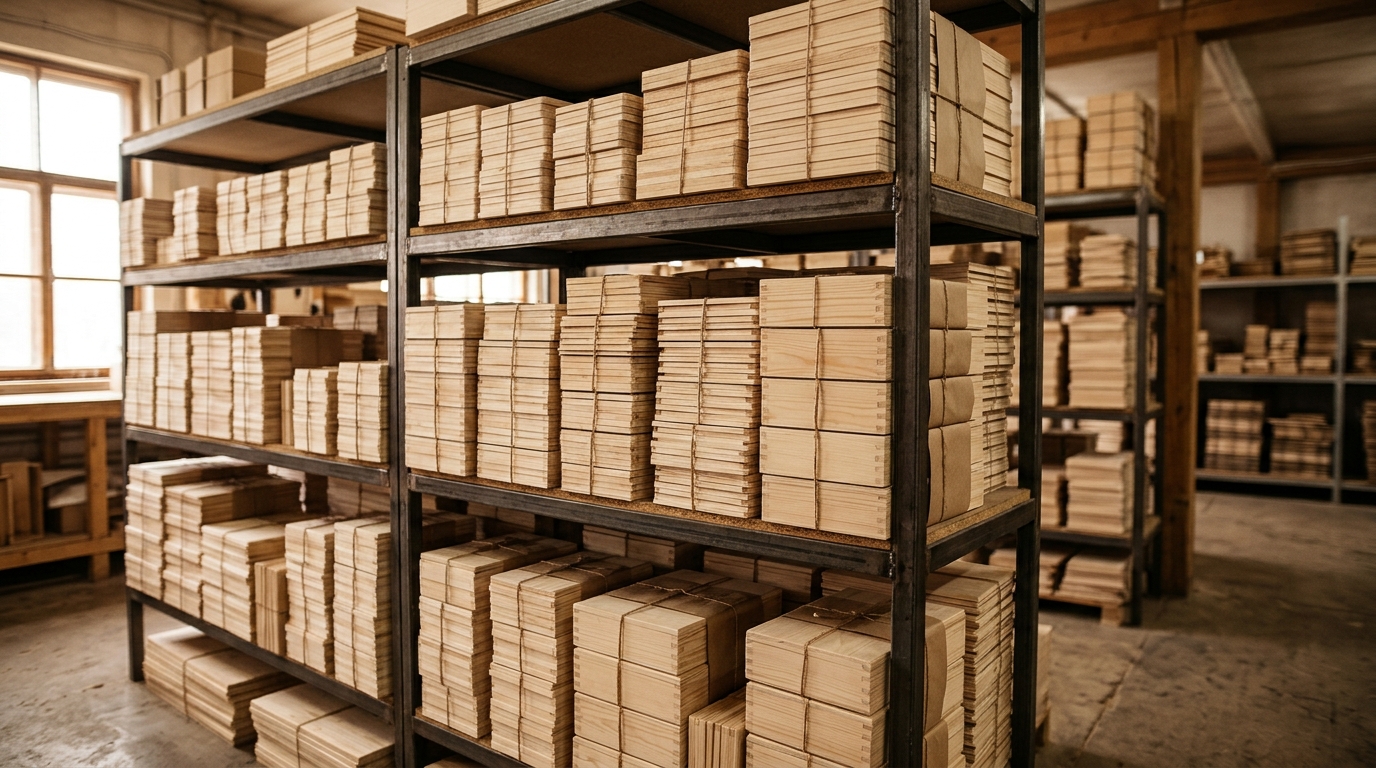
Flat-pack boxes to optimize warehouse space: efficiency and presentation for small businesses
Inventory management is one of the biggest challenges for any small business. Having packaging that is appealing to customers without eating up valuable square footage before use is essential. In this scenario, flat-pack boxes to optimize warehouse space emerge as the ideal solution, balancing the need for quality packaging with efficient internal logistics.
Key Takeaways
- Flat-assembly boxes drastically reduce the volume occupied on shelves compared to pre-assembled rigid boxes.
- Materials such as plywood, MDF, or heavyweight kraft cardboard allow for sturdy and quick assembly.
- Optimized storage lowers logistics costs and streamlines workflow during peak demand periods.
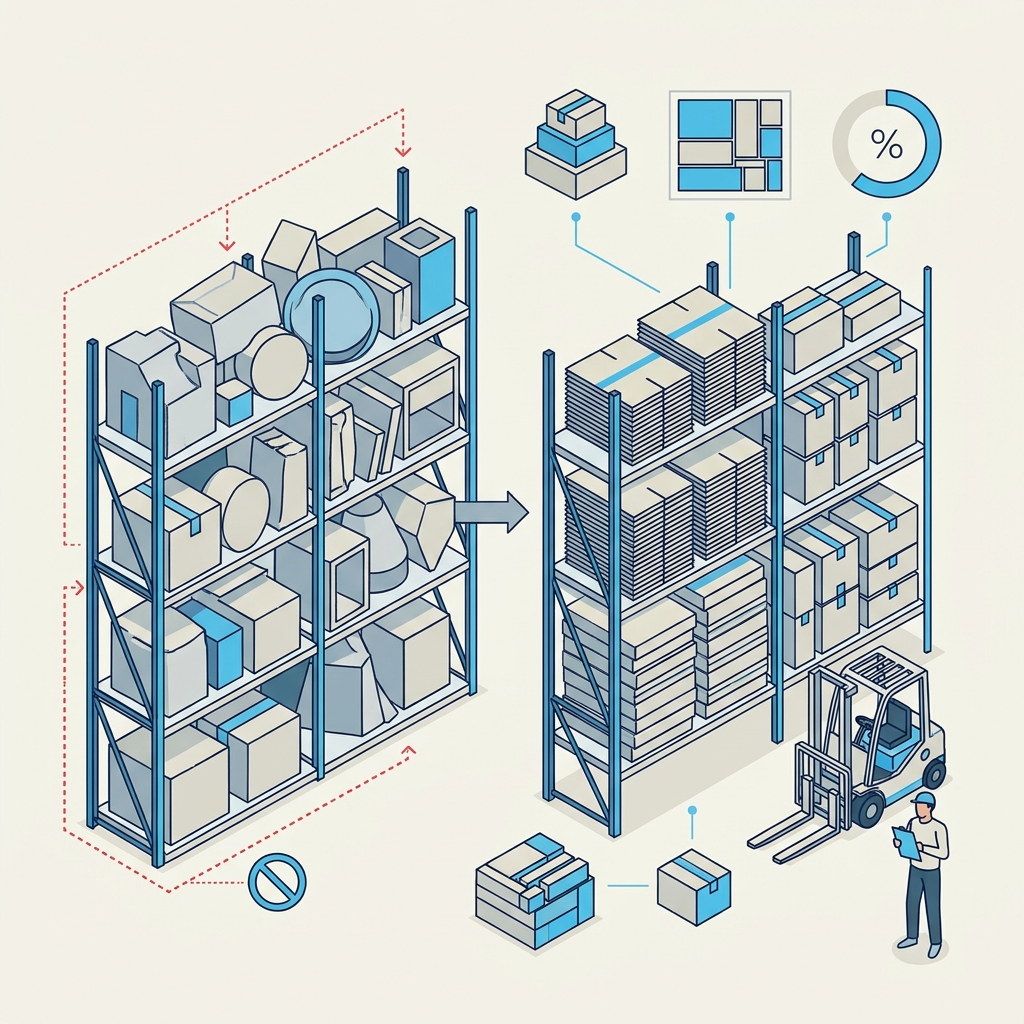
When a business grows, its physical space often fails to keep pace. Gourmet food shops, artisan cosmetics brands, and premium gift stores constantly face the dilemma of storing large volumes of packaging. Choosing boxes that are delivered flat allows you to stack hundreds of units in the same space that would barely fit a dozen conventional boxes.
Footprint impact
Storing flat-pack packaging can reduce occupied volume by up to 80% compared to traditional rigid solutions.
Operational advantages of flat-pack boxes
The primary appeal of flat-pack boxes to optimize warehouse space lies in their practicality. To understand their true day-to-day value for a business, it is helpful to break down the direct benefits they bring to logistics and financial operations.
-
Space savings: Stacking flat maximizes the use of shelving and storage areas.
-
Reduced shipping costs: By taking up less volume during transit from the manufacturer, freight charges decrease.
-
Damage protection: Stored flat, components are far less susceptible to crushing or impact damage.
-
Stock flexibility: Enables ordering larger batches to leverage economies of scale without cluttering your premises.
This system is especially valuable during seasonal campaigns. When preparing alcohol-free corporate Christmas gift sets, for example, the workflow requires having hundreds of boxes ready to assemble quickly, without obstructing everyday goods movement in the months leading up to the rush.
Suitable materials for flat-pack systems
Not all materials perform the same way when it comes to flat packaging. The choice depends on the weight of the product, the brand image you want to project, and the available budget. Below are the most common materials used in the flat-pack packaging industry.
| Material | Strength | Visual Finish | Recommended Use |
|---|---|---|---|
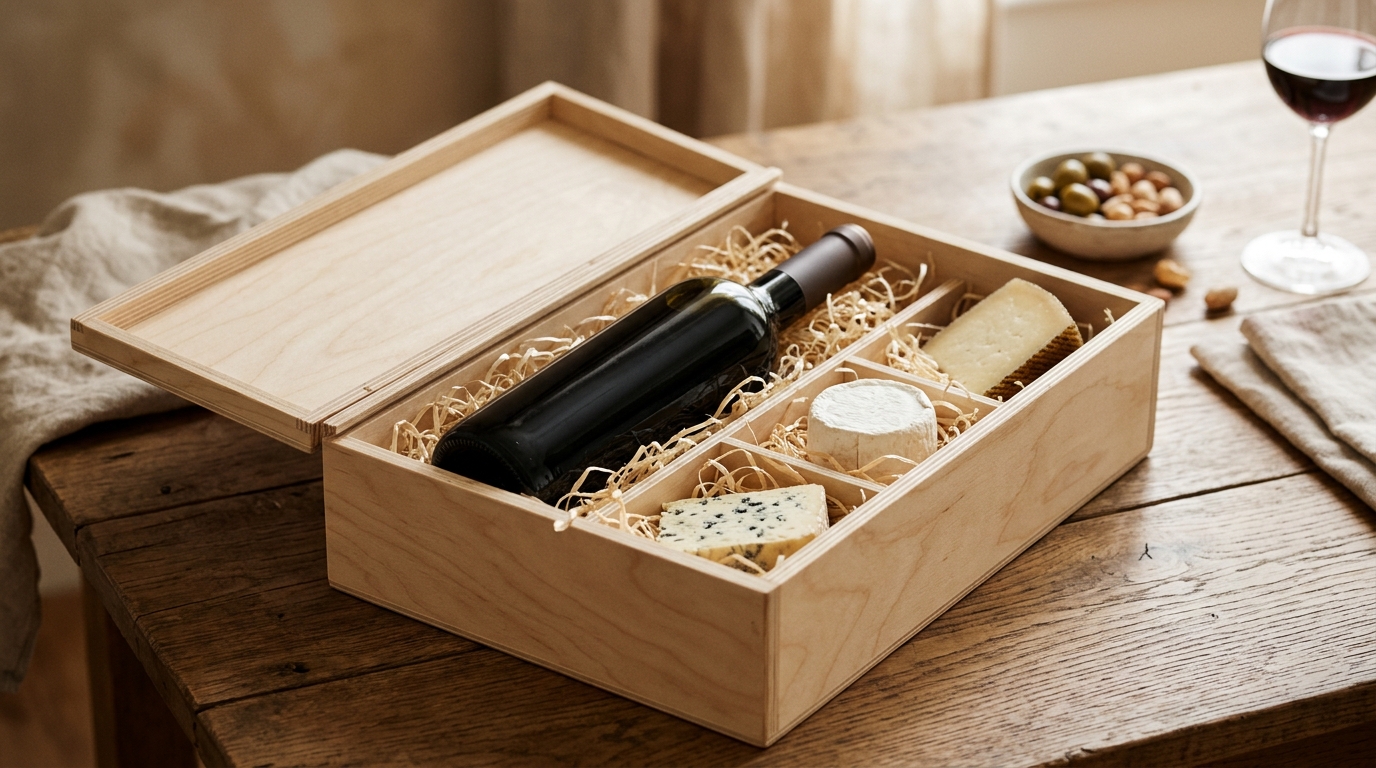
| Plywood | High (holds several kg) | Premium, natural grain | Wine bottles, luxury cosmetics, gourmet gift packs. |
| MDF (Fiberboard) | Medium-High | Smooth, ideal for engraving | Corporate gifts, stationery, jewelry. |
| Rigid Kraft Cardboard | Medium | Eco-friendly, rustic | Textiles, teas, artisan soaps, lightweight accessories. |
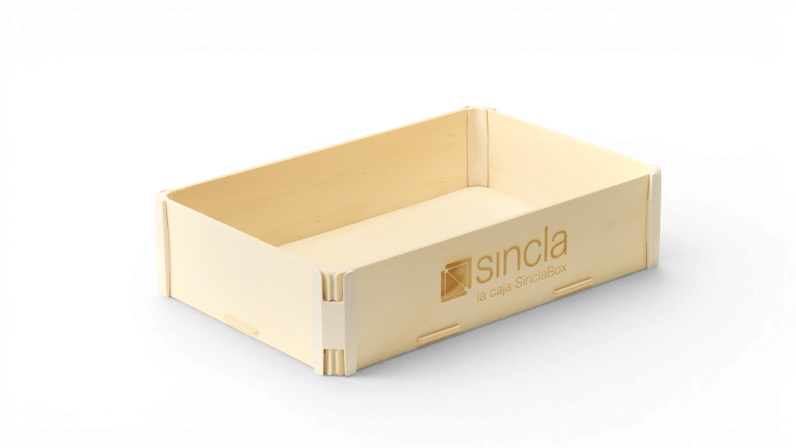
In premium presentation, the advantages of wood over cardboard offer significantly higher perceived value. Modern assembly systems allow wooden pieces to fit together via precise interlocking joints, grooves, or corner-ring mechanisms, ensuring rigidity without needing nails or messy adhesives during assembly in-store.
Check certifications
When selecting wooden packaging, it is advisable to look for seals like FSC or PEFC. These ensure the material originates from responsibly managed forests, a factor increasingly valued by end consumers.
Assembly systems and packaging ergonomics
For flat-pack boxes to perform effectively, the assembly process must be intuitive. A complicated setup defeats time savings and frustrates staff during high-volume periods. The goal is for the transition from a flat, two-dimensional sheet to a sturdy three-dimensional container to take mere seconds.
- Identify the parts. Lay out the base, sides, and lid. Thoughtful design prevents mistakes by clearly indicating the orientation of each component.
- Fold or interlock the base. For cardboard systems, fold along the pre-scored lines. For wooden designs, slot the side panels into the base.
- Secure the structure. On boxes with corner brackets or clips (metal or polymer), attach these pieces at the corners to lock the assembly and ensure rigidity.
- Insert contents and close. Add wood wool, tissue paper, or the product itself, then attach the lid—which may be sliding, hinged (pre-assembled), or top-fitting.
The unboxing experience is not compromised just because the box was assembled minutes earlier in the shop. On the contrary, a clean, sturdy assembly communicates quality and attention to detail.
Customization options in flat format
Flat-pack boxes designed to optimize warehouse space do not compromise on brand identity. In fact, customizing flat packaging is often more production-efficient, as flat sheets can run through industrial machinery far more easily than bulky three-dimensional boxes.
Popular finishing options to give packaging personality include:
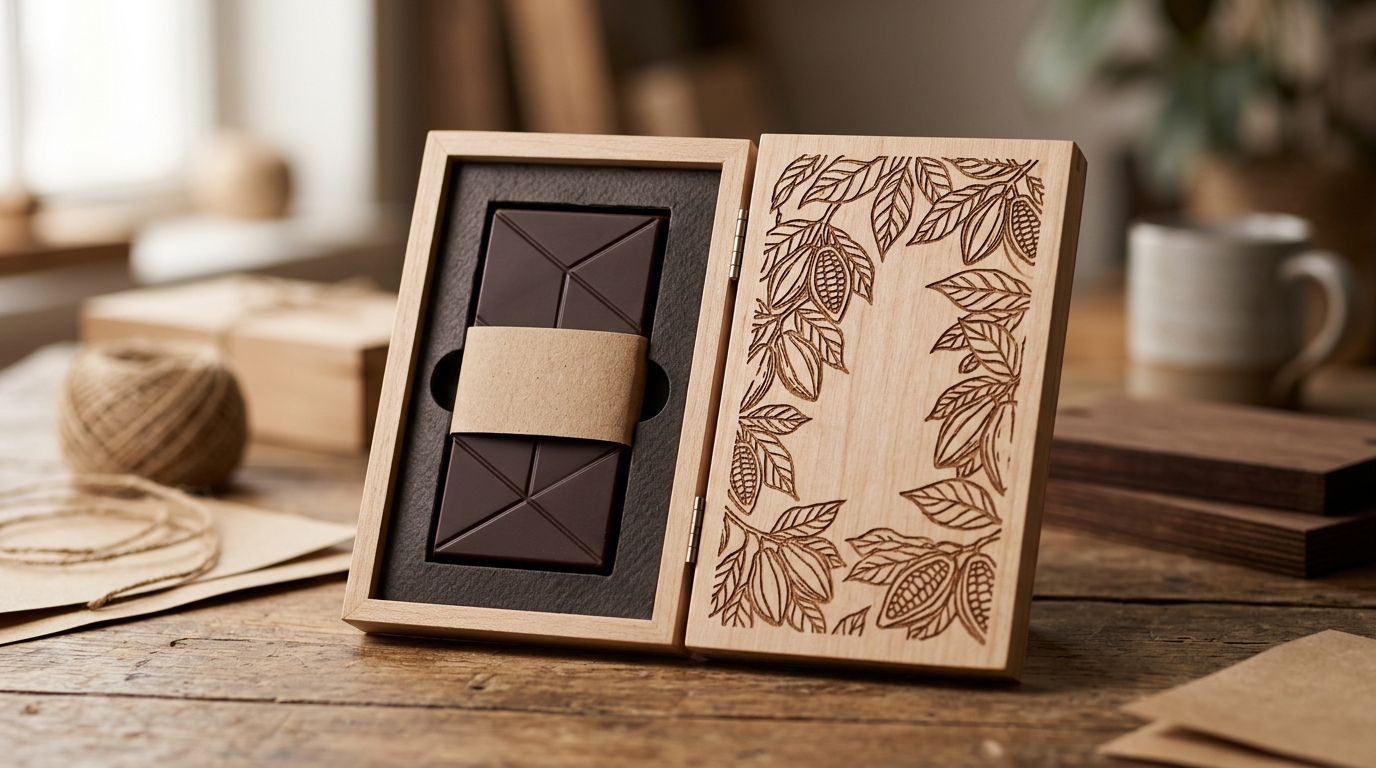
- Laser engraving: Ideal for pale woods and plywood. It scorches the surface lightly to create an elegant, permanent contrast without inks.
- Screen printing: Perfect for bold, solid colors and corporate logos on both cardboard and wood. It requires screens, making it most cost-effective for medium to large runs.
- Digital printing: Enables full-color designs and photographic detail. It is excellent for gourmet preserved food packaging where product imagery is key.
- Hot stamping: Applies metallic foils (gold, silver, copper) using heat and pressure. It provides a luxurious finish commonly seen in wine or jewelry presentation.
The versatility of these finishes allows brands producing items such as bean-to-bar chocolate boxes to achieve packaging that matches the high quality of their product without compromising internal storage feasibility.
Common mistakes when adopting flat packaging
Despite the clear benefits, transitioning to flat packaging systems requires foresight. A frequent mistake is failing to accurately calculate the required load strength. Choosing overly thin cardboard or low-thickness wood to cut costs can lead to boxes bowing under the weight of stacked, filled units.
Assembly care
Ensure staff receive brief training on correct assembly. Forcing parts or rushing the process can bend interlocking tabs and ruin the presentation.
Another factor to monitor is humidity levels within the warehouse. Even when stored flat and neatly stacked, natural wood and kraft cardboard can warp if exposed to excessively damp environments or dramatic temperature swings. It is wise to keep stock in its original plastic wrap or shrink film until ready for assembly.
Flat-pack packaging is not just a logistical workaround; it is a comprehensive strategy that lets small businesses project a premium image while maintaining total control over their physical resources.
Adopting space-optimizing packaging ultimately leads to less stressful, more profitable logistics. It frees up your team to focus on sales and careful order preparation, confident that the packaging supports the operation at every step.