How to Customize Wooden Boxes with Labels: A Guide
Sincla
How to customize wooden boxes with labels: A comprehensive guide. Knowing how to customize wooden boxes with labels is a key step for brands looking for premium, sustainable, and highly distinctive packaging. Natural wooden packaging conveys quality, craftsmanship
How to Customize Wooden Boxes with Labels: A Comprehensive Guide
Knowing how to customize wooden boxes with labels is an essential step for brands looking for premium, sustainable, and highly recognizable packaging. Natural wood packaging conveys quality, craftsmanship, and respect for the environment, but it requires the right visual identity to stand out in the market or at special events. By using printed labels, it is possible to add logos, technical information, barcodes, or promotional messages without altering the packaging structure, achieving a perfect balance between the rustic feel of the material and the precision of corporate design.
Key Takeaways
Labels offer a versatile and cost-effective solution for applying full-color branding to natural wood packaging.
Adhesive choice is critical: porous surfaces require extra-strong or rubber-based adhesives.
Materials such as kraft paper, coated paper, or textured polypropylene determine the final finish and durability.
Benefits of Using Labels for Wooden Packaging
When evaluating options to integrate brand identity into packaging, various alternatives emerge, such as screen printing, laser engraving, or direct printing. However, learning how to customize wooden boxes with labels provides specific competitive advantages, especially regarding flexibility and operational costs. Labels allow you to update designs seasonally, make quick corrections to legal information, and apply multiple colors or metallic finishes that would otherwise be very expensive or technically complex to reproduce directly on the wood grain.
Additionally, in e-commerce and direct shipping sectors, agility is vital. Using stickers or self-adhesive paper sleeves makes it easy to adapt generic inventory for specific campaigns. For instance, when preparing custom e-commerce boxes, a warehouse can use the same base box model and apply different labels depending on the product line or the customer's geographic destination, thereby reducing the need to store thousands of pre-printed SKUs.
Regulatory Fact (2026)
European regulations require certain products, such as food or cosmetics, to clearly and legibly display their composition and batch number. High-resolution labels ensure compliance with these legal requirements without compromising the aesthetics of the wood.
Types of Label Materials
To achieve optimal results when considering how to customize wooden boxes with labels, the substrate material is just as important as the printed design. Not all papers or plastics interact the same way with natural textures such as pine, plywood, or MDF. Below are the most commonly used materials in the wood packaging industry.
Self-Adhesive Kraft Paper
Ideal for maintaining a rustic, eco-friendly aesthetic, blending visually with natural wood tones.
Matte or Gloss Coated Paper
Provides an excellent smooth surface for photographic reproduction and vivid colors that contrast with the box.
Polypropylene (BOPP)
Highly resistant to moisture and tearing; recommended for boxes containing bottles, oils, or refrigerated products.
Laid or Textured Paper
Offers a premium finish, highly sought after in the wine or luxury cosmetics sectors to convey exclusivity.
The visual integration of these materials must be considered in the context of custom packaging, where every detail, from paper weight to opacity, communicates brand values. For example, a wooden box for an organic product would lose coherence if paired with a glossy plastic label, making FSC kraft or laid paper the most appropriate choice.
The Critical Importance of the Adhesive
One of the most common mistakes when labeling wood is overlooking the adhesive type. Untreated wood is a porous material that absorbs liquids and tends to repel standard acrylic adhesives designed for glass or smooth cardboard. If the wood also has a varnished, waxed, or stained finish, surface tension changes drastically, causing conventional labels to peel at the edges or fall off entirely during transit.
Preventing Peeling
For rough wood surfaces, ask your label manufacturer for a "Hot-Melt" (rubber-based) adhesive or high-initial-tack (High Tack) formulations. These adhesives flow better into the micro-irregularities of the wood.
Custom wooden boxes
Discover our wooden boxes for packaging, hospitality, events and more. In-house manufacturing and full customisation.
Label design is not just about ink on paper. In luxury packaging, specialized techniques are used to capture the consumer's attention. Hot foil stamping applies metallic foils in gold, silver, or copper tones that pair beautifully with a wooden background. Embossing adds a tactile dimension that invites the user to touch the package. Similarly, spot UV varnishes can highlight just the logo, creating a glossy contrast against a matte-finish label.
For small to medium runs of custom wooden boxes, digital printing remains the undisputed leader in 2026. It allows for variable data printing (numbering limited-edition boxes or printing specific customer names) at very affordable costs. On the other hand, flexographic printing remains the most cost-effective option for mass industrial volumes.
Step-by-Step Process: How to Apply Labels Correctly
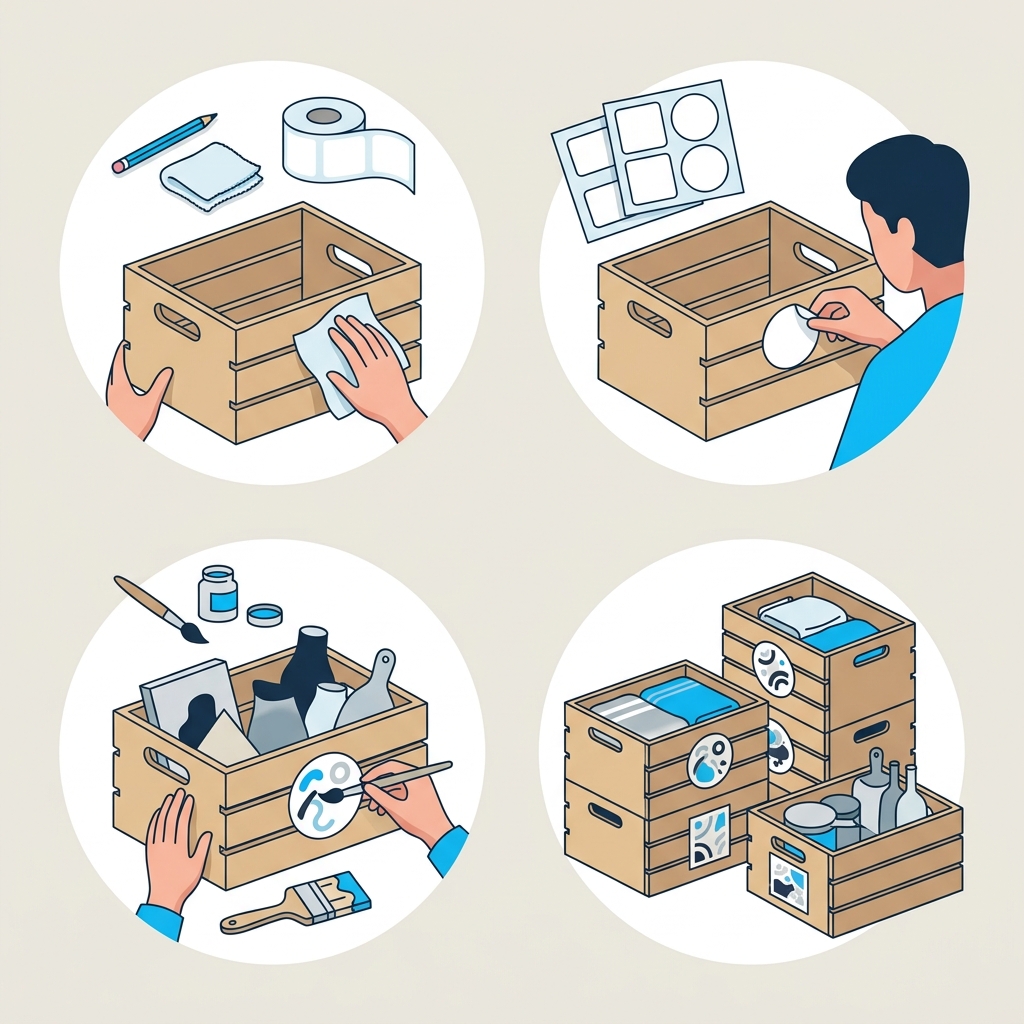
Even with the perfect material and adhesive, poor application technique can ruin the result. Below is the professional process to ensure a long-lasting, flawless application.
Surface Preparation. Ensure the wood is free of dust from sanding or cutting. Wipe it with a microfiber cloth or use compressed air before labeling.
Temperature and Humidity Control. Wood reacts to environmental conditions. It is best to acclimatize both the boxes and labels in the same room (ideally around 20–22°C / 68–72°F) for at least 24 hours prior to application.
Alignment and Registration. Use physical guides, application jigs, or semi-automatic equipment for large runs to ensure all labels are positioned at the exact same height.
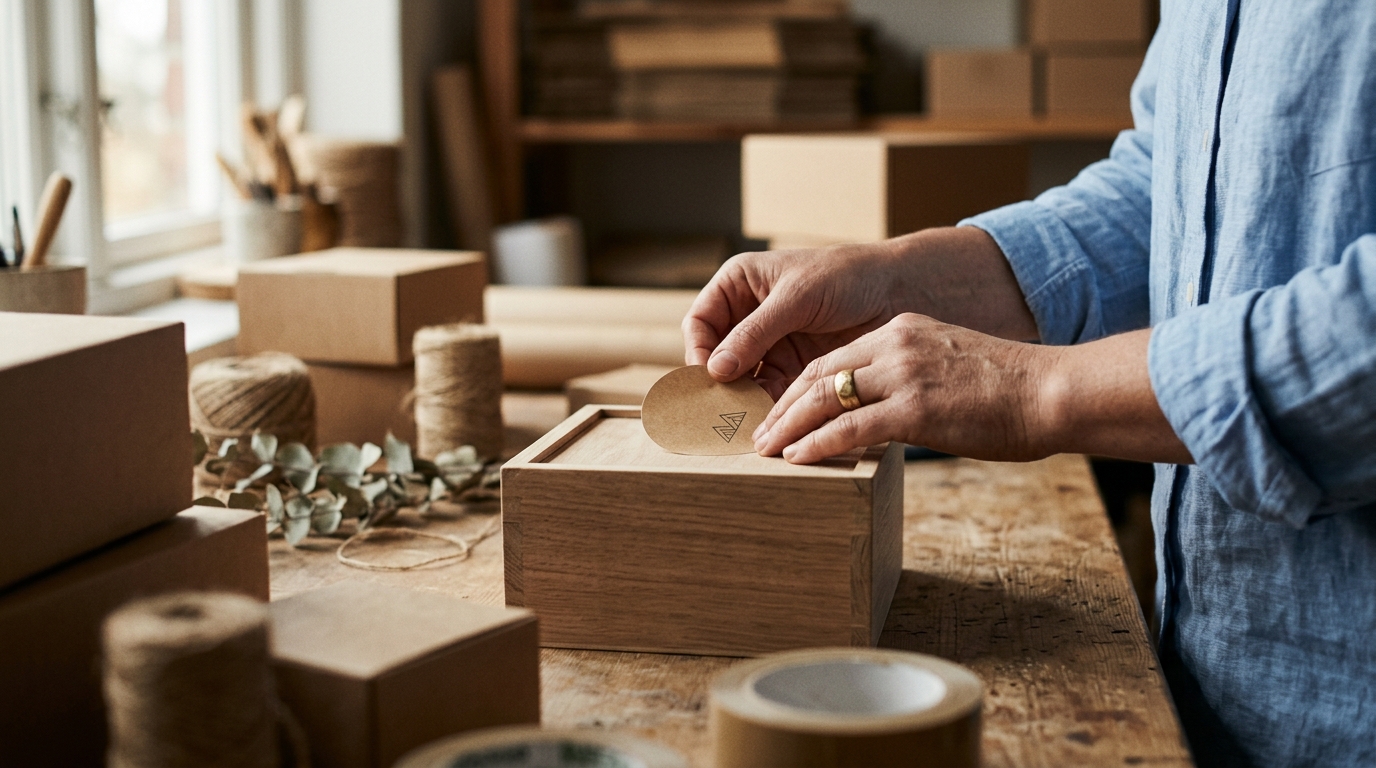
Pressure Application. Apply the label from the center outwards to the edges. Use a soft rubber roller to apply firm, even pressure, forcing the adhesive into the wood's texture without trapping air bubbles.
Curing Time. Adhesive does not reach its maximum bonding strength instantly. It is recommended to let labeled boxes rest for at least 24 to 48 hours before subjecting them to low temperatures or demanding transport conditions.
Design and Sustainability
The label's aesthetic should harmonize with the geometry of the packaging. A growing trend is the use of belly bands or tamper-evident seal labels that wrap from the lid to the base of the box. These not only decorate and provide product information, but also serve a security function, assuring the customer that the product has not been opened.
From a sustainability perspective, consumers are increasingly demanding eco-friendly packaging. If FSC-certified wood (from responsibly managed forests) is used, the labels must follow the same philosophy. Post-consumer recycled papers, vegetable-based inks free of harmful solvents, and even compostable or water-soluble adhesives are widely available, facilitating the full recycling of the package at the end of its useful life.
The Power of Contrast
For dark woods (walnut or stained wood), labels with a white background or metallic inks offer the best readability. On light woods (pine or birch), minimalist designs in black or forest green reinforce the feeling of a natural product.
"Labeling transforms a generic wooden box into a silent ambassador for a brand's values, quality, and identity."
Frequently Asked Questions
What type of glue works best for applying labels to wood?
The most recommended adhesive is known as "High Tack" or rubber-based formulations (Hot-Melt). Unlike standard acrylic adhesives, these offer greater initial flow, allowing them to anchor into the fibers and microscopic texture of untreated or porous wood.
Can labels be applied to varnished wood?
Yes, but varnished surfaces tend to be very smooth and can alter surface tension. In these cases, it is crucial to clean the surface thoroughly to remove any dust, oils, or wax residues, and to test adhesive compatibility beforehand. Strong acrylic adhesives typically perform well on sealed, varnished woods.
Do labels diminish the eco-friendly appeal of wooden packaging?
Not necessarily, provided the right materials are selected. By using FSC-certified paper labels printed with eco-friendly inks (water- or vegetable-based) and sustainable adhesives, the entire package can remain 100% recyclable and eco-friendly, preserving the natural value of the wood.
Is it better to label the box before or after assembly?
Generally, if the box is shipped pre-assembled, manual application or semi-automatic labeling machines are used on the finished product. If you have flat-pack (unfolded) boxes, applying labels flat is usually faster, more precise, and allows for more uniform roller pressure, ensuring a stronger bond.
How much does it typically cost to label wooden boxes?
The cost varies significantly depending on volume, material, and specialty finishes (such as metallic foil stamping). However, standard high-quality self-adhesive paper label printing typically starts at just a few cents per unit for medium runs, making it one of the most cost-effective customization methods compared to short-run screen printing or laser engraving.