The Essentials
- Packaging must be designed as a two-layer system: exterior protection (box) and interior cushioning (fill).
- Immobilizing the product is the golden rule; the merchandise must not move when shaking the box.
- The choice of exterior material (corrugated cardboard, wood, or plywood) will depend on the fragility, weight, and premium positioning of the item.
Why Knowing How to Reduce Breakages in E-Commerce Shipments Is Essential
Well into 2026, e-commerce has reached unprecedented logistical demands. Consumers expect fast deliveries, but above all, flawless ones. When knowing how to reduce breakages in e-commerce shipments is overlooked, financial and reputational consequences multiply. Reverse logistics (the cost of collecting a broken product and shipping a replacement) can amount to up to three times the cost of the original shipment. Furthermore, marketplace algorithms and social media platforms severely penalize sellers with high return rates due to damage. Choosing poor packaging to save a few cents on the box ends up translating into losses of hundreds of euros at the end of the month. Therefore, packaging engineering must be approached through a rigorous analysis of materials, structural resistance, and the handling practices of shipping carriers.The Hidden Cost of Breakages
A damaged product does not just mean replacing the item. It includes the cost of the new shipment, customer service management, brand damage, and the potential loss of that customer's lifetime value (LTV).
The Role of Outer Packaging: Choosing the Right Box
Corrugated Cardboard Boxes
This is the industry standard due to its cost-to-weight ratio. They are mainly divided into single wall (for light and non-fragile products) and double or triple wall (for heavier or international shipments). However, cardboard has limitations: it is susceptible to moisture and can be punctured by sharp impacts.Wooden and Derived Material Boxes
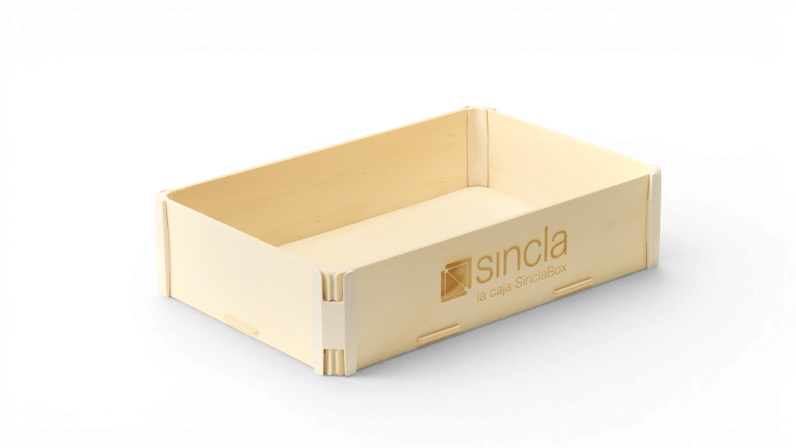
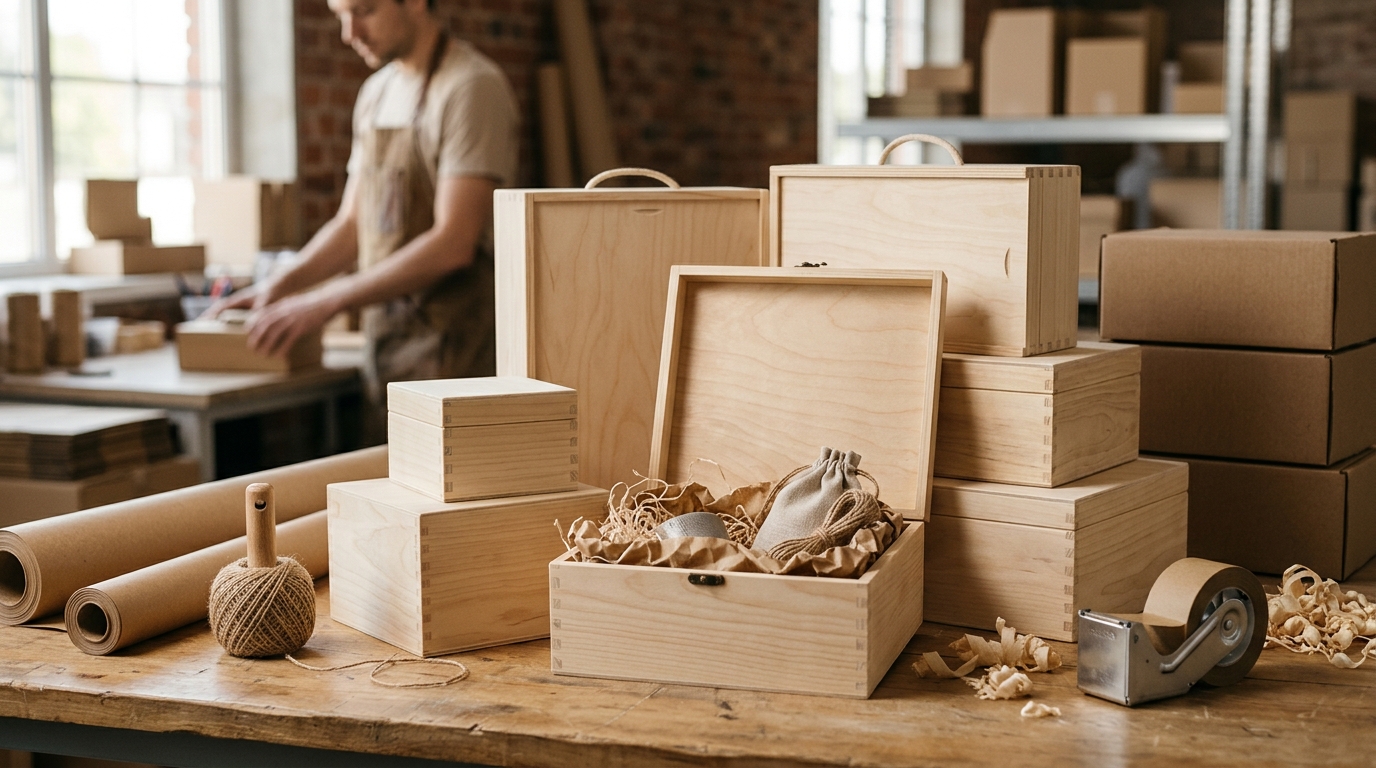
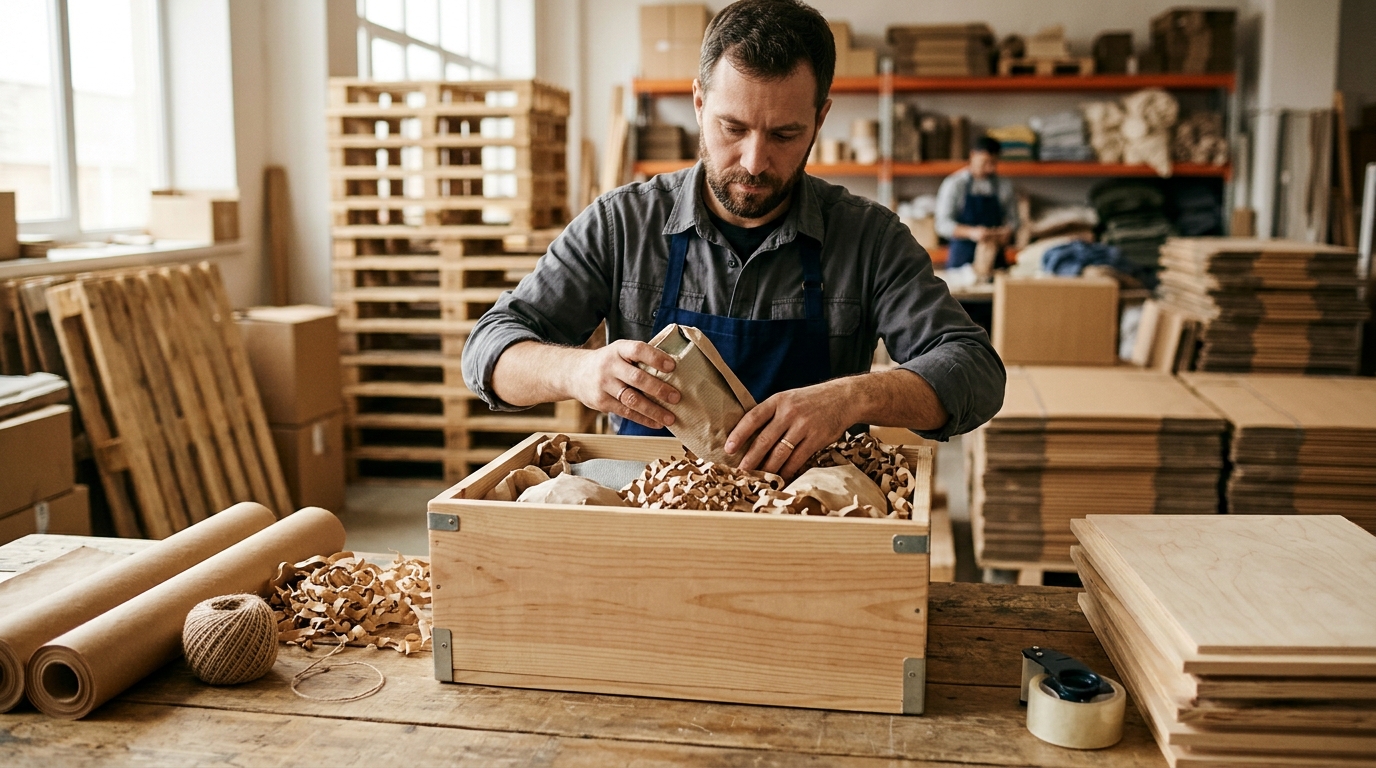
For high-value, fragile products (such as wine bottles, ceramics, or technology) or items requiring a premium presentation, rigid containers offer unmatched structural strength. Materials such as plywood, MDF, or solid wood do not collapse under pressure and withstand adverse weather conditions. Knowing the advantages of wood versus cardboard in packaging is key for gourmet or luxury businesses seeking zero incidents and a memorable unboxing experience. To facilitate the decision, it is useful to compare the technical characteristics of the most common materials:| Outer Material | Compression Resistance | Moisture Resistance | Recommended Use |
|---|---|---|---|
| Single-wall cardboard | Low | Very low | Clothing, books, small accessories. |
| Double-wall cardboard | Medium - High | Low | Small appliances, multiple cosmetics. |
| Plywood / MDF | Very High | Medium - High | Bottles, delicatessen items, premium fragile goods. |
| Solid wood (e.g., pine) | Excellent | High | Luxury corporate gifts, precision machinery. |
Interior Protection Systems: The Secret to Immobilization
Having fortified outer packaging is useless if the item bounces around inside. The primary technique for mastering how to reduce breakages in e-commerce shipments lies in eliminating empty space (void fill) and providing cushioning. There are various materials designed for this purpose:- Crumpled kraft paper: Eco-friendly and economical. Ideal for filling gaps and preventing shifting with medium-weight products.
- Wood wool (excelsior): Highly popular in gourmet sectors (wine, olive oil, preserves) and natural cosmetics. It provides excellent cushioning and reinforces the perception of an organic, premium product.
- Bubble wrap and air pillows: Traditional choices due to their low weight. They are effective, but increasingly less favored by brands seeking to eliminate single-use plastics from their supply chain.
- Die-cut foam and custom inserts: Laser-cut inserts (in cardboard, high-density foam, or wood) that cradle the product with millimeter precision. They are essential for very delicate items or shipments where presentation is paramount.
The 5-Centimeter Rule
For fragile merchandise, it is recommended to maintain a minimum clearance of 5 centimeters between the product and the walls of the outer box, filling that entire perimeter with continuous cushioning material.
Steps to Optimize the Packing Process in the Warehouse
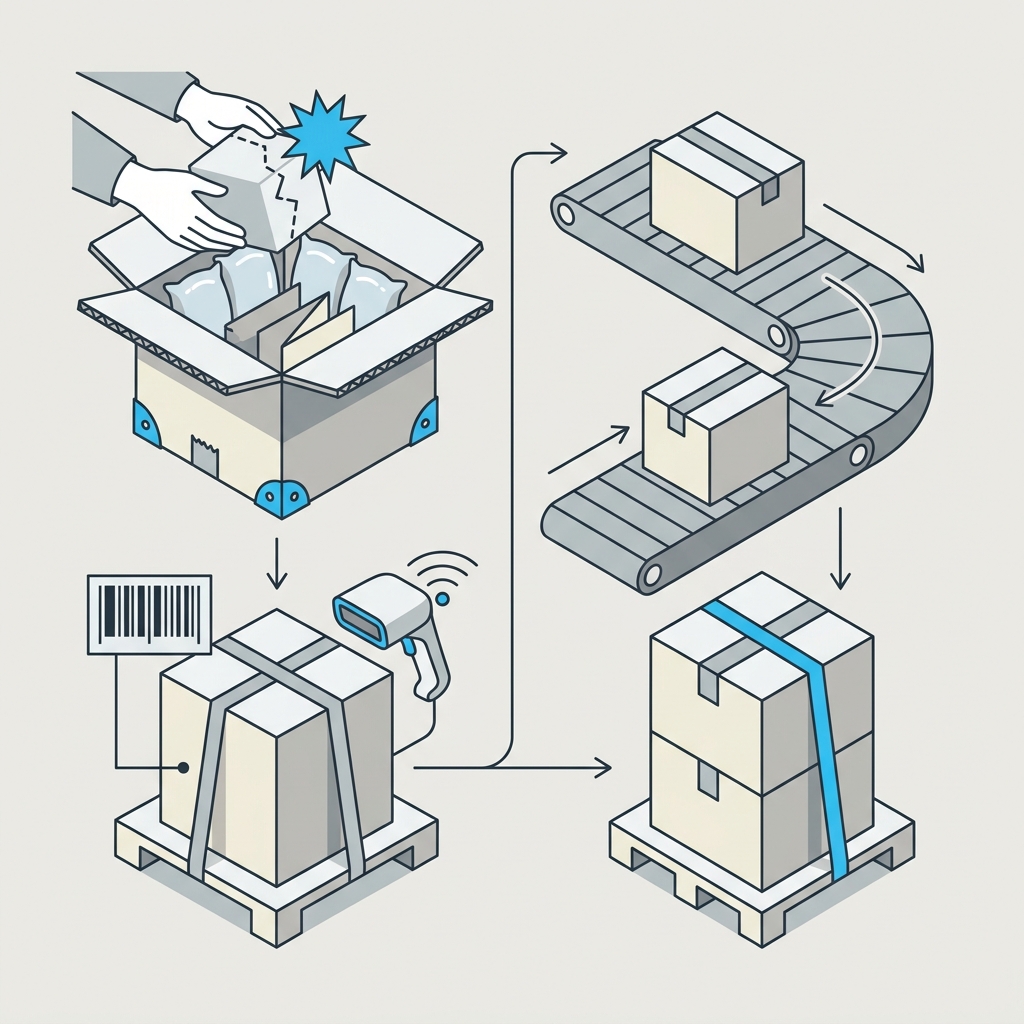
Theory must be translated into clear protocols at the order preparation station. Standardizing packaging reduces human error and ensures that all dispatches comply with safety standards.- Assess fragility and center of gravity. Identify the most delicate parts of the product (bottle necks, glass corners) to reinforce protection at those specific points.
- Select the appropriate format. Choose an outer box that leaves enough room for void fill, but not so much that it requires excessive material. Consulting guides such as Flat boxes to optimize warehouse space: a guide helps select designs that protect well when assembled without overcrowding store shelves.
- Create a cushioning bed. Before placing the product, put down a base of at least 3 to 5 cm of protective material (wood wool, paper, or foam) at the bottom of the box.
- Center the item and immobilize it. Position the product in the center and firmly fill all sides and the top, ensuring no air pockets remain.
- Seal using the "H-taping" method. Apply heavy-duty packing tape along the center seams and side edges (forming an H shape), completely sealing against dust entry and preventing accidental openings.
Common Mistakes That Lead to Transit Damage
Even with good materials, poor practices can ruin a shipment. There are systematic mistakes that recur frequently in the logistics sector and must be avoided at all costs if you want to master how to reduce breakages in e-commerce shipments.-
Reusing fatigued boxes Cardboard loses up to 50% of its structural strength after a single trip and compression cycle.
-
Over-reliance on "Fragile" labels Cautionary stickers do not replace sound packaging. Automated sorting belts do not read labels.
-
Lack of internal dividers When multiple hard items are shipped together (such as two glass jars) without physical partitions between them, they will collide and shatter.
-
Underestimating dimensional weight Using excessively large boxes requires too much fill, drives up shipping costs, and encourages the package to collapse under external pressure.
Well-designed packaging is that which survives not only the ideal journey, but also the unexpected setbacks and accidental drops within the logistics chain.
Drop Testing: Ensuring Safety Before Shipping
For high-volume retailers, conducting preliminary testing is essential. The industry standard is the "Drop Test" or free-fall test. It consists of packaging a sample product exactly as it will be shipped and dropping it from a height of approximately 80 to 100 centimeters (the average height of a courier's hands or a sorting conveyor). The box must land on its corners, edges, and flat surfaces. If the product inside survives without scratches and the outer box maintains its structural integrity without opening, the packaging system is fit for transit. If the item sustains damage, it will be necessary to rethink the density of the interior material or the rigidity of the outer box.Pay Attention to the Climate
Moisture drastically reduces the strength of corrugated cardboard. If shipments travel through very humid areas or experience delays outdoors, opting for wood, plywood, or water-resistant treatments is recommended.
The Impact of Sustainability on Secure Packaging
Reducing breakages does not have to be at odds with environmental responsibility. In fact, current logistics packaging trends point toward eliminating petroleum derivatives. Replacing polyurethane foam with FSC-certified wooden dividers or molded cardboard is a practical, achievable reality. Materials like wood sourced from responsibly managed forests not only provide maximum protection and strength on long journeys, but they also offer a second life. While a broken cardboard box ends up in the recycling bin (or the trash), a rigid wooden or plywood box is frequently kept by the buyer for decorative storage, extending the brand's visual impact long after the initial sale.Frequently Asked Questions
Is it better to use custom-sized boxes or standard boxes with fill?
It depends on shipping volume and product type. For fragile products with uniform dimensions (such as a specific wine bottle), a custom-sized box or packaging with die-cut inserts ensures maximum protection and saves packing time. For stores with highly varied catalogs, it is more cost-effective to use standard boxes in several sizes and adjust them with quality void-fill materials.
What type of tape is most secure for preventing openings?
Water-activated gummed kraft paper tape reinforced with fiberglass filaments is currently the most secure option. When moistened and applied, it bonds directly with the fibers of the box (whether cardboard or untreated wood), preventing it from being peeled off without tearing the package, which deters theft and enhances structural firmness.
How do I protect shipments that combine hard and soft products?
The right strategy involves creating compartments or isolating the hard items. The heaviest and most rigid elements should be placed at the bottom of the box, secured with dense fill so they cannot shift. Softer or lighter products are placed on top. They should never travel together without a physical barrier (a cardboard or wooden divider) preventing direct contact during transit vibrations.
Is it worth investing in wooden packaging for e-commerce shipments?
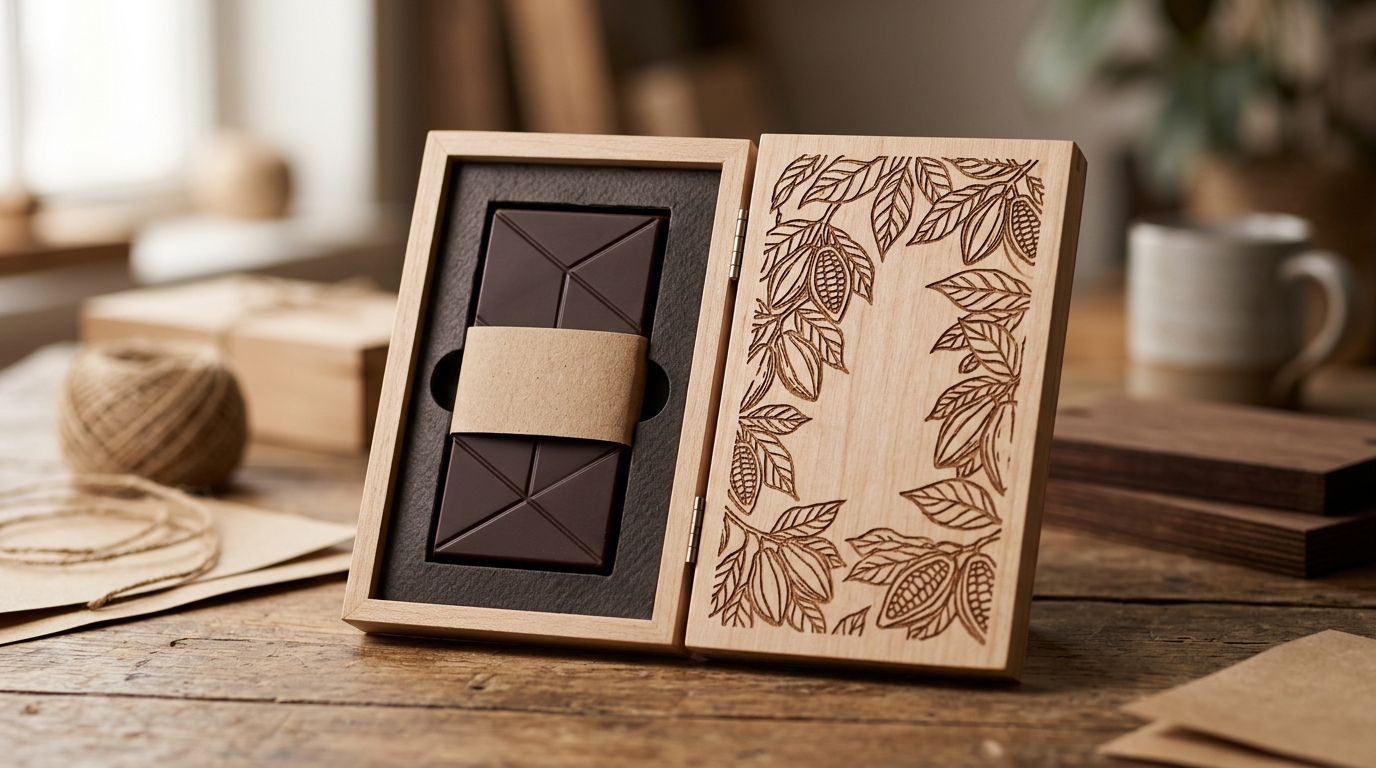
Yes, especially if the average order value is high, the item is extremely fragile, or you want to deliver a premium unboxing experience (corporate gifts, delicatessen products, fine spirits). The dramatic reduction in breakage rates and the elevated brand perception usually far outweigh the initial cost difference compared to conventional packaging.