Boxes for Christmas? Order as early as you can. Last day to order up to 200 boxes: 30 November · 5 days left.See all deadlines

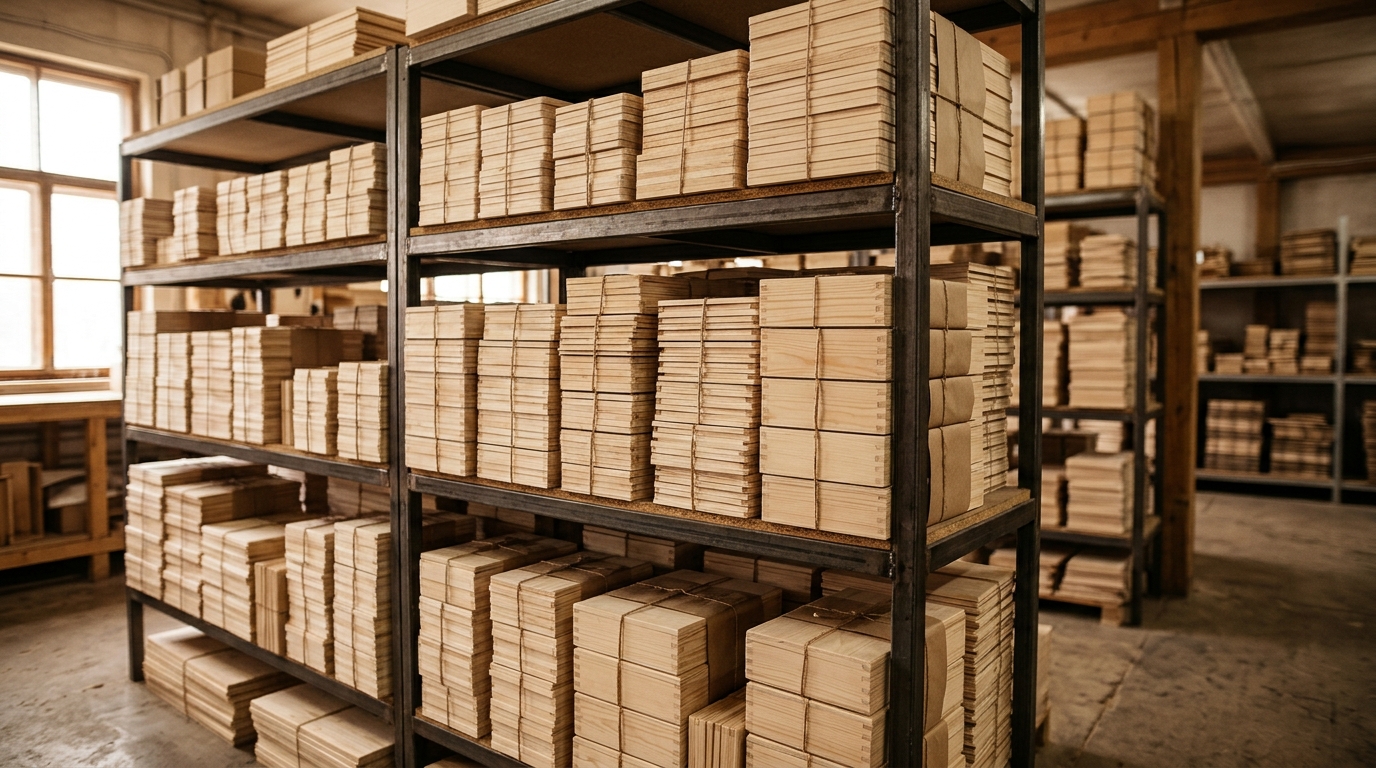
    Cajas de chopo ligero para envíos postales preparadas sobre una mesa de empaquetado logístico
    Packaging

    Lightweight Poplar Wood Boxes for Secure Postal Shipping

    Sincla

    Why choose lightweight poplar wood boxes for postal shipping? E-commerce demands a precise balance between product presentation, protection during transport, and logistics costs. Shipping delicate items, artisanal batches, or high-v

    Why Choose Lightweight Poplar Boxes for Postal Shipping?

    E-commerce demands a millimeter-level balance between product presentation, protection during transit, and logistics costs. Shipping delicate items, artisanal batches, or high-value products requires packaging that conveys quality without driving courier rates through the roof. In this increasingly demanding logistics environment, lightweight poplar boxes for postal shipping have established themselves in 2026 as one of the most efficient and profitable solutions for online stores looking to offer a premium, sustainable experience right from the first visual contact.

    Key Takeaways

    • Poplar provides the structural strength of wood with a low density that does not penalize shipping rates.
    • Premium wooden presentation exponentially enhances the unboxing experience and elevates the perceived value of the product.
    • They are a highly sustainable alternative thanks to the tree's fast growth cycle and forest certifications.

    Poplar wood is renowned in the packaging industry for its excellent strength-to-weight ratio. Unlike denser woods, such as oak or solid pine, poplar has a density of approximately 400 to 450 kg/m³, placing it in the lightweight wood category. This characteristic is vital in e-commerce logistics, where every extra gram of packaging tare weight can push a parcel into a higher rate bracket with postal operators and courier agencies.

    The Impact of Volumetric Weight

    Carriers calculate shipping costs based on actual weight or volumetric weight (whichever is greater). By using lightweight poplar, actual weight remains low, allowing you to maximize shipping profitability without sacrificing the robustness of rigid packaging.

    Beyond cost optimization, lightweight poplar boxes for postal shipping act as an unmatched protective shield against impacts, crushing, and friction typical of automated sorting belts. While standard cardboard packaging can buckle if heavy parcels are stacked on top, the structural rigidity of wood ensures the contents arrive intact at their destination, drastically reducing breakage-related returns—a critical factor in the profitability of any digital business.

    Comparison of E-Commerce Packaging Materials

    To fully understand the value that poplar delivers, it is essential to compare it with materials traditionally used in the logistics industry. Each option presents advantages and limitations depending on the product type and the online store's brand strategy.
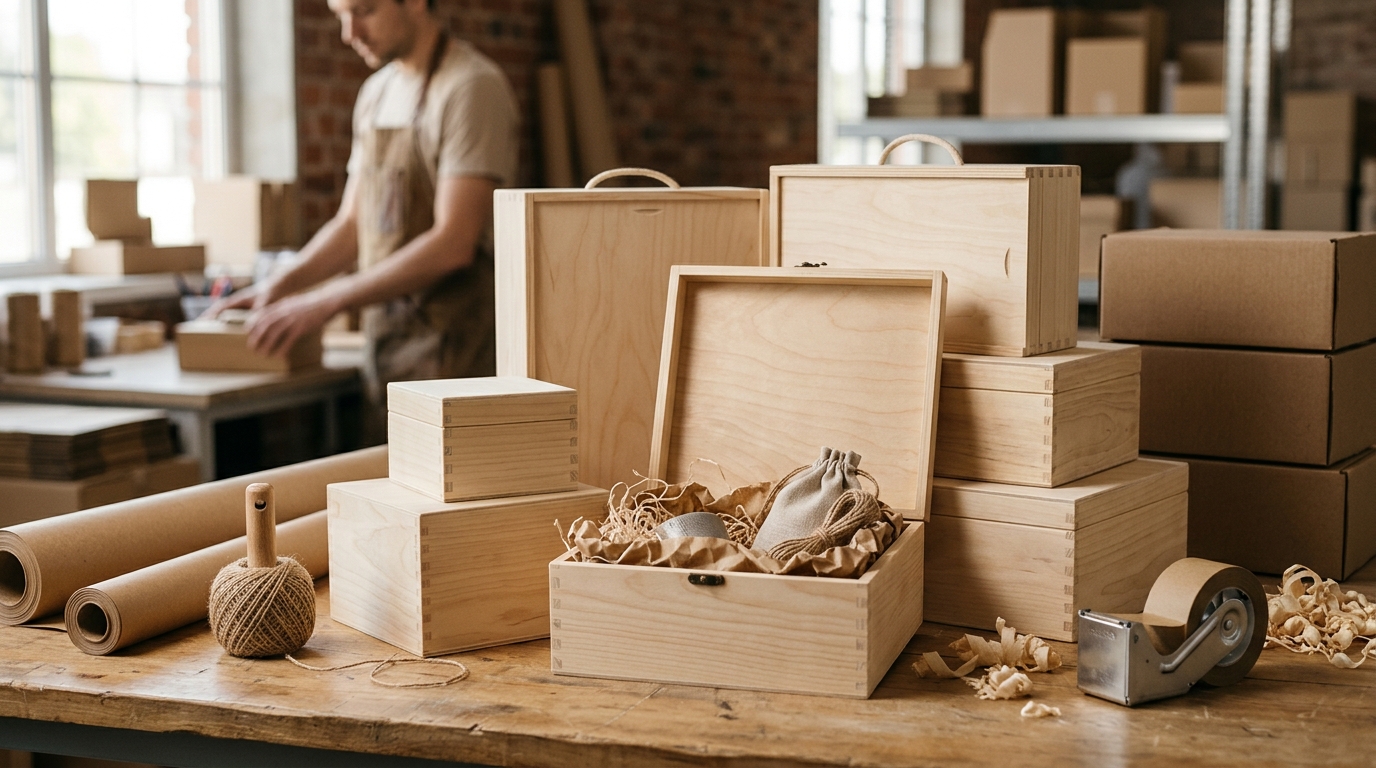
    Lightweight poplar boxes for postal shipping prepared on a logistics packaging table
    Material Impact Protection Weight (Tare) Customer Perception Associated Logistics Cost
    Lightweight Poplar High (Rigid structure) Low - Medium Premium / Natural Balanced
    Corrugated Cardboard (Kraft) Low - Medium (Crushing risk) Very Low Standard / Functional Very Low Cost
    Solid Pine Wood Very High High Rustic / Premium High (due to weight)
    MDF (Fiberboard) Medium - High Medium - High Industrial / Uniform Medium

    Looking at the comparison, it is clear why more and more brands are exploring the Advantages of wood versus cardboard in packaging. Cardboard is unbeatable on pure price, but falls short in creating a memorable experience and providing extreme protection. Dense woods, on the other hand, make transit excessively expensive. Poplar hits the sweet spot, offering the required rigidity and desired organic touch with a manageable weight.

    The Psychology of Unboxing and Perceived Value

    Packaging is the only marketing channel with a 100% open rate. When a customer receives an online order, the first physical impression shapes their entire perception of the brand and the product inside. In sectors such as natural cosmetics, contemporary jewelry, gourmet goods, or niche technology, delivering an item in a poplar wood box communicates an immediate message of care, craftsmanship, and exclusivity.

    The light, uniform color of poplar is visually clean and minimalist, adapting seamlessly to brands with rustic aesthetics as well as modern, Scandinavian-style design firms. This color neutrality turns the packaging into a perfect canvas. Furthermore, recipients rarely discard a wooden box. Unlike cardboard, which quickly ends up in the recycling bin, poplar packaging tends to be repurposed in the customer's home for storage or decoration. This ensures prolonged brand exposure, keeping your logo or message visible in the consumer's living space for years—a key consideration when designing an Unboxing experience for gourmet stores and packaging strategy.

    Packaging that gets reused is a permanent advertisement in the consumer's home that cost zero dollars in recurring ad spend.

    Technical Customization Options for Poplar Wood

    Poplar wood performs exceptionally well with customization techniques due to its smooth surface, fine grain, and light tone. This natural lightness creates high contrast without requiring pre-applied stains or primers. Brands have various techniques available to integrate their logos or designs onto custom wooden boxes, achieving durable, professional finishes.

    • Laser EngravingSuperficially burns the wood, creating a dark, permanent, and highly precise low-relief finish.
    • Screen PrintingIdeal for applying flat, vibrant corporate colors directly onto the grain of the poplar.
    • Hot StampingApplies metallic foils (gold, silver, copper) through heat and pressure for luxury finishes.
    • Direct Digital Printing (UV)Allows full-color images or complex gradients to be reproduced directly onto the box surface.

    The choice of technique depends on your budget, unit volume, and brand image. While laser engraving provides a more organic, timeless look, UV printing or screen printing are perfect for modern, colorful visual identities that must adhere to strict corporate brand guidelines (Pantone).
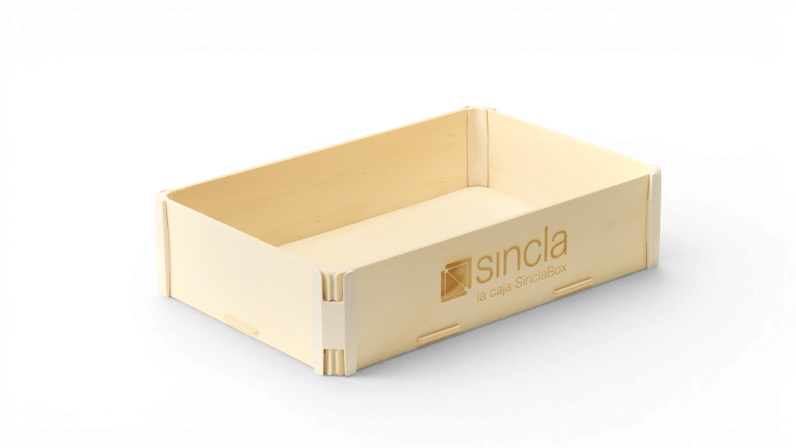
    Custom wooden boxes

    Discover our wooden boxes for packaging, hospitality, events and more. In-house manufacturing and full customisation.

    View products

    How to Prepare a Secure Postal Shipment with Wood

    Although lightweight poplar boxes for postal shipping provide an unbeatable rigid shell, the security of the product inside depends on proper immobilization. If the item shifts inside the packaging, transit vibrations can cause damage regardless of how tough the outer container is.

    1. Select the right size. Choose a poplar box whose dimensions leave a margin of 2 to 4 centimeters on each side of the product for cushioning material.
    2. Place a protective bed. Create a shock-absorbing base at the bottom using natural wood shavings, wood wool, or crumpled kraft paper. This shields the product from vertical impacts.
    3. Secure the product. Place the item in the center and firmly fill any lateral gaps. The goal is that when the closed box is shaken, no internal movement is felt.
    4. Close and seal securely. Fasten the lid securely. Depending on the box design (sliding lid, hinged lid, or drop-in lid), you may need to apply an outer cardboard sleeve, security stickers, or eco-friendly strapping to prevent accidental opening.
    5. Clear labeling. Place the shipping label on the top surface, preferably on a flat area, ensuring barcodes are perfectly readable for logistics scanners.

    Beware of Plastic Fillers

    Using a premium, eco-friendly wooden box only to fill it with bubble wrap or polystyrene peanuts completely undermines your sustainability message and brand consistency. Always prioritize biodegradable fillers such as wood wool or kraft paper.

    Sustainability and Forest Certifications

    In today's e-commerce landscape, consumers demand transparency and environmental responsibility. Using wood for shipping often raises concerns about deforestation, but the reality of modern poplar-based packaging is very different. Poplar is an exceptionally fast-growing tree compared to other species. It reaches commercial maturity in a cycle of 10 to 15 years, allowing for rapid, sustainable rotation in managed plantations while acting as a significant carbon sink throughout its growth.

    To ensure a positive environmental impact, e-commerce businesses should purchase boxes crafted from responsibly managed forests verified by internationally recognized certifications. Furthermore, wooden packaging manufacturers typically maximize yield from poplar boards, and offcuts are repurposed into biomass, pellets, or engineered boards (like MDF), closing the loop toward a zero-waste model.

    FSC / PEFCCertified wood
    100%Recyclable and Biodegradable Material
    10-15Years poplar growth cycle

    The combination of a renewable origin, the absence of plastics in its primary construction, and a remarkably high home reuse rate positions poplar boxes as one of the greenest alternatives for postal shipping, aligning with increasingly stringent European regulations on packaging waste reduction.

    Key Takeaways for Logistics Strategy

    Incorporating lightweight poplar boxes for postal shipping into an online store's operations is not merely a change of wrapping; it is a strategic decision that affects multiple areas of the business. Operationally, it reduces breakage incidents without excessively driving up volumetric weight costs. From a marketing standpoint, it turns product delivery into a memorable event that fosters customer loyalty, positive reviews, and organic social media reach when buyers share their unboxing experience.

    The bottom line justifies the investment, particularly for brands operating in segments where attention to detail is part of the core value proposition. Comparing the cost of returns caused by inadequate packaging against an investment in lightweight wood typically yields a positive return on investment, making this packaging a silent partner in the growth of modern e-commerce.

    Frequently Asked Questions

    Is it necessary to wrap the poplar wood box inside a cardboard box for postal shipping?

    Generally, it is not necessary if the wooden box has a secure closing system. Courier companies accept shipments sent directly in wooden boxes. However, if the poplar box serves as the product's primary gift packaging and you want it to arrive pristine (free of shipping labels and scuffs), placing it inside an opaque poly mailer or a snug secondary cardboard box is recommended.

    Do courier agencies charge a surcharge for handling wooden packages?

    No, standard courier services (such as postal carriers, SEUR, DHL, UPS) charge based on package dimensions and weight, regardless of whether the outer packaging is cardboard or flat wood, as long as it has no dangerous sharp edges or irregular shapes that would prevent smooth transit along automated conveyor belts.

    Is poplar resistant to moisture during transit?

    Like any unfinished natural wood, poplar is porous and can absorb ambient moisture. For standard ground or air transit of a few days, this poses no issue. For ocean freight or shipments to extreme climates, applying a protective finish to the wood or including desiccant packs inside the package can be beneficial.

    How much weight can a poplar postal box support?

    Load capacity depends on the thickness of the poplar board (typically between 3 and 5 millimeters for postal shipping) and the assembly method (stapled, pinned, or finger-jointed). Standard boxes are designed to comfortably support loads between 1 and 5 kilograms, providing ideal protection for bottles, glass jars, electronics, or heavy books.

    Newsletter

    Get our latest articles and news in your inbox.