The Surprise Box: Unveiling the Charm of the Unexpected

The Essential
- A surprise box generates anticipation and excitement by revealing hidden content.
- Its application is diverse: marketing, personalized experiences, corporate gifts.
- Material and design choices are crucial for visual impact and experience.
- Personalizing content and packaging enhances its value.
Origins and Evolution of the Concept
Emotional Impact
The surprise factor activates reward centers in the brain, generating joy and gratitude, which strengthens the positive perception of what is received.
Types of Surprise Boxes
1. Subscription Boxes
This business model has seen a remarkable boom. It consists of the periodic (monthly, quarterly) shipment of a box with a selection of products whose specific content is unknown to the subscriber until the moment of reception. The themes are varied, ranging from beauty and personal care products, to gourmet food, books, toys, or pet items. Its success lies in convenience, product curation, and the constant excitement of "unboxing."
2. Personalized Gift Boxes
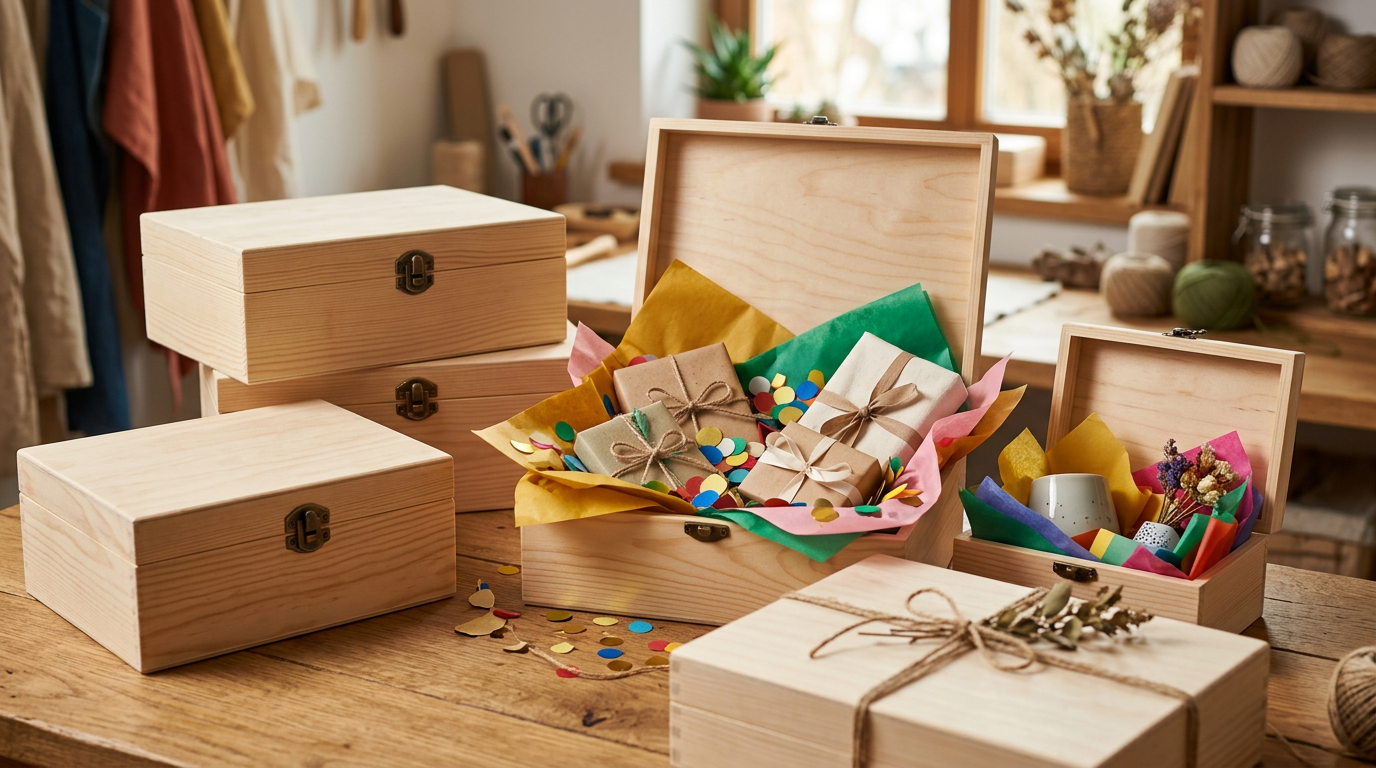
Aimed at special occasions, these boxes are designed for a particular recipient, with products specifically selected for their tastes or needs. They can include anything from a selection of sweets or wines to handmade products or experiences (spa vouchers, tastings). The added value lies in the personalization of the content and, often, the packaging itself. An example could be wedding boxes, where small details are presented cohesively.
Beyond the Gift
The personalized surprise box is a unique opportunity to show attention and deep knowledge of the recipient's tastes, creating a lasting impact.
3. "Mystery Box" or "Blind Box"
Common in the realm of collectibles, video games, or merchandise, these boxes contain a random item from a limited series. The "luck" component and the rarity of some items add extra appeal for collectors.
4. Experiential Boxes
Beyond containing physical products, some surprise boxes offer an "experience" in themselves. This can include a kit to carry out an activity (painting, gardening), ingredients to prepare a themed dinner, or even interactive elements that culminate in a game or a challenge.
5. Corporate or Marketing Boxes
Companies use surprise boxes for various strategies: as gifts for employees (welcome, anniversary), press kits for product launches, gifts for VIP clients, or as part of influencer marketing campaigns. The design and products in these boxes usually reflect the brand's identity and aim to generate a positive and memorable impact.
- Excitement of DiscoveryGenerates gratifying and unexpected experiences.
- Customer LoyaltySubscription boxes create recurrence and connection.
- Strategic MarketingBoosts launches and brand image.
- Deep PersonalizationAdaptable to the recipient's tastes and interests.
- Community BuildingIn collectibles, fosters exchange and interaction.
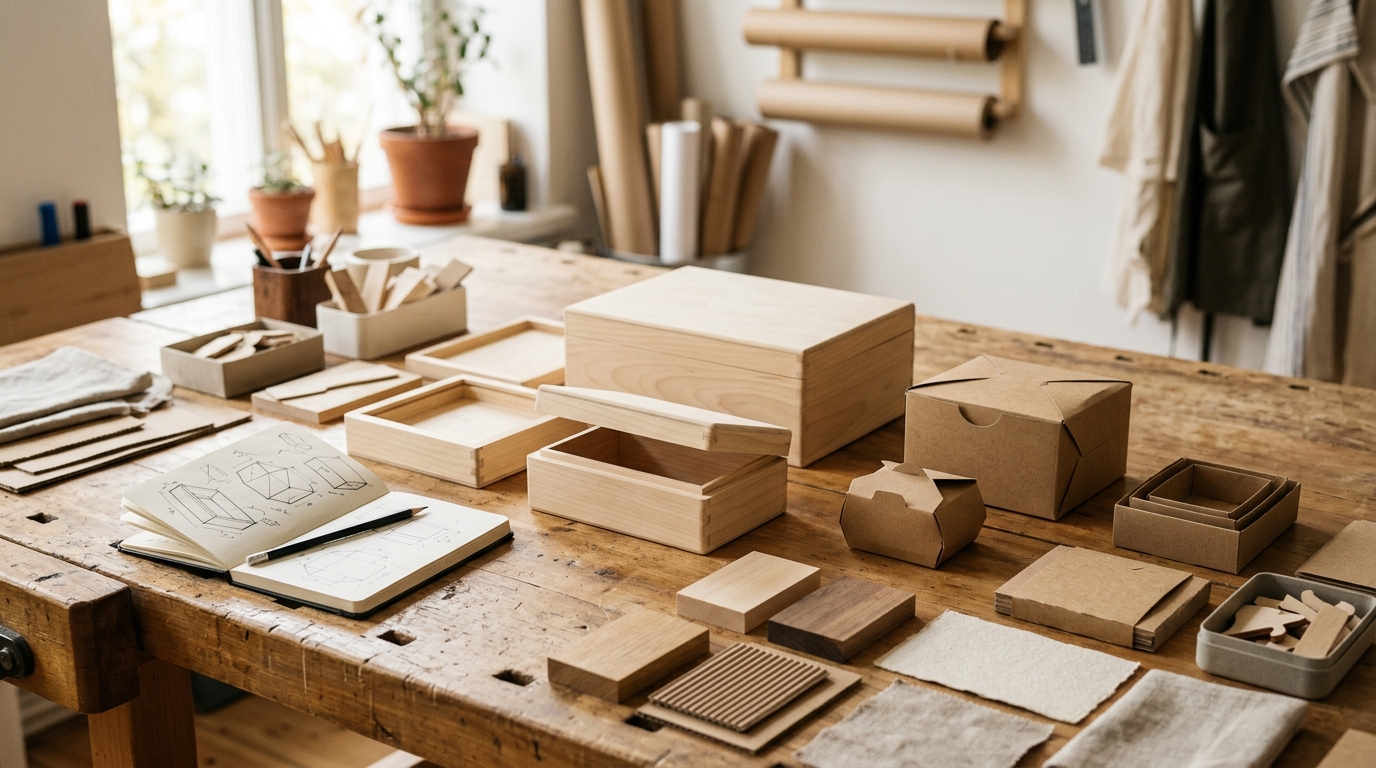
Materials: The Foundation of an Experience
Material Tip
For heavy or high-value products, plywood or micro-flute cardboard is recommended; for a premium touch, certified wood is ideal.
- Cardboard: The most common and versatile material.
- Corrugated or Micro-flute Cardboard: Offers good resistance and protection, ideal for shipping. Cardboard is an economical and customizable option.
- Kraft Cardboard: Valued for its natural aesthetic and resistance. It is a sustainable option. Kraft paper and cardboard are closely related materials.
- Folding Carton: Smooth, suitable for high-quality printing, ideal for lighter products and a more elegant finish.
- Wood: Adds a touch of luxury, durability, and a handcrafted feel.
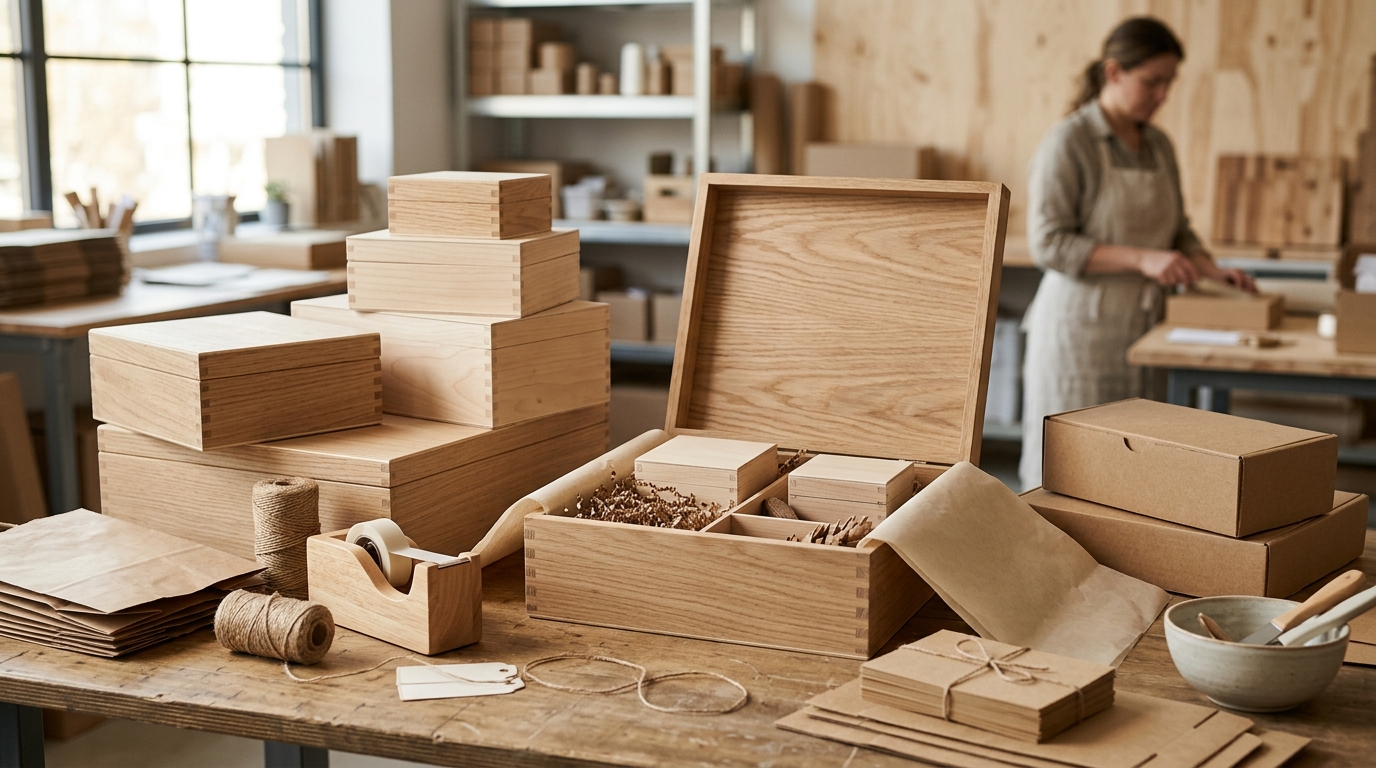
- Solid Wood or Plywood: Offers robustness and a premium aesthetic, ideal for custom wooden boxes or high-value gifts. Allows for sophisticated engravings and finishes.
- MDF (Medium-Density Fiberboard): More economical than solid wood, it offers a smooth surface ideal for painting, lacquering, and precise details.
- FSC Certified Wood: Guarantees that the wood comes from sustainably managed forests, adding ecological value.
- Metal: Used for very specific products, such as limited edition boxes. Offers maximum protection and an industrial or luxurious look.
- Plastic/Acrylic: Allows for transparent or semi-transparent designs, ideal for partially displaying content or for products requiring greater water resistance.
Key Elements in Design and Manufacturing
1. Formats and Structures
From classic boxes with separable or hinged lids, to more complex structures such as unfolding boxes, with hidden compartments, or irregular formats. The choice of format can enhance the "revelation" of the content. For example, a box with a flower-type opening or one with multiple levels of discovery.
Discovery Engineering
The format and opening sequence of the box can amplify surprise and enjoyment, making "unboxing" an integral part of the experience.
2. Finishes and Decoration
Finishes transform a functional box into a desirable object.
- Digital Printing or Screen Printing: For graphics, logos, and complex patterns. Screen printing is durable and allows for vibrant colors; digital printing is ideal for short runs and variable personalization.
- Laser Engraving: Especially on wood and MDF, creates elegant and permanent textures and details.
- Pad Printing: For irregular surfaces or small details.
- Hot Stamping: Allows adding metallic foils (gold, silver) or colors that provide a shine and a premium touch.
- Varnishes and Laminates: To protect the surface and add a touch of gloss or matte.
- Die-cutting: To create shapes, windows, or cut-outs that allow part of the content to be seen or add a decorative element.
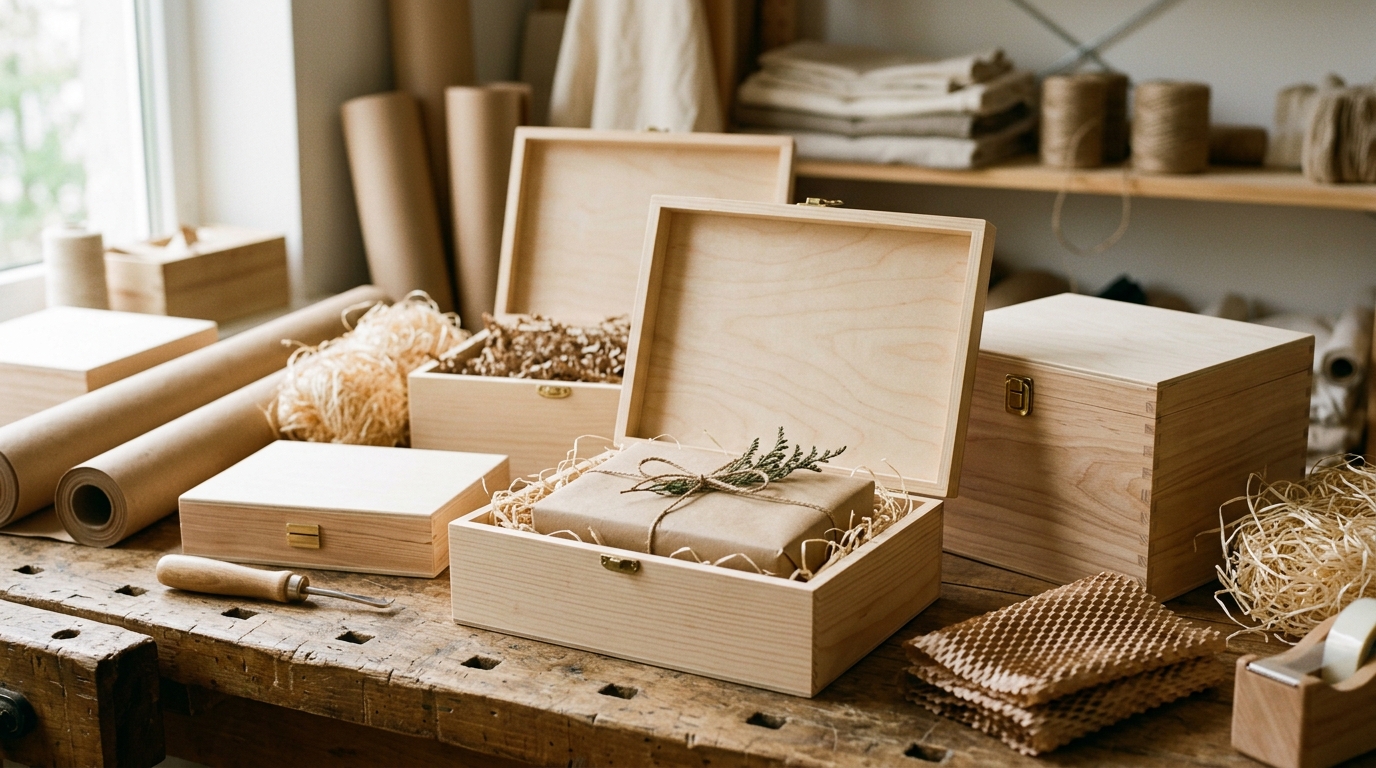
3. Padding and Internal Fillers
The inside of the box is as important as the outside.
- Die-cut foam: Ideal for holding delicate products and creating a professional presentation.
- Wood shavings or shredded paper: Ecological options that add volume and protection.
- Silk or fabric: For a luxurious presentation, especially for high-end gifts.
- Cardboard dividers: To organize various items within the same box.
Personalization: The Soul of the Surprise Box
1. Content Personalization
Selecting products based on the recipient's profile, tastes, or needs. In the case of subscription boxes, this may involve detailed questionnaires for the subscriber. For gifts, a deep knowledge of the recipient is key.
2. Packaging Personalization
Beyond printing a logo, the box can be personalized with:
- Unique designs: Adapted to the brand or occasion.
- Names or initials: Engraved or printed directly on the box, especially for communion boxes or weddings.
- Personalized messages: A handwritten or printed card that adds a personal touch.
- Thematic: Adapting the design to an event (Christmas, Valentine's Day, birthdays).
Packaging Quality
The perceived value of the content is directly linked to the quality of the packaging. A good design protects the product and enhances its appeal.