Polypropylene: A Versatile and Essential Material in Modern Packaging
Polypropylene (PP) is one of the most widely used plastics globally, standing out for its versatility, resistance, and low cost. This semi-crystalline thermoplastic is obtained from the polymerization of propylene and has revolutionized various industries, from automotive to medicine, and very notably, the packaging sector. Its wide range of properties makes it a fundamental material for manufacturing containers, boxes, and components that require durability and safety.
The Essential
- Polypropylene (PP) is a versatile, resistant, and economical thermoplastic, crucial in packaging.
- It stands out for its high chemical, impact, and fatigue resistance, and as an excellent electrical insulator.
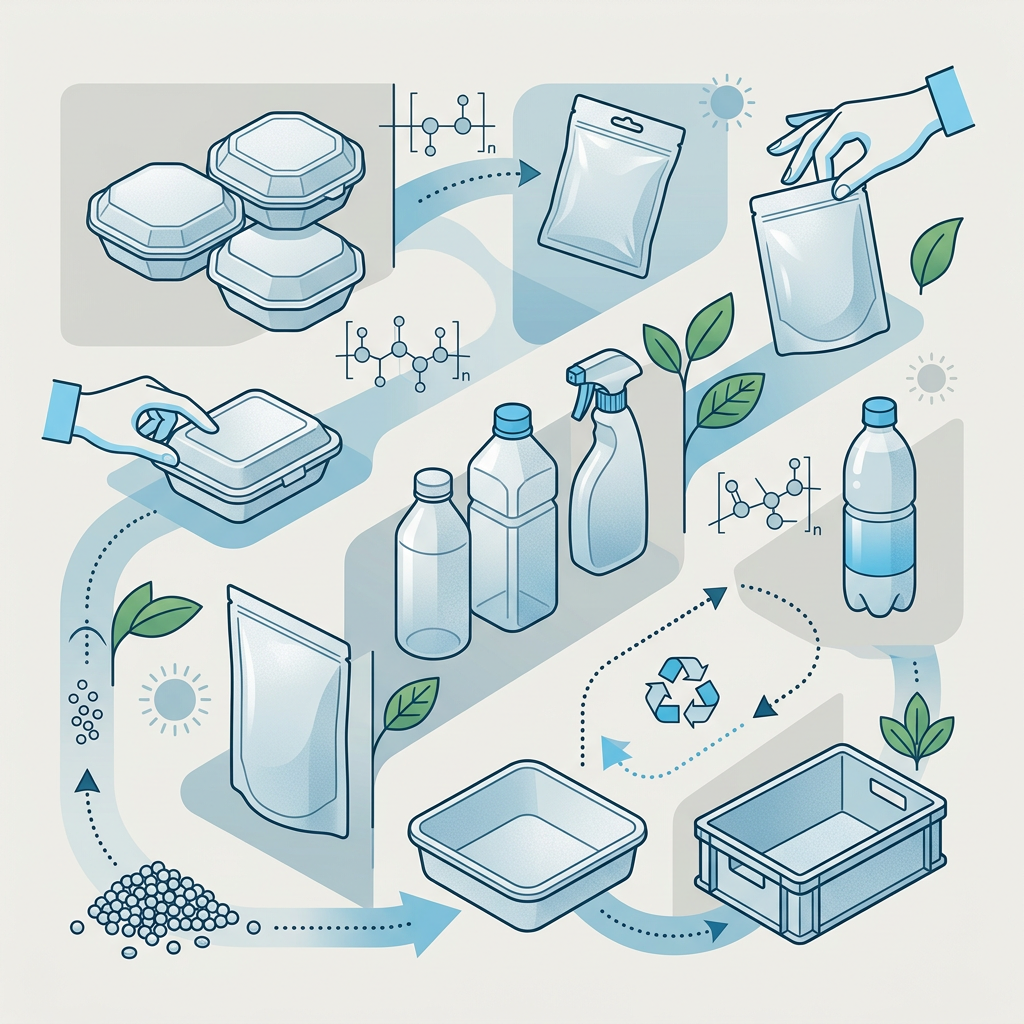
- It is used in flexible packaging (films, bags) and rigid packaging (containers, reusable boxes).
- It offers environmental advantages such as recyclability and a lower carbon footprint compared to other plastics.
Origins and Discovery of Polypropylene
Polypropylene was first synthesized in 1951 by Paul Hogan and Robert Banks at Phillips Petroleum. However, its commercial production began thanks to the independent work of Karl Ziegler in Germany and Giulio Natta in Italy in the mid-1950s. Natta, in particular, developed stereospecific catalysis that allowed the production of isotactic polypropylene, a more ordered and crystalline form of the polymer, earning him the Nobel Prize in Chemistry in 1963 alongside Ziegler.
Since then, polypropylene has experienced exponential growth, becoming the second most produced plastic in the world, surpassed only by polyethylene. Its adaptability to different manufacturing processes and its balanced properties have consolidated its position in a vast spectrum of applications.
Key Properties of Polypropylene in the Context of Packaging
The intrinsic characteristics of polypropylene make it ideal for a multitude of packaging solutions. Understanding these properties is crucial for determining when it is the most suitable material.
- Chemical ResistanceInert to most acids, bases, and organic solvents.
- High Impact ResistanceWithstands blows and vibrations without easy fracturing.
- Fatigue ResistanceMaintains structural integrity after repeated bending cycles.
- High Melting PointWithstands temperatures up to 160 °C, suitable for sterilization.
- Low DensityLighter than many other plastics, optimizes transport costs.
- Good Electrical InsulatorProtects electronic components.
Additionally, polypropylene is odorless, non-toxic, and biocompatible, making it suitable for food and pharmaceutical packaging. Its surface is easy to clean and resistant to bacteria, ensuring the necessary hygiene in certain sectors. It also offers good transparency in certain formulations, allowing product visualization.
Key fact
Polypropylene has a unique ability to function as a "living hinge," meaning thin sections can be repeatedly bent millions of times without breaking, an essential feature for integrated lids and closures.
Types of Polypropylene Relevant for Packaging
Although polypropylene is a single polymer, its properties can vary significantly depending on its molecular structure and the polymerization process. The most common types are:
- Polypropylene Homopolymer (PP-H): This is the most basic form of PP, with high rigidity, tensile strength, and a high melting point. It is used in rigid packaging such as containers, disposable plates, and boxes.
- Polypropylene Copolymer (PP-C): Obtained by adding ethylene during polymerization, which improves impact resistance, especially at low temperatures, and increases flexibility. It is common in flexible packaging, films, and containers that require more toughness.
- Random Copolymer (PP-R): Ethylene is randomly distributed in the chain, resulting in greater transparency, flexibility, and better sealability.
- Block Copolymer (PP-B): Ethylene segments are grouped into blocks, offering superior impact resistance at low temperatures, ideal for applications that will be exposed to cold environments.
- Biaxially Oriented Polypropylene (BOPP): A PP film stretched in two directions, giving it excellent tensile strength, transparency, rigidity, and improved barrier properties. It is widely used in food packaging, labels, and adhesive tapes (Sellotape: Versatile Adhesive for Packaging and Beyond).
Applications of Polypropylene in Packaging
The versatility of polypropylene is reflected in its vast range of applications within the packaging sector. It is found in both flexible solutions and rigid structures, offering protection, functionality, and aesthetics.
Flexible Packaging
- Films and Sheets: BOPP is a popular material for wrapping food, snacks, and sweets, offering a good barrier against moisture and oxygen. It is also used in laminated films to improve strength and printability.
- Bags and Sacks: From bags for agricultural products to woven sacks for construction materials, PP offers durability and tear resistance.
- Labels: PP films are used in the manufacture of water-resistant and chemical-resistant self-adhesive labels, ideal for personal care products or bottles.
- Adhesive Tapes: The backing of many packaging tapes is made of PP, offering strength and good grip. (Masking tape: uses, types, and essential characteristics)
Rigid Packaging
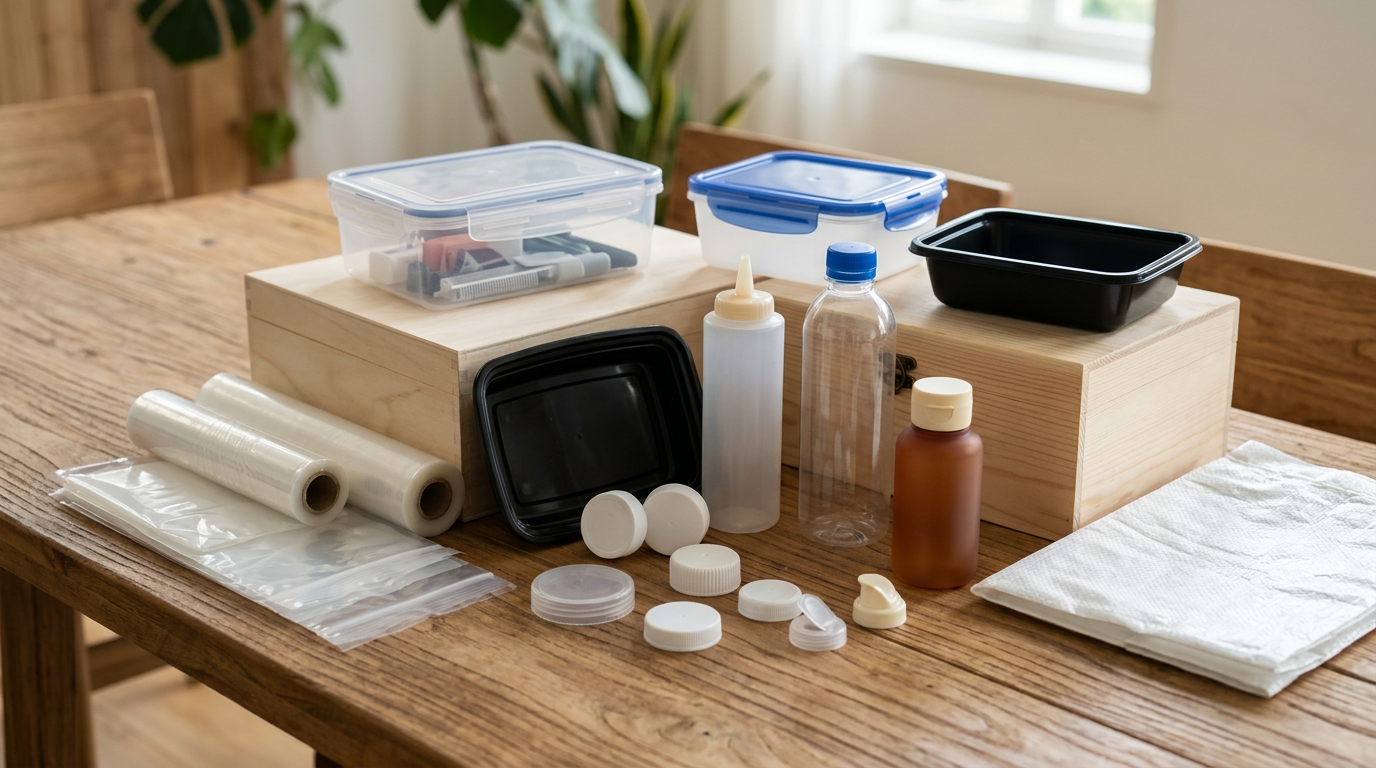
- Containers and Packaging: Sauce bottles, yogurt containers, margarine tubs, caps, and closures are frequently made from PP due to its chemical resistance and its ability to create integrated hinges.
- Reusable Boxes: Cellular polypropylene boxes (or "corrugated plastic") are extensively used in closed-loop logistics. They are lightweight, water-resistant, washable, and can withstand multiple use cycles, reducing the need for single-use packaging.
- Trays and Thermoformed Products: For transporting electronic components, industrial parts, or fresh food packaging, PP trays offer protection and stability.
- Industrial Packaging: Large containers for chemicals or automotive parts take advantage of PP's robustness and corrosion resistance.
Choose the right type of PP
For packaging with high impact requirements or low temperatures, opt for PP copolymers. If rigidity and heat resistance are priorities, a homopolymer might be more suitable.
Customization and Finishes in Polypropylene Packaging
Although intrinsically functional, polypropylene allows for various customization options to improve aesthetics and brand communication in packaging.
- Direct Printing: PP can be printed using techniques such as flexography, screen printing, or digital printing. It is common to see logos and full-color designs on PP bags, films, and containers.
- Labeling: For more complex packaging or those requiring high-resolution graphics, labeling can be an effective solution, either with self-adhesive labels (often PP) or in-mold labels (IML), which fuse with the container during molding.
- Coloring: Polypropylene can be pigmented in virtually any color, allowing for alignment with brand identity or industry color codes.
- Embossing and Texturizing: Through molding, it is possible to add textures or reliefs to the surface of PP, improving grip or the tactile perception of the packaging.
- Special Finishes: Although less common than in other materials, varnishes or coatings can be applied to improve scratch resistance or modify gloss.
Polypropylene and Sustainability
The environmental impact of polypropylene is a subject of constant debate, as is the case with most plastics. However, PP presents several characteristics that position it favorably compared to other materials.
- Recyclability: Polypropylene is 100% recyclable and has the plastic identification code #5. Recycled PP (rPP) is increasingly used in the manufacturing of new products and packaging, reducing reliance on virgin material.
- Weight Reduction: Its low density contributes to the reduction of the total weight of packaging, which translates into lower carbon emissions during transport.
- Durability and Reuse: Especially in the form of reusable boxes or containers, PP allows for multiple cycles of use, extending the useful life of the packaging and avoiding premature disposal. This is particularly important in reverse logistics and circular economy systems.
- Lower Energy Consumption in Production: The energy required to produce PP is, in some cases, lower than that of other plastics or alternative materials.
- Incineration: At the end of its useful life, if it cannot be recycled, PP can be incinerated for energy recovery, with clean combustion that only produces carbon dioxide and water vapor, without toxic residues.
Challenge: Separation and Recycling Flow
Although PP is recyclable, the efficiency of its recycling depends on local collection and separation infrastructures. Contamination with other plastics can complicate the process, highlighting the importance of correct sorting by the consumer.
Comparison of Polypropylene with Other Packaging Materials
To better understand the advantages and disadvantages of polypropylene, it is useful to compare it with some of the most common packaging materials.
| Characteristic | Polypropylene (PP) | Cardboard | Polyethylene (PE) | PET (Polyethylene Terephthalate) |
|---|---|---|---|---|
| Water Resistance | Very High | Low (unless treated) | Very High | Very High |
| Chemical Resistance | Excellent | Low | Very Good | Good |
| Hardness/Rigidity | Medium-High | Variable (depending on type) | Low-Medium (more flexible) | High |
| Impact Resistance | High | Low | Medium-High | Medium |
| Transparency | Variable (from opaque to translucent) | Opaque | Variable (translucent to transparent) | Excellent |
| Recyclability | Good (Type 5) | Excellent | Good (Type 2, 4) | Excellent (Type 1) |
| Cost | Medium-Low | Low | Low | Medium |
| Weight | Light | Variable | Light | Medium |
| Melting Point | High (130-170°C) | Low (burns) | Lower (105-130°C) | Medium (250-260°C) |
As observed, polypropylene positions itself as a versatile intermediary: it surpasses cardboard in durability and water resistance, and offers a balance between the strength of PET and the flexibility of PE. Its higher temperature resistance compared to PE makes it suitable for sterilization processes or packaging hot products.
Innovations and Future Trends
Research in polypropylene continues, seeking to improve its properties and sustainability:
- Bio-Polypropylene: Development of PP from renewable resources, such as sugars or biomass, reducing dependence on fossil fuels.
- PP Composites: Incorporation of natural fibers (wood, hemp) or minerals to improve rigidity, strength, and reduce the carbon footprint.
- PP for Advanced Applications: Formulation of PP with improved barrier properties to extend the shelf life of food.
- Design for Recyclability: Trend towards monolayer or mono-material packaging using only PP, which greatly simplifies the recycling process by eliminating the need to separate multiple plastics.
Consider the life cycle
When choosing a packaging material, it is essential to consider not only the initial cost but its entire life cycle, from production to end-of-life, including durability and recycling options.
Polypropylene is a cornerstone material in the packaging sector, and its importance will only grow as its properties are optimized and more sustainable solutions are promoted. Its balance of strength, flexibility, lightness, and cost makes it a strategic choice for countless applications, contributing to the effective protection and presentation of products in all markets, from consumer goods to industrial components.
While wood packaging materials or cardboard boxes may be suitable for certain scenarios, polypropylene offers unparalleled advantages in chemical resistance, durability, and the ability to withstand demanding environments, positioning it as an indispensable material in the global supply chain.