The Stapler: Uses, Types, and Selection Criteria for Packaging and Beyond
The Essentials
- Staplers have multiple applications, from office to packaging and construction.
- There are various types: manual, electric, pneumatic, plier, industrial, and packaging.
- The choice depends on the material, work volume, frequency of use, and portability requirements.
History and Evolution of the Stapler
Types of Staplers and their Applications
Office Staplers
These are the most common and generally the first that come to mind. Designed for light to moderate paper use, they are characterized by their compact size and ease of handling.
- Desktop: Ideal for large volumes of paper, allowing dozens of sheets to be stapled at once with less effort.
- Handheld or mini: Lightweight, portable, and suitable for small amounts of paper or occasional use.
- Electric office: Automate the process, reducing fatigue in repetitive tasks. Perfect for receptions or departments with a lot of paperwork.
Long-Reach Staplers
For stapling the center of brochures or large documents, there are special staplers with a much greater insertion depth. This is a crucial detail for publications and printed materials.
Industrial and Workshop Staplers
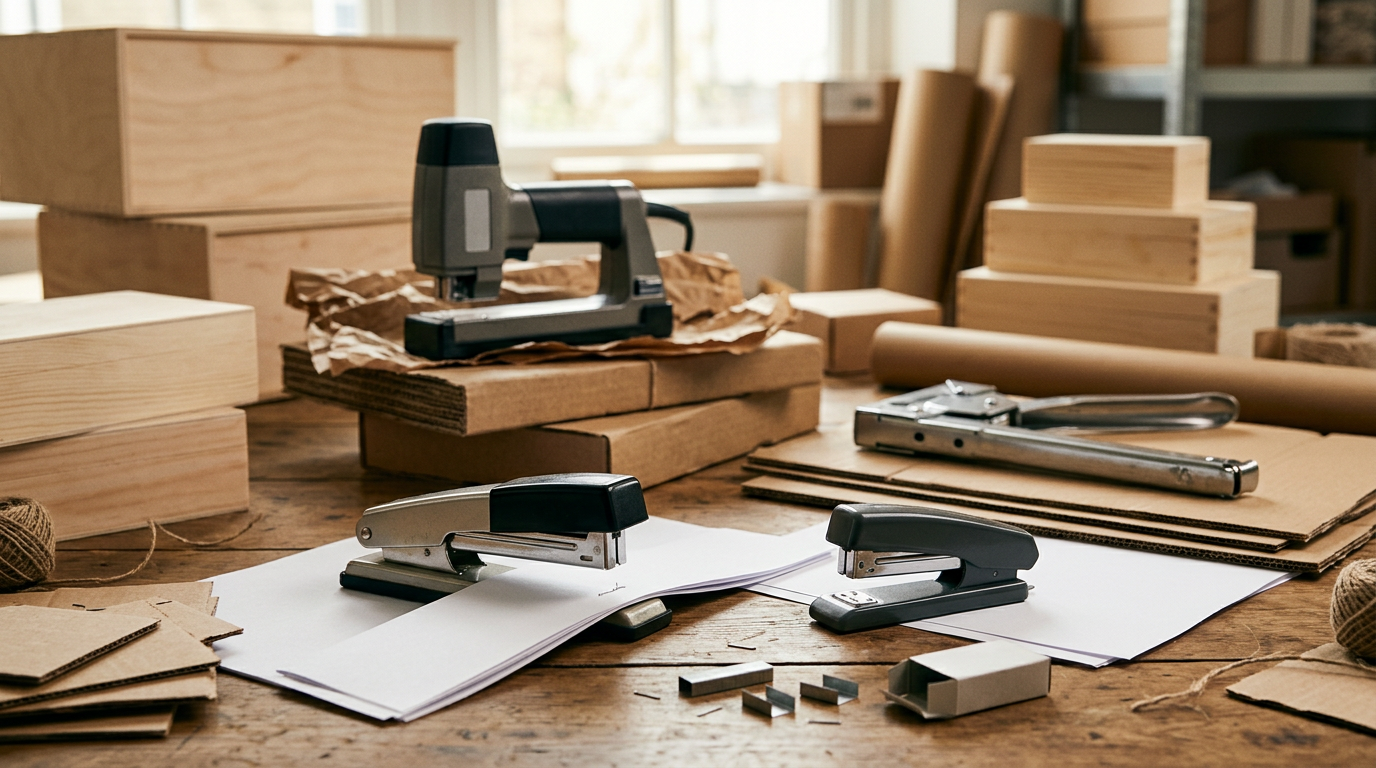
These tools are designed for more demanding use and more robust materials, such as wood, fabrics, plastics, or thick cardboard. They are mainly divided by their actuation method:
- Manual hammer staplers: Resistant and durable, they are activated by striking the head against the surface. Useful for fastening insulation, roofing felt, or carpets.
- Upholstery staplers: Specifically designed for fastening fabrics to furniture frames. They are usually manual or electric.
- Cable staplers: Incorporate a guide to avoid damaging electrical cables when fastening them to walls or surfaces.
Electric Staplers
Provide greater power and reduce fatigue. They are ideal for repetitive tasks or materials that require more force. They can be portable (battery-powered) or corded.
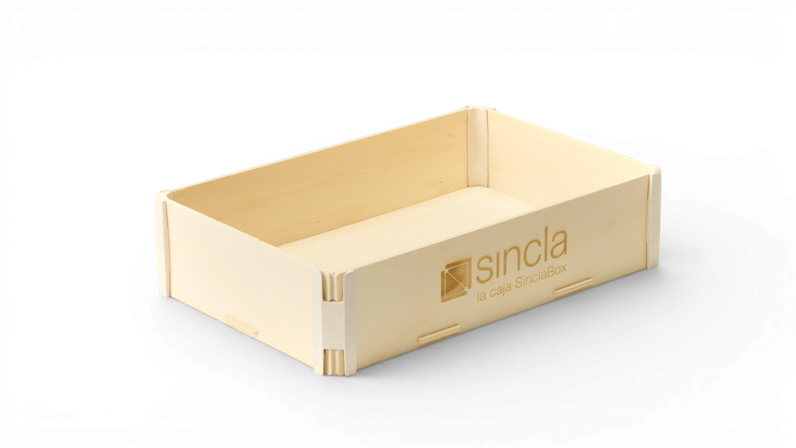
- For wood: Fasten thin panels, moldings, or even for constructing custom wooden boxes.
- For upholstery: Facilitate the precise and rapid fastening of fabrics.
- For general fastening: Versatile for a wide range of tasks in the home and small workshops.
Pneumatic Staplers
They operate with compressed air, which gives them exceptional power and speed. They are the preferred choice in industrial and construction environments for heavy, continuous tasks.
- Construction: Used for subfloors, roofing, house wraps, and other construction applications.
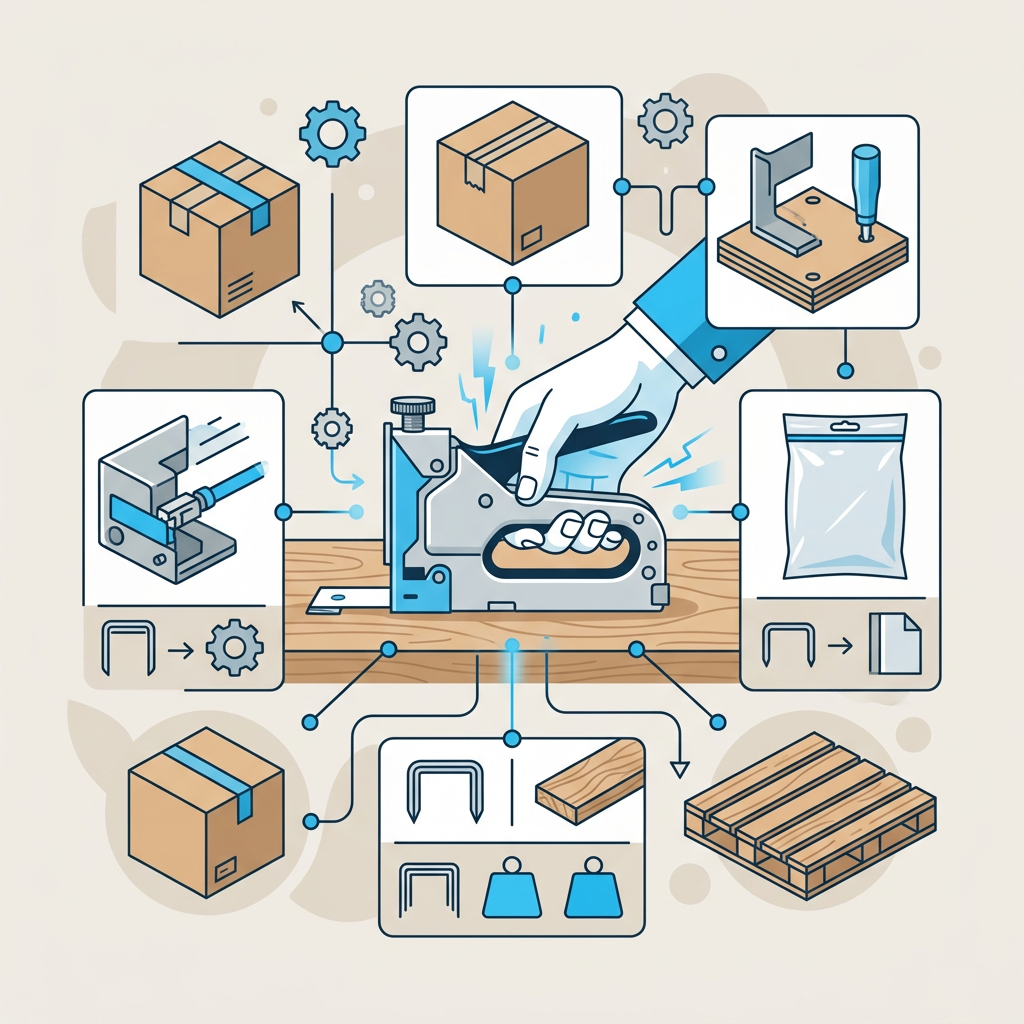
- For pallets and packaging: Essential for assembling large wooden boxes, pallets, and closing heavy-gauge cardboard boxes.
- Braders/Nailer-Staplers: Many pneumatic tools combine the ability to fire both staples and nails, increasing their versatility.
Packaging Staplers (Carton Staplers)
Specifically designed for closing cardboard boxes. They offer robust and reliable fastening, essential for the security and integrity of contents during transportation.
- Manual plier: Small, portable, and economical, ideal for low volumes of packaging. Commonly used to close postal bags or light boxes.
- Pneumatic plier: Offer the power and speed needed to quickly close cardboard boxes continuously on production lines.
- Foot-operated (or pedal) staplers: Operated by foot, leaving hands free to manipulate the box. Very common in warehouses and distribution centers for efficiently closing boxes.
Staples for Every Need
The effectiveness of a stapler largely depends on the staples it uses. There are various types (narrow crown, wide crown, fine wire, stainless steel, galvanized, etc.) and lengths, each suitable for different materials and fastening levels. Choosing the right one is as important as the tool itself.
Key Criteria for Choosing the Right Stapler
- Material to staplePaper, cardboard, wood, fabric, plastic, etc. Each material requires a specific type of staple and power.
- Volume and frequency of useFor occasional use, a manual stapler is sufficient. For intensive use, electric or pneumatic is recommended.
- Mobility and portabilityWill the tool need to move or will it be fixed in one place? Battery-powered or plier staplers are ideal for movement.
- Compatible staple typeEnsure the model uses staples that are easily found and appropriate for the job.
- Budget and energy efficiencyManual staplers are the most economical. Electric and pneumatic involve a higher initial investment but save time and effort.
Additional Factors to Consider
- Insertion depth: Crucial for stapling into the center of documents or on box edges.
- Loading capacity: How many staples the magazine can hold, which affects reloading frequency.
- Safety features: Safety locks, non-slip grips, or contact activation for more powerful staplers.
- Ergonomics: A comfortable design that reduces fatigue, especially during prolonged use.
- Power adjustment: Some models allow regulating the impact force of the staple, useful for different materials.
Basic Maintenance
To prolong the lifespan of any stapler, it is essential to keep it clean, lubricate moving parts according to the manufacturer's instructions, and always use recommended staples to prevent jams and wear.
The Stapler in the Packaging Sector
Applications in Cardboard Boxes
Foot-operated or pneumatic staplers are standard tools in warehouses and logistics centers for closing cardboard boxes. Their main advantages are:
- Speed: Allows boxes to be closed much faster than with adhesive tape in many cases.
- Security: Provides a very strong seal, ideal for heavy products or when greater inviolability is required.
- Moisture resistance: Staples are less susceptible to failure in humid environments than certain adhesives.
- Waste reduction: Although they do not eliminate waste, their use can be cleaner and more direct than applying large quantities of tape.
It is important to select staples with the appropriate length for the cardboard thickness, preventing them from protruding from the inside and potentially damaging the product.
Wooden Packaging and Heavy Products
For assembling wooden packaging, such as robust shipping crates or pallets, pneumatic staplers and nailer-staplers are indispensable. They allow for:
- Strong and durable joints to withstand heavy loads.
- Speed in manufacturing high volumes of wooden boxes.
- Fastening interior linings or protectors inside wooden boxes.
Other Uses in Packaging
- Fastening labels or bags: Manual plier staplers for small packages.
- Closing sacks or meshes: Robust staplers with special staples for textile materials.
- Joining filling materials: To create internal structures or fasten protective foams.
*Estimated figures for industrial pneumatic staplers compared to manual methods in continuous packaging tasks. Results may vary.
Common Mistakes and How to Avoid Them
Even with a tool as seemingly simple as the stapler, there are mistakes that can affect efficiency and safety.
- Using incorrect staples. The most frequent error. Staples of the wrong size or type (too short, too long, incorrect material) can cause jams, not fasten properly, or damage the material. Always check the manufacturer's specifications.
- Not maintaining the tool. Lack of cleaning or lubrication can lead to poor performance, frequent jams, and a reduced lifespan. Always follow maintenance recommendations.
- Forcing the stapler. If a staple doesn't penetrate with the first press, it should not be forced excessively. It is better to remove the staple, check the magazine and the material, and try again with the correct technique.
- Neglecting safety. Staplers, especially pneumatic and electric ones, can be dangerous if not used with caution. Always wear safety glasses, do not point at people, and disconnect before performing maintenance.
- Underestimating the material. Trying to staple materials that are too hard or thick with a low-power stapler is not only ineffective but can also damage the tool.
"The right stapler transforms a tedious job into an efficient and safe operation, both for paper and industrial packaging."
Innovations and the Future of the Stapler
Although fundamentally the stapler is a simple tool, innovation continues. Trends are observed towards:
- Greater ergonomics: More comfortable and lighter designs to reduce user fatigue during prolonged use.
- Longer battery life: In electric models, allowing greater autonomy and mobility.
- More resistant and lighter materials: To improve durability without increasing weight.
- Sensors and automation: In industrial environments, with systems that detect box position and automatically apply staples.
- More sustainable staples: Research into biodegradable or recycled materials for staples, in line with the growing demand for ecological packaging solutions.
The stapler, from its humble beginning as an office tool, has adapted and evolved, becoming an indispensable pillar in numerous sectors, from construction to packaging logistics, demonstrating its lasting relevance.