Polypropylene: A Fundamental Material in Packaging and Everyday Life
The Essentials
- Polypropylene (PP) is a lightweight and resistant thermoplastic, key in multiple industries.
- It stands out for its durability, chemical resistance, low moisture absorption, and recyclability.
- It is widely used in packaging, automotive, medical, and textile fields, among others.
- There are variants such as homopolymer and copolymer, each with specific properties.
- Its environmental impact is managed through recycling and the development of sustainable options.
What is polypropylene?
Key Fact
Polypropylene is the second most produced plastic worldwide, only behind polyethylene, due to its versatility and low cost.
Key properties of polypropylene
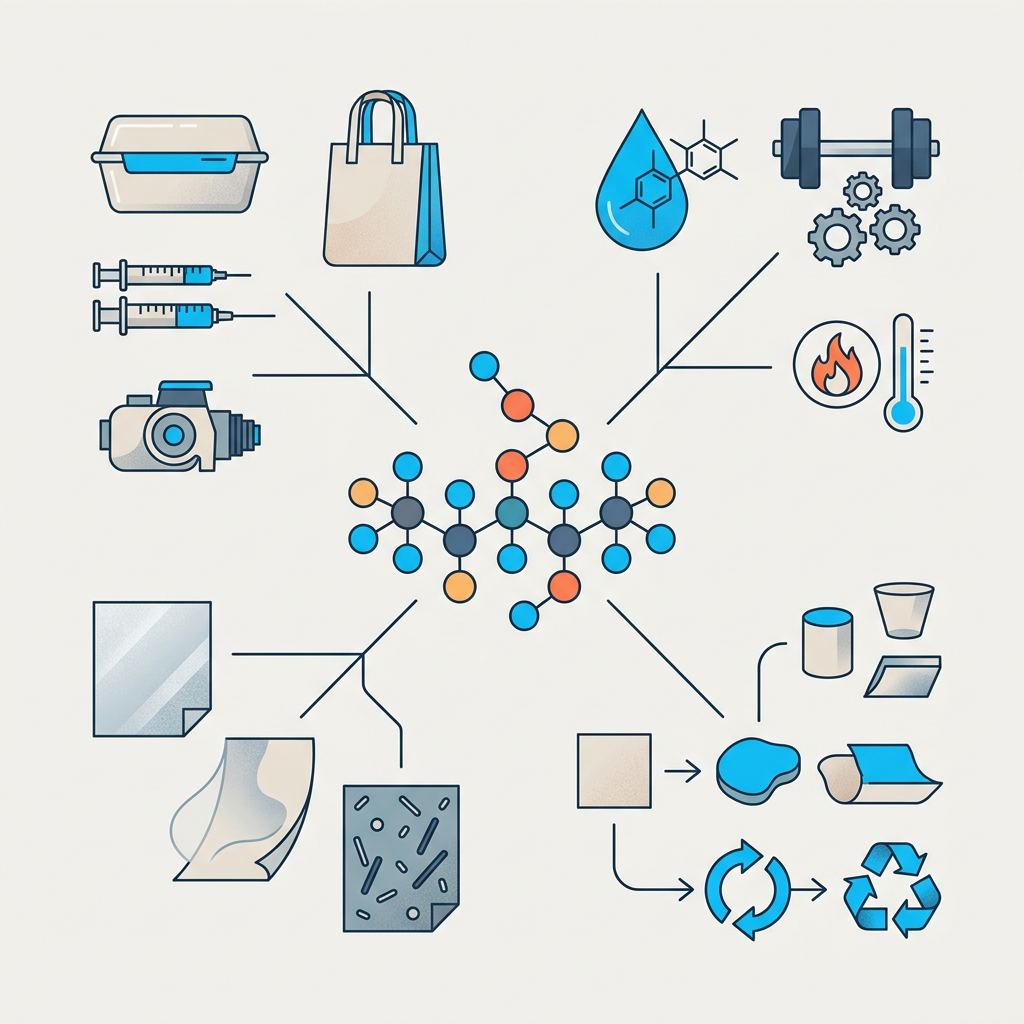
- LightnessWith a density between 0.895 and 0.92 g/cm³, it is one of the lightest plastics available.
- Mechanical resistanceHigh resistance to tension, impact, and fatigue, especially in flexing conditions.
- Chemical resistanceExcellent resistance to acids, bases, organic solvents, and most chemical products.
- Thermal resistanceCan withstand temperatures up to 140 °C and is suitable for microwaves and sterilization.
- Moisture barrierLow water absorption, making it ideal for protecting moisture-sensitive products.
- RecyclabilityIt is a 100% recyclable material, classified with the recycling code "5".
Types of polypropylene and their uses
Polypropylene homopolymer (PPH)
- Characteristics: High rigidity, hardness, good tensile strength, excellent dimensional stability. It is more brittle at low temperatures than copolymers.
- Applications: Used in bottles, rigid containers, sheets, textile fibers (carpets, ropes), interior automotive components, home appliances, and plastic drawer units.
Polypropylene copolymer (PPC)
- Random Copolymer PP (RACO PP): Ethylene monomers are randomly distributed along the chain.
- Characteristics: Greater transparency, better impact resistance at low temperatures, and greater flexibility compared to homopolymer.
- Applications: Transparent food packaging (cups, containers), packaging films, medical syringes, household products, and toys.
- Block Copolymer PP (BC PP): Ethylene monomers are grouped into blocks within the polypropylene chain.
- Characteristics: Higher impact resistance, especially at low temperatures, and greater toughness than random copolymers. Slightly less transparent.
- Applications: Automotive components (bumpers, dashboards), toolboxes, suitcases, industrial containers, pipes.
Practical Tip
When choosing polypropylene for a packaging application, consider transparency and impact resistance. Random copolymers are ideal for transparent food packaging, while block copolymers offer greater durability for products requiring extra protection.
Polypropylene manufacturing processes
- Injection molding: Molten polypropylene is injected at high pressure into a mold, where it cools and solidifies, forming complex parts with great dimensional precision. It is ideal for the production of containers, caps, automotive parts, and toys.
- Extrusion molding: Molten polypropylene is forced through a die with a specific shape to create continuous sheets, films, fibers, or profiles. It is used for the manufacture of sheets for thermoforming, packaging films, filaments for textiles, and pipes.
- Thermoforming: Polypropylene sheets are heated until they become malleable and then molded over a mold using vacuum or pressure. This process is common for creating food trays, single-use containers, and interior linings.
- Blow molding: A polypropylene preform is heated and inflated inside a mold to create hollow objects, such as bottles or drums.
- Rotational molding: Ideal for large, hollow parts, where powdered polypropylene is heated and rotated within a mold, distributing evenly to form the object.
Applications of polypropylene in packaging
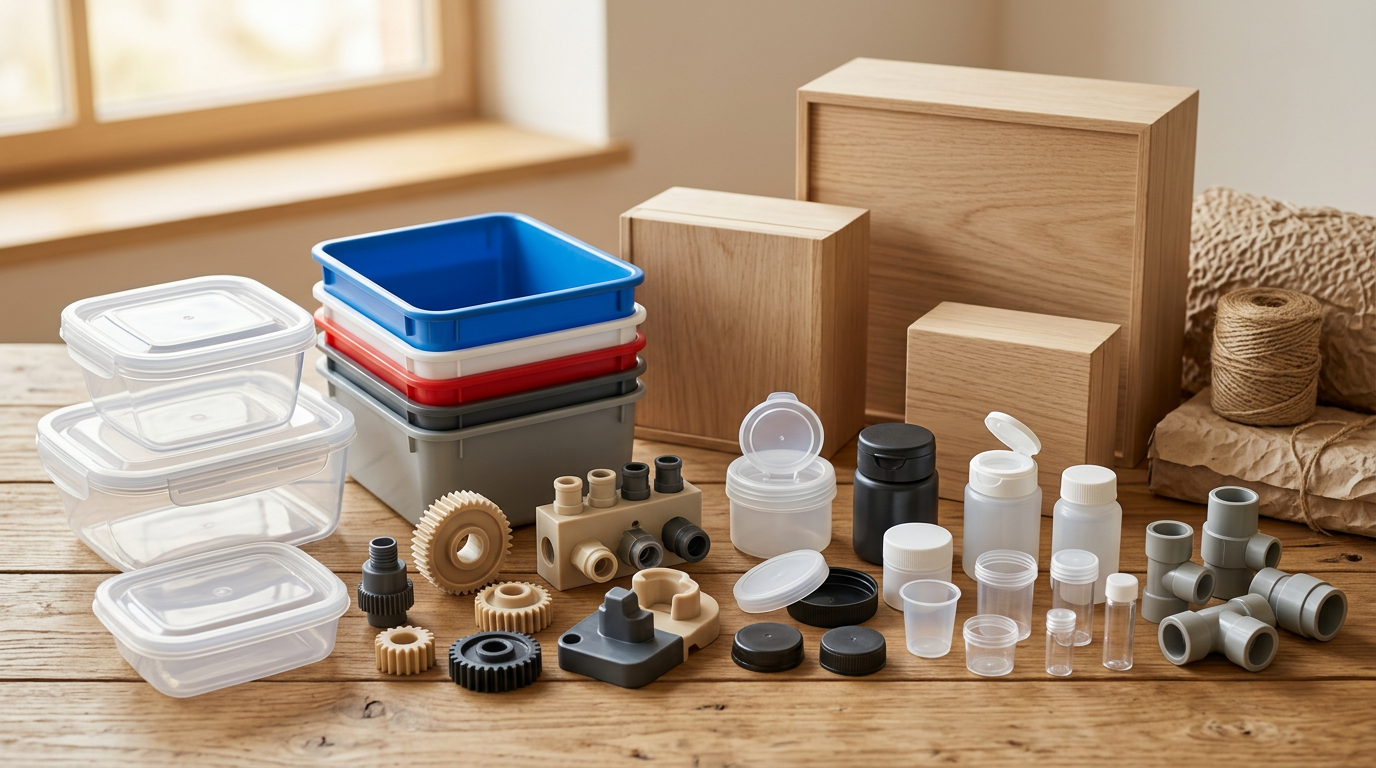
- Rigid packaging: Food containers (yogurt, butter), bottles for cleaning products, caps, CD/DVD cases, plastic storage boxes, and buckets.
- Flexible packaging: Stretch films, snack bags, woven (raffia) bags for cereal or fertilizer sacks, labels, adhesive tapes (sealing tapes).
- Bags and fibers: Reusable shopping bags, geotextiles, carpets, ropes, and furniture components.
- Protective packaging: Corrugated polypropylene sheets for the protection of delicate components, internal dividers in boxes, and folding hand trucks with PP components.
- Luxury packaging: Although not traditionally a "premium" material in its basic form, transparent polypropylene or with special finishes is used in the packaging of cosmetics, perfumes, and electronic products, where its lightness and impact resistance are advantageous.
Note on finish
The surface of polypropylene can be treated to improve ink adhesion, allowing for high-quality screen printing, offset printing, or labeling, crucial for branding and product information.
Polypropylene and sustainability
Sustainable advantages:
- Recyclability: PP is 100% recyclable. Mechanical recycling transforms it into pellets that can be used to manufacture new products, reducing the need for virgin raw materials.
- Low carbon footprint in production: Compared to other polymers, the PP production process is relatively energy efficient.
- Lightness: Its low density contributes to weight reduction in transport, which in turn reduces fuel consumption and CO2 emissions.
- Durability: Polypropylene products have a long lifespan, especially those designed to be reusable, which reduces waste generation.
Challenges and considerations:
- Collection and sorting: Although it is recyclable, collection and sorting infrastructure can vary between regions, affecting effective recycling rates.
- Recycling of mixtures: The presence of additives, colorants, or mixing with other polymers can complicate the recycling process and degrade the properties of the recycled material.
- Resistance to biodegradation: Like most plastics, polypropylene is very resistant to biodegradation, meaning it can remain in the environment for hundreds of years if not managed correctly.
5PP recycling code
140°CTemperature resistance
~0.9 g/cm³Low density
Common mistakes and considerations when using polypropylene
- Use at extreme temperatures: Although it withstands high temperatures, PP can become brittle at very low temperatures, especially homopolymer. For cold applications, block copolymers are more suitable.
- UV sensitivity: Polypropylene can degrade with prolonged exposure to ultraviolet radiation. For outdoor applications, UV stabilizing additives are required.
- Ink and adhesive adhesion: The non-polar surface of PP can make it difficult for inks and adhesives to adhere without prior treatment (such as corona or plasma treatment) to increase surface energy.
- Incorrect type selection: Using a homopolymer when the impact resistance of a copolymer is needed, or vice versa, can lead to product failure or unnecessary cost.
- Overload: Although resistant, polypropylene has a load limit. The design must consider the stresses the material will be subjected to to avoid deformation or breakage. For example, when designing storage boxes, it is crucial to calculate the maximum weight they will support.
Comparison of polypropylene with other packaging materials
| Characteristic | Polypropylene (PP) | Polyethylene (PE) | PET (Polyethylene Terephthalate) | Cardboard |
|---|---|---|---|---|
| Cost | Medium-low | Low | Medium | Low |
| Mechanical resistance | High (flex, tensile, impact) | Medium (flexibility, impact) | High (rigidity, tensile) | Medium (compression) |
| Chemical resistance | Excellent | Very good | Good | Low (sensitive to liquids) |
| Thermal resistance | High (up to 140°C) | Medium (up to 80-100°C) | Medium (up to 70°C) | Low (flammable) |
| Transparency | Variable (homo-opaque, copo-transparent) | Opaque/translucent | Excellent | Opaque |
| Lightness | Very high | Very high | Medium | Medium-high |
| Recyclability | Yes (code 5) | Yes (codes 2, 4) | Yes (code 1) | Yes |
| Moisture barrier | Very good | Excellent | Good | Low |
| Typical applications | Rigid containers, films, fibers | Bags, stretch film, pipes | Beverage bottles, food containers | Boxes, primary and secondary packaging |